What’s Observed on April 27
Born on April 27: Taurus ♉
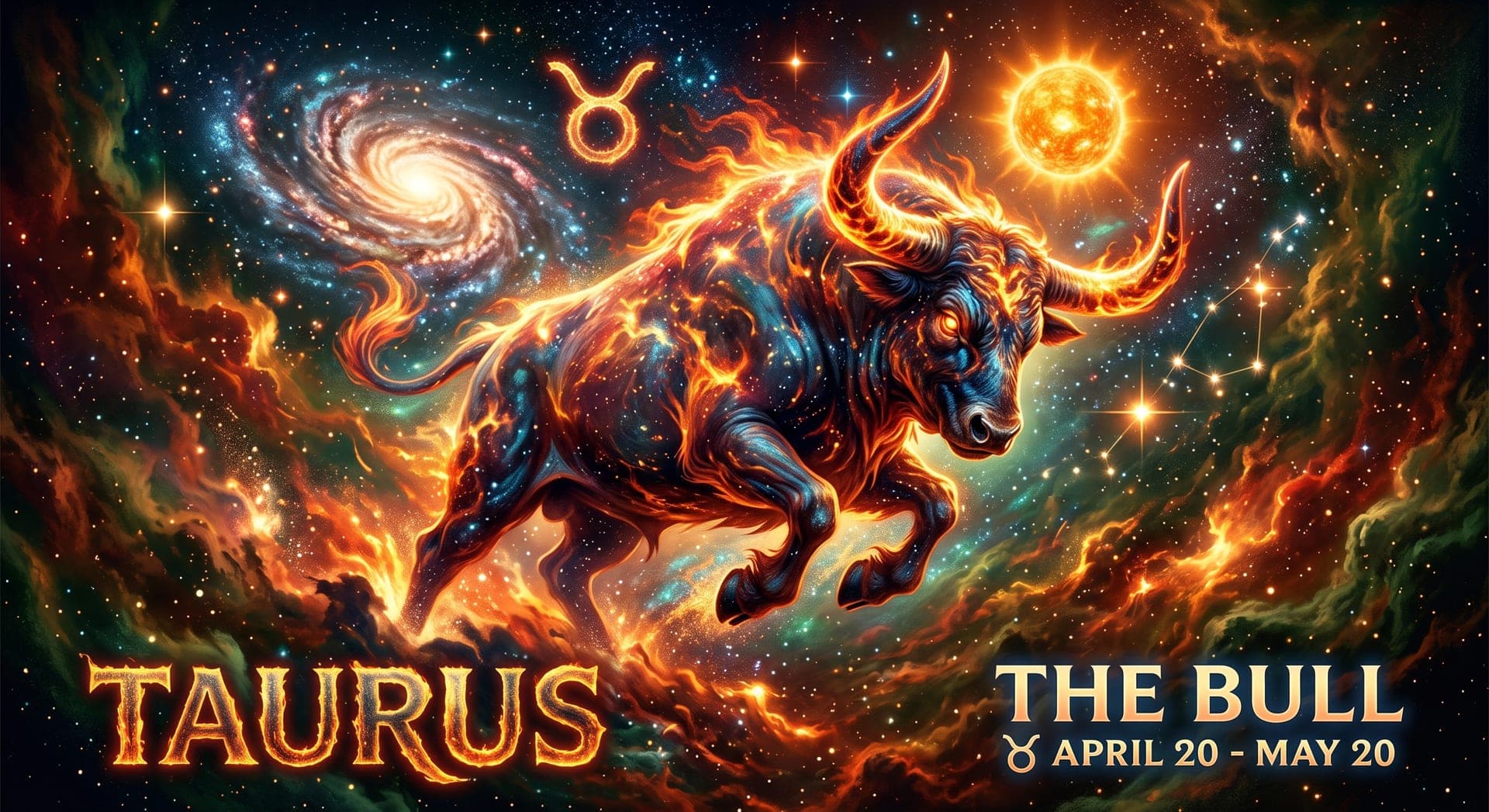
Taurus, the second sign of the zodiac, spans April 20 to May 20 and is symbolized by the bull, an animal prized for its strength, steadiness, and quiet determination. Ruled by Venus, the planet of love, beauty, and material comfort, Taurus is often described as one of the most sensual and pleasure-loving signs, drawn to good food, fine art, and physical comfort. As an Earth sign, Taurus is grounded, practical, and deeply connected to the physical world, valuing stability and tangible security over abstract ideas or sudden change. Its Fixed modality gives Taurus a well-earned reputation for stubbornness, since once a Taurus has settled on a plan or opinion, shifting it can be remarkably difficult. People born under this sign tend to be dependable, loyal, and patient, often the steady presence others rely on during difficult times. While their resistance to change can occasionally frustrate those around them, Taurus's persistence and work ethic make them exceptionally good at seeing long-term goals through to completion.
Personality Traits
Strengths
- Dependable and steady
- Patient and persistent
- Devoted to loved ones
- Appreciates beauty and comfort
- Financially sensible
Weaknesses
- Extremely stubborn
- Resistant to change
- Can be possessive
- Overindulgent
- Slow to forgive
Compatible Signs
Fun Facts
- Taurus's bull symbol connects to the Greek myth of Zeus transforming into a white bull to abduct Europa.
- Venus, Taurus' ruling planet, is the Roman goddess of love and beauty, reflecting the sign's love of comfort, art, and sensory pleasure.
- Taurus is considered by many astrologers to be the most stubborn sign of the zodiac, a trait often attributed to its Fixed modality and bull symbolism.
- Notable Taureans include Queen Elizabeth II, William Shakespeare, Adele, and David Beckham.
- The star cluster known as the Pleiades sits within the constellation Taurus and has been referenced in mythology and literature across many cultures.
Born on April 27
- 1759
Mary Wollstonecraft
English philosopher and writer born in Spitalfields, London, author of A Vindication of the Rights of Woman, a foundational feminist text.
- 1791
Samuel Morse
American inventor who co-created Morse code
- 1820
Herbert Spencer
English philosopher and sociologist born in Derby, who coined the phrase 'survival of the fittest' and applied evolutionary theory to society.
- 1822
Ulysses S. Grant
Union general and 18th President of the United States
- 1891
Sergei Prokofiev
Russian composer known for "Peter and the Wolf"
- 1904
Cecil Day-Lewis
Anglo-Irish poet who served as Poet Laureate of the United Kingdom from 1968 until his death, also known for detective novels written as Nicholas Blake
- 1920
Edwin Morgan
Scottish poet and translator born in Glasgow, named the first Scots Makar, or national poet of Scotland.
- 1927
Coretta Scott King
American civil rights activist and author
- 1932
Casey Kasem
American radio personality who co-created American Top 40
- 1944
Michael Fish
English meteorologist born in Rainham, Kent, a long-serving BBC weather forecaster famous for his 1987 'hurricane' broadcast.
- 1947
Pete Ham
Welsh singer-songwriter born in Swansea, frontman of the band Badfinger and co-writer of 'Without You'.
- 1955
Eric Schmidt
American technology executive, former CEO of Google
- 1959
Sheena Easton
Scottish singer-songwriter
- 1963
Russell T Davies
Welsh screenwriter and producer born in Swansea, credited with reviving and showrunning the television series Doctor Who.
- 1969
Darcey Bussell
English ballerina born in London, a principal dancer with The Royal Ballet later known as a judge on Strictly Come Dancing.
- 1976
Sally Hawkins
English actress born in London, Oscar-nominated for her performances in Blue Jasmine and The Shape of Water.
On This Day in History
- 1296
An English army decisively defeats Scottish forces at the Battle of Dunbar.
Fought during the First War of Scottish Independence, the battle was a major victory for King Edward I of England ('Hammer of the Scots'), whose forces routed the army of John Balliol. The defeat led to the capture of Dunbar Castle and effectively broke organized Scottish resistance for a time, forcing Balliol's abdication soon after.
- 1521
Explorer Ferdinand Magellan is killed by indigenous warriors in the Philippines at the Battle of Mactan.
Portuguese explorer Ferdinand Magellan was killed by warriors led by local chieftain Lapu-Lapu while attempting to assert Spanish authority and Christian conversion on the island of Mactan in the Philippines, cutting short his historic voyage before it could be completed, though his remaining crew went on to finish the first circumnavigation of the globe.
- 1521
Explorer Ferdinand Magellan is killed in the Philippines during a battle with the forces of chief Lapu-Lapu.
Magellan, leading the first expedition to circumnavigate the globe, had allied with a local ruler and intervened in a rivalry on the island of Mactan, where his small landing party was overwhelmed by Lapu-Lapu's warriors. Though Magellan died before completing the voyage, one of his ships eventually returned to Spain, finishing the first circumnavigation of the Earth.
- 1650
A Royalist army landing from Orkney is defeated by Covenanter forces at the Battle of Carbisdale in Scotland.
The Royalist force, led by the Marquess of Montrose in a last attempt to restore Charles II to the Scottish throne by force, was ambushed and routed by government troops loyal to the Covenanter regime. Montrose himself escaped the battlefield but was soon captured, tried, and executed in Edinburgh weeks later.
- 1667
Poet John Milton sells the rights to "Paradise Lost" to a printer for ten pounds.
Blind and impoverished in his later years, English poet John Milton sold the publishing rights to his epic poem "Paradise Lost" to a printer for the modest sum of ten pounds, a work now widely regarded as one of the greatest achievements in the English literary canon despite its unremarkable initial financial return.
- 1667
The blind poet John Milton sells the rights to Paradise Lost to a printer for £10.
Milton, who had dictated the epic poem to assistants after losing his sight, agreed to a modest contract that also promised small further payments based on future editions. Despite the unassuming sale, Paradise Lost went on to become one of the most influential works in the English language, securing Milton's reputation as one of England's greatest poets.
- 1805
U.S. Marines and allied Berber forces attack the city of Derna during the First Barbary War, an episode later immortalized in the Marine Corps hymn.
American Marines and a small allied force of Berber mercenaries and Greek soldiers captured the city of Derna during the First Barbary War against Tripoli, an episode considered the first time the American flag was raised in victory on foreign soil and later commemorated in the opening line of the Marine Corps hymn.
- 1813
American troops capture and burn York, the capital of the British colony of Upper Canada.
During the War of 1812, US forces crossed Lake Ontario and overwhelmed the small British garrison defending the town, now Toronto, looting and burning government buildings including the parliament. British retaliation for the raid came the following year, when troops burned Washington, D.C., partly in reprisal.
- 1861
US President Abraham Lincoln suspends the writ of habeas corpus in parts of the country.
Facing the outbreak of the Civil War and unrest along the vital rail line connecting Washington to the North, Lincoln authorized military commanders to arrest and detain suspected Confederate sympathizers without normal judicial process. The move proved highly controversial, prompting a constitutional clash with Chief Justice Roger Taney over the limits of executive power during wartime.
- 1941
German forces occupy Athens during their invasion of Greece in World War II.
German forces occupied Athens after a swift invasion of Greece during World War II, forcing the Greek government into exile and beginning a harsh occupation marked by severe food shortages and a devastating famine that killed tens of thousands of Greek civilians over the following years.
- 1945
Italian partisans capture former dictator Benito Mussolini as he attempts to flee to Switzerland.
Italian partisans captured former dictator Benito Mussolini and his mistress, Clara Petacci, as they attempted to flee toward Switzerland disguised among retreating German soldiers, ending his final desperate bid for escape as Allied forces closed in on the collapsing remnants of his Fascist regime.
- 1967
Expo 67 officially opens in Montreal, Canada, with a globally broadcast ceremony.
Expo 67, a major international exposition celebrating Canada's centennial, officially opened in Montreal with a globally broadcast ceremony, drawing millions of visitors over its run and showcasing innovative architecture and pavilions from dozens of participating nations, cementing the fair's reputation as one of the most successful World's Fairs of the 20th century.
- 1986
Soviet authorities begin evacuating the city of Pripyat following the Chernobyl nuclear disaster.
Soviet authorities began evacuating the nearby city of Pripyat, home to Chernobyl plant workers and their families, more than 24 hours after the reactor explosion, only after radiation levels had spiked dangerously and initial official silence had already exposed thousands of residents to significant contamination.
- 1992
Betty Boothroyd becomes the first woman elected Speaker of the British House of Commons.
A former Labour MP, Boothroyd broke a 700-year tradition of male speakers when the House chose her to preside over its debates, a position requiring strict impartiality. Known for her firm but good-humored chairing style, she went on to serve as Speaker for eight years and became one of the most recognizable figures in modern British politics.
- 1994
South Africa holds its first fully democratic general election, in which Black citizens are allowed to vote for the first time.
South Africa held its first fully democratic general election, in which Black citizens were permitted to vote for the first time in the country's history, resulting in a decisive victory for Nelson Mandela's African National Congress and formally ending the apartheid system of institutionalized racial segregation.
- 1994
South Africa holds its first democratic general election in which citizens of all races could vote.
Millions of Black South Africans voted for the first time in the country's history, forming lines that stretched for miles at polling stations nationwide. The African National Congress, led by Nelson Mandela, won decisively, and Mandela was inaugurated as the country's first Black president weeks later, marking the formal end of apartheid.
- 2005
The Airbus A380, the world's largest passenger airliner, completes its first test flight.
The Airbus A380, the largest passenger airliner ever built with capacity for over 800 passengers in an all-economy configuration, completed its first test flight from Toulouse, France, representing a major bet by European aerospace manufacturer Airbus on continued demand for very large aircraft on major international routes.
- 2005
The Airbus A380, then the world's largest passenger airliner, completes its maiden test flight.
Taking off from Toulouse, France, the double-decker jet was designed to carry more passengers than any previous commercial aircraft, capable of seating over 500 people in a typical configuration. Developed by the multinational European consortium Airbus at a cost of billions of euros, the A380 entered commercial service in 2007 before production ended in 2021 amid weak demand for very large aircraft.
- 2018
North and South Korea sign the Panmunjom Declaration, pledging to formally end the Korean War and pursue denuclearization.
Leaders of North and South Korea signed the Panmunjom Declaration during a historic summit, pledging to work toward formally ending the Korean War, which had only paused under an armistice since 1953, and pursuing the complete denuclearization of the Korean Peninsula, though substantial progress toward those goals remained elusive in subsequent years.
- 2018
North and South Korea sign the Panmunjom Declaration, pledging to work toward peace and denuclearization.
Signed by North Korean leader Kim Jong Un and South Korean President Moon Jae-in at a historic summit in the Demilitarized Zone, the declaration committed both countries to pursue a formal end to the Korean War and denuclearize the peninsula. It was the first meeting between the two countries' leaders on Korean soil in over a decade, though many of its ambitious goals ultimately went unrealized.