What’s Observed on April 28
Born on April 28: Taurus ♉
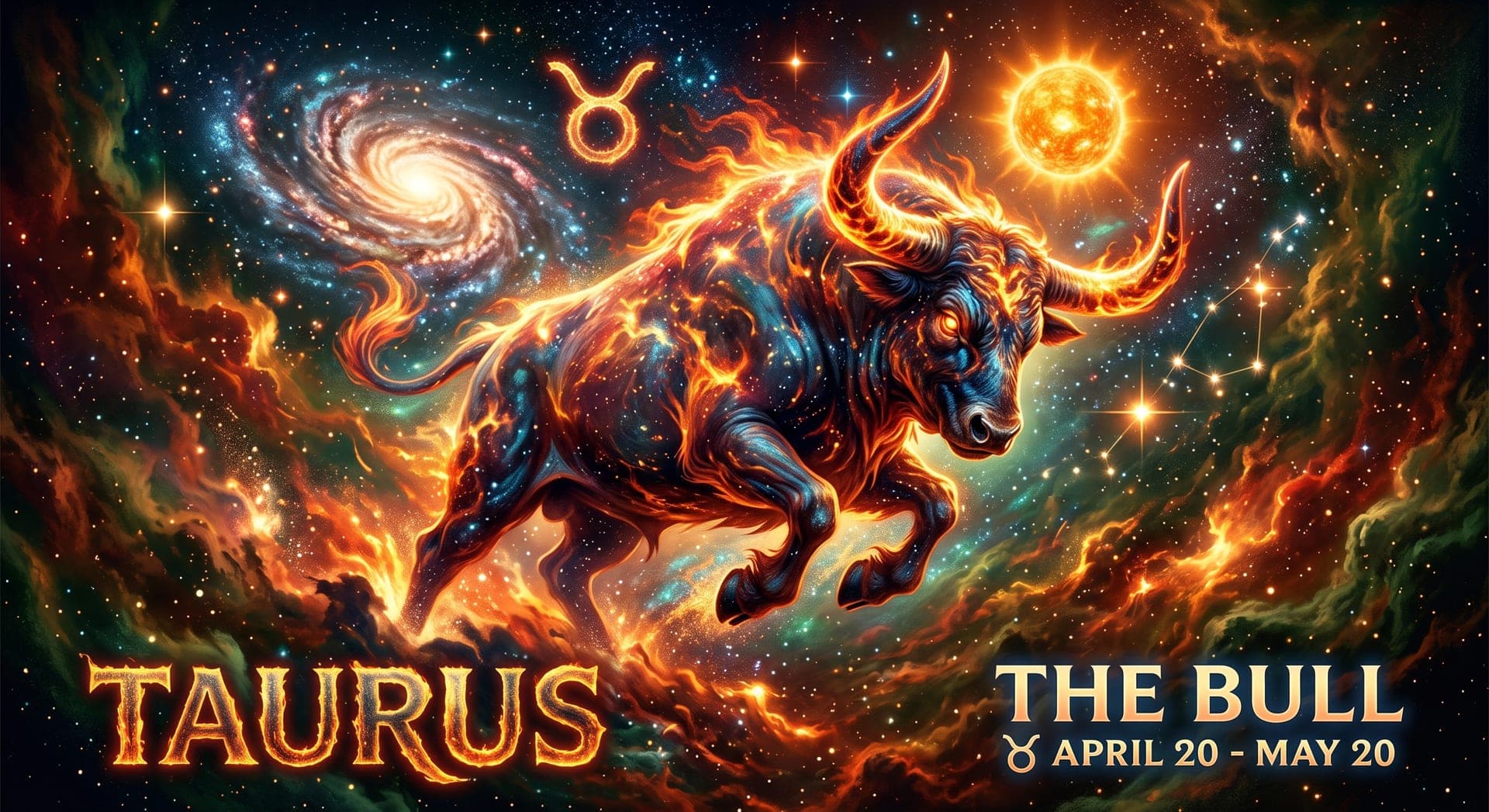
Taurus, the second sign of the zodiac, spans April 20 to May 20 and is symbolized by the bull, an animal prized for its strength, steadiness, and quiet determination. Ruled by Venus, the planet of love, beauty, and material comfort, Taurus is often described as one of the most sensual and pleasure-loving signs, drawn to good food, fine art, and physical comfort. As an Earth sign, Taurus is grounded, practical, and deeply connected to the physical world, valuing stability and tangible security over abstract ideas or sudden change. Its Fixed modality gives Taurus a well-earned reputation for stubbornness, since once a Taurus has settled on a plan or opinion, shifting it can be remarkably difficult. People born under this sign tend to be dependable, loyal, and patient, often the steady presence others rely on during difficult times. While their resistance to change can occasionally frustrate those around them, Taurus's persistence and work ethic make them exceptionally good at seeing long-term goals through to completion.
Personality Traits
Strengths
- Dependable and steady
- Patient and persistent
- Devoted to loved ones
- Appreciates beauty and comfort
- Financially sensible
Weaknesses
- Extremely stubborn
- Resistant to change
- Can be possessive
- Overindulgent
- Slow to forgive
Compatible Signs
Fun Facts
- Taurus's bull symbol connects to the Greek myth of Zeus transforming into a white bull to abduct Europa.
- Venus, Taurus' ruling planet, is the Roman goddess of love and beauty, reflecting the sign's love of comfort, art, and sensory pleasure.
- Taurus is considered by many astrologers to be the most stubborn sign of the zodiac, a trait often attributed to its Fixed modality and bull symbolism.
- Notable Taureans include Queen Elizabeth II, William Shakespeare, Adele, and David Beckham.
- The star cluster known as the Pleiades sits within the constellation Taurus and has been referenced in mythology and literature across many cultures.
Born on April 28
- 1442
Edward IV of England
King of England who won the throne during the Wars of the Roses, ruling 1461-1470 and 1471-1483
- 1630
Charles Cotton
English poet and writer born in Staffordshire, best known for translating Montaigne's essays and contributing to Izaak Walton's The Compleat Angler.
- 1758
James Monroe
Fifth President of the United States, author of the Monroe Doctrine
- 1854
Hertha Marks Ayrton
British engineer and mathematician born in Portsmouth, known for her research on electric arcs and sand ripples and her advocacy for women in science.
- 1888
Walter Tull
English footballer and army officer born in Folkestone, Kent, one of Britain's first Black professional footballers and the first Black combat officer in the British Army.
- 1906
Kurt Gödel
Mathematician and logician known for the incompleteness theorems
- 1908
Oskar Schindler
German businessman who saved Jewish lives during the Holocaust
- 1926
Harper Lee
American novelist known for "To Kill a Mockingbird"
- 1937
Jean Redpath
Scottish singer born in Edinburgh, celebrated for preserving and performing traditional Scottish folk songs.
- 1942
Mike Brearley
English cricketer and psychoanalyst born in Harrow, Middlesex, renowned as one of England's most tactically astute Test captains.
- 1948
Terry Pratchett
English author born in Beaconsfield, Buckinghamshire, creator of the bestselling Discworld series of fantasy novels.
- 1950
Jay Leno
American comedian, former host of "The Tonight Show"
- 1956
Jimmy Barnes
Rock singer born in Glasgow, Scotland, who emigrated to Australia as a child and became frontman of the band Cold Chisel.
- 1960
Elena Kagan
Associate Justice of the U.S. Supreme Court
- 1960
Ian Rankin
Scottish author born in Cardenden, Fife, best known for his Inspector Rebus series of crime novels set in Edinburgh.
- 1974
Penélope Cruz
Spanish actress and Academy Award winner
- 1980
Bradley Wiggins
British cyclist and the first British winner of the Tour de France (2012), also an eight-time Olympic medallist
On This Day in History
- 357
Roman Emperor Constantius II enters Rome for the first time, celebrating his victory over the usurper Magnentius.
Roman Emperor Constantius II entered Rome for the first time during his reign, staging an elaborate ceremonial procession to celebrate his recent victory over the usurper Magnentius, a display intended to reinforce his legitimacy despite having spent little time in the city that remained Rome's symbolic, if no longer primary political, capital.
- 1192
Conrad of Montferrat, the newly elected King of Jerusalem, is assassinated by the Hashshashin in Tyre.
Conrad of Montferrat, who had just been elected King of Jerusalem after skillfully defending the Crusader states, was assassinated in the streets of Tyre by members of the Hashshashin, a secretive sect, in a killing whose exact motive and sponsor remain debated by historians to this day.
- 1503
Spanish forces win the Battle of Cerignola, considered one of the first European battles decided by gunpowder small-arms fire.
Spanish forces under Gonzalo Fernández de Córdoba decisively defeated a French army at the Battle of Cerignola in southern Italy using coordinated infantry firearms and field fortifications, a victory widely regarded by military historians as one of the first major European battles decided primarily by gunpowder small-arms fire rather than traditional cavalry and pike formations.
- 1788
Maryland becomes the seventh state to ratify the U.S. Constitution.
Maryland became the seventh state to ratify the newly drafted United States Constitution, helping build the momentum needed to reach the nine-state threshold required for the document to take effect and replace the weaker Articles of Confederation as the nation's founding governing framework.
- 1789
Crew members aboard HMS Bounty mutiny against Captain William Bligh, setting him and loyal crew adrift in the Pacific.
Sailors aboard the British Royal Navy vessel HMS Bounty, angered by their captain's harsh discipline, mutinied and set Captain William Bligh and 18 loyal crew members adrift in a small open boat in the Pacific Ocean. Bligh's subsequent 47-day, 3,600-mile voyage to safety became a celebrated feat of navigation and survival.
- 1789
Sailors aboard the Royal Navy vessel HMS Bounty mutiny against Lieutenant William Bligh, setting him and 18 loyal crew adrift.
Led by acting lieutenant Fletcher Christian, the mutineers seized control of the ship in the South Pacific, reportedly driven by harsh discipline and reluctance to leave Tahiti. Bligh navigated an open boat over 3,600 nautical miles to safety in a remarkable feat of seamanship, while the mutineers eventually settled on remote Pitcairn Island, where descendants still live today.
- 1858
British colonial authorities hang 52 Indian rebels from a tamarind tree at Bawani Imli during the suppression of the Indian Rebellion of 1857.
The mass execution took place as British forces reasserted control over northern India following the widespread uprising against East India Company rule the previous year. Such reprisals left a lasting legacy of bitterness and became emblematic of the brutal suppression that followed the rebellion, which led Britain to dissolve the East India Company and place India under direct Crown rule.
- 1859
The clipper ship Pomona is wrecked off the coast of Ireland, killing 424 of the 448 people aboard.
The vessel, carrying emigrants bound from Liverpool to New York, ran aground on a sandbar near Wexford in a storm, and most of those aboard drowned attempting to reach shore in the ship's boats. It remains one of the deadliest maritime disasters in Irish waters, then part of the United Kingdom.
- 1869
Chinese and Irish immigrant laborers lay ten miles of track in a single day on the First Transcontinental Railroad, a feat that still stands as a record.
Chinese and Irish immigrant laborers working for competing railroad companies laid an extraordinary ten miles of track in a single day near Promontory, Utah, in a demonstration of speed and efficiency during the final push to complete the First Transcontinental Railroad, a record for single-day track-laying that has never been broken.
- 1910
Frenchman Louis Paulhan wins the first long-distance aeroplane race, flying from London to Manchester.
Sponsored by the Daily Mail, the £10,000 prize challenge pitted Paulhan against British aviator Claude Grahame-White in a dramatic overnight race across England, closely followed by the press. Paulhan's victory, completed with an overnight stop, demonstrated aviation's growing practicality and captivated the British public in the early years of powered flight.
- 1923
Wembley Stadium opens in London, initially known as the Empire Stadium.
Wembley Stadium, initially built as the Empire Stadium for the British Empire Exhibition, opened in London and hosted its first FA Cup Final, quickly becoming one of the most iconic sporting venues in the world and the traditional home of English football for over eight decades before its later reconstruction.
- 1923
Wembley Stadium, initially named the Empire Stadium, opens in London.
Built for the British Empire Exhibition, the stadium hosted its first major event on opening day, the FA Cup Final between Bolton Wanderers and West Ham United, drawing a crowd so large it spilled onto the pitch, an incident later known as the 'White Horse Final.' Wembley went on to become the home of English football and one of the world's most famous sporting venues.
- 1944
German E-boats attack US and British units during Exercise Tiger, a rehearsal for the D-Day landings off the English coast.
The night assault on landing craft training off Slapton Sands in Devon killed 946 American servicemen, more than would die on the same beach during the actual D-Day landings weeks later. The disaster was kept secret for decades to protect the secrecy of the coming invasion, and British authorities had evacuated the local area to allow the exercise to proceed.
- 1945
Benito Mussolini is executed by Italian partisans a day after his capture.
Italian partisans executed former dictator Benito Mussolini and his mistress, Clara Petacci, by firing squad a day after their capture, and their bodies were later publicly displayed hanging upside down in a Milan square, a grim symbolic end to over two decades of Fascist rule in Italy.
- 1947
Thor Heyerdahl and five companions set sail from Peru aboard the raft Kon-Tiki to test a theory of Polynesian migration.
Built from balsa wood using only materials and techniques available to pre-Columbian South Americans, the raft drifted across roughly 4,300 miles of the Pacific Ocean over 101 days before reaching the Tuamotu Islands. Heyerdahl's voyage aimed to demonstrate that ancient South Americans could have settled Polynesia, though later genetic evidence favored an Asian origin for Polynesian peoples.
- 1952
The Treaty of San Francisco comes into effect, formally restoring Japanese sovereignty after World War II.
Negotiated at a conference jointly organized by the United States and the United Kingdom, the treaty ended the Allied occupation of Japan and normalized relations between Japan and most of the wartime Allied powers. Britain, as one of Japan's principal wartime adversaries and a major Pacific power, played a central role in shaping the treaty's terms alongside Washington.
- 1967
Muhammad Ali refuses induction into the U.S. Army on religious grounds, resulting in the loss of his boxing title and license.
Heavyweight boxing champion Muhammad Ali refused induction into the U.S. Army on religious and moral grounds, citing his Muslim faith and opposition to the Vietnam War, a stand that cost him his boxing title, license, and passport for over three years but later cemented his legacy as a symbol of principled conscientious objection.
- 1967
Boxer Muhammad Ali refuses induction into the United States Army, citing his religious beliefs.
Ali, who had adopted the name after converting to the Nation of Islam, objected to fighting in the Vietnam War on grounds of conscience, famously stating he had no quarrel with the Viet Cong. He was immediately stripped of his boxing titles and license and later convicted of draft evasion, a conviction the US Supreme Court unanimously overturned in 1971.
- 1986
Elevated radiation levels detected in Sweden lead Soviet authorities to publicly acknowledge the Chernobyl nuclear disaster for the first time.
Radiation detection equipment at a Swedish nuclear power plant, located hundreds of miles from Chernobyl, registered abnormally high levels of airborne radioactivity, prompting Swedish officials to press Soviet authorities for an explanation and forcing the Soviet Union to publicly acknowledge the Chernobyl disaster for the first time, two days after it occurred.
- 1996
Martin Bryant opens fire at the Broad Arrow Cafe and other sites in Port Arthur, Tasmania, killing 35 people.
The gunman's rampage through the historic tourist site became Australia's deadliest mass shooting and prompted the government, within weeks, to enact sweeping gun-control legislation banning most semi-automatic and automatic firearms. The National Firearms Agreement that followed is widely credited with reducing subsequent gun violence in Australia and remains a frequently cited model in international debates.