What’s Observed on April 29
Born on April 29: Taurus ♉
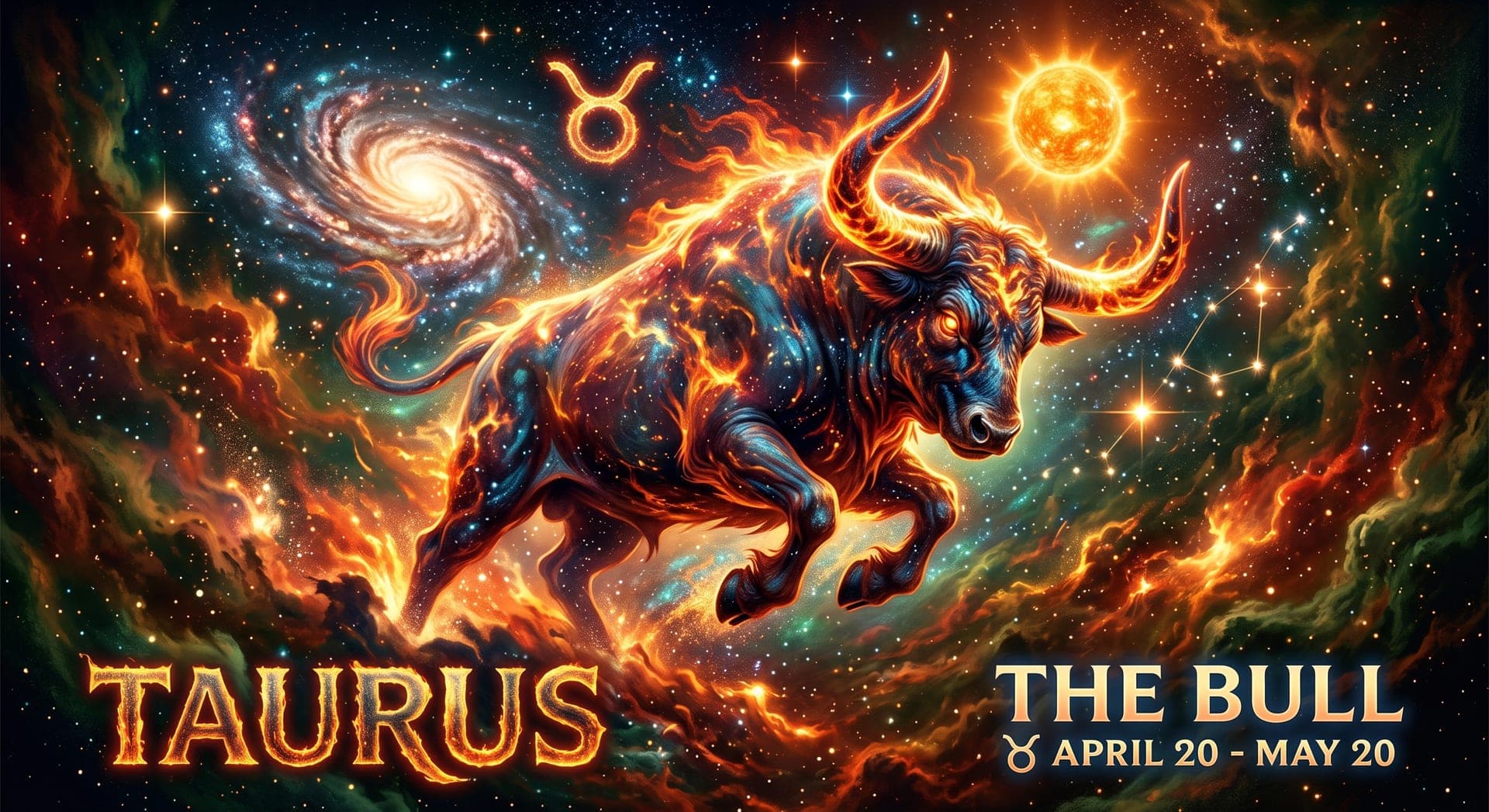
Taurus, the second sign of the zodiac, spans April 20 to May 20 and is symbolized by the bull, an animal prized for its strength, steadiness, and quiet determination. Ruled by Venus, the planet of love, beauty, and material comfort, Taurus is often described as one of the most sensual and pleasure-loving signs, drawn to good food, fine art, and physical comfort. As an Earth sign, Taurus is grounded, practical, and deeply connected to the physical world, valuing stability and tangible security over abstract ideas or sudden change. Its Fixed modality gives Taurus a well-earned reputation for stubbornness, since once a Taurus has settled on a plan or opinion, shifting it can be remarkably difficult. People born under this sign tend to be dependable, loyal, and patient, often the steady presence others rely on during difficult times. While their resistance to change can occasionally frustrate those around them, Taurus's persistence and work ethic make them exceptionally good at seeing long-term goals through to completion.
Personality Traits
Strengths
- Dependable and steady
- Patient and persistent
- Devoted to loved ones
- Appreciates beauty and comfort
- Financially sensible
Weaknesses
- Extremely stubborn
- Resistant to change
- Can be possessive
- Overindulgent
- Slow to forgive
Compatible Signs
Fun Facts
- Taurus's bull symbol connects to the Greek myth of Zeus transforming into a white bull to abduct Europa.
- Venus, Taurus' ruling planet, is the Roman goddess of love and beauty, reflecting the sign's love of comfort, art, and sensory pleasure.
- Taurus is considered by many astrologers to be the most stubborn sign of the zodiac, a trait often attributed to its Fixed modality and bull symbolism.
- Notable Taureans include Queen Elizabeth II, William Shakespeare, Adele, and David Beckham.
- The star cluster known as the Pleiades sits within the constellation Taurus and has been referenced in mythology and literature across many cultures.
Born on April 29
- 1667
John Arbuthnot
Scottish physician and satirist born in Inverbervie, Kincardineshire, a founding member of the Scriblerus Club and creator of the character John Bull.
- 1783
David Cox
English landscape painter born in Birmingham, a leading figure of the British watercolor tradition.
- 1854
Henri Poincaré
French mathematician and physicist
- 1863
William Randolph Hearst
American publisher who founded the Hearst media empire
- 1879
Thomas Beecham
English conductor born in St Helens, Lancashire, founder of the London Philharmonic and Royal Philharmonic orchestras.
- 1895
Malcolm Sargent
English conductor born in Ashford, Kent, long associated with the BBC Proms and the BBC Symphony Orchestra.
- 1899
Duke Ellington
American jazz pianist, composer, and bandleader
- 1901
Hirohito
Emperor of Japan during World War II and the postwar era
- 1928
Heinz Wolff
German-born British scientist and broadcaster best known for presenting the BBC series "The Great Egg Race"
- 1931
Lonnie Donegan
Scottish-English musician born in Bridgeton, Glasgow, known as the 'King of Skiffle' for popularizing the genre in 1950s Britain.
- 1931
Frank Auerbach
German-born British painter celebrated for his intense portraits and urban landscapes of Camden Town, London
- 1944
Francis Lee
English footballer born in Westhoughton, a prolific striker for Manchester City and England in the 1960s and 1970s.
- 1945
Hugh Hopper
English bass guitarist born in Whitstable, Kent, a founding member of the influential Canterbury scene band Soft Machine.
- 1953
Bill Drummond
South African-born Scottish musician and artist best known as co-founder of the avant-garde pop group the KLF
- 1954
Jerry Seinfeld
American comedian known for "Seinfeld"
- 1957
Daniel Day-Lewis
English actor born in London, a three-time Academy Award winner for Best Actor known for roles in My Left Foot, There Will Be Blood, and Lincoln.
- 1970
Andre Agassi
American professional tennis champion

On This Day in History
- 1429
Joan of Arc arrives to relieve the besieged city of Orléans, a turning point in the Hundred Years' War.
French peasant girl Joan of Arc, claiming divine guidance, arrived with a relief force to break the prolonged English siege of Orléans during the Hundred Years' War, a decisive turning point that revitalized French military morale and began a string of victories that helped secure the eventual coronation of Charles VII.
- 1760
French forces begin a siege of Quebec, aiming to retake the city from British control.
Following Britain's capture of Quebec the previous year, French troops under the Chevalier de Lévis won an initial battlefield victory and besieged the British garrison inside the city's walls. The siege was lifted weeks later when British reinforcements arrived by sea before French relief ships could reach the city, securing Britain's hold on Quebec and, ultimately, Canada.
- 1770
Captain James Cook and his crew arrive at Botany Bay on the eastern coast of Australia.
Captain James Cook and the crew of HMS Endeavour made their first landing on the eastern coast of Australia at Botany Bay, encountering and cataloging the region's distinctive flora and fauna alongside initial, often fraught, contact with the local Aboriginal Gweagal people, laying groundwork for Britain's later colonization of the continent.
- 1770
British explorer Captain James Cook arrives at Botany Bay on the eastern coast of Australia.
Commanding HM Bark Endeavour, Cook charted the previously unmapped eastern coastline and made first recorded contact between local Aboriginal people and British explorers at the site. His landing and subsequent claim of the coastline for Britain later paved the way for the establishment of the first British penal colony at nearby Sydney Cove in 1788.
- 1781
British and French fleets clash in the Battle of Fort Royal off the coast of Martinique.
Fought during the American Revolutionary War, the naval engagement pitted a British fleet under Samuel Hood against a larger French force under the Comte de Grasse escorting a valuable convoy to the French Caribbean colony. Though largely inconclusive, it was part of a wider contest for naval supremacy in the West Indies that shaped the course of the war.
- 1862
Union naval forces under David Farragut capture New Orleans, a major Confederate port city.
Union naval forces under Admiral David Farragut successfully forced their way past Confederate coastal defenses and captured New Orleans, the Confederacy's largest city and a vital port, dealing a significant strategic and economic blow to the Southern war effort early in the American Civil War.
- 1910
The Parliament of the United Kingdom passes the 'People's Budget,' introducing new taxes on the wealthy to fund social welfare programs.
Championed by Chancellor of the Exchequer David Lloyd George, the budget proposed unprecedented land and income taxes to pay for old-age pensions and naval expansion, provoking fierce resistance from the Conservative-dominated House of Lords. The Lords' initial rejection triggered a constitutional crisis that ultimately led to the Parliament Act of 1911, curbing the upper chamber's power over money bills.
- 1916
The Easter Rising in Dublin ends after six days as Irish rebel leaders surrender to British forces.
After six days of intense urban fighting against British forces, the leaders of the Easter Rising in Dublin, recognizing the hopelessness of their military position and wishing to spare further civilian casualties, formally surrendered, ending the armed uprising, though the subsequent execution of its leaders significantly boosted support for Irish independence.
- 1916
The British 6th (Poona) Indian Division surrenders to Ottoman forces at the end of the Siege of Kut.
After a nearly five-month siege in Mesopotamia (modern Iraq), roughly 13,000 starving British and Indian troops under General Charles Townshend surrendered, one of the most humiliating defeats suffered by British arms during the First World War. Many of the prisoners subsequently died in brutal captivity, and the disaster prompted a major reorganization of British military leadership in the Middle East.
- 1916
Irish rebel leaders surrender to British forces in Dublin, ending the six-day Easter Rising.
Facing overwhelming British reinforcements and the destruction of much of central Dublin by artillery fire, rebel commander Patrick Pearse ordered an unconditional surrender to prevent further civilian casualties. The subsequent British execution of the rising's leaders transformed public opinion in Ireland and accelerated the movement toward Irish independence.
- 1945
U.S. troops liberate the Dachau concentration camp in Germany.
United States Army troops liberated the Dachau concentration camp near Munich, discovering thousands of surviving prisoners in horrific conditions alongside overwhelming evidence of the systematic brutality inflicted at one of the Nazi regime's earliest and longest-operating camps, established originally to hold political prisoners in 1933.
- 1945
Adolf Hitler marries Eva Braun in his Berlin bunker and names Karl Dönitz as his successor, the day before their joint suicide.
With Soviet forces closing in on his besieged Berlin bunker, Adolf Hitler married his longtime companion Eva Braun in a brief ceremony and dictated his final political testament, naming Admiral Karl Dönitz as his successor, hours before the couple's joint suicide the following day.
- 1945
German forces in Italy sign the Surrender of Caserta, agreeing to end hostilities against Allied troops.
Negotiated in secret and signed at Allied Forces Headquarters in Caserta, Italy, under British Field Marshal Harold Alexander's command, the agreement ended nearly two years of brutal fighting in the Italian campaign. It took effect on 2 May, several days before Germany's overall surrender, making it one of the first formal capitulations of German forces in Europe.
- 1945
British aircraft begin dropping food supplies over German-occupied areas of the Netherlands in Operation Manna.
With much of the Dutch population facing starvation during the 'Hunger Winter,' RAF Bomber Command negotiated an informal truce with German occupiers to fly low-level airdrops of food into besieged areas, soon joined by the United States Army Air Forces. The operation delivered thousands of tons of supplies in the war's final days and remains fondly remembered in the Netherlands as an act of mercy.
- 1975
The United States launches Operation Frequent Wind, evacuating remaining American personnel and at-risk Vietnamese civilians from Saigon as the city falls.
As North Vietnamese forces closed in on Saigon, the United States launched Operation Frequent Wind, a massive helicopter evacuation of American personnel and thousands of at-risk South Vietnamese civilians from the U.S. embassy and other sites, marking the chaotic final chapter of American involvement in the Vietnam War.
- 1991
A powerful cyclone strikes Bangladesh with winds of roughly 155 miles per hour, killing well over one hundred thousand people.
An extremely powerful tropical cyclone made landfall in Bangladesh with sustained winds of roughly 155 miles per hour, generating a massive storm surge that killed well over one hundred thousand people, mostly in low-lying coastal areas, in one of the deadliest natural disasters of the 20th century.
- 1992
Riots erupt in Los Angeles after a jury acquits police officers filmed beating motorist Rodney King.
Riots and widespread civil unrest erupted across Los Angeles after a jury acquitted four police officers who had been videotaped repeatedly striking motorist Rodney King, resulting in days of violence, arson, and looting that killed over 60 people and caused roughly a billion dollars in property damage.
- 1992
Riots erupt in Los Angeles following the acquittal of police officers charged in the beating of Rodney King.
The verdict, which cleared four white officers despite a widely broadcast video of King's beating during a 1991 arrest, ignited days of rioting, looting, and arson across the city that killed more than 60 people and caused roughly a billion dollars in damage. The unrest prompted a national reckoning over policing, race, and inequality in American cities.
- 2011
Prince William and Catherine Middleton marry at Westminster Abbey in London before a global television audience.
Prince William, second in line to the British throne, married Catherine Middleton at Westminster Abbey in a lavish ceremony watched by a global television audience estimated in the hundreds of millions, a moment of significant celebration and renewed public interest in the British royal family.
- 2011
Prince William marries Catherine Middleton at Westminster Abbey in London.
The wedding of the second in line to the British throne was watched by an estimated global television audience in the hundreds of millions and drew huge crowds to central London. The couple, now the Prince and Princess of Wales, became one of the most prominent public faces of the modern British monarchy.