What’s Observed on April 23
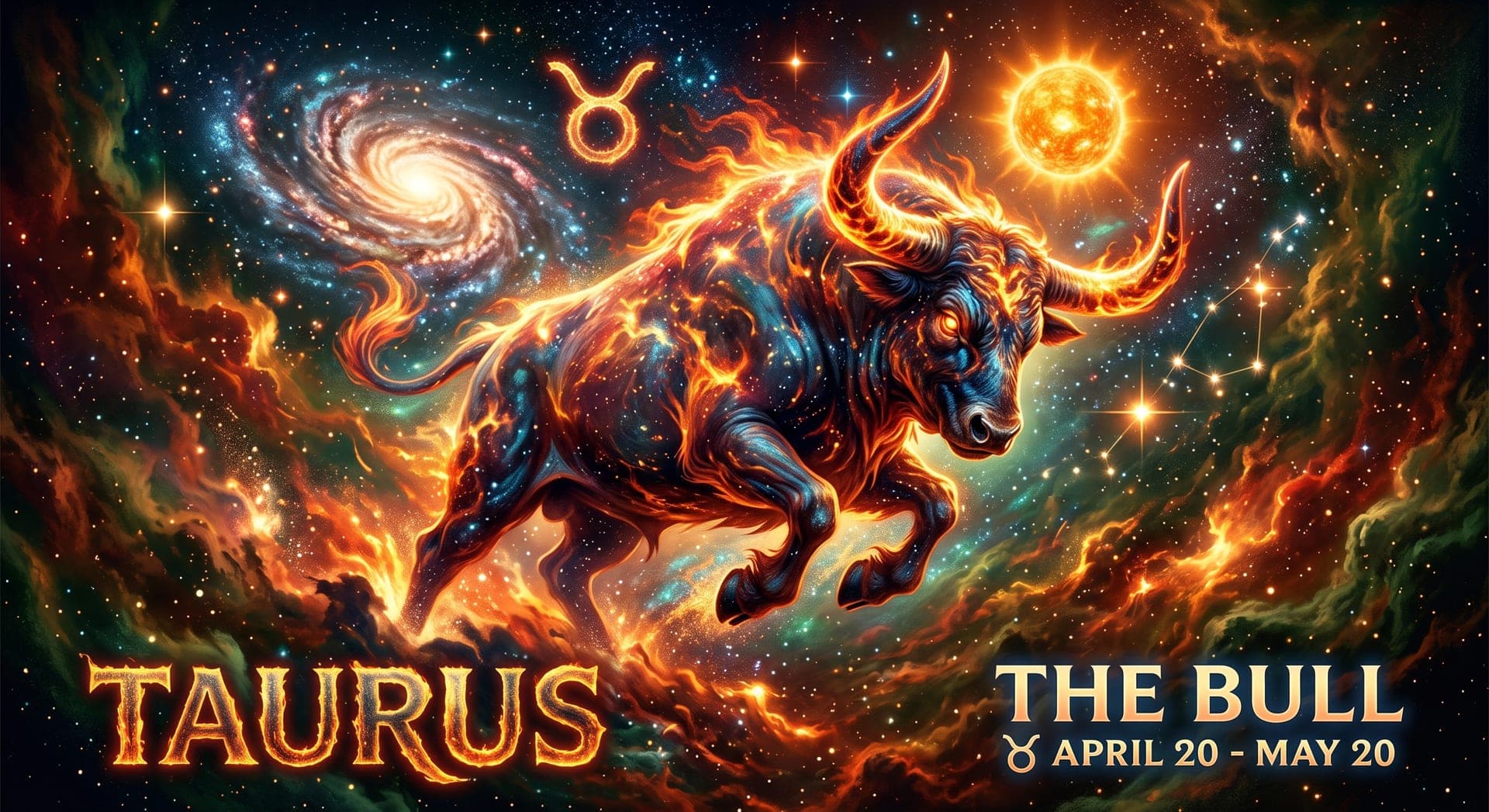
Born on April 23: Taurus ♉
Taurus, the second sign of the zodiac, spans April 20 to May 20 and is symbolized by the bull, an animal prized for its strength, steadiness, and quiet determination. Ruled by Venus, the planet of love, beauty, and material comfort, Taurus is often described as one of the most sensual and pleasure-loving signs, drawn to good food, fine art, and physical comfort. As an Earth sign, Taurus is grounded, practical, and deeply connected to the physical world, valuing stability and tangible security over abstract ideas or sudden change. Its Fixed modality gives Taurus a well-earned reputation for stubbornness, since once a Taurus has settled on a plan or opinion, shifting it can be remarkably difficult. People born under this sign tend to be dependable, loyal, and patient, often the steady presence others rely on during difficult times. While their resistance to change can occasionally frustrate those around them, Taurus's persistence and work ethic make them exceptionally good at seeing long-term goals through to completion.
Personality Traits
Strengths
- Dependable and steady
- Patient and persistent
- Devoted to loved ones
- Appreciates beauty and comfort
- Financially sensible
Weaknesses
- Extremely stubborn
- Resistant to change
- Can be possessive
- Overindulgent
- Slow to forgive
Compatible Signs
Fun Facts
- Taurus's bull symbol connects to the Greek myth of Zeus transforming into a white bull to abduct Europa.
- Venus, Taurus' ruling planet, is the Roman goddess of love and beauty, reflecting the sign's love of comfort, art, and sensory pleasure.
- Taurus is considered by many astrologers to be the most stubborn sign of the zodiac, a trait often attributed to its Fixed modality and bull symbolism.
- Notable Taureans include Queen Elizabeth II, William Shakespeare, Adele, and David Beckham.
- The star cluster known as the Pleiades sits within the constellation Taurus and has been referenced in mythology and literature across many cultures.
Born on April 23
- 1564
William Shakespeare
English playwright and poet born in Stratford-upon-Avon, widely regarded as the greatest writer in the English language.
- 1858
Max Planck
German physicist who originated quantum theory
- 1861
Edmund Allenby
British field marshal born in Nottinghamshire, who led Allied forces to victory in the Sinai and Palestine campaign of World War I.
- 1897
Lester B. Pearson
Canadian Prime Minister and Nobel Peace Prize laureate
- 1928
Shirley Temple
American child actress and later U.S. diplomat
- 1936
Roy Orbison
American singer-songwriter known for "Oh, Pretty Woman"
- 1947
Bernadette Devlin McAliskey
Civil rights leader born in Cookstown, County Tyrone, Northern Ireland, who became the youngest woman ever elected to the UK Parliament.
- 1957
Neville Brody
English graphic designer born in London, celebrated for his influential typography and art direction for The Face magazine.
- 1962
John Hannah
Scottish actor born in East Kilbride, known for roles in Four Weddings and a Funeral and the Sherlock Holmes film series.
- 1977
John Cena
American professional wrestler and actor
- 1977
John Oliver
English comedian and television host born in Birmingham, known for hosting the satirical news program Last Week Tonight.
- 1990
Dev Patel
English actor born in Harrow, London, known for Slumdog Millionaire and Lion, and for directing Monkey Man.
- 1995
Gigi Hadid
American fashion model
- 2018
Prince Louis of Wales
British royal born in London, the youngest child of Prince William and Catherine, Princess of Wales.

On This Day in History
- 1014
High King Brian Boru's forces defeat Viking invaders at the Battle of Clontarf in Ireland, though Boru is killed during the fighting.
High King Brian Boru's forces defeated an alliance of Viking and rival Irish troops at the Battle of Clontarf near Dublin, though Boru himself was killed in his tent by fleeing Viking soldiers shortly after the battle's conclusion. The victory significantly curtailed Viking political power in Ireland, even as Boru's death threw the kingdom back into internal fragmentation.
- 1016
Edmund Ironside becomes King of England on the death of his father, Æthelred the Unready.
Edmund earned his nickname for his fierce resistance against invading Danish forces led by Cnut. His reign lasted only months; after further battles the two rivals agreed to divide England between them, with Edmund ruling Wessex. He died later that year, leaving Cnut to become king of a unified England.
- 1348
King Edward III of England founds the Order of the Garter, the country's oldest and most prestigious order of chivalry.
King Edward III of England founded the Order of the Garter, England's oldest and most prestigious order of chivalry, reportedly inspired by a chivalric incident involving a lady's garter at a royal ball. The order, still active today with the British monarch as its head, has honored the country's most distinguished citizens and allied foreign monarchs for nearly seven centuries.
- 1348
King Edward III founds the Order of the Garter, England's most prestigious order of chivalry, on St George's Day.
Legend holds the order originated when a lady's garter slipped off at a royal court dance and Edward, retrieving it, declared 'honi soit qui mal y pense' (shame on him who thinks evil of it), a motto the order still bears. Limited to the monarch and 24 knights, it remains the oldest and most senior order of chivalry in Britain.
- 1516
Bavaria's beer purity law, the Reinheitsgebot, takes effect, regulating the ingredients permitted in beer production.
Bavarian rulers issued the Reinheitsgebot, a beer purity law restricting permissible ingredients in beer production to water, barley, and hops, partly to protect grain supplies needed for bread and partly to standardize quality. Often cited as one of the oldest food regulation laws still referenced today, it profoundly shaped German brewing traditions.
- 1635
Boston Latin School is founded, becoming the first public school established in what would become the United States.
Puritan colonists in Massachusetts founded Boston Latin School, the first public school established in what would become the United States, providing a classical education modeled on English grammar schools. The school has continued operating for centuries and counts numerous prominent Americans, including several signers of the Declaration of Independence, among its alumni.
- 1655
An English expedition's siege of Santo Domingo fails after seven days during the Anglo-Spanish War.
Sent by Oliver Cromwell as part of his 'Western Design' to seize Spanish territory in the Caribbean, the poorly organized invasion force under Robert Venables suffered heavy losses from disease and Spanish defenders and was repelled from Santo Domingo. The expedition salvaged some success weeks later by capturing the lightly defended island of Jamaica instead.
- 1661
Charles II is crowned King of England at Westminster Abbey following the restoration of the monarchy.
Charles II was crowned King of England, Scotland, and Ireland at Westminster Abbey following the restoration of the monarchy after the collapse of Oliver Cromwell's republican Commonwealth government. His coronation marked the formal end of England's brief experiment with republican rule and the return of the Stuart dynasty to the throne.
- 1661
Charles II is crowned King of England, Scotland, and Ireland at Westminster Abbey.
The coronation came roughly a year after Charles's restoration to the throne following the collapse of the Commonwealth that had followed his father's execution. Held with elaborate ceremony intended to reaffirm royal authority after the upheaval of civil war, it marked a symbolic return to monarchy after eleven years of Puritan Commonwealth government.
- 1815
The Second Serbian Uprising begins against Ottoman rule, eventually leading to greater Serbian autonomy.
Serbian rebels launched the Second Serbian Uprising against Ottoman rule, achieving greater success than an earlier failed uprising and eventually securing an autonomous Serbian principality under Ottoman suzerainty. The uprising marked an important step in Serbia's long path toward full independence, achieved later in the 19th century.
- 1918
The British Royal Navy launches a daring raid on the German-held Belgian port of Zeebrugge.
Aiming to block the canal linking Bruges to the sea and disrupt German U-boat and destroyer operations, British sailors and Royal Marines attempted to sink obsolete cruisers in the harbor entrance under heavy fire. Though the blockade proved only partially effective, the operation's boldness made it a celebrated feat of arms, and eight participants were awarded the Victoria Cross.
- 1920
Turkey's Grand National Assembly convenes in Ankara, challenging the authority of the Ottoman Sultan's government.
Turkish nationalist leader Mustafa Kemal Atatürk convened the Grand National Assembly in Ankara, establishing an alternative government that directly challenged the authority of the Ottoman Sultan and set Turkey on the path toward becoming a secular republic. The assembly's formation is regarded as a foundational moment in modern Turkish statehood.
- 1927
Cardiff City defeats Arsenal 1-0 to win the FA Cup Final.
Played at Wembley Stadium, the match remains the only FA Cup final won by a club based outside England, a distinction Cardiff still holds a century later. The decisive goal came from a mishit backpass by Arsenal goalkeeper Dan Lewis, and the Welsh side's victory prompted the popular saying that the cup had 'left England' for the only time in its history.
- 1940
A fire at the Rhythm Night Club in Natchez, Mississippi, kills 198 people, one of the deadliest nightclub fires in American history.
A fire broke out at the crowded Rhythm Night Club in Natchez, Mississippi, during a dance featuring a touring big band, killing 198 people, most of them Black residents, after flammable decorations ignited and blocked exits trapped attendees inside. The disaster remains one of the deadliest nightclub fires in American history.
- 1942
German bombers strike the historic English cities of Exeter, Bath, and York in the Baedeker Blitz.
Launched in retaliation for a British raid on Lübeck, the campaign deliberately targeted culturally significant but militarily minor cities, reportedly selected from the Baedeker tourist guidebooks. Exeter, Bath, and York suffered heavy damage to historic buildings and civilian casualties over these nights, part of a broader series of raids on English heritage cities that spring.
- 1967
Soviet cosmonaut Vladimir Komarov is launched into orbit aboard Soyuz 1, humanity's first single-pilot Soyuz flight.
The mission was plagued by technical problems from the outset, including a failure to deploy one of the spacecraft's solar panels. During re-entry the next day, Soyuz 1's parachute system failed, and Komarov was killed on impact, making him the first human to die during a spaceflight.
- 1979
New Zealand-born teacher Blair Peach is fatally injured during an Anti-Nazi League protest in London.
Peach, an anti-racism campaigner living in Britain, was struck on the head, apparently by a police officer, during clashes with the Metropolitan Police's Special Patrol Group at a demonstration against a National Front meeting in Southall. He died the next day; despite an internal police report implicating officers, no one was ever charged, and the case remains a landmark controversy in British policing.
- 1985
Coca-Cola introduces a reformulated "New Coke," prompting a fierce consumer backlash that leads the company to reintroduce the original formula within months.
Facing declining market share against Pepsi, the Coca-Cola Company introduced a reformulated "New Coke" recipe intended to taste sweeter, but the change provoked an intense and unexpected backlash from loyal customers. Within three months, the company reintroduced the original formula as "Coca-Cola Classic," a reversal widely studied as a cautionary business case.
- 2005
The first YouTube video, titled "Me at the zoo," is uploaded by company co-founder Jawed Karim.
Company co-founder Jawed Karim uploaded "Me at the zoo," a nineteen-second video filmed at the San Diego Zoo, becoming the first video ever posted to the newly launched platform YouTube. The modest clip preceded YouTube's transformation into one of the most influential video-sharing and media platforms in the world.
- 2005
Jawed Karim uploads 'Me at the zoo,' the first video posted to YouTube.
The 19-second clip, filmed by a friend at the San Diego Zoo, showed YouTube co-founder Jawed Karim standing before the elephant enclosure remarking on their long trunks. The unassuming video marked the debut of a platform that would go on to transform how video content is shared, watched, and monetized worldwide.