What’s Observed on April 22
Born on April 22: Taurus ♉
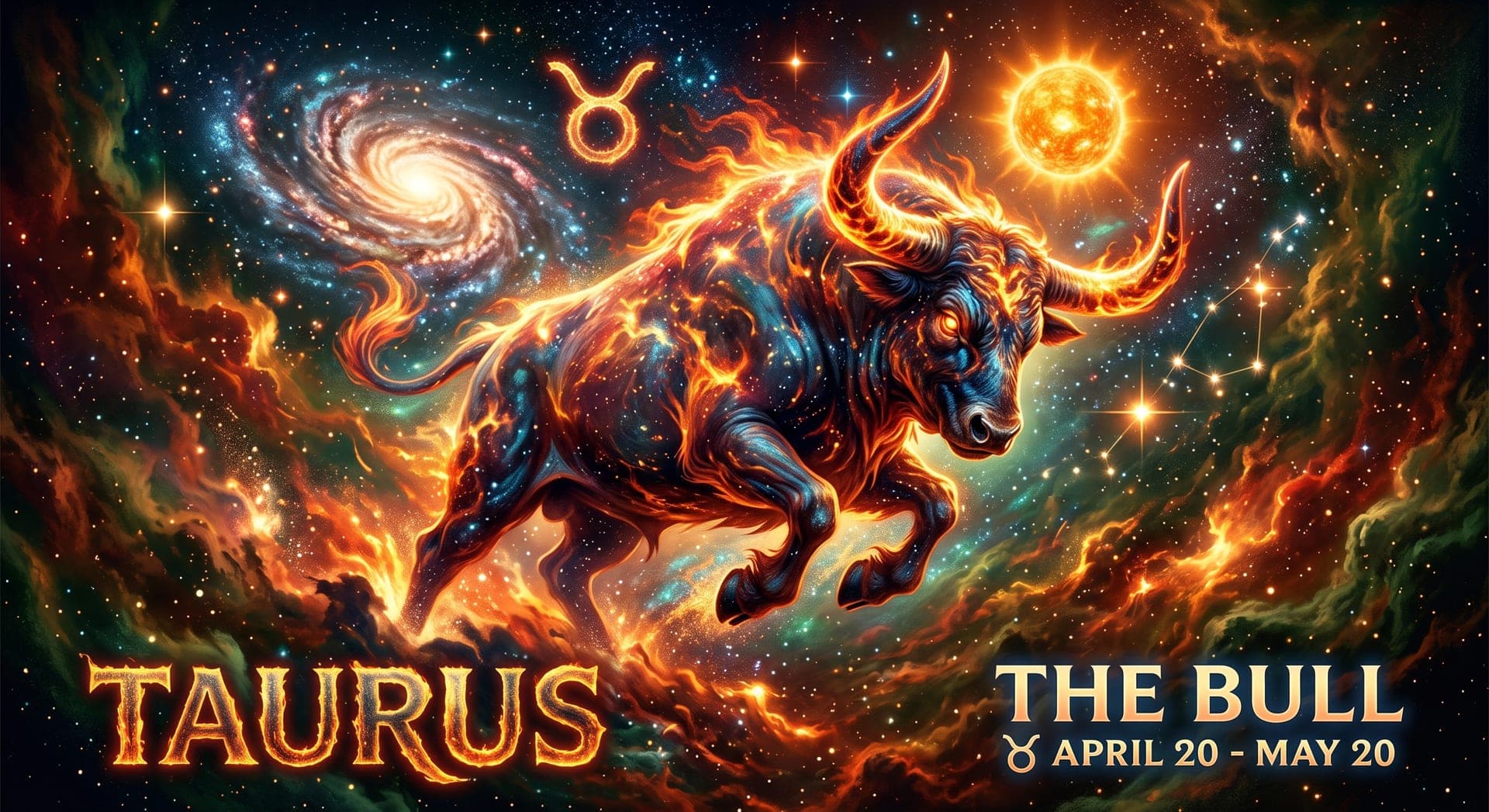
Taurus, the second sign of the zodiac, spans April 20 to May 20 and is symbolized by the bull, an animal prized for its strength, steadiness, and quiet determination. Ruled by Venus, the planet of love, beauty, and material comfort, Taurus is often described as one of the most sensual and pleasure-loving signs, drawn to good food, fine art, and physical comfort. As an Earth sign, Taurus is grounded, practical, and deeply connected to the physical world, valuing stability and tangible security over abstract ideas or sudden change. Its Fixed modality gives Taurus a well-earned reputation for stubbornness, since once a Taurus has settled on a plan or opinion, shifting it can be remarkably difficult. People born under this sign tend to be dependable, loyal, and patient, often the steady presence others rely on during difficult times. While their resistance to change can occasionally frustrate those around them, Taurus's persistence and work ethic make them exceptionally good at seeing long-term goals through to completion.
Personality Traits
Strengths
- Dependable and steady
- Patient and persistent
- Devoted to loved ones
- Appreciates beauty and comfort
- Financially sensible
Weaknesses
- Extremely stubborn
- Resistant to change
- Can be possessive
- Overindulgent
- Slow to forgive
Compatible Signs
Fun Facts
- Taurus's bull symbol connects to the Greek myth of Zeus transforming into a white bull to abduct Europa.
- Venus, Taurus' ruling planet, is the Roman goddess of love and beauty, reflecting the sign's love of comfort, art, and sensory pleasure.
- Taurus is considered by many astrologers to be the most stubborn sign of the zodiac, a trait often attributed to its Fixed modality and bull symbolism.
- Notable Taureans include Queen Elizabeth II, William Shakespeare, Adele, and David Beckham.
- The star cluster known as the Pleiades sits within the constellation Taurus and has been referenced in mythology and literature across many cultures.
Born on April 22
- 1830
Emily Davies
English suffragist and educator born in Southampton, co-founder of Girton College, Cambridge, one of the first residential colleges for women.
- 1858
Ethel Smyth
English composer born in Sidcup, Kent, known for operas and orchestral works as well as her activism in the suffrage movement.
- 1870
Vladimir Lenin
Russian revolutionary who led the Bolshevik Revolution
- 1891
Harold Jeffreys
English mathematician and geophysicist born in Fatfield, County Durham, whose work on seismology helped establish the structure of the Earth's interior.
- 1904
J. Robert Oppenheimer
American physicist known as the "father of the atomic bomb"
- 1906
Eric Fenby
English composer born in Scarborough, Yorkshire, best known as amanuensis to the blind and paralyzed composer Frederick Delius.
- 1912
Kathleen Ferrier
English contralto born near Preston, Lancashire, one of the most celebrated classical singers of the 20th century.
- 1916
Yehudi Menuhin
American-born violinist and conductor
- 1922
Charles Mingus
American jazz bassist, composer, and bandleader
- 1926
James Stirling
Scottish architect born in Glasgow, winner of the Pritzker Architecture Prize and designer of the Staatsgalerie Stuttgart.
- 1929
Michael Atiyah
Mathematician born in Hampstead, London, awarded both the Fields Medal and the Abel Prize for his work on the Atiyah-Singer index theorem.
- 1937
Jack Nicholson
American actor known for "One Flew Over the Cuckoo's Nest"
- 1938
Issey Miyake
Japanese fashion designer
- 1950
Peter Frampton
English singer-songwriter and guitarist born in Beckenham, Kent, known for the multi-platinum live album Frampton Comes Alive!
On This Day in History
- 960
Basil II is crowned co-Emperor of the Byzantine Empire.
Crowned as a young child alongside his father, Emperor Romanos II, Basil II would not gain full personal control of the empire until years of regency and power struggles had passed. He eventually became one of Byzantium's most formidable rulers, expanding its borders dramatically and earning the epithet 'Bulgar-Slayer' for his conquest of Bulgaria.
- 1073
Pope Gregory VII is elected, later becoming a central figure in the Investiture Controversy with the Holy Roman Empire.
German-born cardinal Gregory VII was elected pope by popular acclamation following the death of his predecessor, going on to become a central figure in the Investiture Controversy, a decades-long power struggle with Holy Roman Emperor Henry IV over whether secular rulers or the papacy held authority to appoint bishops.
- 1500
Portuguese navigator Pedro Álvares Cabral becomes the first European to reach Brazil.
Portuguese navigator Pedro Álvares Cabral, commanding a fleet bound for India, made landfall on the coast of present-day Brazil, becoming the first European to document the territory, which Portugal subsequently claimed and colonized. Some historians debate whether the landing was accidental, caused by ocean currents, or a deliberate exploratory detour.
- 1500
Portuguese navigator Pedro Álvares Cabral lands on the coast of Brazil.
Commanding a fleet bound for India via the route pioneered by Vasco da Gama, Cabral was blown off course across the Atlantic and sighted land near present-day Porto Seguro. He claimed the territory for Portugal, and the encounter marked the beginning of centuries of Portuguese colonization that shaped Brazil's language, culture, and borders.
- 1519
Hernán Cortés establishes the settlement of Veracruz on the Mexican coast, his base for the conquest of the Aztec Empire.
Spanish conquistador Hernán Cortés established the settlement of Veracruz on the Gulf coast of Mexico, using it as a strategic base of operations for his subsequent inland campaign against the Aztec Empire. The founding of Veracruz also symbolically allowed Cortés to declare independence from the authority of the Cuban governor who had commissioned his expedition.
- 1529
The Treaty of Zaragoza divides the eastern hemisphere between Spain and Portugal.
Signed in the Aragonese city of Zaragoza, the treaty resolved a dispute over the lucrative Spice Islands by fixing an anti-meridian roughly 297 leagues east of the Moluccas, complementing the earlier Treaty of Tordesillas. Spain relinquished its claims to the islands in exchange for a payment of 350,000 ducats from Portugal.
- 1809
Napoleon's forces defeat Austria at the Battle of Eckmühl during the War of the Fifth Coalition.
Napoleon's forces decisively defeated the Austrian army at the Battle of Eckmühl in Bavaria during the War of the Fifth Coalition, splitting Austrian forces and forcing a retreat that allowed Napoleon to advance toward Vienna. The victory reinforced Napoleon's reputation as Europe's preeminent military commander at the height of his power.
- 1876
The first National League baseball game is played in Philadelphia, marking the start of the oldest surviving major professional sports league in the U.S.
The Boston Red Stockings and Philadelphia Athletics played the first official game of baseball's newly formed National League in Philadelphia, establishing what remains the oldest continuously operating professional sports league in the United States and a foundational institution in the development of American baseball.
- 1889
Tens of thousands of settlers rush to claim land in the Land Run of 1889, instantly creating cities like Oklahoma City and Guthrie.
Tens of thousands of settlers lined up at the border of unassigned lands in Indian Territory and rushed in at the sound of a signal to stake claims, instantly transforming stretches of open prairie into settlements including what became Oklahoma City and Guthrie in what became known as the Land Run of 1889.
- 1889
Thousands of settlers rush to claim land in the Land Rush of 1889.
At noon, a cannon shot signaled the start of a race by an estimated 50,000 people to stake claims on roughly two million acres of former Indian Territory in present-day Oklahoma. Some participants entered early and hid to claim the best plots before the official start, giving Oklahoma its nickname 'the Sooner State.'
- 1915
German forces release chlorine gas at the Second Battle of Ypres, the first large-scale use of chemical weapons in warfare.
German forces released chlorine gas against French and colonial troops at the Second Battle of Ypres, the first large-scale use of chemical weapons in modern warfare, creating panic and mass casualties among unprotected soldiers. The attack marked a grim escalation in the brutality of World War I and prompted the rapid development of gas masks and countermeasures.
- 1930
The United Kingdom, Japan, and the United States sign the London Naval Treaty limiting naval armaments.
Negotiated in London by the world's leading naval powers, the treaty extended the tonnage limits of the 1922 Washington Naval Treaty to cruisers, destroyers, and submarines. Britain, keen to curb a costly naval arms race while preserving its fleet's global reach, played a leading role in the talks, though the restrictions would later strain relations as rearmament resumed in the 1930s.
- 1969
British yachtsman Robin Knox-Johnston wins the Sunday Times Golden Globe Race, completing the first solo non-stop circumnavigation.
Sailing his 32-foot ketch Suhaili, Knox-Johnston departed Falmouth in June 1968 and spent 312 days alone at sea, battling storms, damaged equipment, and near-total radio silence before returning to Falmouth. He was the only competitor among nine entrants to finish, becoming the first person to sail single-handed and non-stop around the globe.
- 1970
The first Earth Day is celebrated across the United States, mobilizing millions and helping launch the modern environmental movement.
An estimated 20 million Americans participated in the first Earth Day, organized by Senator Gaylord Nelson and activist Denis Hayes through rallies, teach-ins, and cleanups across the country, mobilizing public concern over pollution and environmental degradation. The unprecedented turnout helped spur the creation of the EPA and landmark environmental legislation later that year.
- 1970
The first Earth Day is celebrated in the United States.
Organized by Senator Gaylord Nelson and activist Denis Hayes, the event brought an estimated 20 million Americans into streets, parks, and auditoriums to demonstrate for environmental protection, following a decade of growing concern over pollution and industrial damage. It is credited with helping spur the creation of the US Environmental Protection Agency, and is now marked annually worldwide.
- 1992
A series of gas explosions in the sewer system of Guadalajara, Mexico, kills over 200 people.
A series of powerful explosions ripped through the sewer system beneath the streets of Guadalajara, Mexico, after gasoline leaking from a damaged pipeline accumulated in the underground tunnels, killing over 200 people and destroying several city blocks. Investigations revealed the disaster resulted from years of inadequate maintenance and warnings that had gone unheeded by officials.
- 1992
A series of gas explosions tears through the streets of Guadalajara, Mexico, killing over 200 people.
A buildup of gasoline vapor that had leaked into the city's sewer system ignited in a chain of explosions along several kilometers of streets in the Analco neighborhood, destroying homes and ripping up roadways. The disaster killed around 206 people and injured over a thousand, and investigations later blamed corroded pipes and negligence.
- 1993
Teenager Stephen Lawrence is murdered in a racially motivated attack in southeast London.
The 18-year-old was stabbed to death by a gang of white youths while waiting for a bus in Eltham. A flawed police investigation failed to secure convictions for years, and a subsequent public inquiry found the Metropolitan Police institutionally racist, prompting sweeping reforms to British policing. Two of his killers were finally convicted in 2012.
- 2016
More than 170 countries sign the Paris Agreement on climate change at the United Nations.
Representatives of more than 170 countries gathered at United Nations headquarters in New York to sign the Paris Agreement, a landmark international accord committing signatory nations to efforts limiting global temperature rise and reducing greenhouse gas emissions, marking the largest single-day signing of an international agreement in UN history.
- 2016
More than 170 countries sign the Paris Agreement on climate change at the United Nations in New York.
The signing ceremony, held on Earth Day, marked the formal opening for countries to join the accord reached the previous December at the COP21 climate conference, which committed signatories to pursue efforts to limit global warming to well below 2 degrees Celsius above pre-industrial levels. It set a record for the most countries signing an international agreement on a single day.