What’s Observed on April 21
Born on April 21: Taurus ♉
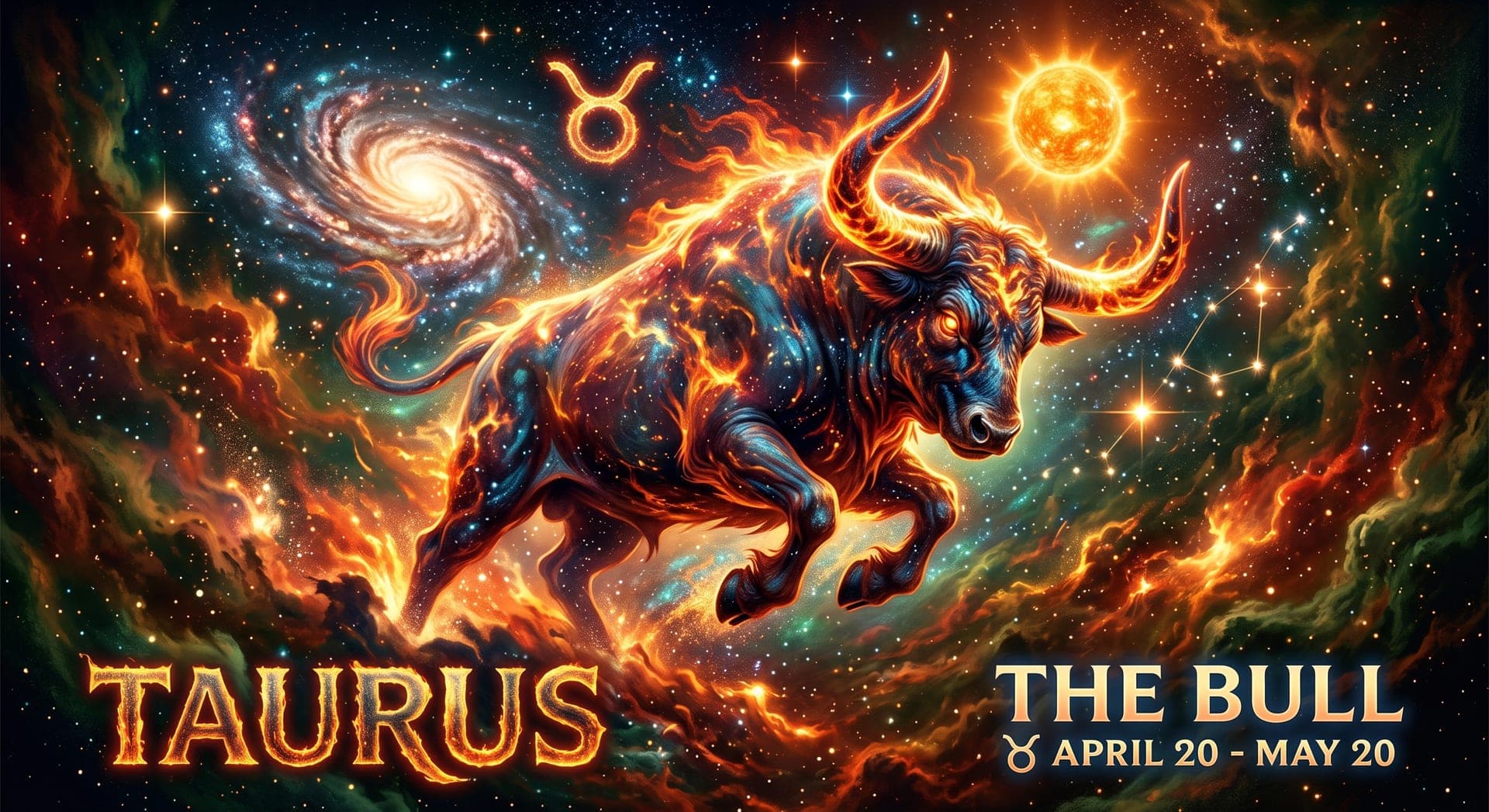
Taurus, the second sign of the zodiac, spans April 20 to May 20 and is symbolized by the bull, an animal prized for its strength, steadiness, and quiet determination. Ruled by Venus, the planet of love, beauty, and material comfort, Taurus is often described as one of the most sensual and pleasure-loving signs, drawn to good food, fine art, and physical comfort. As an Earth sign, Taurus is grounded, practical, and deeply connected to the physical world, valuing stability and tangible security over abstract ideas or sudden change. Its Fixed modality gives Taurus a well-earned reputation for stubbornness, since once a Taurus has settled on a plan or opinion, shifting it can be remarkably difficult. People born under this sign tend to be dependable, loyal, and patient, often the steady presence others rely on during difficult times. While their resistance to change can occasionally frustrate those around them, Taurus's persistence and work ethic make them exceptionally good at seeing long-term goals through to completion.
Personality Traits
Strengths
- Dependable and steady
- Patient and persistent
- Devoted to loved ones
- Appreciates beauty and comfort
- Financially sensible
Weaknesses
- Extremely stubborn
- Resistant to change
- Can be possessive
- Overindulgent
- Slow to forgive
Compatible Signs
Fun Facts
- Taurus's bull symbol connects to the Greek myth of Zeus transforming into a white bull to abduct Europa.
- Venus, Taurus' ruling planet, is the Roman goddess of love and beauty, reflecting the sign's love of comfort, art, and sensory pleasure.
- Taurus is considered by many astrologers to be the most stubborn sign of the zodiac, a trait often attributed to its Fixed modality and bull symbolism.
- Notable Taureans include Queen Elizabeth II, William Shakespeare, Adele, and David Beckham.
- The star cluster known as the Pleiades sits within the constellation Taurus and has been referenced in mythology and literature across many cultures.
Born on April 21
- 1783
Reginald Heber
English bishop and hymn writer born in Malpas, Cheshire, remembered for enduring hymns including 'Holy, Holy, Holy'.
- 1816
Charlotte Brontë
English novelist and poet, born in Thornton, Yorkshire, celebrated for Jane Eyre and her work as eldest of the literary Brontë sisters.
- 1838
John Muir
Scottish-born naturalist and writer, born in Dunbar, whose advocacy for wilderness preservation helped establish Yosemite and other US national parks.
- 1864
Max Weber
German sociologist and influential social theorist
- 1922
Alistair MacLean
Scottish novelist born in Glasgow, author of bestselling adventure thrillers including The Guns of Navarone and Where Eagles Dare.
- 1923
John Mortimer
English barrister and author born in Hampstead, London, best known for creating the Rumpole of the Bailey television and book series.
- 1926
Elizabeth II
Queen of the United Kingdom born in Mayfair, London, whose 70-year reign was the longest of any British monarch in history.
- 1947
Iggy Pop
American rock singer known as the "Godfather of Punk"
- 1949
Patti LuPone
American stage and film actress and vocalist
- 1959
Robert Smith
English singer-songwriter and guitarist born in Blackpool, founder and frontman of the rock band The Cure.
- 1979
James McAvoy
Scottish actor born in Glasgow, known for films including Atonement, Split, and the X-Men franchise.

On This Day in History
- 753 BCE
According to Roman tradition, the city of Rome is founded by Romulus.
According to Roman legend recorded by later historians, the twin brothers Romulus and Remus founded the city of Rome on the Palatine Hill, with Romulus becoming the city's first king after killing his brother in a dispute over the new settlement's boundaries. While the precise historical founding date remains uncertain, ancient Romans commemorated this legendary date annually.
- 43 BCE
Roman consul Aulus Hirtius defeats Mark Antony's forces at the Battle of Mutina.
Roman consul Aulus Hirtius, fighting alongside Octavian's forces, defeated troops loyal to Mark Antony at the Battle of Mutina in northern Italy, though Hirtius was killed in the fighting alongside his fellow consul Pansa days earlier. The victory temporarily weakened Antony's position but ultimately failed to prevent his later alliance with Octavian in the Second Triumvirate.
- -753 BCE
According to tradition, Romulus founds the city of Rome.
Roman legend holds that the twins Romulus and Remus, said to be descended from the Trojan prince Aeneas, were raised by a she-wolf and later quarreled over where to build a new city on the Tiber. Romulus killed Remus, founded Rome on the Palatine Hill, and became its first king.
- 1509
Henry VIII ascends to the English throne following the death of his father, Henry VII.
The 17-year-old Henry VIII ascended to the English throne following the death of his father, Henry VII, inheriting a relatively stable and well-funded kingdom. His subsequent 38-year reign would dramatically reshape English religion, government, and society, most notably through his break with the Catholic Church and establishment of the Church of England.
- 1509
Henry VIII becomes King of England upon the death of his father, Henry VII.
Henry VII died at Richmond Palace, leaving the throne to his second son, then not yet 18 years old. Henry VIII inherited a stable treasury and a unified kingdom, going on to a nearly 38-year reign remembered for his six marriages, the break with Rome, and the English Reformation.
- 1526
Babur defeats Ibrahim Lodi at the First Battle of Panipat, paving the way for the Mughal Empire.
Babur, a Central Asian prince descended from Timur and Genghis Khan, led a smaller but artillery-equipped force against the much larger army of the Delhi Sultanate's Ibrahim Lodi, who was killed in the fighting. The victory gave Babur control of Delhi and Agra, beginning Mughal rule over much of the Indian subcontinent.
- 1782
King Rama I establishes Bangkok as the new capital of Siam, founding the Chakri dynasty that rules Thailand today.
King Rama I founded Bangkok as the new capital of Siam and established the Chakri dynasty, which continues to rule Thailand today, making it one of the world's longest-reigning royal houses. The new capital was strategically located along the Chao Phraya River, offering better defensive and trade advantages than the previous capital.
- 1789
John Adams is sworn in as the first Vice President of the United States.
Adams took the oath of office in New York City, then the nation's capital, alongside George Washington's presidency. He found the role frustrating, later calling it 'the most insignificant office that ever the invention of man contrived,' though he cast tie-breaking Senate votes before becoming the second US president in 1797.
- 1806
A French frigate slips past a Royal Navy blockade off the coast of South Africa.
During the Napoleonic Wars, British naval forces maintained a blockade around the Cape of Good Hope, recently seized from the Dutch, to choke off French supply lines and protect the sea route to India. Despite the Royal Navy's dominance, individual French vessels occasionally evaded capture, as this frigate did.
- 1836
Texan forces under Sam Houston defeat Mexican General Antonio López de Santa Anna at the Battle of San Jacinto, securing Texan independence.
Texan forces under Sam Houston launched a surprise attack on Mexican troops during their afternoon siesta at the Battle of San Jacinto, achieving a swift and decisive victory that led to the capture of Mexican General Antonio López de Santa Anna and secured Texan independence in a battle lasting only about eighteen minutes.
- 1836
Texan forces under Sam Houston defeat the Mexican army, securing Texas independence.
In a surprise afternoon attack near present-day Houston, roughly 900 Texan soldiers routed General Antonio López de Santa Anna's larger force in under twenty minutes, shouting 'Remember the Alamo!' Santa Anna was captured the next day and forced to sign a treaty recognizing Texas independence, ending the Texas Revolution.
- 1918
German fighter ace Manfred von Richthofen, known as the "Red Baron," is shot down and killed over France.
German fighter ace Manfred von Richthofen, known as the "Red Baron" and credited with 80 confirmed aerial victories, the most of any pilot in World War I, was shot down and killed while pursuing an Allied aircraft over the Somme battlefield in France, ending the career of the war's most celebrated flying ace.
- 1918
German flying ace Manfred von Richthofen, the 'Red Baron', is shot down and killed over the Western Front.
Richthofen, credited with 80 aerial victories, was pursuing a Sopwith Camel flown by Canadian pilot Lieutenant Wilfrid May of the Royal Air Force when he came under fire from RAF pilot Captain Roy Brown and Australian ground gunners. He crash-landed near Vaux-sur-Somme and died shortly after, ending the war's most famous air rivalry.
- 1960
Brazil's new capital city, Brasília, is officially inaugurated, replacing Rio de Janeiro.
Brazil's newly constructed capital city, Brasília, built from scratch in the country's interior according to a bold modernist master plan, was formally inaugurated, replacing Rio de Janeiro as the seat of government. The project aimed to spur development in Brazil's underpopulated interior and remains a celebrated example of large-scale urban planning.
- 1960
Brasília is officially inaugurated as the new capital of Brazil.
Built from scratch in under four years on a remote central plateau, Brasília replaced Rio de Janeiro as the national capital and was designed by urban planner Lúcio Costa and architect Oscar Niemeyer with sweeping modernist buildings. The project aimed to spur inland development and symbolize Brazil's forward-looking ambitions; it was later named a UNESCO World Heritage Site.
- 1962
The Century 21 Exposition, the first World's Fair held in the U.S. since World War II, opens in Seattle.
The Century 21 Exposition, the first World's Fair held in the United States since before World War II, opened in Seattle, Washington, showcasing space-age technology and futuristic design themes that reflected the era's optimism about scientific progress. The fair left behind the iconic Space Needle as a lasting landmark of the city.
- 1972
Astronauts John Young and Charles Duke land the Apollo Lunar Module on the Moon's surface.
Apollo 16 touched down in the lunar highlands at the Descartes site, the first mission to explore that mountainous terrain. Young and Duke spent nearly three days on the surface, conducting three moonwalks and collecting over 95 kilograms of samples while Ken Mattingly orbited overhead in the command module.
- 1989
Roughly 100,000 students gather in Beijing's Tiananmen Square to mourn reformist leader Hu Yaobang, an early spark of that year's pro-democracy protests.
Roughly 100,000 university students gathered in Beijing's Tiananmen Square to mourn the death of reformist Communist Party leader Hu Yaobang, whose removal from power years earlier had made him a symbol of political liberalization. The gathering marked an early spark of the broader pro-democracy demonstrations that would grow dramatically over the following weeks.
- 2019
Coordinated Easter Sunday bombings at churches and hotels across Sri Lanka kill at least 269 people.
Coordinated suicide bombings struck churches during Easter Sunday services and luxury hotels across Sri Lanka, killing at least 269 people in the deadliest violence the country had experienced since the end of its civil war a decade earlier. The attacks, claimed by the Islamic State, exposed significant intelligence and security failures despite prior warnings.
- 2019
Coordinated suicide bombings strike churches and hotels across Sri Lanka on Easter Sunday, killing over 250 people.
Eight explosions targeted three Christian churches and several luxury hotels in Colombo and other cities during Easter services and breakfast hours, carried out by local Islamist militants with claimed support from the Islamic State. The attacks killed at least 269 people and wounded hundreds more, becoming one of the deadliest terrorist incidents in Sri Lankan history.