
What’s Observed on April 2
Born on April 2: Aries ♈
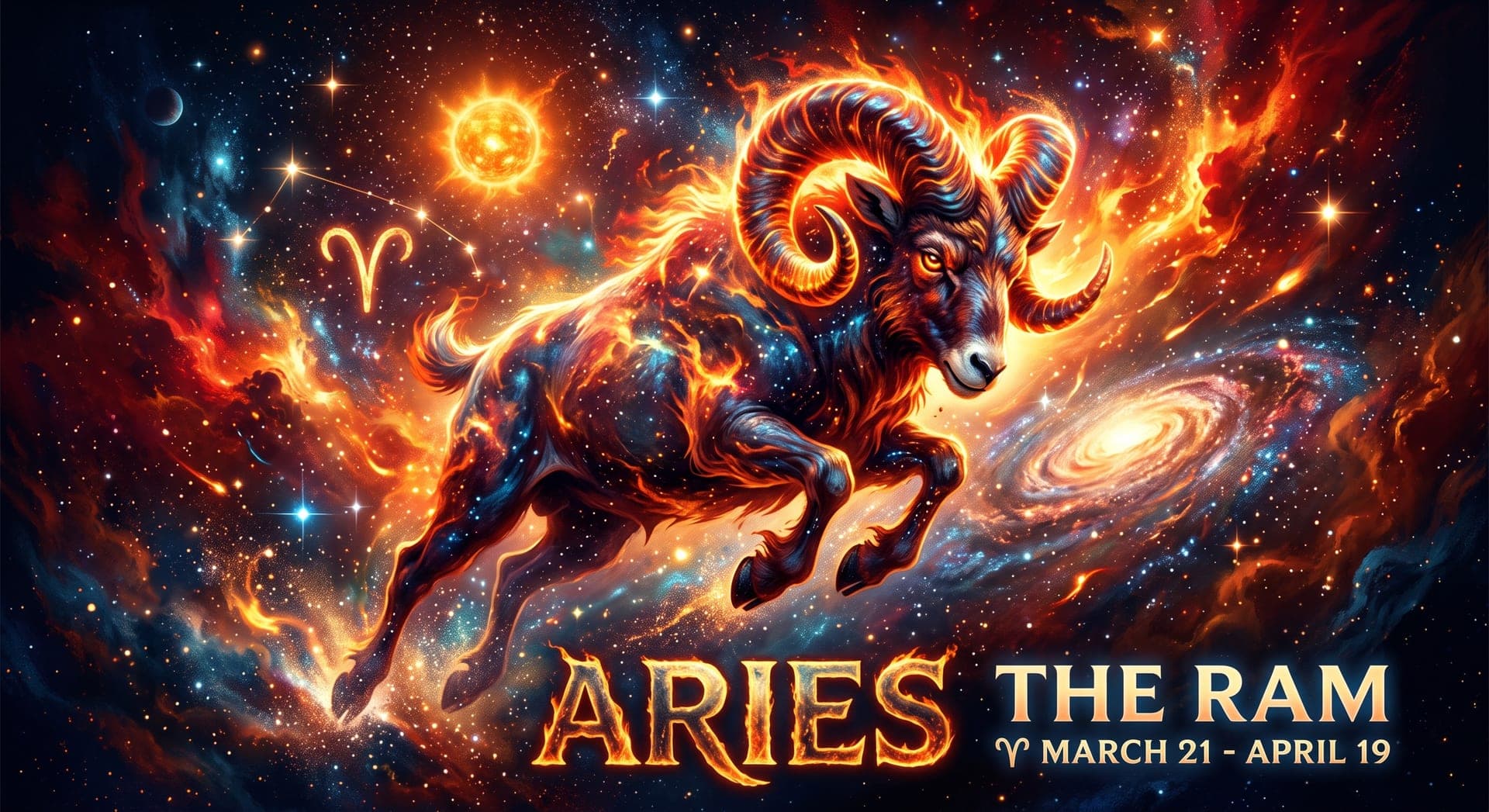
Aries, the first sign of the zodiac, spans March 21 to April 19 and is represented by the ram, an animal known for its boldness, stubborn determination, and willingness to charge forward. Ruled by Mars, the planet of action, drive, and war, Aries is often characterized as one of the most energetic and assertive signs in the zodiac, comfortable taking initiative and leading the way into new territory. As a Fire sign, Aries burns with passion and enthusiasm, approaching life with an instinctive, competitive edge and a low tolerance for hesitation. Its Cardinal modality reflects its role as an initiator, the sign that kicks off the astrological year at the spring equinox and each new season's start. People born under this sign are frequently drawn to leadership roles, sports, entrepreneurship, or any pursuit that rewards courage and quick decision-making. Direct and refreshingly honest, Aries individuals tend to say exactly what they think and rarely shy away from a challenge worth having.
Personality Traits
Strengths
- Courageous and determined
- Natural-born leader
- Honest and direct
- Enthusiastic and optimistic
- Quick to act on opportunities
Weaknesses
- Impatient and quick-tempered
- Impulsive, acts before thinking
- Can be overly competitive
- Struggles with follow-through
- Prone to selfishness
Compatible Signs
Fun Facts
- Aries is the first sign of the zodiac, marking the start of the astrological year at the spring equinox.
- The ram symbol is tied to the Greek myth of the golden-fleeced ram that rescued Phrixus, whose fleece later became the prize sought by Jason and the Argonauts.
- Mars, Aries' ruling planet, was the Roman god of war, reflecting the sign's associations with boldness, drive, and aggression.
- As a Cardinal sign, Aries is one of four signs, along with Cancer, Libra, and Capricorn, that initiate a new season.
- Notable Aries include Lady Gaga, Robert Downey Jr., Mariah Carey, and Leonardo da Vinci.
Born on April 2
- 747
Charlemagne
Frankish king who founded the Carolingian Empire
- 1805
Hans Christian Andersen
Danish author famous for fairy tales like "The Little Mermaid"
- 1827
William Holman Hunt
English painter and co-founder of the Pre-Raphaelite Brotherhood, best known for The Light of the World
- 1840
Émile Zola
French novelist and journalist known for naturalistic literature
- 1888
Neville Cardus
English writer celebrated as one of the finest cricket journalists and music critics of his era
- 1891
Jack Buchanan
Scottish actor, singer and director who became a leading star of British musical theatre and film
- 1914
Alec Guinness
English actor renowned for roles in The Bridge on the River Kwai and as Obi-Wan Kenobi in Star Wars
- 1925
George MacDonald Fraser
English novelist and screenwriter best known for creating the Flashman series of historical novels
- 1928
Serge Gainsbourg
French singer-songwriter known for provocative pop music
- 1939
Marvin Gaye
American soul singer known for "What's Going On"
- 1940
Mike Hailwood
English motorcycle racer regarded as one of the greatest riders of all time
- 1940
Penelope Keith
English actress best known for the sitcoms The Good Life and To the Manor Born
- 1966
Teddy Sheringham
English footballer who starred for Manchester United, Tottenham Hotspur and the England national team
- 1977
Michael Fassbender
German-Irish actor known for the X-Men film series

On This Day in History
- 1513
Spanish explorer Juan Ponce de León comes ashore in Florida, becoming the first documented European to reach what is now the continental United States.
Spanish explorer Juan Ponce de León came ashore near what is now St. Augustine, becoming the first documented European to set foot on the North American mainland within the present-day continental United States. He named the region "La Florida," and though he was searching for new territory and resources rather than the mythical Fountain of Youth later associated with his name, his landing opened Florida to Spanish colonization.
- 1725
Johann Sebastian Bach's cantata for Easter Monday premieres in Leipzig.
Johann Sebastian Bach's cantata for Easter Monday, "Bleib bei uns, denn es will Abend werden" (BWV 6), received its first performance in Leipzig, where Bach had recently taken up the post of director of music. The work was part of his ambitious first Leipzig cantata cycle, composed at a demanding weekly pace to accompany the church calendar.
- 1755
Commodore William James of the British East India Company captures the Maratha stronghold of Suvarnadurg on India's western coast.
The fortress, held by the Maratha admiral Tulaji Angre, had long threatened British and other European shipping along the Konkan coast. James's naval assault was part of a wider campaign against the so-called 'Angria pirates' that culminated the following year in the fall of their main base at Gheria. The victory strengthened the East India Company's growing naval and commercial dominance along India's coastline.
- 1792
The U.S. Congress passes the Coinage Act, establishing the United States Mint and the nation's early monetary system.
Congress passed the Coinage Act of 1792, establishing the United States Mint in Philadelphia and creating the country's first federal currency system, including the dollar as its basic monetary unit divided into cents. The act specified the composition and value of gold, silver, and copper coins, laying the legal foundation for an independent American currency separate from the various foreign and state coins that had previously circulated.
- 1800
Ludwig van Beethoven conducts the premiere of his First Symphony in Vienna.
A 29-year-old Ludwig van Beethoven personally conducted the premiere of his First Symphony at Vienna's Burgtheater, a work that, while still rooted in the classical style of Haydn and Mozart, hinted at the bolder, more expressive direction his later symphonies would take. The performance helped establish Beethoven's growing reputation in Vienna as both a composer and a formidable presence at the keyboard.
- 1801
The British Royal Navy defeats a Danish-Norwegian fleet at the Battle of Copenhagen during the Napoleonic Wars.
During the Napoleonic Wars, a British fleet commanded by Admiral Hyde Parker, with Horatio Nelson leading the main assault, attacked and decisively defeated a Danish-Norwegian fleet defending Copenhagen. The battle, in which Nelson famously ignored a signal to withdraw by holding a telescope to his blind eye, forced Denmark out of an armed coalition seen as a threat to British naval interests in the Baltic.
- 1801
A British fleet under Admiral Horatio Nelson defeats the Danish-Norwegian navy at the Battle of Copenhagen.
Fought as part of Britain's campaign against the League of Armed Neutrality during the French Revolutionary Wars, the battle saw Nelson famously disregard a signal to withdraw by holding a telescope to his blind eye. The British victory forced Denmark to suspend its participation in the armed neutrality coalition, protecting Britain's vital naval blockade against Napoleonic France and its allies.
- 1863
The largest of the Confederacy's Southern bread riots erupts in Richmond, Virginia, as hungry residents protest wartime food shortages.
Desperate residents of Richmond, Virginia, many of them women, rioted and looted shops for food and other necessities amid severe wartime shortages and runaway inflation gripping the Confederate capital. The unrest, the largest of several similar bread riots that broke out across the South during the Civil War, was quelled only after Confederate President Jefferson Davis personally intervened and threatened to order troops to fire on the crowd.
- 1912
The RMS Titanic begins her sea trials in Belfast Lough ahead of her maiden voyage.
Built by the Harland and Wolff shipyard for the British White Star Line, the Titanic underwent a day of trials to test her engines, steering and general seaworthiness before being certified fit for passenger service. She departed for Southampton that same evening. Just under two weeks later, on her maiden transatlantic crossing, the supposedly unsinkable liner struck an iceberg and sank with massive loss of life.
- 1917
President Woodrow Wilson asks Congress for a declaration of war against Germany, formally bringing the United States into World War I.
President Woodrow Wilson addressed a joint session of Congress to request a formal declaration of war against Germany, citing unrestricted submarine warfare against American shipping and the intercepted Zimmermann Telegram proposing a German-Mexican alliance. Congress approved the declaration days later, formally bringing the United States into World War I and marking a decisive shift in the balance of the conflict toward the Allied powers.
- 1917
US President Woodrow Wilson asks Congress to declare war on Germany, moving the United States toward entry into the First World War.
Wilson's address followed Germany's resumption of unrestricted submarine warfare and the revelation of the Zimmermann Telegram, which proposed a German-Mexican alliance against the US. Congress approved the declaration of war four days later. American entry brought fresh troops and resources to the exhausted Allied powers, including Britain and France, and proved decisive in tipping the balance of the war.
- 1930
Ras Tafari Makonnen is proclaimed Emperor of Ethiopia, taking the throne name Haile Selassie I.
He succeeded Empress Zewditu, having already served as regent and the power behind the throne for over a decade. Haile Selassie would go on to rule Ethiopia for more than 40 years, leading the country's resistance to Italian occupation in the late 1930s and later becoming a revered figure in the Rastafari movement, which regards him as a messianic figure.
- 1979
An accidental release of anthrax spores from a Soviet military microbiology facility in Sverdlovsk kills at least 66 people.
The leak came from a biological weapons plant that the Soviet government had long denied existed, part of a covert programme that violated the 1972 Biological Weapons Convention. Soviet authorities initially blamed the deaths on contaminated meat, and the true cause was not officially acknowledged until the early 1990s, when President Boris Yeltsin admitted the facility's military origin.
- 1982
Argentina invades the British-held Falkland Islands, triggering the Falklands War.
Argentina's military government launched a surprise invasion of the British-held Falkland Islands in the South Atlantic, seizing the small archipelago it had long claimed as the Malvinas. The invasion triggered a brief but intense war with Britain, which dispatched a naval task force to retake the islands, ultimately forcing an Argentine surrender within ten weeks and contributing to the collapse of Argentina's military junta.
- 1982
Argentine forces invade the British territory of the Falkland Islands, triggering the Falklands War.
The invasion followed decades of unresolved sovereignty disputes between Britain and Argentina over the South Atlantic islands. Prime Minister Margaret Thatcher dispatched a naval task force to retake them, and after ten weeks of fighting British forces secured the islands' surrender in June 1982. The conflict cost around 900 lives and left the islands under continued British administration.
- 1992
Mafia boss John Gotti is convicted of murder and racketeering in a New York federal court.
Known as the 'Teflon Don' for previously evading conviction, Gotti was finally brought down largely through the testimony of his underboss Salvatore 'Sammy the Bull' Gravano, who turned informant. The verdict effectively ended Gotti's leadership of the Gambino crime family, and he was sentenced to life imprisonment without parole, dying in federal custody in 2002.
- 2011
India wins the Cricket World Cup for the second time, defeating Sri Lanka under the captaincy of MS Dhoni.
India defeated Sri Lanka in the final to win the Cricket World Cup for the second time, twenty-eight years after its first title in 1983, with captain Mahendra Singh Dhoni hitting the winning six in front of a jubilant home crowd in Mumbai. The victory, achieved on Indian soil, was celebrated nationwide as one of the country's most memorable sporting triumphs.
- 2015
Burglars break into the Hatton Garden Safe Deposit Company in London's jewellery quarter over the Easter weekend, carrying out one of the largest burglaries in British history.
A gang of elderly career criminals used heavy drilling equipment to bore through a concrete wall into the vault, ransacking dozens of safe deposit boxes over several nights while the alarm was ignored by a security contractor. Police later recovered much of the haul, valued at many millions of pounds, and the ringleaders were sentenced to lengthy prison terms in a case that gripped the British press.
- 2020
Confirmed global COVID-19 cases surpass one million as the pandemic accelerates worldwide.
The World Health Organization's dashboard recorded that confirmed global COVID-19 cases had surpassed one million, roughly three months after the virus was first identified, as the pandemic accelerated sharply across Europe and the Americas. The grim milestone came amid widening lockdowns, overwhelmed hospital systems in hard-hit regions, and a scramble by governments worldwide to secure medical equipment and slow the virus's spread.
- 2020
The cumulative number of confirmed COVID-19 cases worldwide passes one million as the pandemic accelerates globally.
The milestone came just over three months after the virus was first identified in Wuhan, China, and reflected its rapid spread across Europe, the Americas and beyond. Many countries, including the UK, were by this point under strict lockdown measures, with hospitals under severe strain and governments racing to secure medical equipment and, eventually, vaccines.