
What’s Observed on March 21
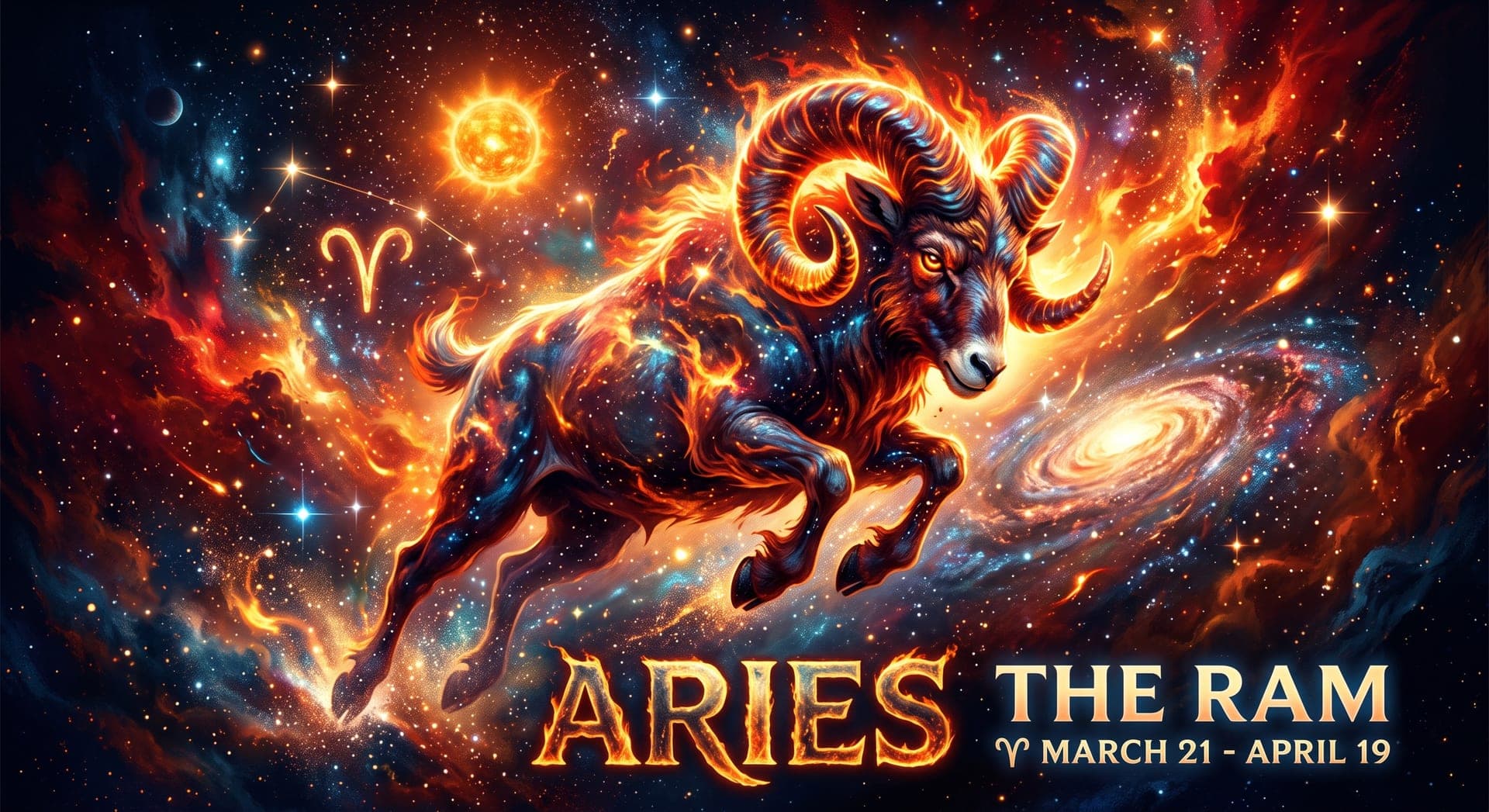
Born on March 21: Aries ♈
Aries, the first sign of the zodiac, spans March 21 to April 19 and is represented by the ram, an animal known for its boldness, stubborn determination, and willingness to charge forward. Ruled by Mars, the planet of action, drive, and war, Aries is often characterized as one of the most energetic and assertive signs in the zodiac, comfortable taking initiative and leading the way into new territory. As a Fire sign, Aries burns with passion and enthusiasm, approaching life with an instinctive, competitive edge and a low tolerance for hesitation. Its Cardinal modality reflects its role as an initiator, the sign that kicks off the astrological year at the spring equinox and each new season's start. People born under this sign are frequently drawn to leadership roles, sports, entrepreneurship, or any pursuit that rewards courage and quick decision-making. Direct and refreshingly honest, Aries individuals tend to say exactly what they think and rarely shy away from a challenge worth having.
Personality Traits
Strengths
- Courageous and determined
- Natural-born leader
- Honest and direct
- Enthusiastic and optimistic
- Quick to act on opportunities
Weaknesses
- Impatient and quick-tempered
- Impulsive, acts before thinking
- Can be overly competitive
- Struggles with follow-through
- Prone to selfishness
Compatible Signs
Fun Facts
- Aries is the first sign of the zodiac, marking the start of the astrological year at the spring equinox.
- The ram symbol is tied to the Greek myth of the golden-fleeced ram that rescued Phrixus, whose fleece later became the prize sought by Jason and the Argonauts.
- Mars, Aries' ruling planet, was the Roman god of war, reflecting the sign's associations with boldness, drive, and aggression.
- As a Cardinal sign, Aries is one of four signs, along with Cancer, Libra, and Capricorn, that initiate a new season.
- Notable Aries include Lady Gaga, Robert Downey Jr., Mariah Carey, and Leonardo da Vinci.
Born on March 21
- 1685
Johann Sebastian Bach
German Baroque composer, one of the greatest in Western music history
- 1806
Benito Juárez
25th President of Mexico
- 1831
Dorothea Beale
English educational reformer and suffragist who, as principal of Cheltenham Ladies' College, pioneered improved education for girls.
- 1839
Modest Mussorgsky
Russian composer known for "Pictures at an Exhibition"
- 1867
Florenz Ziegfeld Jr.
American Broadway producer known for the Ziegfeld Follies
- 1925
Peter Brook
English theatre and film director celebrated for radical, stripped-down productions of Shakespeare and other classic works.
- 1933
Michael Heseltine
Welsh-born British Conservative politician who served as Deputy Prime Minister and led the challenge that ended Margaret Thatcher's premiership.
- 1935
Brian Clough
English football manager who led Nottingham Forest to consecutive European Cup titles after earlier success at Derby County.
- 1943
Vivian Stanshall
English singer, songwriter, and painter best known as a founding member of the surreal comedy-rock group the Bonzo Dog Band.
- 1946
Timothy Dalton
Welsh-born actor who portrayed James Bond in two films and starred in numerous stage and screen productions.
- 1958
Gary Oldman
English actor renowned for his versatility, winning an Academy Award for his portrayal of Winston Churchill in Darkest Hour.
- 1960
Ayrton Senna
Brazilian Formula One racing champion
- 1962
Matthew Broderick
American actor known for "Ferris Bueller's Day Off"
- 1975
Mark Williams
Welsh snooker player who has won the World Snooker Championship three times across two decades.
- 1980
Ronaldinho
Brazilian professional footballer

On This Day in History
- 1556
Thomas Cranmer, the former Archbishop of Canterbury, publicly renounced his earlier recantations moments before being burned at the stake in Oxford.
Cranmer, the principal architect of the English Reformation and author of the Book of Common Prayer, had signed several recantations of his Protestant faith under pressure from Queen Mary I's Catholic regime, hoping to save his life. At his final public appearance he shocked onlookers by disavowing those recantations and thrusting the hand that had signed them into the flames first, dying as a Protestant martyr.
- 1801
British forces defeated the French army at the Battle of Alexandria in Egypt, a major setback for Napoleon's ambitions in the region.
The battle, fought near the ruins of ancient Alexandria, saw British troops under Sir Ralph Abercromby repel a French assault, though Abercromby himself was mortally wounded and died days later. The victory helped force the eventual withdrawal of remaining French forces from Egypt and is commemorated in several British regiments' battle honours as the origin of the sphinx badge.
- 1804
The Napoleonic Code is formally adopted as French civil law, later influencing legal systems across much of the world.
Napoleon Bonaparte promulgated the French Civil Code, later known as the Napoleonic Code, unifying and modernizing French civil law under principles of equality before the law and secular governance. The code was subsequently adopted or adapted by numerous countries across Europe, Latin America, and beyond.
- 1804
France adopted the Code Napoleon, a sweeping reform of French civil law commissioned under Napoleon Bonaparte.
The code replaced a patchwork of feudal, regional, and revolutionary laws with a single, unified legal system based on principles of equality before the law, secular authority, and property rights. It became enormously influential outside France as well, forming the basis of civil law codes across much of Europe, Latin America, and other regions that later adopted French legal traditions.
- 1829
British Prime Minister the Duke of Wellington fought a pistol duel in London with the Earl of Winchilsea over Catholic emancipation.
Winchilsea had publicly accused Wellington of secretly plotting to undermine Protestant institutions after the Prime Minister backed the Catholic Relief Act. The two men met at dawn on Battersea Fields; Wellington deliberately fired wide, and Winchilsea, having intended not to fire directly at the Prime Minister, discharged his pistol into the air before offering a written apology, ending the affair without injury.
- 1871
Otto von Bismarck is appointed the first Chancellor of the newly unified German Empire.
Following the unification of Germany after the Franco-Prussian War, Otto von Bismarck was appointed the first Chancellor of the new German Empire, a position from which he dominated European diplomacy for the next two decades through a complex system of alliances.
- 1871
Journalist Henry Morton Stanley set out from Zanzibar on the expedition to find the missing Scottish missionary and explorer David Livingstone.
Commissioned by the New York Herald, the Welsh-born Stanley led a large caravan into East Africa's interior in search of Livingstone, who had not been heard from in years while searching for the source of the Nile. Stanley finally located Livingstone at Ujiji on Lake Tanganyika in November 1871, greeting him with the famous, possibly apocryphal, line "Dr. Livingstone, I presume?"
- 1918
Germany launches Operation Michael, the first phase of its major spring offensive on the Western Front.
German forces launched Operation Michael, a massive offensive intended to break through Allied lines before American reinforcements could fully arrive, achieving significant early territorial gains. The offensive ultimately stalled, and the exhausted German army was unable to sustain further large-scale attacks for the rest of the war.
- 1919
The Hungarian Soviet Republic is proclaimed, becoming the first communist government established in Europe after the Russian Revolution.
Communist revolutionaries led by Bela Kun proclaimed the Hungarian Soviet Republic, the second communist state established anywhere after Soviet Russia itself, following the collapse of the earlier short-lived Hungarian democratic government amid postwar chaos and territorial losses. The radical regime nationalized industry and land but fell within about four months to counter-revolutionary forces and a Romanian military intervention.
- 1945
British and Indian troops of the Fourteenth Army completed the liberation of Mandalay from Japanese occupation in the Burma campaign.
The battle for Burma's second city involved brutal fighting for control of Mandalay Hill and the walled Fort Dufferin, much of the historic royal palace reduced to rubble by British artillery and air bombardment. The capture of Mandalay opened the road south toward Rangoon and marked a turning point in the Allied reconquest of Burma from Japanese forces.
- 1945
RAF Mosquito bombers attacked Gestapo headquarters in Copenhagen in a precision raid that accidentally killed 125 civilians, many of them schoolchildren.
Operation Carthage aimed to destroy Gestapo records and free imprisoned resistance fighters held at the Shellhus building. While the raid succeeded in demolishing the target, one low-flying bomber struck a lamppost and crashed, leading following aircraft to mistakenly bomb the nearby Jeanne d'Arc School. The tragedy remains one of the most painful episodes of the RAF's wartime bombing campaign.
- 1960
South African police open fire on peaceful anti-apartheid demonstrators, killing 69 in the Sharpeville massacre.
South African police opened fire on a crowd of unarmed Black protesters demonstrating against pass laws outside a police station in Sharpeville, killing 69 people and wounding many more. The massacre drew international condemnation and became a pivotal moment galvanizing global opposition to apartheid.
- 1960
South African police opened fire on a crowd of Black demonstrators protesting apartheid pass laws in Sharpeville, killing 69 people.
The protesters had gathered peacefully outside a police station to demonstrate against laws requiring Black South Africans to carry internal passports restricting their movement. Police fired into the fleeing crowd, killing dozens and wounding around 180 more, many shot in the back. The massacre triggered international condemnation, the banning of major anti-apartheid organisations, and is now commemorated annually as Human Rights Day in South Africa.
- 1963
Alcatraz Federal Penitentiary closes permanently.
Alcatraz Federal Penitentiary, the notorious island prison in San Francisco Bay that had housed inmates including Al Capone, closed permanently due to the high cost of maintaining the isolated facility. It later reopened as a popular tourist attraction operated by the National Park Service.
- 1965
Martin Luther King Jr. leads thousands on the successful third Selma-to-Montgomery civil rights march.
Protected by federal troops after a court order, roughly 25,000 marchers led by Martin Luther King Jr. completed the successful third attempt to march from Selma to Montgomery, Alabama, following the violent suppression of earlier attempts. The march built crucial momentum for the Voting Rights Act.
- 1965
Martin Luther King Jr. led thousands of civil rights marchers on the successful third march from Selma to Montgomery, Alabama.
The five-day, 54-mile march, protected by federalised National Guard troops after President Johnson intervened, followed two earlier attempts that had been violently broken up by state troopers. The marchers' arrival at the Alabama State Capitol, where King addressed a crowd of around 25,000, built momentum that helped secure passage of the Voting Rights Act months later.
- 1980
President Jimmy Carter announces a U.S. boycott of the 1980 Summer Olympics in Moscow, in protest of the Soviet invasion of Afghanistan.
President Jimmy Carter announced that the United States would boycott the upcoming Moscow Summer Olympics in protest of the Soviet Union's invasion of Afghanistan months earlier, a decision joined by dozens of other nations and one that the Soviet bloc reciprocated by boycotting the 1984 Los Angeles Games.
- 1990
Namibia becomes independent after decades of South African administration.
Namibia gained full independence from South African administration after a lengthy armed liberation struggle led by the South West Africa People's Organisation and a United Nations-supervised transition process. Sam Nujoma was inaugurated as the country's first president, marking the end of one of Africa's last remaining colonial-era territorial disputes and completing the continent's broader decolonization wave.
- 2006
The social media platform Twitter is founded.
Jack Dorsey sent the first message on a new microblogging platform he co-founded called Twitter, a simple text reading "just setting up my twttr." What began as a niche status-update tool went on to become one of the most influential social media services in the world for real-time news, public discourse, activism, and political communication over the following decade.
- 2006
The social media platform Twitter was founded, later becoming one of the world's most influential tools for real-time public communication.
Created by Jack Dorsey, Biz Stone, Evan Williams, and Noah Glass as a short-message service limited to 140 characters, Twitter grew from a niche side project into a global platform used by politicians, journalists, and celebrities to reach audiences directly. It was renamed X in 2023 after Elon Musk's acquisition of the company.