What’s Observed on March 22
Born on March 22: Aries ♈
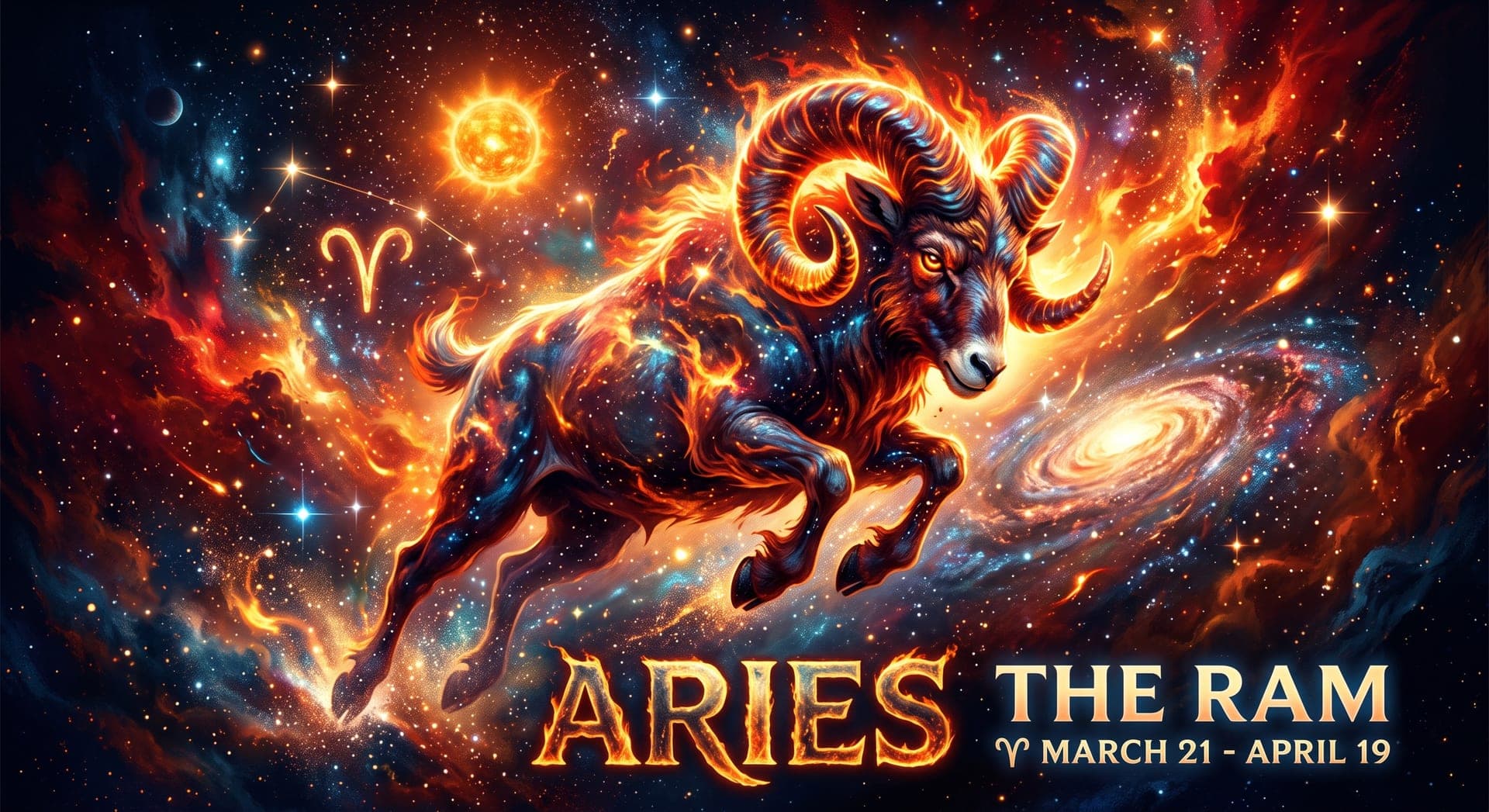
Aries, the first sign of the zodiac, spans March 21 to April 19 and is represented by the ram, an animal known for its boldness, stubborn determination, and willingness to charge forward. Ruled by Mars, the planet of action, drive, and war, Aries is often characterized as one of the most energetic and assertive signs in the zodiac, comfortable taking initiative and leading the way into new territory. As a Fire sign, Aries burns with passion and enthusiasm, approaching life with an instinctive, competitive edge and a low tolerance for hesitation. Its Cardinal modality reflects its role as an initiator, the sign that kicks off the astrological year at the spring equinox and each new season's start. People born under this sign are frequently drawn to leadership roles, sports, entrepreneurship, or any pursuit that rewards courage and quick decision-making. Direct and refreshingly honest, Aries individuals tend to say exactly what they think and rarely shy away from a challenge worth having.
Personality Traits
Strengths
- Courageous and determined
- Natural-born leader
- Honest and direct
- Enthusiastic and optimistic
- Quick to act on opportunities
Weaknesses
- Impatient and quick-tempered
- Impulsive, acts before thinking
- Can be overly competitive
- Struggles with follow-through
- Prone to selfishness
Compatible Signs
Fun Facts
- Aries is the first sign of the zodiac, marking the start of the astrological year at the spring equinox.
- The ram symbol is tied to the Greek myth of the golden-fleeced ram that rescued Phrixus, whose fleece later became the prize sought by Jason and the Argonauts.
- Mars, Aries' ruling planet, was the Roman god of war, reflecting the sign's associations with boldness, drive, and aggression.
- As a Cardinal sign, Aries is one of four signs, along with Cancer, Libra, and Capricorn, that initiate a new season.
- Notable Aries include Lady Gaga, Robert Downey Jr., Mariah Carey, and Leonardo da Vinci.
Born on March 22
- 1599
Anthony van Dyck
Flemish Baroque painter who became principal court painter to King Charles I and the dominant influence on English portraiture for over a century
- 1785
Adam Sedgwick
English geologist who named the Cambrian and Devonian periods and mentored a young Charles Darwin in fieldwork.
- 1797
William I, German Emperor
First German Emperor and King of Prussia
- 1808
Caroline Norton
English social reformer and author whose campaigning over her own custody and divorce battles helped change British family law.
- 1846
Randolph Caldecott
English illustrator whose innovative children's picture books gave their name to the prestigious Caldecott Medal.
- 1910
Nicholas Monsarrat
English novelist best known for The Cruel Sea, drawn from his own wartime service escorting Atlantic convoys with the Royal Navy.
- 1912
Wilfrid Brambell
Irish-born British actor best known for playing Albert Steptoe in the BBC sitcom "Steptoe and Son" and for his role in the Beatles' film "A Hard Day's Night"
- 1931
William Shatner
Canadian actor known for "Star Trek"
- 1936
Roger Whittaker
Kenyan-born British singer-songwriter known for his distinctive whistling and the hit song "The Last Farewell"
- 1943
George Benson
American jazz and soul guitarist and singer
- 1943
Keith Relf
English singer and guitarist who fronted the influential rock band the Yardbirds.
- 1948
Andrew Lloyd Webber
English composer behind some of the world's most commercially successful musicals, including The Phantom of the Opera and Cats.
- 1952
Bob Costas
American sportscaster
- 1963
Deborah Bull
English ballerina who danced as a principal with the Royal Ballet before becoming a prominent arts administrator and broadcaster.
- 1973
Beverley Knight
English soul and R&B singer known for a string of UK hit albums and singles since the 1990s.
- 1976
Reese Witherspoon
American actress and Academy Award winner
- 1989
J.J. Watt
American NFL defensive end and three-time MVP
On This Day in History
- 1312
Pope Clement V formally dissolves the Knights Templar under pressure from the French crown.
Under pressure from King Philip IV of France, who coveted the order's wealth, Pope Clement V formally dissolved the Knights Templar at the Council of Vienne, ending the once-mighty medieval military and banking order that had operated for nearly two centuries.
- 1621
The Plymouth Colony Pilgrims sign a peace treaty with the Wampanoag leader Massasoit.
Pilgrim leaders from the Plymouth Colony signed a peace and mutual defense treaty with Massasoit, leader of the Wampanoag Confederacy, establishing decades of relative peace between the two groups following the harsh first winter that had killed nearly half the colonists.
- 1765
The British Parliament passes the Stamp Act, imposing direct taxation on the American colonies and fueling revolutionary sentiment.
The British Parliament passed the Stamp Act, requiring colonists to pay a tax on printed materials including newspapers, legal documents, and playing cards, to help fund British military presence in North America. Colonial outrage over "taxation without representation" sparked boycotts and protests that foreshadowed the American Revolution.
- 1765
The British Parliament passed the Stamp Act, imposing Britain's first direct tax on its American colonies.
The act required colonists to pay a tax on virtually all printed materials, from newspapers to playing cards, ostensibly to help fund British troops stationed in North America after the costly Seven Years' War. Colonial reaction was fierce, with boycotts, riots, and the convening of the Stamp Act Congress in protest. Parliament repealed the tax the following year, but the episode became an early flashpoint in the growing dispute over taxation without representation that led toward the American Revolution.
- 1829
Britain, France, and Russia signed the London Protocol, recognising an autonomous Greek state under their joint protection.
The agreement built on earlier great-power intervention in the Greek War of Independence against Ottoman rule, following the allied naval victory at Navarino. It set out preliminary borders and status for the future Greek kingdom, though full independence and final boundaries were not settled until further negotiations the following year. Britain's role in Greek independence reflected its broader strategic interest in the Eastern Mediterranean and containing Ottoman and Russian power.
- 1895
The Lumiere brothers publicly demonstrate their film projection technology for the first time in Paris.
Auguste and Louis Lumiere held one of the first public demonstrations of their cinematographe device in Paris, screening short films to an audience of scientists and industrialists. Their subsequent public film screenings later that year are widely regarded as the birth of cinema as a public entertainment medium.
- 1895
The Lumiere brothers gave the first public demonstration of their cinematographe motion-picture technology in Paris.
Auguste and Louis Lumiere screened footage of workers leaving their family's factory to an audience of industrial society members, showcasing a device that could both film and project moving images. The demonstration is widely regarded as a foundational moment in the birth of cinema, and the brothers went on to hold the first paying public film screening later that year.
- 1933
Nazi Germany opens the Dachau concentration camp, its first, near Munich.
The SS opened Dachau, the first Nazi concentration camp, near Munich, initially intended to hold political prisoners including communists and socialists. The camp later became a model for the broader Nazi concentration camp system and a site of medical experimentation and mass death.
- 1933
Nazi Germany opened the Dachau concentration camp near Munich, the first of the regime's dedicated camps for political prisoners.
Established by Heinrich Himmler just weeks after Hitler became chancellor, Dachau initially held Communists, Social Democrats, and other political opponents of the Nazi regime before expanding to imprison Jews, Roma, clergy, and other targeted groups. It became a model for the broader Nazi concentration camp system and remained in operation until its liberation by American forces in April 1945, by which point tens of thousands of prisoners had died there.
- 1942
The Royal Navy fought off a stronger Italian battle fleet in the Second Battle of Sirte, protecting a vital convoy bound for besieged Malta.
A British force of light cruisers and destroyers, heavily outgunned by Italian battleships and cruisers, used smoke screens and aggressive destroyer attacks to shield the merchant convoy through a fierce Mediterranean storm. Although the convoy was later damaged by air attack near Malta, the Royal Navy's tactical success in fending off the Italian fleet helped sustain the besieged island through one of the most critical periods of its wartime blockade.
- 1945
The Arab League is founded in Cairo, uniting several Arab states in a regional political organization.
Representatives of Egypt, Iraq, Jordan, Lebanon, Saudi Arabia, Syria, and Yemen met in Cairo to sign the founding charter of the Arab League, establishing a regional organization aimed at strengthening ties, coordinating policy, and safeguarding the independence and sovereignty of its member states. The League has since expanded to include most Arab nations across the Middle East and North Africa.
- 1945
Royal Air Force bombers heavily damaged the German city of Hildesheim in a raid that destroyed much of its historic old town.
The attack, launched in the final weeks of the war, dropped a mix of high-explosive and incendiary bombs that ignited firestorms across Hildesheim's medieval centre, killing over 1,000 people and destroying numerous half-timbered buildings and churches dating back centuries. The devastation was among the most severe suffered by any German town of its size and remains a contested episode in debates over the necessity of late-war Allied bombing.
- 1946
The United Kingdom formally granted independence to Transjordan, ending its League of Nations mandate over the territory.
The Treaty of London ended direct British control while Britain retained military basing rights and continued to subsidise and train the Transjordanian army. Emir Abdullah I, who had ruled under British oversight since the 1920s, took the title of king, and the state was later renamed the Hashemite Kingdom of Jordan in 1949 after it annexed the West Bank.
- 1960
Physicists Arthur Schawlow and Charles Townes receive the first patent for the laser.
Physicists Arthur Schawlow and Charles Townes received the first patent for the laser, based on their theoretical work on stimulated light emission. The technology they helped pioneer went on to revolutionize fields ranging from medicine and telecommunications to manufacturing and consumer electronics.
- 1963
The Beatles release their debut studio album, "Please Please Me."
The Beatles released their debut studio album "Please Please Me" in the United Kingdom, recorded in a single marathon session and featuring the title track alongside cover songs. The album's success launched the band toward the global phenomenon of Beatlemania.
- 1963
The Beatles released their debut studio album, Please Please Me, launching the group's rise to global fame.
Recorded by the Liverpool quartet in a single marathon session at London's Abbey Road Studios, the album captured the raw energy of their live club sets alongside hit singles like the title track. It topped the UK album charts for 30 weeks and is widely credited with kick-starting Beatlemania, transforming British popular music's standing on the world stage.
- 2006
British special forces freed three Christian Peacemaker Team hostages who had been held captive in Baghdad for nearly four months.
The aid workers, part of a group whose Canadian colleague Tom Fox had earlier been murdered by his captors, were rescued unharmed in a raid acting on intelligence about their location. The operation was one of several hostage-rescue missions carried out by British and coalition forces during the Iraq War and highlighted the dangers faced by civilian aid workers and activists in the conflict.
- 2016
Coordinated suicide bombings at the Brussels airport and a metro station kill 32 people.
Coordinated suicide bombings struck Brussels Airport's departure hall and a city metro station, killing 32 victims and three attackers and wounding hundreds more. The Islamic State claimed responsibility, and the attack was linked to the same network behind the previous year's Paris attacks.
- 2017
A terrorist drove a car into pedestrians on Westminster Bridge and stabbed a police officer outside the Houses of Parliament in London, killing four people.
The attacker, Khalid Masood, ploughed a rented vehicle into crowds on the bridge before crashing near the Palace of Westminster and fatally stabbing an unarmed police officer guarding the gates. He was shot dead by armed police within the parliamentary estate. The attack, claimed by the Islamic State group, was the deadliest in London since the 2005 transit bombings and prompted a major review of security around Parliament.
- 2024
Gunmen kill at least 145 people in an attack on a Moscow concert hall, one of Russia's deadliest terrorist attacks.
Gunmen attacked the Crocus City Hall concert venue near Moscow, opening fire on concertgoers and setting the building ablaze, killing at least 145 people in one of the deadliest terrorist attacks in modern Russian history. The Islamic State claimed responsibility for the assault.