
What’s Observed on March 23
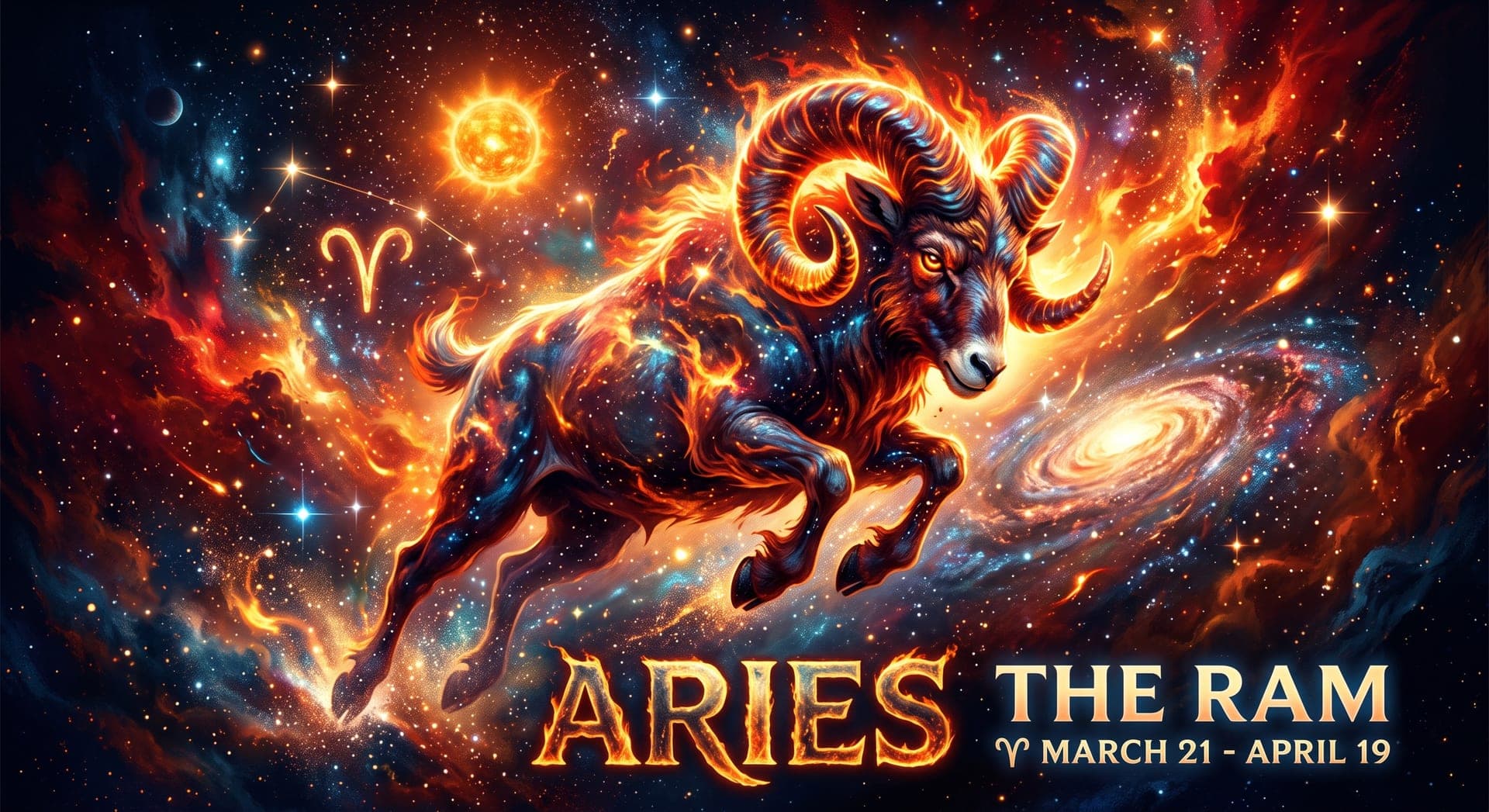
Born on March 23: Aries ♈
Aries, the first sign of the zodiac, spans March 21 to April 19 and is represented by the ram, an animal known for its boldness, stubborn determination, and willingness to charge forward. Ruled by Mars, the planet of action, drive, and war, Aries is often characterized as one of the most energetic and assertive signs in the zodiac, comfortable taking initiative and leading the way into new territory. As a Fire sign, Aries burns with passion and enthusiasm, approaching life with an instinctive, competitive edge and a low tolerance for hesitation. Its Cardinal modality reflects its role as an initiator, the sign that kicks off the astrological year at the spring equinox and each new season's start. People born under this sign are frequently drawn to leadership roles, sports, entrepreneurship, or any pursuit that rewards courage and quick decision-making. Direct and refreshingly honest, Aries individuals tend to say exactly what they think and rarely shy away from a challenge worth having.
Personality Traits
Strengths
- Courageous and determined
- Natural-born leader
- Honest and direct
- Enthusiastic and optimistic
- Quick to act on opportunities
Weaknesses
- Impatient and quick-tempered
- Impulsive, acts before thinking
- Can be overly competitive
- Struggles with follow-through
- Prone to selfishness
Compatible Signs
Fun Facts
- Aries is the first sign of the zodiac, marking the start of the astrological year at the spring equinox.
- The ram symbol is tied to the Greek myth of the golden-fleeced ram that rescued Phrixus, whose fleece later became the prize sought by Jason and the Argonauts.
- Mars, Aries' ruling planet, was the Roman god of war, reflecting the sign's associations with boldness, drive, and aggression.
- As a Cardinal sign, Aries is one of four signs, along with Cancer, Libra, and Capricorn, that initiate a new season.
- Notable Aries include Lady Gaga, Robert Downey Jr., Mariah Carey, and Leonardo da Vinci.
Born on March 23
- 1749
Pierre-Simon Laplace
French mathematician and astronomer
- 1769
William Smith
English geologist known as the "Father of English Geology" for producing the first nationwide geological map of England and Wales.
- 1882
Emmy Noether
German-American mathematician known for foundational work in abstract algebra
- 1910
Akira Kurosawa
Japanese film director known for "Seven Samurai"
- 1912
Wernher von Braun
German-American aerospace engineer, chief architect of the Saturn V rocket
- 1921
Donald Campbell
English speed record holder who broke both land and water speed records multiple times, dying in a 1967 attempt on Coniston Water.
- 1929
Roger Bannister
English middle-distance runner and neurologist who became the first person to run a mile in under four minutes.
- 1934
Alan Baddeley
English psychologist renowned for developing an influential model of human working memory.
- 1944
Michael Nyman
English composer and pianist known for his minimalist film scores, including The Piano.
- 1953
Chaka Khan
American singer known for "I'm Every Woman"
- 1962
Steve Redgrave
English rower who won gold medals at five consecutive Olympic Games, one of Britain's most decorated Olympians.
- 1968
Damon Albarn
English singer-songwriter and multi-instrumentalist, frontman of Blur and co-creator of the virtual band Gorillaz.
- 1976
Keri Russell
American actress
- 1976
Chris Hoy
Scottish track cyclist who won six Olympic gold medals, making him one of Britain's most successful Olympians.
- 1983
Mo Farah
Somali-born British long-distance runner and multiple Olympic and World Championship gold medallist over 5,000m and 10,000m
On This Day in History
- 625
Meccan forces defeated Muhammad's army at the Battle of Uhud, a major early engagement of the Muslim-Quraysh conflict.
Fought near Medina, the battle initially favored the Muslim forces until archers guarding a strategic hill abandoned their position to join the looting of the enemy camp, allowing Meccan cavalry led by Khalid ibn al-Walid to encircle and rout them. The Prophet Muhammad himself was wounded in the fighting. Despite the tactical defeat, the Muslim community survived and would recover to eventually gain the upper hand over Mecca.
- 1540
Waltham Abbey in Essex surrendered to King Henry VIII, becoming the last religious house dissolved in England's Dissolution of the Monasteries.
Founded centuries earlier and long a site of royal patronage, the abbey's surrender marked the symbolic end of a decade-long campaign in which Henry VIII closed England's monasteries, seized their wealth, and redistributed their lands, largely to fund the crown and reward loyal nobles. The dissolution permanently reshaped England's religious landscape and property ownership, cementing the break from papal authority that followed Henry's split with Rome.
- 1775
Patrick Henry delivers his famous "Give me liberty, or give me death!" speech urging Virginia toward revolution.
Addressing the Second Virginia Convention, Patrick Henry delivered a fiery speech urging Virginia to prepare for armed resistance against British rule, famously declaring "Give me liberty, or give me death!" The speech helped galvanize support for revolution among wavering colonial delegates.
- 1775
Patrick Henry delivered his famous "Give me liberty, or give me death!" speech to the Virginia Convention in Richmond.
Speaking in support of a resolution to arm Virginia's militia against escalating British rule, Henry argued that further negotiation with Britain was futile and that armed resistance was the colonies' only remaining option. Though no verbatim transcript survives, the speech, reconstructed decades later, became one of the most celebrated orations of the American Revolutionary period and helped rally support for the resolution, which passed narrowly.
- 1801
Russian Tsar Paul I is assassinated by disaffected army officers.
Tsar Paul I of Russia, whose erratic and increasingly autocratic rule had alienated much of the nobility and military, was assassinated by a group of disaffected officers in the Mikhailovsky Castle. His son Alexander I succeeded him to the throne.
- 1848
The immigrant ship John Wickliffe arrived at Port Chalmers, landing the first organised group of Scottish settlers who would found the city of Dunedin, New Zealand.
Sponsored by the Free Church of Scotland and the New Zealand Company, the settlement was conceived as a Scottish Presbyterian colony, its very name derived from the Gaelic for Edinburgh. The settlers brought Scottish institutions, education traditions, and place names with them, shaping Dunedin's enduring character as New Zealand's most distinctly Scottish city and a major centre of Presbyterian religious life in the South Pacific.
- 1857
Elisha Otis installs the first passenger safety elevator in a New York City building, enabling the later rise of skyscrapers.
Inventor Elisha Otis installed the first passenger safety elevator, featuring an automatic braking mechanism to prevent falls if the hoisting cable failed, in a New York City department store. The innovation made tall buildings practical for everyday use, paving the way for the skyscraper era.
- 1888
Representatives of English football clubs met to establish the Football League, the world's first organised professional football league.
Convened by Aston Villa director William McGregor, the meeting brought together twelve clubs from the Midlands and north of England who agreed to play a regular, scheduled season of matches rather than the ad hoc friendlies and cup ties that had dominated the sport. The League's structured, professional model became the template later adopted by football leagues around the world and cemented England's role in codifying the modern game.
- 1918
German forces pressed their spring offensive on the Western Front, inflicting heavy casualties on the retreating British Fifth Army.
Launched two days earlier as Operation Michael, the German assault achieved the deepest advances seen on the Western Front since 1914, overwhelming thinly stretched British defences near the old Somme battlefields. Tens of thousands of British troops were killed, wounded, or captured in the fighting, and the crisis prompted the Allies to finally unify command of their forces under French general Ferdinand Foch.
- 1919
Benito Mussolini founds his Fascist political movement in Milan.
Benito Mussolini founded the Fasci Italiani di Combattimento in Milan, a nationalist, anti-communist, and initially fringe political movement that drew disillusioned World War I veterans and grew into the National Fascist Party. Mussolini's subsequent March on Rome in 1922 pressured the king into appointing him prime minister, from which position he transformed Italy into a totalitarian dictatorship.
- 1931
British colonial authorities in India executed independence activists Bhagat Singh, Shivaram Rajguru, and Sukhdev Thapar for the killing of a police officer.
The three revolutionaries had been convicted for their role in the 1928 killing of a British police official, an act of retaliation for the death of independence leader Lala Lajpat Rai during a protest. Hanged inside Lahore Central Jail ahead of their scheduled execution date to avoid public unrest, the men became lasting martyrs of the Indian independence movement, and Bhagat Singh in particular remains one of its most revered and debated figures.
- 1933
Germany's parliament passes the Enabling Act, granting Adolf Hitler dictatorial powers.
Germany's Reichstag passed the Enabling Act by an overwhelming margin, granting Chancellor Adolf Hitler the power to enact laws without parliamentary approval or presidential consent, effectively dismantling German democracy from within. Passed under conditions of intimidation following the earlier Reichstag fire and the suppression of communist deputies, the law provided the legal foundation for full Nazi dictatorship.
- 1933
The German Reichstag passed the Enabling Act, granting Adolf Hitler's cabinet the power to enact laws without parliamentary approval.
Passed under intimidation from Nazi paramilitary forces stationed around the chamber, the act effectively dismantled German parliamentary democracy and legally cemented Hitler's dictatorship just weeks after he became chancellor. Only the Social Democratic Party voted against it, while the Communist Party's members had already been arrested or barred from the vote. The act became the constitutional basis for Nazi rule until the regime's collapse in 1945.
- 1956
Pakistan becomes the world's first Islamic republic.
Pakistan's constituent assembly adopted the country's first constitution, formally declaring it an Islamic republic while establishing a parliamentary system of government, becoming the first country in the world to adopt that specific designation. Despite the Islamic framing, Pakistan remained a member of the British Commonwealth, reflecting its continued ties to its former colonial administrators.
- 1977
British broadcaster David Frost began videotaping his landmark series of interviews with former US President Richard Nixon.
Frost paid Nixon a substantial fee to secure the disgraced former president's first extended interview since resigning over the Watergate scandal, a move that drew criticism from American journalists who felt Nixon was being handled too gently by a comparative outsider. The interviews, broadcast later that year, produced a startling moment when Nixon came close to admitting wrongdoing, and became a landmark in television journalism, later dramatised in the film Frost/Nixon.
- 1983
President Ronald Reagan proposes the Strategic Defense Initiative, a missile defense program nicknamed "Star Wars."
President Ronald Reagan proposed a space-based missile defense system intended to intercept incoming Soviet nuclear missiles, quickly dubbed "Star Wars" by critics and the press. Though never fully realized due to technological and cost limitations, the program significantly influenced Cold War strategic dynamics.
- 1998
"Titanic" wins eleven Academy Awards, including Best Picture, tying the record for most Oscars won by a single film.
James Cameron's epic film "Titanic" won eleven Academy Awards including Best Picture and Best Director, tying the record previously set by "Ben-Hur" for the most Oscars won by a single film, a feat later matched again by "The Lord of the Rings: The Return of the King."
- 2001
Russia's Mir space station is deliberately deorbited, breaking apart over the Pacific Ocean.
Russia's Mir space station, which had orbited Earth for over fifteen years and hosted numerous long-duration international crews conducting scientific research, was deliberately deorbited after ground controllers determined the aging, deteriorating structure could no longer be safely maintained. It broke apart during reentry and fell into the South Pacific Ocean in a controlled, carefully planned disposal.
- 2010
President Barack Obama signs the Affordable Care Act into law, overhauling the U.S. health insurance system.
President Barack Obama signed the Patient Protection and Affordable Care Act, widely known as Obamacare, into law after a bruising year-long legislative battle, enacting the most significant overhaul of the U.S. health care system in decades. The law expanded insurance coverage to millions of previously uninsured Americans and imposed new regulations on insurance industry practices.
- 2020
Prime Minister Boris Johnson announced the United Kingdom's first national lockdown to slow the spread of COVID-19.
In a televised address, Johnson ordered people to stay at home except for essential purposes, closing non-essential shops and banning public gatherings, backed by new police enforcement powers. The unprecedented peacetime restriction on personal freedom aimed to prevent the National Health Service from being overwhelmed by a surge in coronavirus cases, and marked the beginning of months of intermittent lockdowns across the country.
- 2021
The container ship Ever Given runs aground and blocks the Suez Canal for six days, disrupting global shipping.
The container ship Ever Given ran aground diagonally across the Suez Canal during high winds, completely blocking one of the world's busiest shipping lanes for nearly a week. The incident stranded hundreds of vessels and caused billions of dollars in delayed global trade.