What’s Observed on March 24
Born on March 24: Aries ♈
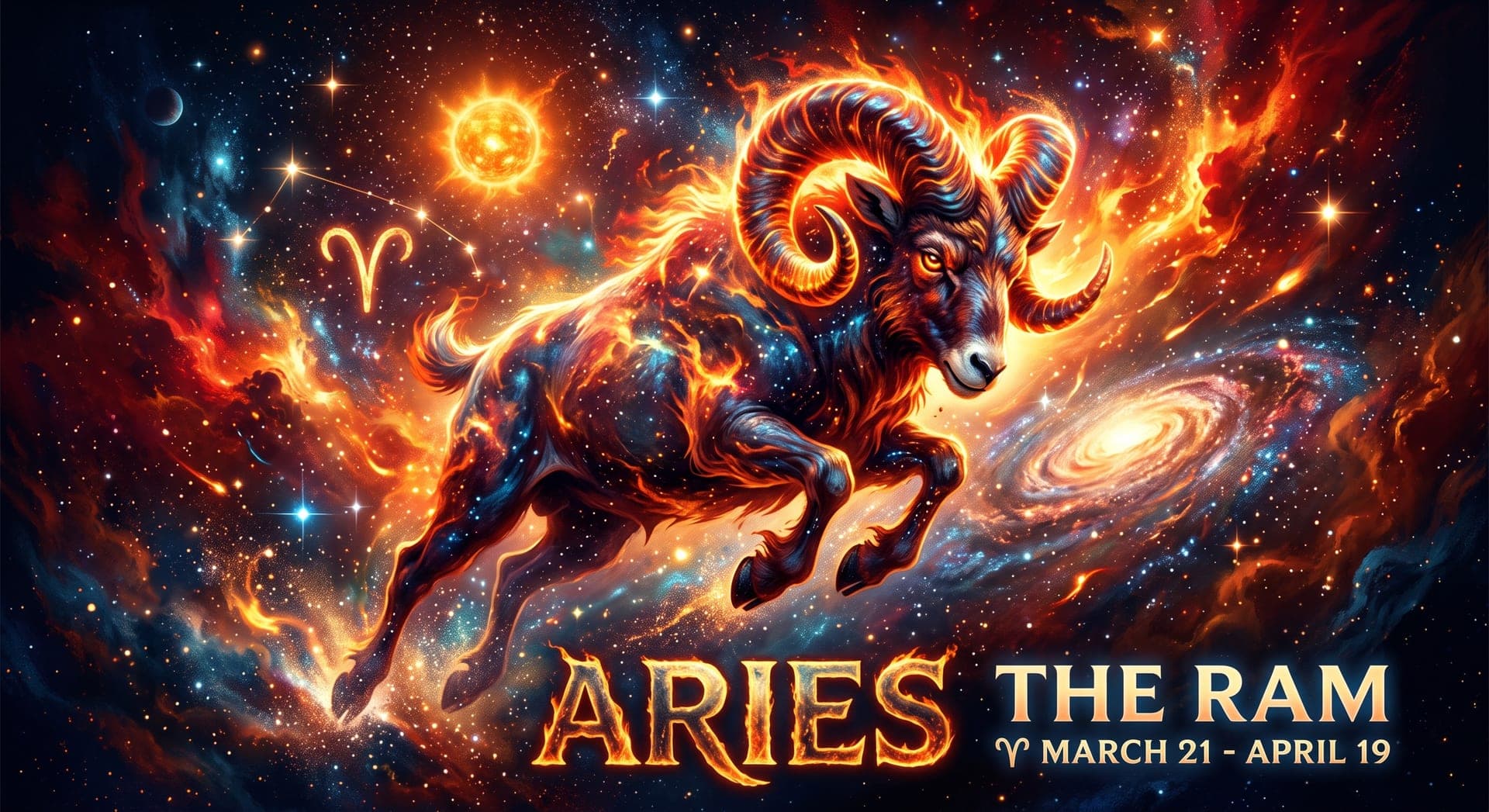
Aries, the first sign of the zodiac, spans March 21 to April 19 and is represented by the ram, an animal known for its boldness, stubborn determination, and willingness to charge forward. Ruled by Mars, the planet of action, drive, and war, Aries is often characterized as one of the most energetic and assertive signs in the zodiac, comfortable taking initiative and leading the way into new territory. As a Fire sign, Aries burns with passion and enthusiasm, approaching life with an instinctive, competitive edge and a low tolerance for hesitation. Its Cardinal modality reflects its role as an initiator, the sign that kicks off the astrological year at the spring equinox and each new season's start. People born under this sign are frequently drawn to leadership roles, sports, entrepreneurship, or any pursuit that rewards courage and quick decision-making. Direct and refreshingly honest, Aries individuals tend to say exactly what they think and rarely shy away from a challenge worth having.
Personality Traits
Strengths
- Courageous and determined
- Natural-born leader
- Honest and direct
- Enthusiastic and optimistic
- Quick to act on opportunities
Weaknesses
- Impatient and quick-tempered
- Impulsive, acts before thinking
- Can be overly competitive
- Struggles with follow-through
- Prone to selfishness
Compatible Signs
Fun Facts
- Aries is the first sign of the zodiac, marking the start of the astrological year at the spring equinox.
- The ram symbol is tied to the Greek myth of the golden-fleeced ram that rescued Phrixus, whose fleece later became the prize sought by Jason and the Argonauts.
- Mars, Aries' ruling planet, was the Roman god of war, reflecting the sign's associations with boldness, drive, and aggression.
- As a Cardinal sign, Aries is one of four signs, along with Cancer, Libra, and Capricorn, that initiate a new season.
- Notable Aries include Lady Gaga, Robert Downey Jr., Mariah Carey, and Leonardo da Vinci.
Born on March 24
- 1693
John Harrison
English carpenter and self-taught clockmaker who invented the marine chronometer, solving the centuries-old problem of measuring longitude at sea.
- 1834
William Morris
English textile designer, poet, and writer who led the Arts and Crafts movement and championed traditional craftsmanship over industrial production.
- 1874
Harry Houdini
Hungarian-American magician and escape artist
- 1883
Dorothy Campbell
Scottish-born golfer who dominated women's amateur golf in the early twentieth century, winning multiple British and US championships.
- 1884
Peter Debye
Dutch-American physicist and chemist, Nobel laureate
- 1886
Edward Weston
American photographer known for still-life and landscape work
- 1889
Albert Hill
English middle-distance runner who won gold medals in both the 800 metres and 1,500 metres at the 1920 Olympics.
- 1902
Thomas E. Dewey
American politician and Governor of New York
- 1916
Harry B. Whittington
English palaeontologist whose meticulous re-examination of the Burgess Shale fossils transformed understanding of early animal evolution.
- 1917
John Kendrew
English biochemist who won the Nobel Prize in Chemistry for determining the three-dimensional structure of the protein myoglobin.
- 1926
Dario Fo
Italian playwright and Nobel laureate in Literature
- 1930
Steve McQueen
American actor known as "The King of Cool"
- 1947
Alan Sugar
English businessman who founded electronics company Amstrad and became known to television audiences as host of The Apprentice.
- 1973
Jim Parsons
American actor known for "The Big Bang Theory"
- 1979
Graeme Swann
English cricketer who became one of the country's leading Test spin bowlers, helping England win multiple Ashes series.
On This Day in History
- 1199
King Richard I of England was struck by a crossbow bolt while besieging the castle of Chalus in France, a wound that proved fatal less than two weeks later.
Richard, known as Richard the Lionheart for his martial reputation during the Crusades, was inspecting the siege lines around the minor castle when a defender's bolt struck his shoulder. The wound turned gangrenous, and Richard died on 6 April 1199 with, according to legend, his mother Eleanor of Aquitaine at his side. His death ended a reign spent largely abroad on crusade and brought his brother John to the English throne.
- 1387
An English fleet under Richard FitzAlan, Earl of Arundel, defeated a combined Franco-Castilian-Flemish force off Margate, seizing a large enemy wine convoy.
The battle came during the Hundred Years' War, when English naval forces intercepted a fleet escorting merchant ships loaded with Flemish and French goods bound for France. Arundel's victory captured dozens of enemy vessels along with a vast cargo of wine, temporarily restoring English control of the Channel and boosting the earl's standing at a time of political tension between Richard II and his nobles.
- 1603
James VI of Scotland is proclaimed King James I of England and Ireland, uniting the two crowns.
Following the death of the childless Queen Elizabeth I, King James VI of Scotland was proclaimed King James I of England and Ireland, uniting the crowns of England and Scotland under a single monarch for the first time, though the two kingdoms remained formally separate.
- 1603
Tokugawa Ieyasu is granted the title of shogun, establishing the Tokugawa shogunate that ruled Japan for over 250 years.
Following his decisive victory at the Battle of Sekigahara several years earlier, the Japanese imperial court granted Tokugawa Ieyasu the title of shogun, formally recognizing him as Japan's supreme military ruler. His establishment of the Tokugawa shogunate ushered in a stable, centralized feudal system that governed Japan in relative isolation for over 250 years until the 1868 Meiji Restoration.
- 1603
James VI of Scotland was proclaimed King James I of England and Ireland following the death of Elizabeth I, uniting the Scottish and English crowns.
Elizabeth's death without an heir ended the Tudor dynasty, and her closest legitimate relative, the Stuart king of Scotland, inherited the English and Irish thrones as well. Although the kingdoms remained legally separate until the Acts of Union over a century later, the Union of the Crowns under James marked the first time the same monarch ruled all of Britain and Ireland, laying groundwork for the eventual formation of a unified United Kingdom.
- 1765
The British Parliament passed the Quartering Act, requiring American colonies to provide housing and supplies for British troops stationed there.
The act obliged colonial assemblies to furnish barracks, and where none existed, to pay for soldiers to be housed in inns, stables, and other buildings, though it stopped short of forcing quartering in private homes. Passed alongside the Stamp Act as Parliament sought new ways to fund and support its expanded military presence in North America, it became another grievance colonists cited as an overreach of British authority in the years leading to the Revolution.
- 1829
The British Parliament passed the Roman Catholic Relief Act 1829, allowing Catholics to sit as members of Parliament for the first time in centuries.
The act, championed by the Duke of Wellington's government despite fierce opposition from Protestant hardliners, repealed most remaining restrictions barring Catholics from holding public office and Parliamentary seats across Britain and Ireland. Its passage followed sustained pressure from Irish Catholic campaigner Daniel O'Connell's Catholic Association and marked a major step in dismantling centuries of institutionalised religious discrimination in British political life.
- 1878
The Royal Navy training frigate HMS Eurydice capsized and sank in a sudden squall off the Isle of Wight, killing over 300 young sailors.
The wooden sailing frigate was returning from a training cruise to the West Indies with her gun ports open when a violent snow squall struck without warning, knocking her over before the crew could shorten sail. Only a handful of the roughly 350 aboard, mostly young trainee sailors, survived the icy waters. The disaster prompted public mourning across Britain and lasting questions about the ship's stability and the navy's use of ageing sailing vessels for training.
- 1882
German physician Robert Koch announces his discovery of the bacterium that causes tuberculosis.
German physician and microbiologist Robert Koch announced his identification of the bacterium responsible for tuberculosis, then one of the deadliest diseases in the world. His rigorous methodology, known as Koch's postulates, became a foundational standard for establishing causal links between microbes and disease.
- 1922
Gunmen shot dead six members of the Catholic McMahon family in their Belfast home during a wave of sectarian violence in the early days of Northern Ireland.
The attackers, widely believed to have included members of the police, burst into the McMahon house at night and shot the men of the family in front of relatives, in apparent reprisal for an earlier IRA attack on police officers. The killings were among the most notorious episodes of sectarian bloodshed that accompanied the partition of Ireland and the establishment of Northern Ireland, and remain a disputed and painful chapter in the region's history.
- 1944
German occupying forces massacre 335 Italian civilians in Rome in reprisal for a partisan attack.
In retaliation for a partisan bomb attack that killed German soldiers in Rome, occupying Nazi forces rounded up and executed 335 Italian civilians and prisoners in the Ardeatine Caves outside the city, one of the worst massacres committed during the German occupation of Italy.
- 1944
Seventy-six Allied prisoners of war break out of the German camp Stalag Luft III in the escape later dramatized as "The Great Escape."
Seventy-six Allied airmen tunneled out of the heavily guarded German prisoner-of-war camp Stalag Luft III using tools improvised from tin cans and bed boards, in one of the most meticulously planned escapes of World War II. Most were quickly recaptured and fifty were subsequently executed on Hitler's direct orders, an episode later dramatized in the film "The Great Escape."
- 1944
Seventy-six Allied airmen, most of them British and Commonwealth prisoners, began a mass breakout through a tunnel from the German POW camp Stalag Luft III.
The escape, meticulously organised over months by Royal Air Force officer Roger Bushell and his fellow prisoners, involved three tunnels dug deep beneath the camp's huts using improvised tools and smuggled materials. Only three escapees reached safety, while the Gestapo recaptured and murdered fifty of the men on Hitler's orders, a war crime for which several German officers were later tried and executed. The episode later inspired the film The Great Escape.
- 1946
A British Cabinet Mission arrived in India to negotiate the terms of the country's transition from colonial rule to independence.
Sent by Prime Minister Clement Attlee's government, the three-man mission held talks with the Indian National Congress, the Muslim League, and other parties over a proposed constitutional structure intended to keep a united India together under a loose federal framework. Although its specific plan ultimately failed amid growing communal tension between Hindu and Muslim leaders, the mission's visit was a pivotal step on the path to India's independence and partition the following year.
- 1972
The British government under Prime Minister Edward Heath imposed direct rule on Northern Ireland, suspending its devolved parliament at Stormont.
The decision followed escalating violence during the Troubles, including the Bloody Sunday shootings weeks earlier, which convinced London that the Northern Ireland government could no longer maintain order. Westminster assumed direct control of the region's governance for the first time since Northern Ireland's parliament was established in 1921, an arrangement intended as temporary that, with brief interruptions, lasted for decades amid repeated efforts to restore devolved government.
- 1976
Argentina's military overthrows President Isabel Peron, beginning a brutal dictatorship.
Argentina's military, led by General Jorge Rafael Videla, overthrew President Isabel Peron in a coup, installing a junta that ruled through terror for the next seven years, during which thousands of dissidents disappeared in what became known as the Dirty War.
- 1980
Archbishop Oscar Romero is assassinated while celebrating Mass in El Salvador.
Archbishop Oscar Romero, an outspoken critic of El Salvador's military government and human rights abuses, was shot and killed by a right-wing death squad while celebrating Mass. His assassination is widely seen as a catalyst for the country's subsequent civil war.
- 1989
The tanker Exxon Valdez spills roughly 11 million gallons of crude oil into Alaska's Prince William Sound.
The oil tanker Exxon Valdez struck a reef in Alaska's Prince William Sound, spilling roughly 11 million gallons of crude oil into pristine waters and devastating local wildlife and fisheries. The disaster became a landmark environmental catastrophe that reshaped maritime safety and spill-response regulations.
- 1999
NATO begins bombing Yugoslavia without United Nations authorization, in response to the Kosovo crisis.
NATO began a sustained air campaign against Yugoslav military and infrastructure targets without explicit United Nations Security Council authorization, responding to escalating violence and a campaign of ethnic cleansing directed against Kosovar Albanians by Slobodan Milosevic's government. The controversial 78-day bombing campaign eventually forced Yugoslav forces to withdraw from Kosovo and accept international administration of the province.
- 2015
Germanwings Flight 9525 crashes in the French Alps after being deliberately downed by its co-pilot, killing all 150 aboard.
Germanwings Flight 9525 crashed into the French Alps after its co-pilot, who had a history of severe depression concealed from his employer, deliberately locked the captain out of the cockpit and flew the plane into a mountainside, killing all 150 people aboard.