What’s Observed on March 25
Born on March 25: Aries ♈
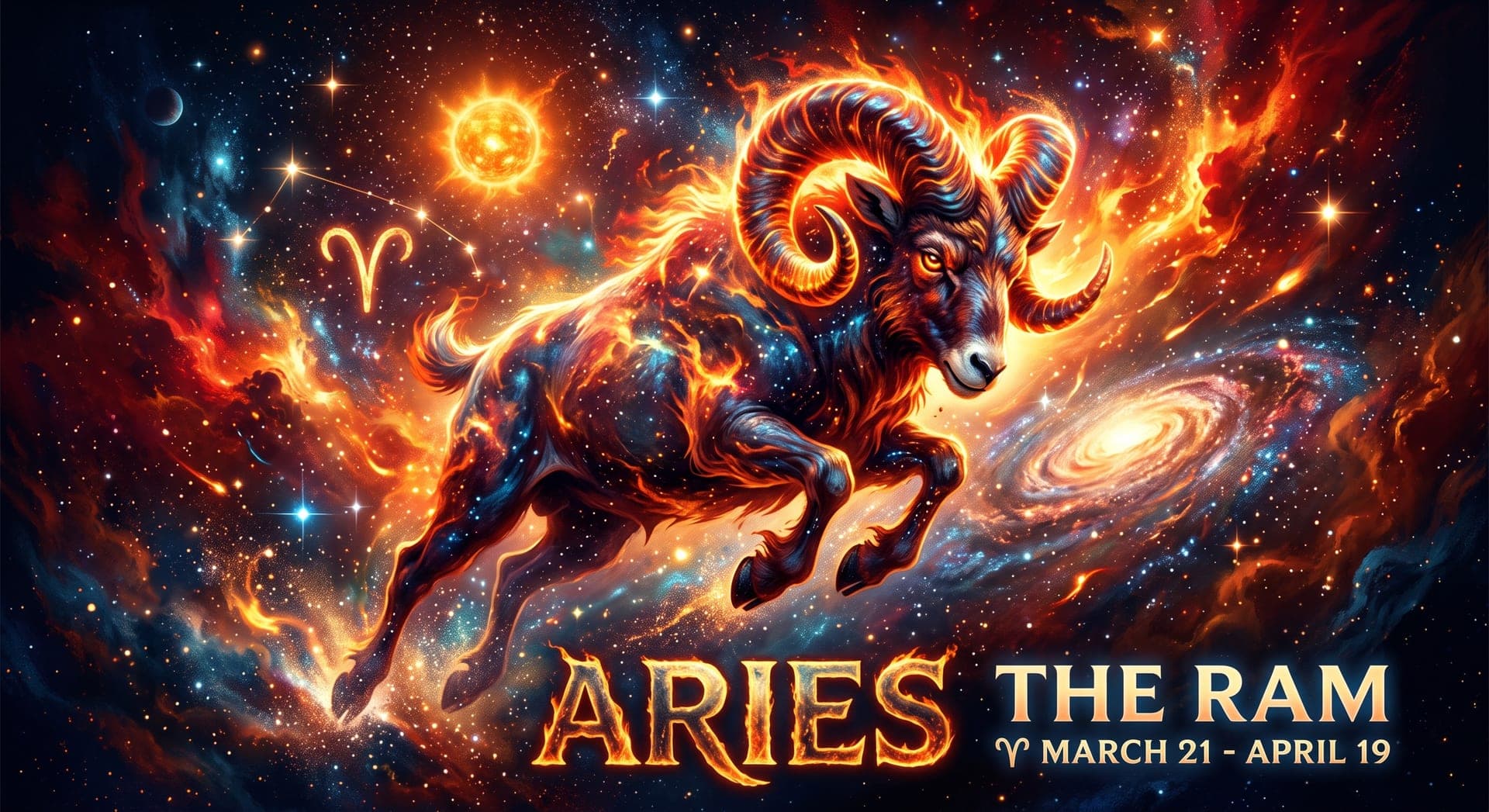
Aries, the first sign of the zodiac, spans March 21 to April 19 and is represented by the ram, an animal known for its boldness, stubborn determination, and willingness to charge forward. Ruled by Mars, the planet of action, drive, and war, Aries is often characterized as one of the most energetic and assertive signs in the zodiac, comfortable taking initiative and leading the way into new territory. As a Fire sign, Aries burns with passion and enthusiasm, approaching life with an instinctive, competitive edge and a low tolerance for hesitation. Its Cardinal modality reflects its role as an initiator, the sign that kicks off the astrological year at the spring equinox and each new season's start. People born under this sign are frequently drawn to leadership roles, sports, entrepreneurship, or any pursuit that rewards courage and quick decision-making. Direct and refreshingly honest, Aries individuals tend to say exactly what they think and rarely shy away from a challenge worth having.
Personality Traits
Strengths
- Courageous and determined
- Natural-born leader
- Honest and direct
- Enthusiastic and optimistic
- Quick to act on opportunities
Weaknesses
- Impatient and quick-tempered
- Impulsive, acts before thinking
- Can be overly competitive
- Struggles with follow-through
- Prone to selfishness
Compatible Signs
Fun Facts
- Aries is the first sign of the zodiac, marking the start of the astrological year at the spring equinox.
- The ram symbol is tied to the Greek myth of the golden-fleeced ram that rescued Phrixus, whose fleece later became the prize sought by Jason and the Argonauts.
- Mars, Aries' ruling planet, was the Roman god of war, reflecting the sign's associations with boldness, drive, and aggression.
- As a Cardinal sign, Aries is one of four signs, along with Cancer, Libra, and Capricorn, that initiate a new season.
- Notable Aries include Lady Gaga, Robert Downey Jr., Mariah Carey, and Leonardo da Vinci.
Born on March 25
- 1867
Arturo Toscanini
Italian conductor regarded as one of the greatest of the 20th century
- 1867
Gutzon Borglum
American sculptor who designed Mount Rushmore
- 1881
Béla Bartók
Hungarian composer and pianist
- 1881
Mary Webb
English novelist and poet celebrated for lyrical, nature-steeped novels of rural Shropshire life, including Gone to Earth and Precious Bane.
- 1908
David Lean
English film director, producer, and screenwriter renowned for epic films such as Lawrence of Arabia, The Bridge on the River Kwai, and Doctor Zhivago.
- 1912
Melita Norwood
English civil servant unmasked in 1999 as a longtime Soviet intelligence source, dubbed the 'granny spy' for passing British atomic secrets to the KGB for decades.
- 1915
Dorothy Squires
Welsh singer known for her powerful voice and hit recordings such as 'Say It With Flowers,' who became one of Britain's best-selling vocalists of the mid-20th century.
- 1920
Patrick Troughton
English actor best known for playing the second incarnation of the Doctor in the television series Doctor Who, pioneering the show's tradition of regeneration.
- 1934
Gloria Steinem
American feminist activist and journalist
- 1942
Aretha Franklin
American singer known as the "Queen of Soul"
- 1942
Richard O'Brien
English actor, writer, and composer who created The Rocky Horror Show and played Riff Raff in its stage and film versions.
- 1946
Blair Peach
New Zealand-born teacher and anti-racism activist killed by police during an Anti-Nazi League protest in Southall, London, in 1979
- 1947
Elton John
English singer-songwriter, pianist, and performer whose decades-spanning catalogue, including 'Rocket Man' and 'Your Song,' made him one of the best-selling music artists in history.
- 1965
Sarah Jessica Parker
American actress known for "Sex and the City"
On This Day in History
- 421
According to tradition, the city of Venice is founded when its first church is consecrated on the lagoon islands.
According to a long-standing local tradition, Venice was founded when its first church, San Giacomo, was consecrated on the marshy Rialto islands by refugees fleeing barbarian invasions on the Italian mainland. The city's unique position amid the lagoon later made it a dominant maritime and trading power.
- 1306
Robert the Bruce is crowned King of Scots at Scone.
Robert Bruce seized the Scottish throne six weeks after killing his rival John Comyn, launching a campaign against English overlordship that would culminate at Bannockburn in 1314. His hastily arranged coronation, lacking many traditional trappings, marked the start of the second phase of the Scottish Wars of Independence and eventually secured Scotland's sovereignty under his line.
- 1576
Jerome Savage takes a sub-lease to establish the Newington Butts Theatre outside London.
Built south of the Thames near Southwark, Newington Butts was among the earliest purpose-built playhouses in England, predating the more famous Globe by more than two decades. Its remote location, a long walk from the City, limited its popularity, but it hosted early performances by touring companies before falling out of regular use.
- 1584
Sir Walter Raleigh is granted a royal patent to colonize Virginia.
Queen Elizabeth I's charter authorized Raleigh to explore, settle, and govern any lands in North America not already claimed by a Christian power, in exchange for one-fifth of any gold or silver found. The patent led to the ill-fated Roanoke expeditions later that decade and set an early template for English overseas colonization.
- 1655
Dutch astronomer Christiaan Huygens discovers Titan, the largest moon of Saturn.
Dutch astronomer and physicist Christiaan Huygens, using a telescope of his own design, discovered Titan, Saturn's largest moon and the second-largest moon in the solar system. The discovery advanced understanding of Saturn's system decades before its rings were properly characterized.
- 1708
A French fleet anchors near Fife Ness as part of a planned invasion of Britain.
The expedition aimed to land James Francis Edward Stuart, the exiled claimant to the British throne, on Scottish soil to spark a Jacobite rising against Queen Anne. Poor weather, disease aboard the ships, and the swift arrival of a Royal Navy squadron under Sir George Byng forced the French to abandon the attempt without landing troops.
- 1802
Britain and France sign the Treaty of Amiens, ending years of war.
Negotiated as a 'Definitive Treaty of Peace,' the agreement brought a temporary halt to hostilities between Britain and Revolutionary France after nearly a decade of conflict. Britain agreed to return most colonial conquests, while France withdrew from various occupied territories. The peace proved short-lived, collapsing within fourteen months as tensions over trade and influence resumed.
- 1807
The British Parliament passes the Slave Trade Act, abolishing the transatlantic slave trade throughout the British Empire.
The British Parliament passed the Slave Trade Act, prohibiting the transatlantic trade in enslaved people throughout the British Empire, though it did not immediately abolish slavery itself, which continued legally for another quarter century. The Royal Navy subsequently worked to intercept slave ships from other nations.
- 1807
The Swansea and Mumbles Railway becomes the first passenger-carrying railway in the world.
Originally built as the Oystermouth Railway to haul limestone, coal, and iron by horse-drawn wagon, the line began carrying fare-paying passengers along the South Wales coast, a world first for railway transport. It predated steam-hauled passenger services by decades and is celebrated as the true birthplace of public railway travel.
- 1811
Poet Percy Bysshe Shelley is expelled from Oxford after publishing a pamphlet on atheism.
Poet Percy Bysshe Shelley was expelled from Oxford's University College after co-authoring and distributing a pamphlet titled "The Necessity of Atheism," which scandalized university authorities. The expulsion strained his relationship with his family but did little to slow his emerging career as one of the era's leading Romantic poets.
- 1811
Percy Bysshe Shelley is expelled from the University of Oxford.
Shelley was sent down from University College after co-writing and distributing the pamphlet 'The Necessity of Atheism,' which challenged religious orthodoxy and refused to recant when questioned by college authorities. The expulsion, alongside his friend Thomas Jefferson Hogg, became a defining early episode in the life of one of England's leading Romantic poets.
- 1911
A fire at the Triangle Shirtwaist Factory in New York kills 146 garment workers, spurring major workplace safety reforms.
A fire broke out on the eighth floor of the Triangle Shirtwaist Factory in New York City, killing 146 workers, mostly young immigrant women, many of whom died after being trapped behind locked exit doors. The tragedy spurred sweeping reforms in workplace safety and labor laws across the United States.
- 1911
A fire at the Triangle Shirtwaist Factory in New York City kills 146 garment workers.
Trapped behind exit doors that had been locked to prevent theft and unauthorized breaks, mostly young immigrant women died in the blaze or leapt from the building's upper floors. The disaster exposed shocking workplace safety failures and became a catalyst for sweeping labor reforms and the growth of the American labor movement.
- 1957
European nations sign the Treaty of Rome, establishing the European Economic Community, a forerunner of the European Union.
Representatives of Belgium, France, Italy, Luxembourg, the Netherlands, and West Germany gathered in Rome to sign the Treaty of Rome, establishing the European Economic Community to promote free trade and economic integration among member states in the aftermath of two devastating world wars. The organization evolved over subsequent decades of expansion and deepening cooperation into the modern European Union.
- 1957
The Treaty of Rome establishes the European Economic Community.
Signed by West Germany, France, Italy, Belgium, the Netherlands, and Luxembourg, the treaty created a common market intended to bind former wartime enemies together through economic cooperation. The EEC laid the institutional groundwork for what would eventually become the European Union, reshaping European politics for the rest of the century.
- 1965
Martin Luther King Jr. leads 25,000 people to the Alabama State Capitol, completing the Selma-to-Montgomery march.
Following the violent suppression of earlier attempts, roughly 25,000 marchers led by Martin Luther King Jr. completed the fifty-mile trek from Selma to the steps of the Alabama State Capitol in Montgomery, delivering a rousing address that further galvanized support for federal voting rights legislation.
- 1975
King Faisal of Saudi Arabia is assassinated by his nephew.
King Faisal of Saudi Arabia was shot and killed by his nephew, Prince Faisal bin Musaid, during a public audience at the royal palace, in an assassination whose motives remain debated by historians. His half-brother Khalid succeeded him to the throne.
- 1995
The Schengen Agreement takes effect, abolishing border checks between seven European countries.
The Schengen Agreement took effect among several European nations, eliminating routine border checks and controls between participating countries and allowing for free movement of people. The area has since expanded to cover most of the European Union and several non-EU states.
- 1996
Russian and Chechen forces clash as fighting over the breakaway republic of Chechnya continues.
Fighting intensified between Russian federal forces and Chechen separatists as the brutal First Chechen War ground on, part of a broader conflict over the breakaway republic's bid for independence following the Soviet Union's collapse. The war, marked by heavy civilian casualties and the near-total destruction of the Chechen capital Grozny, devastated the region and claimed tens of thousands of lives.
- 1996
The European Union bans exports of British beef amid the mad cow disease crisis.
The ban followed mounting evidence linking bovine spongiform encephalopathy to a new variant of Creutzfeldt-Jakob disease in humans, triggering alarm across Europe. The embargo devastated Britain's cattle farming industry and strained relations with Brussels for years, becoming one of the defining food safety and trade disputes of 1990s British politics.