
What’s Observed on March 20
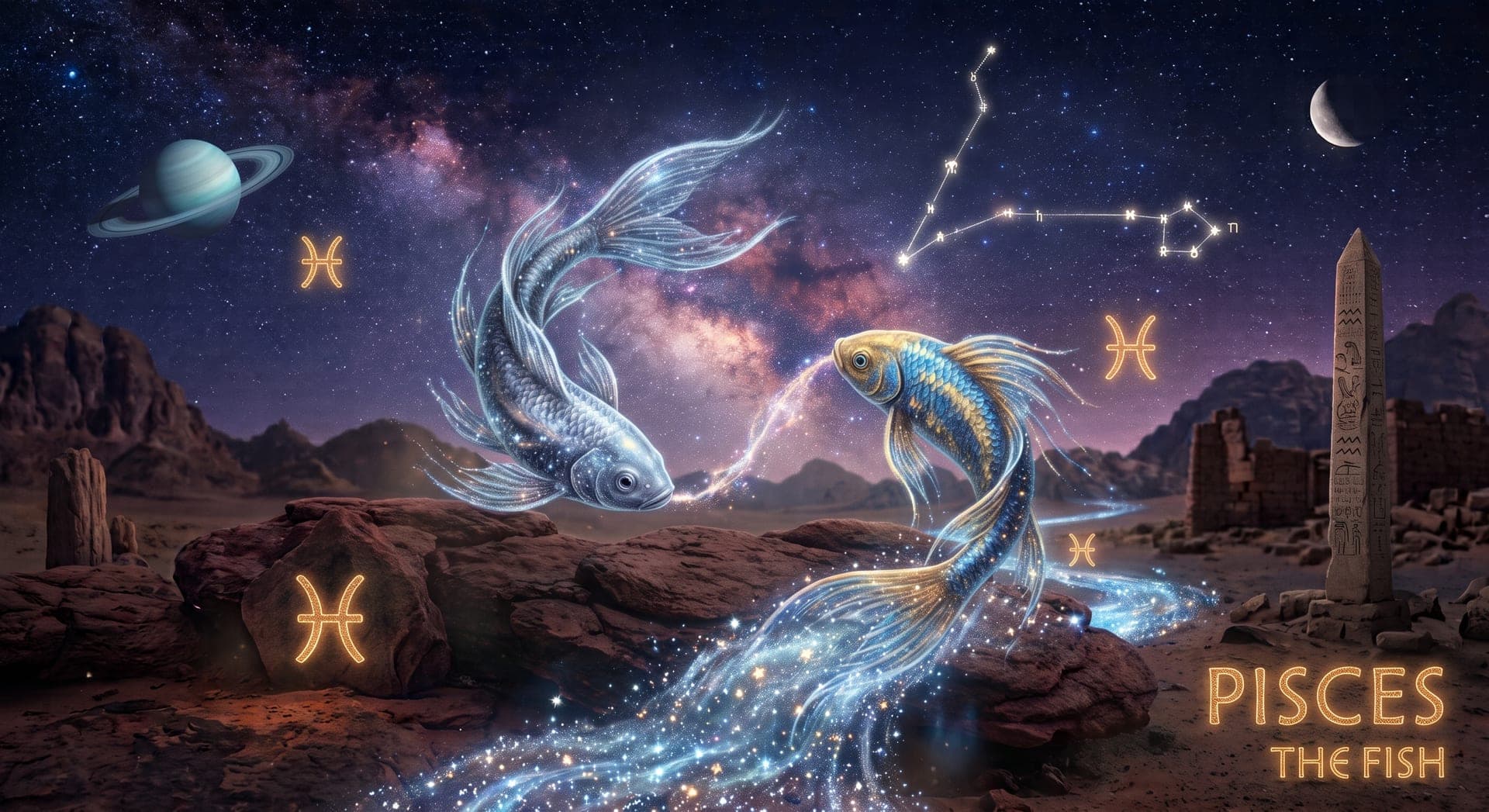
Born on March 20: Pisces ♓
Pisces, the twelfth and final sign of the zodiac, spans February 19 to March 20 and is symbolized by two fish swimming in opposite directions, tied together by a cord, representing the tension between fantasy and reality, or the conscious and subconscious mind. Ruled by Neptune, the planet of dreams, intuition, and illusion, Pisces is widely regarded as the most emotionally sensitive and imaginative sign of the zodiac. As a Water sign, Pisces navigates the world primarily through feeling and empathy, often absorbing the moods of people around it as though they were its own. Its Mutable modality reflects a deep adaptability and fluidity, comfortable going with the flow rather than forcing rigid plans. People born under this sign are often drawn to art, music, and other creative or spiritual pursuits where their vivid imagination can take shape. Compassionate to a fault, Pisces individuals are frequently the ones quietly caring for others, sometimes at the expense of their own boundaries and needs.
Personality Traits
Strengths
- Deeply empathetic and compassionate
- Highly imaginative and artistic
- Intuitive and perceptive
- Selfless and generous
- Adaptable to change
Weaknesses
- Prone to escapism or avoidance
- Overly trusting, can be taken advantage of
- Difficulty setting boundaries
- Tends toward melancholy
- Indecisive
Compatible Signs
Fun Facts
- Pisces' symbol of two fish bound together swimming in opposite directions comes from a Greek myth in which Aphrodite and Eros transformed into fish and tied themselves together to escape the monster Typhon.
- As the twelfth and final sign of the zodiac, Pisces is often described as embodying traits of all the preceding signs, a kind of culmination of the zodiac wheel.
- Neptune, Pisces' modern ruling planet, is the Roman god of the sea, discovered in 1846 and named for its blue, oceanic appearance.
- Notable Pisces include Albert Einstein, Rihanna, Steve Jobs, and Kurt Cobain.
- Classical astrology assigns Jupiter as Pisces' ruler, before Neptune's discovery in the 19th century gave the sign its modern ruling planet.
Born on March 20
- 43
Ovid
Roman poet known for "Metamorphoses"
- 1828
Henrik Ibsen
Norwegian playwright known as the father of modern drama
- 1856
John Lavery
Belfast-born painter renowned for his portraits and depictions of high society, later appointed an official artist of the First World War.
- 1904
B. F. Skinner
American psychologist known for behaviorism research
- 1908
Michael Redgrave
English actor of stage and screen and patriarch of the Redgrave acting dynasty, celebrated for roles in films like The Lady Vanishes.
- 1917
Vera Lynn
English singer known as "The Forces' Sweetheart" for morale-boosting wartime songs such as "We'll Meet Again".
- 1928
Fred Rogers
American television host of "Mister Rogers' Neighborhood"
- 1950
Carl Palmer
English drummer and founding member of the progressive rock supergroup Emerson, Lake & Palmer.
- 1956
Catherine Ashton
English politician who served as the European Union's first High Representative for Foreign Affairs and Security Policy.
- 1957
Spike Lee
American filmmaker known for "Do the Right Thing"
- 1963
David Thewlis
English actor known for roles including Remus Lupin in the Harry Potter films and his award-winning performance in Naked.
- 1965
William Dalrymple
Scottish historian and travel writer known for acclaimed books on South Asian and Mughal history.
- 1969
Yvette Cooper
British Labour politician who has served as Home Secretary and chaired the House of Commons Home Affairs Committee.
- 1976
Chester Bennington
American singer, frontman of Linkin Park
- 1984
Fernando Torres
Spanish professional footballer

On This Day in History
- 1602
The Dutch East India Company (VOC) was established, becoming the world's first multinational corporation to issue public stock.
Chartered by the States General of the Netherlands and granted a monopoly on Dutch trade in Asia, the VOC combined competing merchant fleets into a single powerful enterprise with quasi-governmental powers, including the ability to wage war, negotiate treaties, and establish colonies. It dominated the spice trade for nearly two centuries and is widely regarded as a model for the modern joint-stock corporation before its dissolution in 1799.
- 1616
Sir Walter Raleigh was released from the Tower of London after thirteen years' imprisonment on a charge of treason.
Raleigh, the celebrated Elizabethan courtier, soldier, and explorer, had been condemned following the accession of James I amid accusations of plotting against the new king. His release was secured on the promise of leading an expedition to find gold in Guiana. The venture failed disastrously and violated a peace treaty with Spain, leading to Raleigh's re-arrest and execution under his original death sentence in 1618.
- 1815
Napoleon Bonaparte entered Paris after escaping exile on Elba, beginning the period known as the Hundred Days.
Having slipped past his guards on Elba and landed in southern France, Napoleon marched on the capital gathering troops sent to stop him, entering Paris to a hero's welcome as King Louis XVIII fled. His brief return to power ended with his final defeat at the Battle of Waterloo in June, after which he was exiled to the remote island of Saint Helena for the rest of his life.
- 1852
Harriet Beecher Stowe's novel "Uncle Tom's Cabin" is published, galvanizing Northern opposition to slavery.
Harriet Beecher Stowe's anti-slavery novel "Uncle Tom's Cabin," which had been serialized the previous year, was published in book form and became a massive bestseller. Its vivid depiction of slavery's cruelties intensified Northern abolitionist sentiment and is often credited with helping set the stage for the Civil War.
- 1890
German Chancellor Otto von Bismarck is dismissed by Kaiser Wilhelm II after nearly two decades in power.
Kaiser Wilhelm II dismissed Chancellor Otto von Bismarck, the architect of German unification who had dominated European diplomacy for nearly two decades, after growing tensions over foreign and domestic policy. Bismarck's departure marked a shift toward the more erratic and confrontational foreign policy that contributed to World War I.
- 1890
Otto von Bismarck, the architect of German unification, was dismissed as Chancellor of the German Empire by Kaiser Wilhelm II.
Bismarck had dominated European diplomacy for nearly three decades, engineering the unification of Germany and building a complex system of alliances to preserve the peace. Growing friction with the young, assertive Kaiser over foreign and domestic policy led to Bismarck's forced resignation. His departure removed a stabilising hand from German diplomacy, and historians have long debated its role in the drift toward the First World War.
- 1914
More than 100 British Army officers stationed at the Curragh camp in Ireland threatened to resign rather than enforce Home Rule on Ulster.
With the Third Home Rule Bill nearing passage, officers led by Brigadier-General Hubert Gough indicated they would refuse orders to coerce Ulster unionists opposed to Irish self-government. The crisis exposed deep sympathies for unionism within the British military establishment and badly embarrassed the government, undermining confidence that the army could be relied upon to implement Home Rule policy in Ireland.
- 1916
Albert Einstein submits his paper formally establishing the general theory of relativity.
Albert Einstein completed and submitted his paper on the general theory of relativity, presenting a revolutionary new understanding of gravity as the curvature of spacetime caused by mass. The theory, later confirmed by observations of light bending during a solar eclipse, transformed modern physics.
- 1942
General Douglas MacArthur delivers his famous "I shall return" pledge after evacuating the besieged Philippines.
Ordered to leave the besieged Philippines for Australia, General Douglas MacArthur delivered his famous pledge "I shall return," vowing to liberate the islands from Japanese occupation. He fulfilled the promise with his dramatic return to the Philippines in October 1944.
- 1956
Tunisia gains independence from France.
Tunisia achieved independence from nearly seventy-five years of French colonial rule following negotiations led by nationalist leader Habib Bourguiba, who became the country's first president and ruled for three decades. The relatively peaceful transition contrasted sharply with the violent, protracted independence struggle that would soon engulf neighboring Algeria, where French settlers resisted decolonization far more fiercely.
- 1956
Tunisia gained independence from France after 75 years as a French protectorate.
Negotiations between French authorities and Tunisian nationalist leader Habib Bourguiba's Neo Destour party produced a protocol ending French control, months after France had granted autonomy to Morocco. Bourguiba became the new nation's first prime minister and later its first president, steering Tunisia toward a secular, modernising path that set it apart from many of its regional neighbours.
- 1972
A Provisional IRA car bomb exploded on a busy Belfast street, killing seven people and injuring around 148 more.
The device detonated on Lower Donegall Street after a warning that misdirected police into evacuating crowds toward the bomb rather than away from it, sharply increasing casualties. The attack was among the deadliest single incidents in Belfast during the early years of the Troubles and intensified pressure that led, days later, to the British government suspending Northern Ireland's devolved parliament and imposing direct rule from Westminster.
- 1987
The FDA approves AZT, the first drug found effective in treating HIV/AIDS.
The FDA approved zidovudine, known as AZT, as the first drug shown to slow the progression of HIV/AIDS, offering a measure of hope during the height of the epidemic. Though later found to have significant side effects and limited long-term efficacy alone, it marked a crucial early step in antiretroviral therapy.
- 1993
An IRA bomb attack in the English town of Warrington killed two young boys and injured dozens of shoppers.
Two bombs hidden in litter bins on a busy shopping street exploded despite a telephoned warning, killing three-year-old Johnathan Ball and twelve-year-old Tim Parry. The deaths of the two children provoked widespread revulsion in both Britain and Ireland, galvanising cross-community peace campaigns and contributing to the political momentum that eventually led toward the Northern Ireland peace process.
- 1995
The Aum Shinrikyo cult releases sarin nerve gas on the Tokyo subway, killing fourteen people and injuring thousands.
Members of the Aum Shinrikyo religious cult released sarin nerve gas on five separate Tokyo subway trains during rush hour, killing fourteen people and injuring thousands more. The unprecedented chemical attack on a civilian population shocked Japan and prompted a major reassessment of domestic security and cult oversight.
- 1995
Members of the Aum Shinrikyo cult released sarin nerve gas on the Tokyo subway during morning rush hour, killing fourteen people and injuring more than 6,000.
Cult members punctured bags of liquid sarin on five trains converging on central Tokyo, timing the attack to disrupt an imminent police raid on the group's compounds. It remains Japan's deadliest act of domestic terrorism and exposed the country's vulnerability to chemical terrorism, triggering a nationwide crackdown on the doomsday cult, whose leader, Shoko Asahara, was later executed for orchestrating the attack.
- 2003
The United States and coalition allies begin the invasion of Iraq.
United States and coalition forces launched the invasion of Iraq with a massive air campaign targeting Baghdad and other strategic sites, beginning a conflict justified by claims of hidden weapons of mass destruction that were never subsequently found. The war toppled Saddam Hussein's government within weeks but led to a prolonged, costly insurgency and occupation lasting nearly a decade.
- 2003
A US-led coalition that included the United Kingdom, Australia, and Poland launched the invasion of Iraq.
The ground invasion followed the previous night's opening airstrikes and swiftly advanced toward Baghdad, encountering fierce but ultimately unsuccessful Iraqi resistance. British forces led the assault on Basra and southern Iraq while American units drove toward the capital. Baghdad fell within three weeks, but the invasion, launched without explicit UN Security Council authorisation, triggered years of insurgency and reshaped Middle Eastern geopolitics for decades.
- 2010
Iceland's Eyjafjallajokull volcano begins erupting, eventually disrupting European air travel for days.
Iceland's Eyjafjallajokull volcano, beneath a glacier in the country's south, began an eruption that initially caused only local disruption. Weeks later a more explosive phase sent massive ash clouds high into European airspace, grounding flights across the continent for days and causing one of the largest disruptions to civil aviation since World War II, stranding millions of travelers.
- 2015
A rare alignment of a total solar eclipse, the spring equinox, and a supermoon all occur on the same day.
A rare astronomical convergence brought a total solar eclipse, the March equinox, and a supermoon together on the same day, an alignment that will not recur for many decades. The eclipse's path was visible primarily across the North Atlantic and Arctic regions.