
What’s Observed on March 19
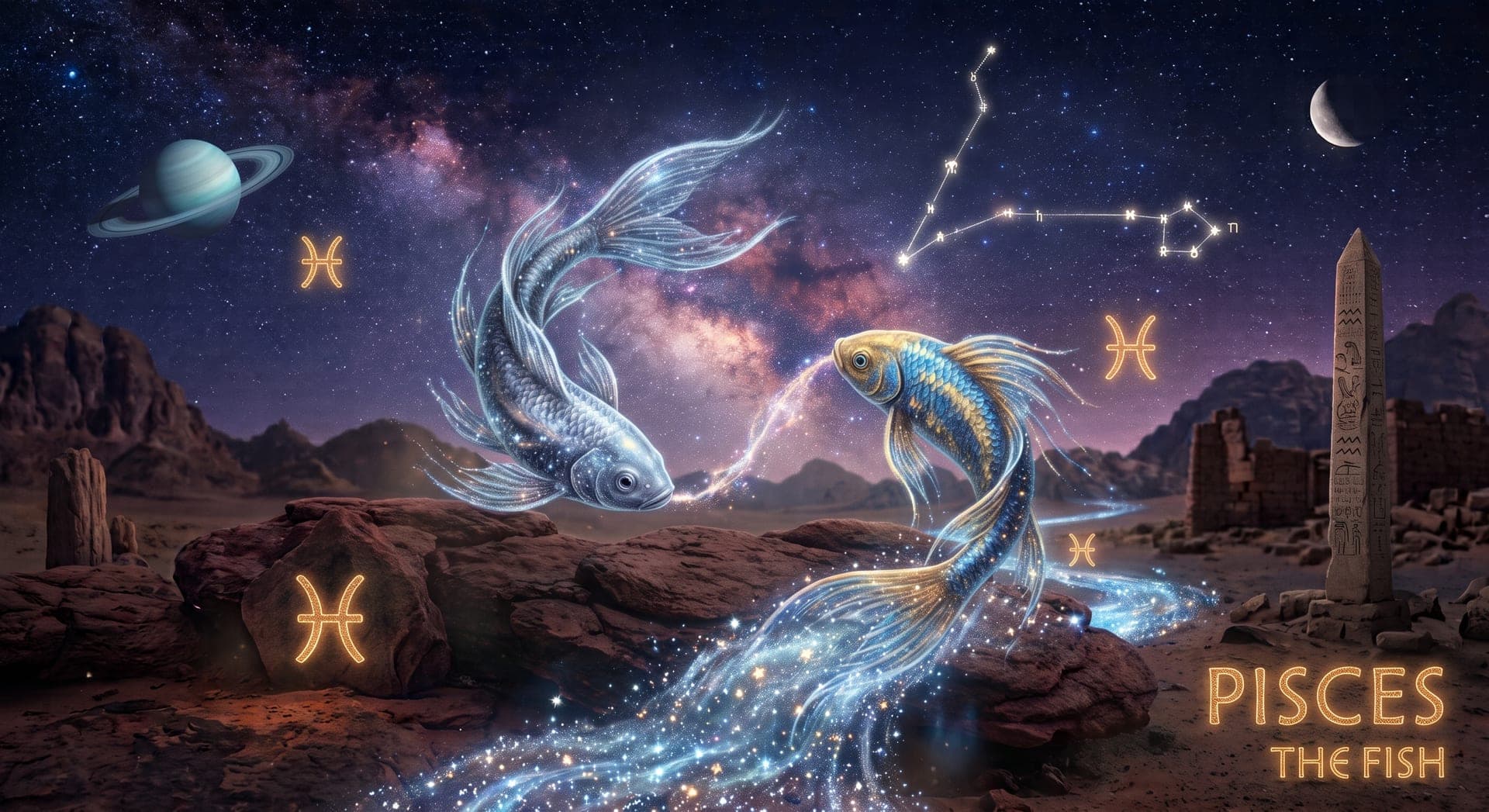
Born on March 19: Pisces ♓
Pisces, the twelfth and final sign of the zodiac, spans February 19 to March 20 and is symbolized by two fish swimming in opposite directions, tied together by a cord, representing the tension between fantasy and reality, or the conscious and subconscious mind. Ruled by Neptune, the planet of dreams, intuition, and illusion, Pisces is widely regarded as the most emotionally sensitive and imaginative sign of the zodiac. As a Water sign, Pisces navigates the world primarily through feeling and empathy, often absorbing the moods of people around it as though they were its own. Its Mutable modality reflects a deep adaptability and fluidity, comfortable going with the flow rather than forcing rigid plans. People born under this sign are often drawn to art, music, and other creative or spiritual pursuits where their vivid imagination can take shape. Compassionate to a fault, Pisces individuals are frequently the ones quietly caring for others, sometimes at the expense of their own boundaries and needs.
Personality Traits
Strengths
- Deeply empathetic and compassionate
- Highly imaginative and artistic
- Intuitive and perceptive
- Selfless and generous
- Adaptable to change
Weaknesses
- Prone to escapism or avoidance
- Overly trusting, can be taken advantage of
- Difficulty setting boundaries
- Tends toward melancholy
- Indecisive
Compatible Signs
Fun Facts
- Pisces' symbol of two fish bound together swimming in opposite directions comes from a Greek myth in which Aphrodite and Eros transformed into fish and tied themselves together to escape the monster Typhon.
- As the twelfth and final sign of the zodiac, Pisces is often described as embodying traits of all the preceding signs, a kind of culmination of the zodiac wheel.
- Neptune, Pisces' modern ruling planet, is the Roman god of the sea, discovered in 1846 and named for its blue, oceanic appearance.
- Notable Pisces include Albert Einstein, Rihanna, Steve Jobs, and Kurt Cobain.
- Classical astrology assigns Jupiter as Pisces' ruler, before Neptune's discovery in the 19th century gave the sign its modern ruling planet.
Born on March 19
- 1813
David Livingstone
Scottish missionary and explorer who mapped large areas of central Africa and campaigned against the East African slave trade.
- 1821
Richard Francis Burton
English explorer, linguist, and diplomat famed for his journey to Mecca in disguise and his search for the source of the Nile.
- 1860
William Jennings Bryan
American statesman and three-time presidential candidate
- 1883
Norman Haworth
English chemist who determined the structure of vitamin C and won the 1937 Nobel Prize in Chemistry.
- 1891
Earl Warren
14th Chief Justice of the United States
- 1907
Elizabeth Maconchy
English composer known for her expressive chamber music, particularly a celebrated cycle of string quartets.
- 1921
Tommy Cooper
Welsh magician and comedian famous for his deliberately bungled magic tricks and catchphrase "Just like that!"
- 1928
Patrick McGoohan
American-born British actor, raised in Ireland and England, best known for creating and starring in the cult television series "The Prisoner" and for playing John Drake in "Danger Man"
- 1943
Mario J. Molina
Mexican chemist, Nobel laureate for ozone depletion research
- 1973
Ashley Giles
English cricketer who played as a spin bowler for the national Test team and later served as a director of the England and Wales Cricket Board.
- 1988
Clayton Kershaw
American professional baseball pitcher
- 1993
Hakim Ziyech
Moroccan professional footballer

On This Day in History
- 1279
Mongol forces destroy the remaining Song dynasty fleet at the Battle of Yamen, completing the Mongol conquest of China.
Mongol forces under Kublai Khan's general destroyed the last remnants of the Song dynasty's navy at the Battle of Yamen off the southern Chinese coast, prompting loyalist officials to drown the child emperor rather than allow his capture. The battle completed the Mongol conquest of China, establishing the Yuan dynasty.
- 1279
The Mongol-led Yuan fleet destroyed the remaining Song dynasty navy at the Battle of Yamen, ending three centuries of Song rule in China.
Trapped in the Pearl River estuary with no escape route, the Song loyalist fleet was overwhelmed despite fierce resistance. Rather than be captured, a loyalist minister carried the child emperor Bing into the sea and drowned with him, along with thousands of court officials and soldiers who followed. The victory completed the Mongol conquest of China and established the Yuan dynasty under Kublai Khan.
- 1284
King Edward I of England issued the Statute of Rhuddlan, formally incorporating the Principality of Wales into the Kingdom of England.
Issued after Edward's conquest of Wales and the death of the last native Welsh prince, Llywelyn ap Gruffudd, the statute reorganised Wales along English administrative lines, dividing it into counties governed by English law and officials. It marked the end of independent Welsh statehood for centuries and laid the legal groundwork for England's rule over Wales, though Welsh law persisted in some civil matters.
- 1649
England's House of Commons voted to abolish the House of Lords, declaring it "useless and dangerous" following the execution of Charles I.
The vote came weeks after the king's execution, as the victorious Parliamentarians moved to dismantle the remaining institutions of the old monarchy and establish a republican Commonwealth under Oliver Cromwell. The House of Lords would remain abolished for eleven years, only restored alongside the monarchy itself in 1660 when Charles II returned from exile.
- 1808
King Charles IV of Spain is forced to abdicate amid riots, with his son Ferdinand VII taking the throne.
Amid the Peninsular War and public anger at his pro-French policies, King Charles IV of Spain was forced to abdicate in favor of his son, who became Ferdinand VII. Napoleon subsequently manipulated both into ceding the throne to his own brother, triggering years of Spanish resistance and guerrilla warfare.
- 1921
IRA guerrillas fought their way out of a large British encirclement at Crossbarry, County Cork, in one of the biggest engagements of the Irish War of Independence.
Around 100 volunteers of the West Cork flying column, commanded by Tom Barry, ambushed advancing British forces before breaking through a ring of roughly 1,200 troops sent to trap them. Despite being heavily outnumbered, the column escaped with only a handful of casualties while inflicting significantly greater losses on Crown forces, a rare tactical success that boosted republican morale in the closing months of the war.
- 1932
The Sydney Harbour Bridge officially opens, becoming an enduring symbol of the Australian city.
The Sydney Harbour Bridge, an engineering feat connecting Sydney's central business district with the North Shore across one of the world's widest and deepest harbors, officially opened after eight years of construction that employed thousands of workers during the Depression. Nicknamed "the Coathanger" for its distinctive steel arch design, it remains one of Australia's most recognizable landmarks.
- 1932
The Sydney Harbour Bridge officially opened, becoming the centrepiece of Australia's largest city.
Nicknamed "the Coathanger" for its distinctive steel arch, the bridge took eight years to build and was, at the time, the widest long-span bridge in the world. Its opening ceremony was famously disrupted when a fringe monarchist, Francis de Groot, rode forward on horseback and slashed the ribbon with his sword before the official opening, protesting that an unelected politician was allowed to cut it.
- 1944
German forces occupy Hungary, a former Axis ally whose loyalty had grown uncertain.
German forces occupied Hungary in Operation Margarethe, concerned that Hungary's leadership under Regent Miklos Horthy was secretly seeking a separate peace with the advancing Allies as the war turned against the Axis. The occupation led directly to the installation of a more compliant government and the mass deportation of hundreds of thousands of Hungarian Jews to Nazi concentration camps in the following months.
- 1945
Adolf Hitler issues his "Nero Decree," ordering the destruction of German infrastructure to deny it to advancing Allied forces.
As Allied forces advanced deep into Germany, Hitler issued an order commanding the destruction of German infrastructure, industry, and resources to prevent their use by the enemy, a scorched-earth policy that would have devastated the country. Armaments minister Albert Speer quietly worked to undermine its implementation.
- 1962
A ceasefire takes effect, formally ending the eight-year Algerian War of Independence from France.
A ceasefire mandated by the Evian Accords took effect between French forces and Algerian nationalists, formally ending more than seven years of brutal warfare that had claimed hundreds of thousands of lives. Algeria achieved full independence months later following a referendum.
- 1962
A ceasefire brought the eight-year Algerian War of Independence against French colonial rule to an end.
The Evian Accords, signed the previous day, established a ceasefire and set out terms for Algerian self-determination, ending a brutal conflict that had killed hundreds of thousands of people. A referendum months later confirmed Algerian independence, which was formally declared in July 1962, ending 132 years of French colonial rule and triggering the exodus of most of Algeria's European settler population.
- 1969
The television transmitting mast at Emley Moor in West Yorkshire collapsed after heavy ice accumulated on its guy wires, cutting broadcasts to over six million viewers.
The 385-metre steel lattice mast, one of the tallest structures in Britain, buckled under the added weight of ice and strong winds, coming down without causing any deaths. The collapse knocked out television and radio signals across a wide swathe of northern England for weeks and led to the construction of the current freestanding concrete Emley Moor tower, still the tallest structure in the United Kingdom.
- 1982
Argentine forces land on South Georgia Island, an early step in the Falklands War with Britain.
Argentine scrap metal workers, accompanied by military personnel disguised as civilians, landed on the British-administered island of South Georgia in the South Atlantic and raised the Argentine flag over the disputed territory. The provocative incident escalated tensions between the two nations and contributed directly to Argentina's full invasion of the Falkland Islands and the outbreak of war with Britain weeks later.
- 1982
Argentine scrap-metal workers raised their national flag on the British territory of South Georgia, an incident that helped trigger the Falklands War.
A party of Argentine civilians, ostensibly there to dismantle a disused whaling station, landed on the remote South Atlantic island and hoisted the Argentine flag without British authorisation. The provocation heightened tensions between Britain and Argentina over the disputed Falkland Islands and their dependencies, and within weeks Argentina had launched a full invasion, prompting Britain to send a naval task force to retake the territories.
- 1989
Egypt's flag is raised over Taba, marking the final return of Egyptian territory occupied by Israel since 1967.
Israel completed the return of the small but strategically significant Taba enclave on the Gulf of Aqaba to Egypt, following years of international arbitration over the exact border demarcation. The handover resolved the final territorial dispute remaining from the 1979 Egypt-Israel peace treaty and the earlier phased return of the broader Sinai Peninsula that Israel had occupied since 1967.
- 2003
President George W. Bush addresses the nation as the United States begins its invasion of Iraq.
President George W. Bush addressed the American public to announce that U.S. and coalition forces had begun military operations against Iraq, citing the need to disarm Saddam Hussein's government of alleged weapons of mass destruction that were never subsequently found.
- 2003
US President George W. Bush announced the start of the invasion of Iraq in a televised address to the nation.
The address came hours after a US-led coalition, which included British forces, launched an initial airstrike targeting Iraqi leader Saddam Hussein following the expiry of a 48-hour ultimatum for him to leave the country. The invasion, launched without explicit United Nations authorisation, began a conflict that would topple Saddam's government within weeks but lead to years of insurgency and instability in Iraq.
- 2023
Swiss authorities broker a deal for banking giant UBS to acquire troubled rival Credit Suisse amid a global banking crisis.
Amid a crisis of confidence in the global banking sector following the sudden collapse of Silicon Valley Bank in the United States, Swiss regulators brokered an emergency weekend deal for banking giant UBS to acquire its long-troubled rival Credit Suisse. The forced merger averted the disorderly failure of a globally significant financial institution and reshaped the Swiss banking landscape.
- 2023
Swiss banking giant UBS agreed to acquire its stricken rival Credit Suisse in an emergency, government-brokered rescue deal.
The takeover, arranged over a single weekend by Swiss regulators and the government, aimed to prevent Credit Suisse's collapse from triggering wider panic in the global banking system following the failure of several US banks days earlier. The deal wiped out billions of dollars in Credit Suisse's riskier bonds and marked the end of one of the world's most storied financial institutions after 167 years.