
What’s Observed on March 18
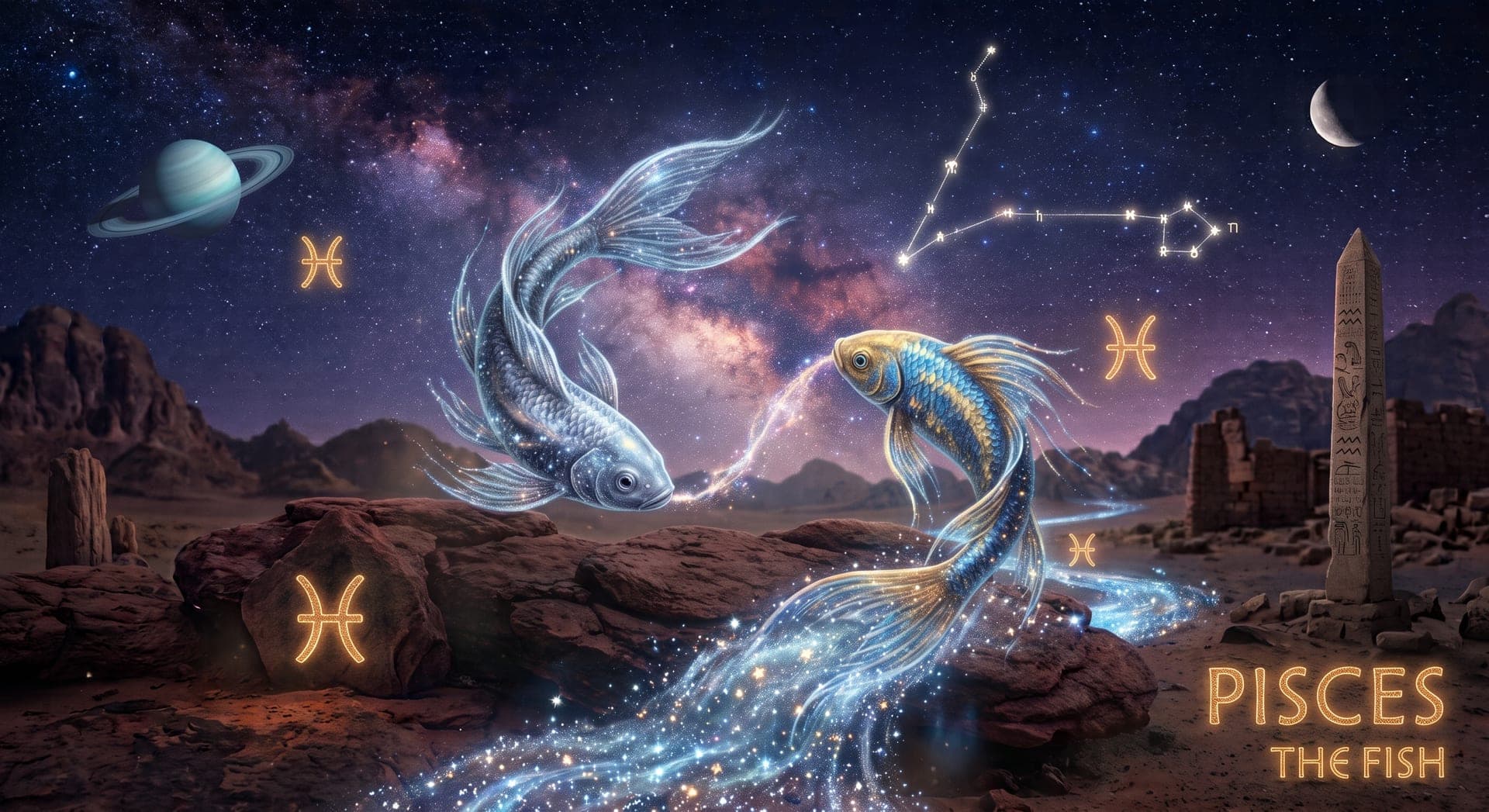
Born on March 18: Pisces ♓
Pisces, the twelfth and final sign of the zodiac, spans February 19 to March 20 and is symbolized by two fish swimming in opposite directions, tied together by a cord, representing the tension between fantasy and reality, or the conscious and subconscious mind. Ruled by Neptune, the planet of dreams, intuition, and illusion, Pisces is widely regarded as the most emotionally sensitive and imaginative sign of the zodiac. As a Water sign, Pisces navigates the world primarily through feeling and empathy, often absorbing the moods of people around it as though they were its own. Its Mutable modality reflects a deep adaptability and fluidity, comfortable going with the flow rather than forcing rigid plans. People born under this sign are often drawn to art, music, and other creative or spiritual pursuits where their vivid imagination can take shape. Compassionate to a fault, Pisces individuals are frequently the ones quietly caring for others, sometimes at the expense of their own boundaries and needs.
Personality Traits
Strengths
- Deeply empathetic and compassionate
- Highly imaginative and artistic
- Intuitive and perceptive
- Selfless and generous
- Adaptable to change
Weaknesses
- Prone to escapism or avoidance
- Overly trusting, can be taken advantage of
- Difficulty setting boundaries
- Tends toward melancholy
- Indecisive
Compatible Signs
Fun Facts
- Pisces' symbol of two fish bound together swimming in opposite directions comes from a Greek myth in which Aphrodite and Eros transformed into fish and tied themselves together to escape the monster Typhon.
- As the twelfth and final sign of the zodiac, Pisces is often described as embodying traits of all the preceding signs, a kind of culmination of the zodiac wheel.
- Neptune, Pisces' modern ruling planet, is the Roman god of the sea, discovered in 1846 and named for its blue, oceanic appearance.
- Notable Pisces include Albert Einstein, Rihanna, Steve Jobs, and Kurt Cobain.
- Classical astrology assigns Jupiter as Pisces' ruler, before Neptune's discovery in the 19th century gave the sign its modern ruling planet.
Born on March 18
- 1789
Charlotte Elliott
English poet and hymn writer best known for composing the widely sung hymn "Just As I Am".
- 1828
Randal Cremer
English pacifist and Nobel Peace Prize laureate who founded the International Arbitration League and helped establish the Inter-Parliamentary Union.
- 1837
Grover Cleveland
22nd and 24th President of the United States
- 1844
Nikolai Rimsky-Korsakov
Russian composer known for "Scheherazade"
- 1858
Rudolf Diesel
German engineer who invented the diesel engine
- 1869
Neville Chamberlain
British Prime Minister remembered chiefly for his policy of appeasement toward Nazi Germany before the Second World War.
- 1893
Wilfred Owen
English poet whose visceral, unflinching verse about trench warfare made him one of the leading poets of the First World War.
- 1920
Fanny Waterman
English pianist and educator who founded the Leeds International Pianoforte Competition, one of the world's most prestigious piano contests.
- 1932
John Updike
American novelist and Pulitzer Prize winner
- 1945
Eric Woolfson
Scottish musician and songwriter who co-founded the progressive rock project the Alan Parsons Project.
- 1952
Pat Eddery
Irish-born champion jockey based in Britain who rode three Derby winners and was British Champion Jockey eleven times
- 1964
Courtney Pine
English jazz saxophonist who helped revitalise Britain's jazz scene in the 1980s and later blended jazz with reggae and hip-hop influences.
- 1970
Queen Latifah
American rapper, singer, and actress
- 1979
Adam Levine
American singer, frontman of Maroon 5
- 1989
Lily Collins
English-born actress known for roles in Emily in Paris and The Blind Side, daughter of musician Phil Collins.

On This Day in History
- 37
The Roman Senate proclaims Caligula emperor after annulling the will of his predecessor Tiberius.
Following the death of Emperor Tiberius, the Roman Senate proclaimed his 24-year-old great-nephew Gaius, nicknamed Caligula, as emperor, annulling Tiberius's will that would have shared power with another heir. Caligula's initially popular reign later descended into infamous cruelty and erratic behavior before his assassination four years later.
- 37
The Roman Senate proclaimed Caligula emperor following the death of his great-uncle Tiberius.
Caligula, born Gaius Julius Caesar Germanicus, was the popular young son of the beloved general Germanicus and initially enjoyed enormous public support. His reign began with a wave of goodwill and reforms, but he soon became notorious for extravagance, cruelty, and increasingly erratic behaviour, and was assassinated by his own guard within four years.
- 1314
Jacques de Molay, the last Grand Master of the Knights Templar, is burned at the stake in Paris.
Jacques de Molay, the final Grand Master of the Knights Templar, was burned at the stake in Paris on charges of heresy after years of imprisonment and torture under King Philip IV of France, who sought to seize the order's wealth. His death effectively ended the once-powerful medieval military order.
- 1644
The Powhatan Confederacy launched a surprise attack on English settlements in Virginia, beginning the Third Anglo-Powhatan War.
Led by the elderly chief Opechancanough, Powhatan warriors killed several hundred English colonists in a coordinated assault reminiscent of the 1622 uprising. The two-year conflict that followed ended in decisive defeat for the Powhatan Confederacy, whose remaining people were confined to reservations under English colonial authority, effectively ending organized Native resistance in the Virginia colony.
- 1766
The British Parliament repeals the unpopular Stamp Act, easing tensions with the American colonies.
The British Parliament repealed the 1765 Stamp Act, which had imposed direct taxes on printed materials in the American colonies and sparked fierce colonial resistance. While celebrated in the colonies, Parliament simultaneously passed the Declaratory Act asserting its right to legislate for the colonies, setting the stage for future conflict.
- 1766
The British Parliament repealed the Stamp Act, withdrawing the direct tax on American colonists that had provoked fierce resistance.
Passed the previous year to help fund British troops stationed in North America, the Stamp Act required colonists to pay for a physical stamp on legal documents, newspapers, and other paper goods. Widespread boycotts and protests, including the Stamp Act Congress, forced Parliament's hand. The same day, however, Parliament passed the Declaratory Act asserting its right to tax the colonies in the future, planting seeds for further conflict.
- 1834
Six farm labourers from Tolpuddle, Dorset, were sentenced to penal transportation to Australia for forming an early agricultural trade union.
The men, later known as the Tolpuddle Martyrs, had sworn a secret oath to form a friendly society protecting labourers' wages, an act deemed illegal under obscure legislation aimed at naval mutinies. Public outcry over their harsh seven-year transportation sentences sparked mass protests and petitions, and the men were eventually pardoned and returned home. The case became a founding legend of the British trade union movement.
- 1871
Parisians rise up and establish the revolutionary Paris Commune, which briefly governed the city.
Parisians, angered by the national government's attempt to seize the National Guard's cannons and by the hardships of the recent siege by Prussia, rose in revolt and established the Paris Commune, a radical socialist government that controlled the city for about two months before being violently suppressed.
- 1871
Parisian workers and National Guardsmen seized control of the city, establishing the revolutionary Paris Commune.
The uprising followed France's defeat in the Franco-Prussian War and resentment at the conservative national government's peace terms. The Commune governed Paris for just over two months, implementing radical social reforms, before French government troops brutally suppressed it during the bloody "Semaine sanglante," killing thousands of Communards. The episode became a touchstone for later socialist and communist movements.
- 1915
An Allied naval assault on the Dardanelles fails disastrously, with three battleships sunk, during World War I.
British and French warships attempted to force passage through the Dardanelles strait to threaten Constantinople but struck a minefield, losing three battleships and suffering heavy damage to others. The costly failure led Allied commanders to instead plan the ill-fated land invasion at Gallipoli.
- 1915
British and French battleships attempting to force the Dardanelles strait were sunk or crippled by Ottoman mines, a major setback in the Gallipoli campaign.
An Allied fleet including the British battleships HMS Irresistible and HMS Ocean tried to smash through Ottoman defences to open a sea route to Constantinople. Undetected minefields sank both British ships along with the French battleship Bouvet, killing hundreds of sailors. The failure convinced Allied commanders that naval power alone could not defeat the straits' defences, leading directly to the disastrous land invasion at Gallipoli weeks later.
- 1922
Mohandas Gandhi was sentenced to six years' imprisonment by a British colonial court in India on charges of sedition.
Gandhi had been arrested after publishing articles urging non-cooperation with British rule following violence at Chauri Chaura. At his trial in Ahmedabad he pleaded guilty and used the courtroom to indict British rule in India as a system of exploitation, in a statement that became one of the most famous speeches of the independence movement. He was released early in 1924 after an appendicitis operation.
- 1938
Mexico nationalizes its foreign-owned oil industry, establishing the state company that became Pemex.
President Lazaro Cardenas signed a decree nationalizing Mexico's foreign-owned oil companies after a bitter labor dispute, expropriating British and American holdings and creating the state-run company Pemex. The move, still celebrated annually as a milestone of Mexican economic sovereignty, prompted a temporary international boycott of Mexican oil by the affected foreign corporations and their governments.
- 1940
Adolf Hitler and Benito Mussolini meet at the Brenner Pass, cementing their wartime alliance.
Adolf Hitler met Benito Mussolini at the Brenner Pass on the Italian-Austrian border, seeking to secure Italian cooperation and passage of German troops through Italian territory as World War II expanded. The meeting reinforced the Axis alliance ahead of Germany's invasions later that year.
- 1962
France and Algerian nationalists sign the Evian Accords, agreeing to end the Algerian War of Independence.
French President Charles de Gaulle's government and representatives of Algeria's National Liberation Front signed the Evian Accords, agreeing to a ceasefire and a referendum on Algerian self-determination. The agreement effectively ended the brutal eight-year Algerian War of Independence, though a formal ceasefire took effect the next day.
- 1965
Soviet cosmonaut Alexei Leonov becomes the first person to walk in space.
Soviet cosmonaut Alexei Leonov exited his Voskhod 2 spacecraft tethered by a cable, becoming the first human to walk in space. His spacesuit swelled in the vacuum, nearly preventing his return to the capsule, in a harrowing episode not disclosed publicly until decades later.
- 1965
Soviet cosmonaut Alexei Leonov became the first person to walk in space, exiting his Voskhod 2 capsule for just over twelve minutes.
Leonov's spacesuit ballooned dangerously in the vacuum of space, forcing him to bleed air from the suit to squeeze back through the airlock, a near-fatal complication concealed from the public for decades. The feat gave the Soviet Union another high-profile victory in the Space Race, just weeks before American astronaut Ed White performed the first American spacewalk that June.
- 1967
The supertanker Torrey Canyon ran aground off the coast of Cornwall, causing Britain's worst oil spill to that date.
The Liberian-registered tanker spilled roughly 120,000 tonnes of crude oil into the English Channel, fouling beaches in Cornwall and across the water in France. The Royal Air Force and Navy bombed the wreck days later in an attempt to burn off the remaining oil, an operation of limited success. The disaster exposed the inadequacy of existing spill-response measures and spurred new international maritime pollution regulations.
- 2014
Russia and Crimean officials sign a treaty formalizing Russia's annexation of Crimea, a move most of the world refused to recognize.
Russian President Vladimir Putin signed a treaty with Crimean officials formalizing the peninsula's annexation from Ukraine, following a disputed referendum held under Russian military presence. The international community broadly condemned the annexation as illegal, imposing sanctions that strained relations between Russia and the West for years.
- 2014
Russia and representatives of Crimea signed a treaty formally annexing the Ukrainian peninsula following a disputed referendum.
The signing came days after a referendum on joining Russia that was held under military occupation and rejected as illegitimate by Ukraine and most of the international community. The annexation, Europe's first forcible seizure of territory since World War II, triggered Western sanctions against Russia and precipitated years of conflict in eastern Ukraine that escalated into full-scale war in 2022.