
What’s Observed on March 17
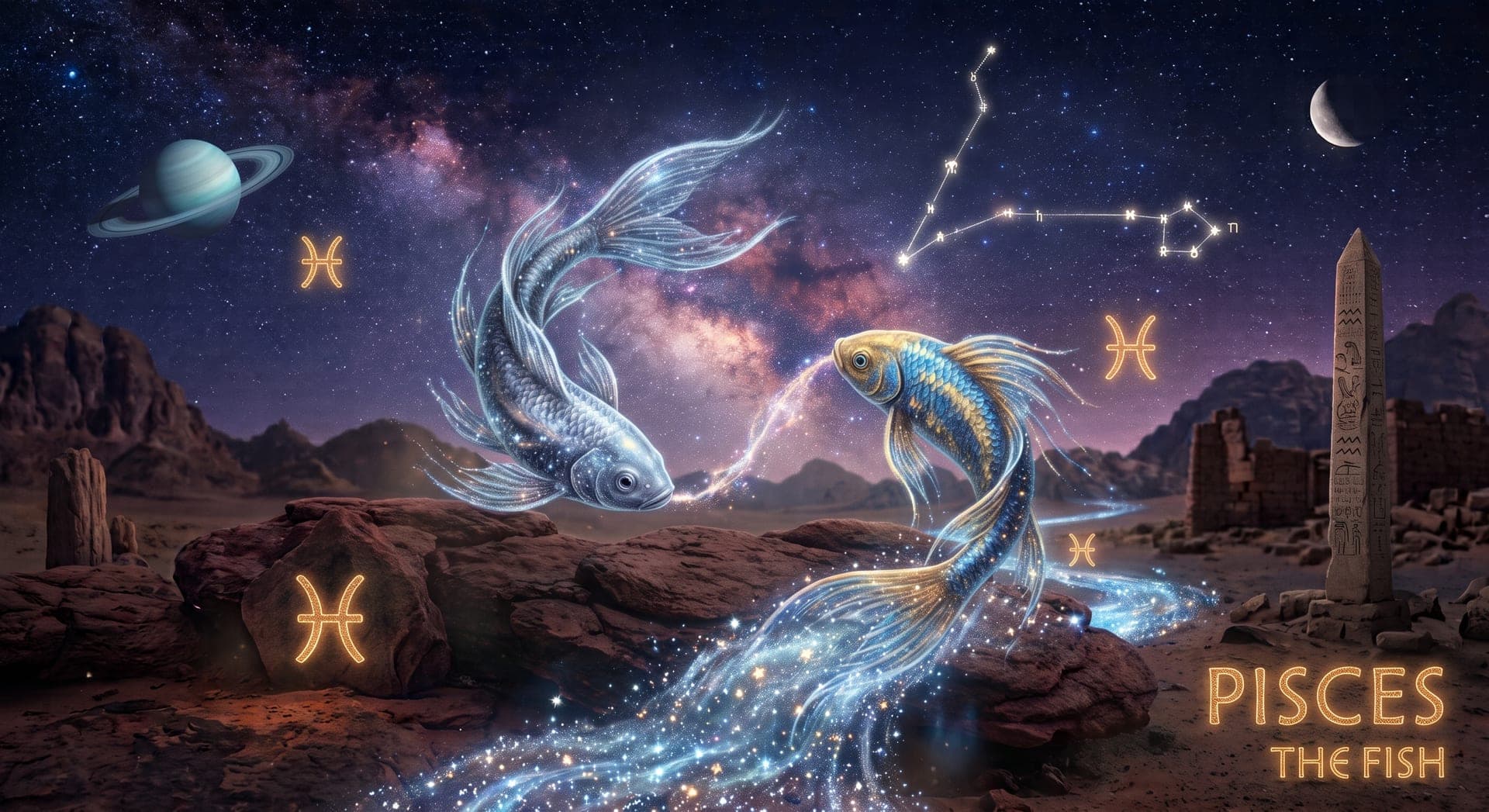
Born on March 17: Pisces ♓
Pisces, the twelfth and final sign of the zodiac, spans February 19 to March 20 and is symbolized by two fish swimming in opposite directions, tied together by a cord, representing the tension between fantasy and reality, or the conscious and subconscious mind. Ruled by Neptune, the planet of dreams, intuition, and illusion, Pisces is widely regarded as the most emotionally sensitive and imaginative sign of the zodiac. As a Water sign, Pisces navigates the world primarily through feeling and empathy, often absorbing the moods of people around it as though they were its own. Its Mutable modality reflects a deep adaptability and fluidity, comfortable going with the flow rather than forcing rigid plans. People born under this sign are often drawn to art, music, and other creative or spiritual pursuits where their vivid imagination can take shape. Compassionate to a fault, Pisces individuals are frequently the ones quietly caring for others, sometimes at the expense of their own boundaries and needs.
Personality Traits
Strengths
- Deeply empathetic and compassionate
- Highly imaginative and artistic
- Intuitive and perceptive
- Selfless and generous
- Adaptable to change
Weaknesses
- Prone to escapism or avoidance
- Overly trusting, can be taken advantage of
- Difficulty setting boundaries
- Tends toward melancholy
- Indecisive
Compatible Signs
Fun Facts
- Pisces' symbol of two fish bound together swimming in opposite directions comes from a Greek myth in which Aphrodite and Eros transformed into fish and tied themselves together to escape the monster Typhon.
- As the twelfth and final sign of the zodiac, Pisces is often described as embodying traits of all the preceding signs, a kind of culmination of the zodiac wheel.
- Neptune, Pisces' modern ruling planet, is the Roman god of the sea, discovered in 1846 and named for its blue, oceanic appearance.
- Notable Pisces include Albert Einstein, Rihanna, Steve Jobs, and Kurt Cobain.
- Classical astrology assigns Jupiter as Pisces' ruler, before Neptune's discovery in the 19th century gave the sign its modern ruling planet.
Born on March 17
- 1473
James IV of Scotland
King of Scotland from 1488 who modernised royal administration, patronised the arts and scholarship, and was killed at the Battle of Flodden in 1513.
- 1846
Kate Greenaway
English illustrator and author celebrated for her nostalgic, delicately drawn children's books; the Kate Greenaway Medal for illustration is named in her honour.
- 1877
Edith New
English suffragette known for chaining herself to railings at 10 Downing Street and smashing windows in militant campaigns for women's voting rights.
- 1880
Lawrence Oates
English army officer and Antarctic explorer on Robert Falcon Scott's fatal Terra Nova expedition, remembered for walking to his death rather than slow his companions.
- 1902
Bobby Jones
American golfer and co-founder of the Masters Tournament
- 1919
Nat King Cole
American singer and pianist known for "Unforgettable"
- 1919
Mike Hoare
British-Irish soldier and mercenary known as "Mad Mike" Hoare, who led mercenary forces during the Congo Crisis and the 1981 Seychelles coup attempt
- 1933
Penelope Lively
British novelist, born in Cairo, who won the 1987 Booker Prize for "Moon Tiger" and wrote acclaimed children's and adult fiction
- 1938
Rudolf Nureyev
Soviet-born ballet dancer and choreographer
- 1939
Robin Knox-Johnston
English sailor who became the first person to sail single-handed and non-stop around the world, completing the Sunday Times Golden Globe Race in 1969.
- 1944
Pattie Boyd
English model and photographer who inspired songs by both of her husbands, guitarists George Harrison and Eric Clapton, including "Layla" and "Wonderful Tonight".
- 1964
Rob Lowe
American actor
- 1969
Alexander McQueen
English fashion designer known for his dramatic, technically daring runway shows and tenure as chief designer at Givenchy before founding his own acclaimed label.
- 1990
Hozier
Irish singer-songwriter
- 1992
John Boyega
English actor who rose to international fame playing Finn in the Star Wars sequel trilogy.
- 1997
Katie Ledecky
American Olympic gold medalist swimmer

On This Day in History
- 45 BCE
Julius Caesar defeats the last significant Pompeian resistance at the Battle of Munda, effectively ending Rome's civil war.
Julius Caesar decisively defeated the sons of Pompey and the remaining forces loyal to the Republic at the Battle of Munda in southern Spain, in the bloodiest and hardest-fought engagement of his career. The victory eliminated the last significant military opposition to his rule, though he would be assassinated within the year.
- 45 BCE
Julius Caesar crushed the last major Pompeian army at the Battle of Munda in Spain.
The battle pitted Caesar's veteran legions against a force led by Pompey's sons, Gnaeus and Sextus, in what proved to be the bloodiest and most desperate fight of the civil war. Caesar's victory eliminated organized opposition to his rule across the Roman world, clearing his path to be declared dictator for life the following year, shortly before his assassination.
- 180
Commodus becomes sole emperor of Rome at eighteen, beginning a reign later remembered for excess and instability.
Following the death of his father, Marcus Aurelius, the 18-year-old Commodus became sole ruler of the Roman Empire after briefly co-ruling. His reign, marked by extravagance, gladiatorial obsession, and political instability, is often cited by historians as marking the beginning of Rome's long decline.
- 1337
Edward of Woodstock, later known as the Black Prince, was created Duke of Cornwall, the first dukedom in the English peerage.
King Edward III created the title for his eldest son and heir, establishing Cornwall as a hereditary duchy permanently attached to the sovereign's eldest son. The Black Prince went on to become one of medieval England's most celebrated commanders, winning renown at Crecy and Poitiers during the Hundred Years' War. The Duchy of Cornwall still passes automatically to the heir apparent today.
- 1776
British forces evacuate Boston after an eleven-month siege by the Continental Army, a major early American Revolutionary War victory.
British forces under General William Howe evacuated Boston by sea after colonial artillery, positioned overnight on Dorchester Heights, made the city untenable to hold. The bloodless victory, still celebrated as Evacuation Day in Massachusetts, was the first major success for George Washington's Continental Army.
- 1776
The British Army evacuated Boston after an eleven-month siege, marking an early American victory in the Revolutionary War.
General George Washington's Continental Army had fortified Dorchester Heights overlooking the harbor with cannon hauled from Fort Ticonderoga, making the British position untenable. Rather than risk another Bunker Hill, General William Howe withdrew his troops and thousands of Loyalist civilians by ship to Halifax, Nova Scotia. The withdrawal ended British military occupation of Boston for the remainder of the war.
- 1805
The Italian Republic is transformed into the Kingdom of Italy, with Napoleon as its king.
Napoleon, having already become President of the Italian Republic, had the Italian legislature transform the state into the Kingdom of Italy with himself as monarch, extending his direct control over northern Italian territories as part of his broader consolidation of power across Europe.
- 1824
Britain and the Netherlands signed the Anglo-Dutch Treaty, dividing their colonial interests in the Malay Archipelago.
The agreement resolved decades of Anglo-Dutch rivalry in Southeast Asia by having Britain cede its trading post at Bencoolen in Sumatra in exchange for Dutch recognition of British control over Malacca and Singapore. The treaty effectively drew the boundary that would separate British Malaya from the Dutch East Indies, shaping the modern border between Malaysia and Indonesia.
- 1861
The Kingdom of Italy is formally proclaimed, completing the unification of the Italian peninsula under Victor Emmanuel II.
Following decades of the Risorgimento unification movement, the various Italian states were formally consolidated into the Kingdom of Italy under King Victor Emmanuel II of Savoy. Rome would not be incorporated until 1870, but the proclamation marked the effective birth of the modern Italian nation-state.
- 1861
The Kingdom of Italy was formally proclaimed, unifying most of the Italian peninsula under King Victor Emmanuel II.
The declaration marked the culmination of the Risorgimento movement, which had spent decades working to merge Italy's separate kingdoms, duchies, and papal territories into one nation. Turin served as the new kingdom's first capital. Rome and Venice were added to the kingdom later, following further conflicts, completing Italian unification by 1871.
- 1891
The emigrant steamship SS Utopia collided with the Royal Navy ironclad HMS Anson in Gibraltar harbour and sank, killing 562 people.
Utopia, carrying mostly Italian emigrants bound for the United States, struck the anchored British battleship during a gale and went down within minutes. Sailors from Anson and other Royal Navy vessels in the harbour launched a desperate rescue effort in heavy seas, saving hundreds, but the majority of those aboard drowned or were trapped below decks, making it one of the deadliest peacetime shipwrecks of the era.
- 1948
Belgium, France, Luxembourg, the Netherlands, and the United Kingdom sign the Treaty of Brussels, an early precursor to NATO.
Five Western European nations signed the Treaty of Brussels, establishing a mutual defense pact and economic cooperation framework in response to postwar instability and Soviet expansion. The agreement served as an important precursor to the founding of NATO the following year.
- 1948
Britain, France, and the Benelux countries signed the Treaty of Brussels, a mutual-defence pact that laid groundwork for NATO.
Negotiated as Soviet influence spread across Eastern Europe in the early Cold War, the treaty bound the United Kingdom, France, Belgium, the Netherlands, and Luxembourg to collective self-defence alongside economic and cultural cooperation. It established the Western Union's joint defence organisation under British and French military leadership and served as a direct forerunner to both NATO, founded the following year, and the Western European Union.
- 1963
Mount Agung erupts on the Indonesian island of Bali, killing over a thousand people.
Mount Agung, a volcano on the Indonesian island of Bali long considered dormant, erupted violently, sending pyroclastic flows through nearby villages and killing over a thousand people. It remains one of the deadliest volcanic eruptions of the 20th century and reshaped Balinese religious and cultural practices surrounding the mountain.
- 1969
Golda Meir becomes the first female Prime Minister of Israel.
Golda Meir was sworn in as Israel's fourth prime minister, becoming the first woman to hold the post and only the third female head of government in the world at the time. She led Israel through the difficult 1973 Yom Kippur War before resigning amid criticism of the country's preparedness.
- 1969
Golda Meir was sworn in as Prime Minister of Israel, becoming the country's first and, to date, only woman to hold the office.
Meir, a co-signer of Israel's declaration of independence and former foreign minister, took office after the sudden death of Levi Eshkol. She led the country through the tense build-up to the 1973 Yom Kippur War before resigning the following year amid criticism of Israel's preparedness for that conflict. She remains one of a small number of women to have led a Middle Eastern nation.
- 1973
The Pulitzer Prize-winning photograph "Burst of Joy," depicting a reunited prisoner-of-war family, is taken as American involvement in Vietnam wound down.
Photojournalist Slava Veder captured Air Force Lieutenant Colonel Robert Stirm being reunited with his family after years as a prisoner of war in Vietnam, his daughter running to embrace him with arms outstretched. The photograph, titled "Burst of Joy," won the Pulitzer Prize and became an enduring image of the war's end.
- 1979
Two workers were killed when the disused Penmanshiel Tunnel on Scotland's East Coast Main Line collapsed during engineering works.
Contractors were lowering the trackbed inside the Victorian-era tunnel near Cockburnspath in the Scottish Borders when a section of the roof gave way, burying the men under tonnes of rock and debris. The collapse forced British Rail to permanently reroute the East Coast Main Line around the site rather than attempt a costly and dangerous reopening, leaving a visible diversion in the line still used today.
- 1992
White South African voters approve ending apartheid in a landslide referendum, clearing the way for democratic elections.
In a whites-only referendum, South African voters overwhelmingly approved President F.W. de Klerk's reform program to negotiate an end to apartheid, granting him a mandate to continue talks with Nelson Mandela's African National Congress. The result paved the way toward the country's first multiracial elections four years later.
- 2003
Robin Cook resigned from the British Cabinet in protest at the government's plan to invade Iraq without explicit United Nations backing.
Cook, who had earlier served as Foreign Secretary, delivered a widely praised resignation speech to the House of Commons arguing that military action lacked broad international support and a clear legal basis. His departure, days before the invasion began, was the most senior ministerial resignation from Tony Blair's government over Iraq policy and crystallised opposition within the Labour Party.