
What’s Observed on March 16
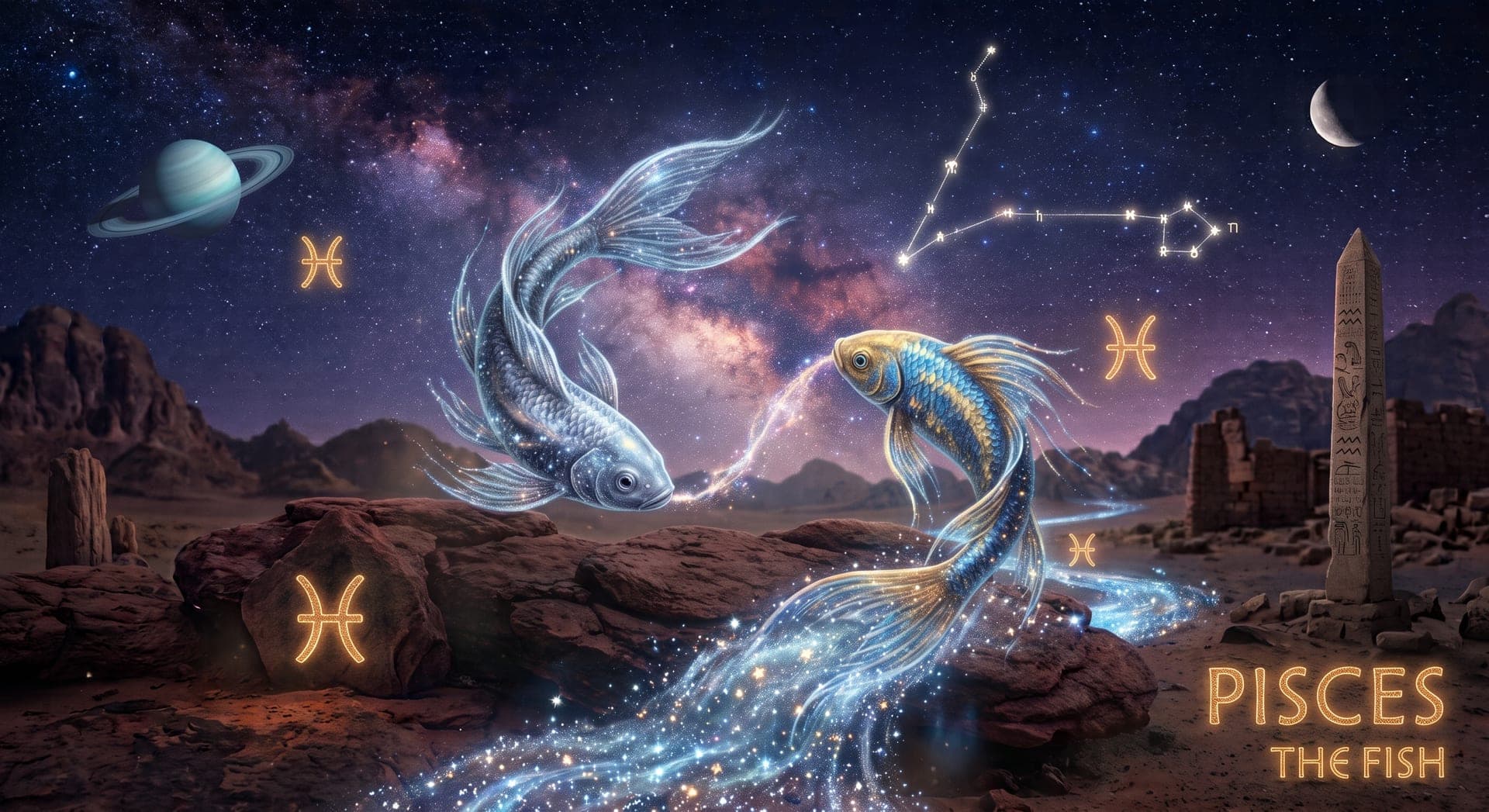
Born on March 16: Pisces ♓
Pisces, the twelfth and final sign of the zodiac, spans February 19 to March 20 and is symbolized by two fish swimming in opposite directions, tied together by a cord, representing the tension between fantasy and reality, or the conscious and subconscious mind. Ruled by Neptune, the planet of dreams, intuition, and illusion, Pisces is widely regarded as the most emotionally sensitive and imaginative sign of the zodiac. As a Water sign, Pisces navigates the world primarily through feeling and empathy, often absorbing the moods of people around it as though they were its own. Its Mutable modality reflects a deep adaptability and fluidity, comfortable going with the flow rather than forcing rigid plans. People born under this sign are often drawn to art, music, and other creative or spiritual pursuits where their vivid imagination can take shape. Compassionate to a fault, Pisces individuals are frequently the ones quietly caring for others, sometimes at the expense of their own boundaries and needs.
Personality Traits
Strengths
- Deeply empathetic and compassionate
- Highly imaginative and artistic
- Intuitive and perceptive
- Selfless and generous
- Adaptable to change
Weaknesses
- Prone to escapism or avoidance
- Overly trusting, can be taken advantage of
- Difficulty setting boundaries
- Tends toward melancholy
- Indecisive
Compatible Signs
Fun Facts
- Pisces' symbol of two fish bound together swimming in opposite directions comes from a Greek myth in which Aphrodite and Eros transformed into fish and tied themselves together to escape the monster Typhon.
- As the twelfth and final sign of the zodiac, Pisces is often described as embodying traits of all the preceding signs, a kind of culmination of the zodiac wheel.
- Neptune, Pisces' modern ruling planet, is the Roman god of the sea, discovered in 1846 and named for its blue, oceanic appearance.
- Notable Pisces include Albert Einstein, Rihanna, Steve Jobs, and Kurt Cobain.
- Classical astrology assigns Jupiter as Pisces' ruler, before Neptune's discovery in the 19th century gave the sign its modern ruling planet.
Born on March 16
- 1750
Caroline Herschel
German-British astronomer who discovered several comets
- 1751
James Madison
Fourth President of the United States, "Father of the Constitution"
- 1774
Matthew Flinders
English navigator and cartographer who led the first circumnavigation of Australia and helped popularise its name
- 1789
Georg Ohm
German physicist known for Ohm's law of electricity
- 1799
Anna Atkins
English botanist and photographer whose cyanotype images of algae are considered the first book illustrated with photographs
- 1822
Rosa Bonheur
French painter known for animal subjects
- 1834
James Hector
Scottish geologist and surgeon who led major scientific surveys of New Zealand
- 1906
Maurice Turnbull
Welsh cricketer and rugby international, the only man to have played both cricket for England and rugby union for Wales
- 1912
Pat Nixon
First Lady of the United States
- 1926
Jerry Lewis
American actor and comedian
- 1953
Isabelle Huppert
French actress
- 1953
Richard Stallman
American computer scientist and free software movement founder
- 1954
Jimmy Nail
English singer-songwriter and actor known for the television series Auf Wiedersehen, Pet and the song 'Crocodile Shoes'
- 1960
Jenny Eclair
English comedian and writer, the first woman to win the Perrier Comedy Award
- 1963
Jerome Flynn
English actor known for playing Bronn in Game of Thrones

On This Day in History
- 597 BCE
Babylonian forces end their first siege of Jerusalem after the city surrenders, part of the events leading to the later destruction of the First Temple.
After a prolonged siege, Jerusalem surrendered to Babylonian forces under Nebuchadnezzar II, who deported King Jehoiachin and much of the city's elite to Babylon. The event was an early step in a series of conflicts that culminated in the destruction of Solomon's Temple roughly a decade later.
- 1190
A mob besieges the Jewish community of York, England, sheltering in Clifford's Tower, leading to the deaths of around 150 people in a mass killing and suicide pact.
The massacre was fuelled by a wave of anti-Jewish violence that swept England around the time of the Third Crusade, driven by debt resentment and religious hostility. Trapped and facing death at the hands of the mob, many of those inside the tower took their own lives rather than be killed or forcibly converted. It remains one of the worst anti-Jewish atrocities in medieval English history.
- 1660
The Long Parliament, sitting in England since 1640, is formally dissolved to make way for elections to the Convention Parliament.
The Long Parliament had presided over extraordinary upheaval, including the English Civil War and the trial and execution of Charles I, before its final 'Rump' remnant was restored in 1659 after the collapse of the Protectorate. Its dissolution cleared the way for the Convention Parliament, which within weeks invited the exiled Charles II to return, restoring the English monarchy.
- 1872
Wanderers F.C. defeat Royal Engineers A.F.C. 1-0 at the Kennington Oval to win the first FA Cup Final.
The FA Cup, organised by the Football Association, is the oldest football competition in the world, and its first final drew a crowd of around 2,000 spectators. Wanderers, an amateur club made up largely of former public school and university players, went on to win the trophy five times in the competition's first eight years, before the club folded in the 1880s as football's popularity shifted to newer clubs.
- 1898
Delegates from five Australian colonies finalise a draft constitution in Melbourne that becomes the basis for the Commonwealth of Australia.
The constitutional convention was the culmination of a decade of debate among the British colonies of Australia over federation. The draft was subsequently approved by voters in each colony and by the British Parliament, and the Commonwealth of Australia formally came into being on 1 January 1901, transforming six separate British colonies into a single self-governing federation within the British Empire.
- 1926
Robert Goddard launches the world's first liquid-fueled rocket, a foundational moment for modern rocketry.
American physicist Robert Goddard launched the world's first liquid-fueled rocket from his aunt's farm in Massachusetts, reaching a modest altitude of just over 40 feet. Though initially dismissed by some contemporaries, his pioneering work laid essential groundwork for the rocketry that later enabled spaceflight.
- 1935
Adolf Hitler orders Germany to openly rearm, violating the disarmament terms of the Treaty of Versailles.
In direct violation of the Treaty of Versailles, Adolf Hitler announced the reintroduction of compulsory military service and the expansion of the German army, formally beginning open German rearmament. The move drew only muted protest from Britain and France, emboldening further German aggression in subsequent years.
- 1935
Adolf Hitler orders Germany to rearm in open violation of the Treaty of Versailles, reintroducing military conscription to build the Wehrmacht.
The move openly repudiated the disarmament restrictions imposed on Germany after the First World War and marked one of the first major tests of the Western powers' willingness to enforce the Versailles settlement. Britain and France issued formal protests but took no substantive action, a response that emboldened further German rearmament and territorial expansion later in the decade.
- 1939
Hitler proclaims Bohemia and Moravia a German protectorate, completing the dismemberment of Czechoslovakia.
Having already occupied the Sudetenland, Hitler proclaimed the remaining Czech lands of Bohemia and Moravia a German protectorate, completing the dismemberment of Czechoslovakia in violation of the Munich Agreement's assurances. The action demonstrated that appeasement had failed to satisfy Nazi territorial ambitions.
- 1941
British and Commonwealth forces launch Operation Appearance, retaking British Somaliland from Italian occupation.
Italy had seized the colony in 1940 during the East African Campaign, forcing a British withdrawal. The operation, mounted from Aden, restored British administration within days and formed part of the wider Allied campaign that drove Italian forces out of East Africa entirely by the end of 1941, contributing to Britain's broader strategic position in the region during the Second World War.
- 1945
Organized Japanese resistance ends on Iwo Jima after over a month of brutal fighting, though isolated holdouts continue.
After more than a month of ferocious fighting that claimed roughly 7,000 American and nearly all of the 21,000 Japanese defenders, organized Japanese resistance on Iwo Jima came to an end, though isolated holdouts continued fighting for weeks. The battle's cost shaped American planning for the anticipated invasion of Japan.
- 1945
Royal Air Force bombers destroy around 90 percent of the German city of Würzburg in a single raid lasting about 20 minutes, killing at least 4,000 people.
The raid, carried out late in the war, used incendiary bombs that ignited a firestorm through the city's densely built medieval centre. Würzburg had little military-industrial significance, and the raid remains one of the more controversial Allied bombing operations of the war, cited alongside the bombing of Dresden weeks earlier as an example of the devastating scale of the Allied strategic bombing campaign against German cities.
- 1966
Gemini 8, crewed by Neil Armstrong and David Scott, performs the first docking of two spacecraft in orbit.
Astronauts Neil Armstrong and David Scott piloted Gemini 8 to successfully dock with an unmanned Agena target vehicle in orbit, the first such docking in spaceflight history. A subsequent thruster malfunction sent the joined spacecraft into a dangerous spin, forcing an early, dramatic return to Earth.
- 1968
American soldiers kill hundreds of unarmed Vietnamese villagers in the My Lai massacre.
American soldiers killed several hundred unarmed Vietnamese civilians, including women, children, and the elderly, in the hamlet of My Lai during the Vietnam War. The massacre, initially covered up, became public over a year later and profoundly damaged American public support for the war effort.
- 1968
American soldiers kill several hundred unarmed Vietnamese civilians in the village of My Lai during the Vietnam War.
The killings, carried out by a company of US Army soldiers, were covered up for over a year before journalist Seymour Hersh exposed the massacre, causing international outrage and fuelling growing opposition to the Vietnam War in the United States. Only one soldier, Lieutenant William Calley, was ultimately convicted, and the massacre became a defining symbol of the war's brutality and its erosion of American public support.
- 1978
The supertanker Amoco Cadiz runs aground and splits apart off the coast of France, causing one of history's largest oil spills.
The supertanker Amoco Cadiz ran aground off the coast of Brittany, France, after its steering mechanism failed in a storm, ultimately spilling its entire cargo of roughly 1.6 million barrels of crude oil. The spill devastated the Breton coastline and remains one of the largest oil spills in history.
- 1988
Iraqi forces attack the Kurdish town of Halabja with poison gas, killing thousands of civilians.
Iraqi forces under Saddam Hussein attacked the Kurdish town of Halabja with chemical weapons during the final stages of the Iran-Iraq War, killing thousands of civilians within hours. The attack stands as one of the largest chemical weapons assaults ever directed against a civilian population.
- 1988
Iraqi forces attack the Kurdish town of Halabja with poison gas and nerve agents on the orders of Saddam Hussein, killing thousands of civilians.
The attack, carried out during the closing stages of the Iran-Iraq War, killed an estimated 5,000 people and injured thousands more, many of whom suffered long-term health effects. It remains the largest chemical weapons attack ever directed against a civilian population and became a central piece of evidence later cited against Saddam Hussein's government, including during the buildup to the 2003 Iraq War.
- 1988
Loyalist militant Michael Stone attacks mourners at a Provisional IRA funeral in Belfast with pistols and grenades, killing three people.
The attack, on the funeral of IRA members killed by the SAS in Gibraltar, was captured on television news cameras and shocked the public. It set off a further deadly chain of events days later when two British Army corporals who drove into the funeral procession for a related burial were killed by a mob, one of the most notorious episodes of Northern Ireland's Troubles.
- 2014
Crimea holds a controversial referendum on seceding from Ukraine to join Russia, a vote widely condemned as illegitimate internationally.
Crimean voters, under Russian military presence and international condemnation, approved a referendum to secede from Ukraine and join the Russian Federation. Russia annexed the peninsula days later in a move most of the international community refused to recognize, triggering years of sanctions and conflict.