
What’s Observed on March 15
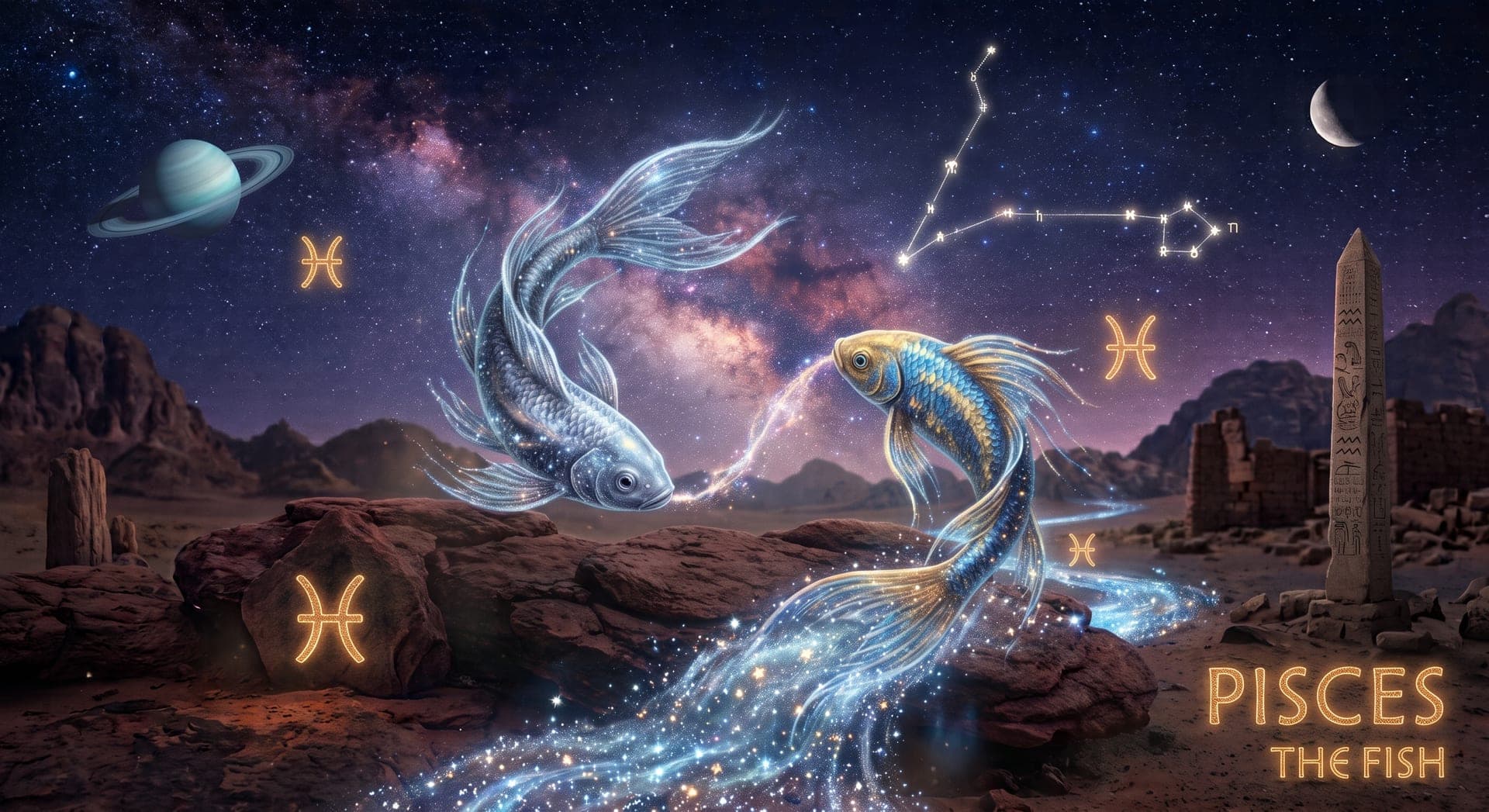
Born on March 15: Pisces ♓
Pisces, the twelfth and final sign of the zodiac, spans February 19 to March 20 and is symbolized by two fish swimming in opposite directions, tied together by a cord, representing the tension between fantasy and reality, or the conscious and subconscious mind. Ruled by Neptune, the planet of dreams, intuition, and illusion, Pisces is widely regarded as the most emotionally sensitive and imaginative sign of the zodiac. As a Water sign, Pisces navigates the world primarily through feeling and empathy, often absorbing the moods of people around it as though they were its own. Its Mutable modality reflects a deep adaptability and fluidity, comfortable going with the flow rather than forcing rigid plans. People born under this sign are often drawn to art, music, and other creative or spiritual pursuits where their vivid imagination can take shape. Compassionate to a fault, Pisces individuals are frequently the ones quietly caring for others, sometimes at the expense of their own boundaries and needs.
Personality Traits
Strengths
- Deeply empathetic and compassionate
- Highly imaginative and artistic
- Intuitive and perceptive
- Selfless and generous
- Adaptable to change
Weaknesses
- Prone to escapism or avoidance
- Overly trusting, can be taken advantage of
- Difficulty setting boundaries
- Tends toward melancholy
- Indecisive
Compatible Signs
Fun Facts
- Pisces' symbol of two fish bound together swimming in opposite directions comes from a Greek myth in which Aphrodite and Eros transformed into fish and tied themselves together to escape the monster Typhon.
- As the twelfth and final sign of the zodiac, Pisces is often described as embodying traits of all the preceding signs, a kind of culmination of the zodiac wheel.
- Neptune, Pisces' modern ruling planet, is the Roman god of the sea, discovered in 1846 and named for its blue, oceanic appearance.
- Notable Pisces include Albert Einstein, Rihanna, Steve Jobs, and Kurt Cobain.
- Classical astrology assigns Jupiter as Pisces' ruler, before Neptune's discovery in the 19th century gave the sign its modern ruling planet.
Born on March 15
- 1767
Andrew Jackson
Seventh President of the United States
- 1779
William Lamb, 2nd Viscount Melbourne
English politician and Prime Minister of the United Kingdom who served as a mentor to the young Queen Victoria
- 1813
John Snow
English physician regarded as a founding figure of modern epidemiology for tracing an 1854 cholera outbreak to a contaminated water pump
- 1854
Emil von Behring
German physiologist, first Nobel laureate in Physiology or Medicine
- 1868
Grace Chisholm Young
English mathematician who became one of the first women to receive a doctorate in Germany
- 1932
Alan Bean
American astronaut, fourth person to walk on the Moon
- 1933
Ruth Bader Ginsburg
U.S. Supreme Court Associate Justice
- 1940
Frank Dobson
English Labour politician who served as Secretary of State for Health
- 1943
Lynda La Plante
English actress and screenwriter who created the television crime drama Prime Suspect
- 1951
David Alton, Baron Alton of Liverpool
English politician known for his campaigning on human rights and life issues
- 1975
Eva Longoria
American actress known for "Desperate Housewives"
- 1993
Paul Pogba
French professional footballer
- 2001
Ellie Leach
English actress known for playing Faye Windass in Coronation Street

On This Day in History
- 44 BCE
Roman dictator Julius Caesar is assassinated by a group of senators on the Ides of March, a pivotal moment in the fall of the Roman Republic.
A group of Roman senators, including Brutus and Cassius, stabbed Julius Caesar to death in the Theatre of Pompey, fearing his accumulating power threatened the Republic. Rather than restoring republican governance, the assassination triggered years of civil war that ultimately led to the rise of Caesar's heir, Augustus, as emperor.
- 44 BCE
Roman dictator Julius Caesar is stabbed to death by a group of senators, including Marcus Junius Brutus, in the Theatre of Pompey in Rome.
The conspirators, who styled themselves the Liberatores, believed Caesar's growing personal power threatened the Roman Republic and hoped his death would restore traditional senatorial rule. Instead, the assassination triggered over a decade of civil war that ended the Republic entirely, culminating in the rise of Caesar's adopted heir Octavian as the first Roman emperor, Augustus. The date, the Ides of March, became forever associated with betrayal.
- 1672
King Charles II issues the Royal Declaration of Indulgence, suspending penal laws against Catholics and Protestant nonconformists in England.
The declaration used the monarch's claimed power to suspend laws passed by Parliament, provoking a fierce backlash from MPs who saw it as an assault on parliamentary authority and a step toward greater royal power. Parliament forced Charles to withdraw the declaration the following year and instead passed the Test Act, which required officeholders to take Anglican communion, deepening tensions that would resurface under his Catholic successor, James II.
- 1781
British forces under General Lord Cornwallis defeat an American army led by Nathanael Greene at the Battle of Guilford Court House in North Carolina.
Although Cornwallis held the field, his heavily outnumbered force suffered such severe casualties that the victory proved pyrrhic. The battle so weakened his army that he abandoned the Carolinas campaign and marched north into Virginia, where he later fortified Yorktown, setting the stage for his surrender to Franco-American forces later that year that effectively ended the American Revolutionary War.
- 1820
Maine is admitted as the 23rd U.S. state, part of the sectional balance struck by the Missouri Compromise.
Maine was admitted to the Union as a free state as part of the Missouri Compromise, which simultaneously allowed Missouri to enter as a slave state to preserve the sectional balance in the Senate. The arrangement temporarily eased tensions over slavery's expansion but merely postponed the deeper national reckoning.
- 1877
The first official Test cricket match begins between Australia and England at the Melbourne Cricket Ground.
The match, won narrowly by Australia by 45 runs, launched what became the oldest and most storied rivalry in international cricket. Test matches between the two countries later gave rise to the Ashes series in 1882, and the five-day format between national teams established at Melbourne became the sport's most prestigious and enduring form of international competition.
- 1888
British Indian forces launch a military expedition into Tibet, beginning the Anglo-Tibetan War.
The campaign arose from a border dispute in Sikkim and British anxiety over Tibet's ties to Russia during the 'Great Game' rivalry between the two empires in Central Asia. British and Indian troops, better armed and organised, defeated Tibetan forces at Lungtur and forced a settlement recognising British control over Sikkim, foreshadowing the larger British expedition into Tibet led by Francis Younghusband in 1903-04.
- 1917
Tsar Nicholas II abdicates the Russian throne, ending the 304-year Romanov dynasty.
Facing mutinying troops and losing the support of his generals amid the February Revolution, Tsar Nicholas II abdicated the throne, ending over three centuries of Romanov rule. His abdication led to a provisional government that itself was overthrown by the Bolsheviks later that year, and the former tsar's family was executed in 1918.
- 1917
Tsar Nicholas II abdicates the Russian throne amid the February Revolution, ending three centuries of Romanov rule.
Mounting military failures in the First World War, food shortages, and widespread unrest had eroded support for the monarchy, and even Nicholas's own generals urged him to step down. His abdication brought a provisional government to power, but that government's own instability paved the way for the Bolshevik seizure of power later that year in the October Revolution.
- 1922
Fuad I becomes King of Egypt after the country gains nominal independence from Britain.
Britain granted Egypt nominal independence while retaining control over defense, foreign affairs, and the Suez Canal, and Sultan Fuad I took the title of King. The arrangement left considerable British influence intact, fueling continued nationalist agitation that eventually led to fuller independence decades later.
- 1927
The first Women's Boat Race is rowed between crews from Oxford and Cambridge universities.
The event was staged separately from, and with far less fanfare than, the famous men's Boat Race, which had been contested annually on the Thames since 1829. Early women's races were judged on style rather than raced side by side, reflecting the limited opportunities for women's competitive rowing at the time. The event slowly grew in stature over the following decades before eventually being raced on the same course and day as the men's event.
- 1939
Nazi Germany occupies the remainder of Czechoslovakia, violating the earlier Munich Agreement.
German troops occupied the remaining Czech territories of Bohemia and Moravia after Hitler summoned Czechoslovak President Emil Hacha to Berlin and coerced his capitulation, violating the earlier Munich Agreement's guarantees. The move exposed the futility of Western appeasement and pushed Europe closer to full-scale war.
- 1951
Iran's parliament votes to nationalize the country's oil industry, previously controlled by a British company.
Iran's parliament voted to nationalize the Anglo-Iranian Oil Company's holdings, asserting control over the country's vast petroleum resources previously dominated by British interests. The move, championed by Prime Minister Mohammad Mossadegh, led to a British-led boycott and eventually a 1953 coup that removed him from power.
- 1951
Iran's parliament votes to nationalize the country's oil industry, seizing the assets of the British-controlled Anglo-Iranian Oil Company.
The move, driven by Prime Minister Mohammad Mosaddegh, ended decades of British control over Iranian oil production that dated back to a 1901 concession. Britain responded with a global boycott of Iranian oil and diplomatic pressure, and the crisis culminated in 1953 when a British- and American-backed coup removed Mosaddegh from power. The Anglo-Iranian Oil Company was later renamed British Petroleum.
- 1961
South Africa announces it will withdraw from the Commonwealth of Nations after facing criticism of its apartheid policies.
The announcement came after other Commonwealth leaders, at a conference in London, made clear that South Africa's application to remain a member as a republic would be opposed unless it abandoned apartheid. Prime Minister Hendrik Verwoerd withdrew the application rather than face rejection. South Africa did not rejoin the Commonwealth until 1994, following the end of apartheid and the election of Nelson Mandela.
- 1965
President Lyndon B. Johnson addresses Congress advocating for the Voting Rights Act amid the Selma civil rights crisis.
President Lyndon B. Johnson addressed a joint session of Congress, invoking the phrase "we shall overcome" and calling for passage of comprehensive voting rights legislation in the wake of the violent Selma marches. Congress passed the Voting Rights Act months later, outlawing discriminatory voting practices across the South.
- 1991
A treaty granting full sovereignty to a reunified Germany comes into effect, formally ending postwar Allied occupation.
A treaty between the two German states and the four World War II Allied powers came into force, granting a reunified Germany full sovereignty and ending the residual occupation rights the Allies had held since 1945. The agreement completed the formal process of German reunification that began with the fall of the Berlin Wall.
- 1991
The Treaty on the Final Settlement with Respect to Germany comes into force, restoring full sovereignty to a reunified Germany.
Signed the previous September by the two German states and the four wartime Allied powers, Britain, France, the United States, and the Soviet Union, the treaty formally ended the post-war occupation rights those powers had held since 1945. Its entry into force removed the last legal restrictions on German sovereignty stemming from the Second World War, completing the process of German reunification.
- 2011
Mass protests begin in Syria, part of the wider Arab Spring, eventually escalating into a prolonged civil war.
Protests against Bashar al-Assad's government began in the southern Syrian city of Deraa following the detention and torture of teenagers who had painted revolutionary graffiti. The demonstrations, part of the broader Arab Spring, escalated into a devastating civil war that continued for over a decade.
- 2019
A gunman kills 51 people at two mosques in Christchurch, New Zealand, in a livestreamed terrorist attack.
A gunman opened fire on worshippers at two mosques in Christchurch, New Zealand, killing 51 people in an attack he livestreamed online. The massacre, motivated by white supremacist ideology, prompted New Zealand to swiftly enact sweeping gun control legislation within weeks.