
What’s Observed on March 14
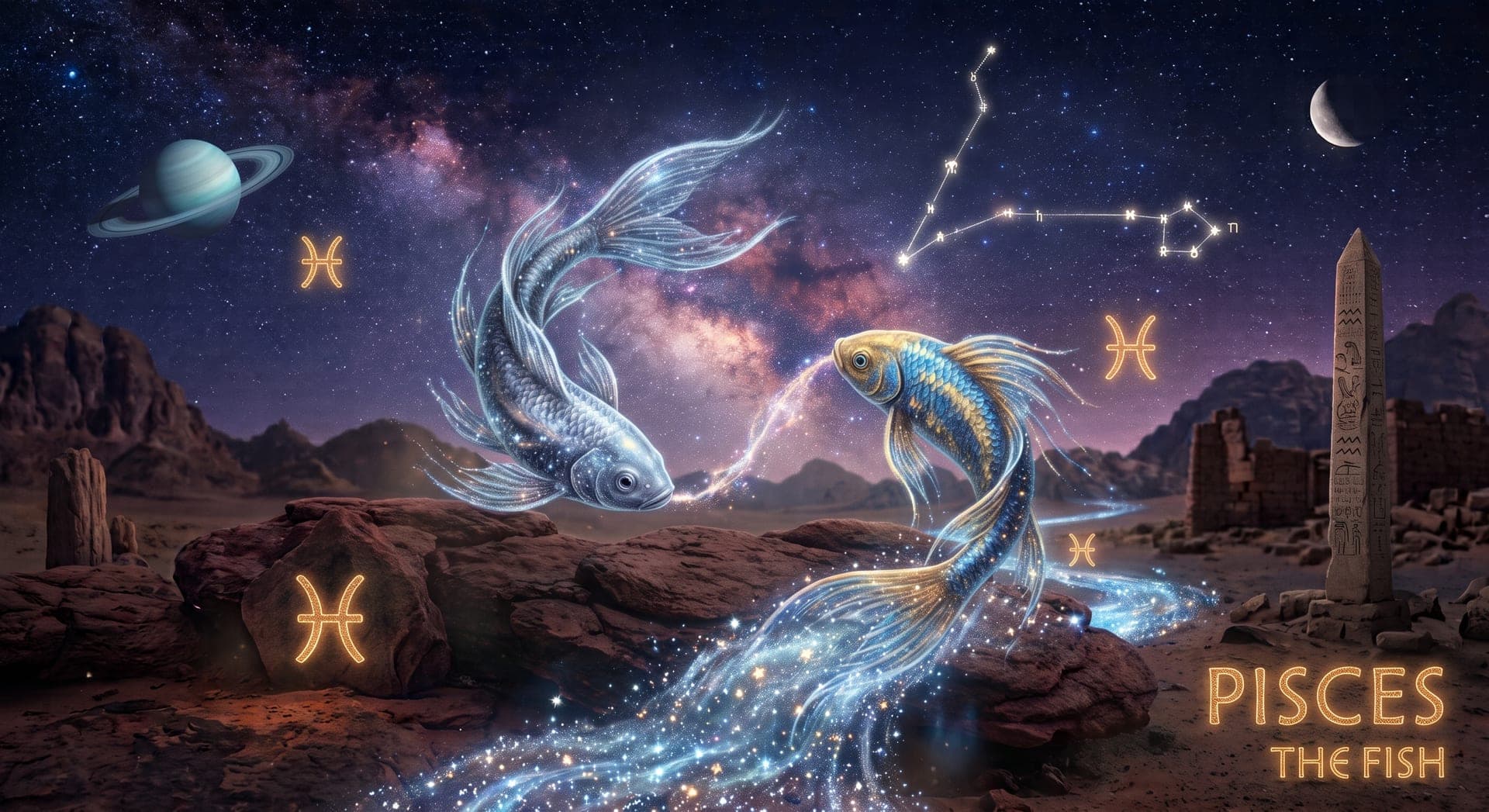
Born on March 14: Pisces ♓
Pisces, the twelfth and final sign of the zodiac, spans February 19 to March 20 and is symbolized by two fish swimming in opposite directions, tied together by a cord, representing the tension between fantasy and reality, or the conscious and subconscious mind. Ruled by Neptune, the planet of dreams, intuition, and illusion, Pisces is widely regarded as the most emotionally sensitive and imaginative sign of the zodiac. As a Water sign, Pisces navigates the world primarily through feeling and empathy, often absorbing the moods of people around it as though they were its own. Its Mutable modality reflects a deep adaptability and fluidity, comfortable going with the flow rather than forcing rigid plans. People born under this sign are often drawn to art, music, and other creative or spiritual pursuits where their vivid imagination can take shape. Compassionate to a fault, Pisces individuals are frequently the ones quietly caring for others, sometimes at the expense of their own boundaries and needs.
Personality Traits
Strengths
- Deeply empathetic and compassionate
- Highly imaginative and artistic
- Intuitive and perceptive
- Selfless and generous
- Adaptable to change
Weaknesses
- Prone to escapism or avoidance
- Overly trusting, can be taken advantage of
- Difficulty setting boundaries
- Tends toward melancholy
- Indecisive
Compatible Signs
Fun Facts
- Pisces' symbol of two fish bound together swimming in opposite directions comes from a Greek myth in which Aphrodite and Eros transformed into fish and tied themselves together to escape the monster Typhon.
- As the twelfth and final sign of the zodiac, Pisces is often described as embodying traits of all the preceding signs, a kind of culmination of the zodiac wheel.
- Neptune, Pisces' modern ruling planet, is the Roman god of the sea, discovered in 1846 and named for its blue, oceanic appearance.
- Notable Pisces include Albert Einstein, Rihanna, Steve Jobs, and Kurt Cobain.
- Classical astrology assigns Jupiter as Pisces' ruler, before Neptune's discovery in the 19th century gave the sign its modern ruling planet.
Born on March 14
- 1804
Johann Strauss I
Austrian composer known for waltzes
- 1836
Isabella Beeton
English author of Mrs Beeton's Book of Household Management, a bestselling guide to Victorian domestic life
- 1854
Paul Ehrlich
German physician and Nobel laureate, pioneer of chemotherapy
- 1869
Algernon Blackwood
English author renowned for his supernatural and ghost fiction
- 1879
Albert Einstein
German-born physicist who developed the theory of relativity
- 1912
Cliff Bastin
English footballer who was Arsenal's leading goalscorer for over 60 years
- 1933
Quincy Jones
American music producer and composer
- 1933
Michael Caine
English actor known for roles in films including Alfie, The Italian Job, and The Dark Knight trilogy
- 1945
Jasper Carrott
English comedian and television presenter known for his observational stand-up
- 1948
Billy Crystal
American actor and comedian
- 1988
Stephen Curry
American NBA champion and record-setting three-point shooter
- 1990
Joe Allen
Welsh footballer who has represented Liverpool, Stoke City, and the Wales national team
- 1999
Olivia Dean
English singer-songwriter known for her soul-influenced pop music

On This Day in History
- 1757
Royal Navy Admiral John Byng is executed by firing squad aboard HMS Monarch for failing to 'do his utmost' to prevent the loss of Minorca to the French.
Byng had been court-martialled after withdrawing his fleet from the Battle of Minorca in 1756 rather than risk it against a stronger French force, a decision widely blamed for the island's fall. Although the court found no cowardice or disloyalty, the Articles of War left death the only available sentence. His execution, satirised by Voltaire as being 'pour encourager les autres,' remains a byword for scapegoating.
- 1794
Eli Whitney is granted a patent for the cotton gin, a machine that transformed American agriculture and entrenched slavery in the South.
Eli Whitney received a patent for his cotton gin, a machine that mechanized the separation of cotton fibers from seeds and dramatically increased processing efficiency. While intended to reduce labor needs, the invention instead entrenched and expanded slavery across the American South by making cotton cultivation vastly more profitable.
- 1794
American inventor Eli Whitney is granted a patent for the cotton gin, a machine that mechanised the separation of cotton fibre from its seeds.
The invention dramatically increased the speed and profitability of cotton processing, transforming the crop into the dominant export of the American South and, with it, entrenching and expanding plantation slavery across the region for decades. Whitney struggled to enforce his patent as the simple design was widely copied, and he later turned to manufacturing firearms with interchangeable parts.
- 1885
Gilbert and Sullivan's comic opera "The Mikado" receives its first public performance in London.
Gilbert and Sullivan's comic opera "The Mikado," a satire set in a fictionalized Japan poking fun at British institutions, premiered at the Savoy Theatre in London to great acclaim. It became one of the most frequently performed works in the operatic repertoire and remains popular over a century later.
- 1885
Gilbert and Sullivan's comic opera The Mikado premieres at the Savoy Theatre in London.
The satirical operetta, ostensibly set in Japan, was in fact a pointed commentary on British institutions and became the most successful of the fourteen Gilbert and Sullivan collaborations, running for 672 performances in its initial production. It remains one of the most frequently performed works in the musical theatre repertoire and helped establish the Savoy Theatre, built specifically to stage the pair's operas, as a landmark of British musical culture.
- 1900
The Gold Standard Act is signed, formally placing U.S. currency on the gold standard.
President William McKinley signed the Gold Standard Act, formally ending the bimetallic currency debate that had dominated American politics for decades by establishing gold as the sole standard for redeeming paper currency. The law provided monetary stability but limited flexibility that would later be tested during economic crises.
- 1900
The United States formally adopts the gold standard with the ratification of the Gold Standard Act.
The act ended decades of debate over 'bimetallism,' the use of both gold and silver to back currency, which had been a major political battleground in American politics, including in the 1896 presidential election. Fixing the dollar's value to gold provided currency stability and was intended to boost investor confidence, and the standard remained the basis of the US monetary system until the 1930s.
- 1916
German forces capture a key position during the prolonged Battle of Verdun on the Western Front.
During the prolonged and brutal Battle of Verdun, German forces captured Fort Vaux and pressed their offensive against entrenched French positions along the Western Front. The battle, lasting most of 1916, produced staggering casualties on both sides and became a symbol of the war's grinding attritional warfare.
- 1921
Six members of the Irish Republican Army are hanged at Mountjoy Prison in Dublin by the British authorities during the Irish War of Independence.
The executions, part of a wider British crackdown on republican activity, provoked outrage and became a rallying point for the independence movement. The Irish War of Independence, fought between the IRA and British forces including the Royal Irish Constabulary and the Black and Tans, ended later that year with a truce that led to the Anglo-Irish Treaty and the creation of the Irish Free State.
- 1942
A patient becomes the first American treated successfully with penicillin, demonstrating the antibiotic's life-saving potential.
Anne Miller, a Connecticut hospital patient dying of blood poisoning, became the first American civilian successfully treated with the newly developed antibiotic penicillin, recovering fully within days. Her case demonstrated the drug's extraordinary potential and accelerated efforts to mass-produce it for wartime and civilian use.
- 1943
German forces complete the liquidation of the Kraków Ghetto, deporting or murdering its remaining Jewish population.
Thousands of Jews were shot in the streets of the ghetto or deported to the Płaszów forced labour camp and the Auschwitz-Birkenau extermination camp. The liquidation was part of the broader Nazi programme to exterminate Polish Jewry, and it is the event later depicted in Steven Spielberg's film Schindler's List, which is set largely within the Kraków Ghetto and Płaszów camp.
- 1945
The Royal Air Force drops the first operational Grand Slam bomb, a 22,000-pound 'earthquake bomb,' destroying the Bielefeld railway viaduct in Germany.
Designed by engineer Barnes Wallis, who had earlier created the bouncing bomb used in the Dambusters raid, the Grand Slam was the largest conventional bomb used in the Second World War. Rather than exploding on impact, it was designed to bury itself deep underground before detonating, creating a cavern that undermined the structure above it. Bielefeld viaduct had survived earlier raids but collapsed under the new weapon.
- 1951
United Nations forces recapture Seoul for the second time during the Korean War.
United Nations forces under General Matthew Ridgway recaptured the South Korean capital of Seoul for the second time during the seesawing Korean War, following its earlier loss to a Chinese-led offensive. The city, devastated by repeated fighting, changed hands four times over the course of the war.
- 1967
The body of assassinated President John F. Kennedy is moved to its permanent burial site at Arlington National Cemetery.
The remains of assassinated President John F. Kennedy were transferred from a temporary grave to a permanent memorial site at Arlington National Cemetery, marked by an eternal flame. The relocation followed the completion of a formal memorial designed to honor the slain president.
- 1978
Israeli forces launch Operation Litani, a week-long invasion of southern Lebanon.
Israeli forces launched Operation Litani, invading southern Lebanon in response to a deadly Palestinian militant attack near Tel Aviv, aiming to push Palestine Liberation Organization fighters away from the border. The week-long incursion foreshadowed Israel's larger 1982 invasion of Lebanon.
- 1982
A bomb planted by South African government agents explodes at the London headquarters of the African National Congress.
The attack was one of several operations carried out by South Africa's apartheid-era security services against anti-apartheid exiles based in Britain, which had become a major hub for the ANC's international campaign. The bombing underscored how the struggle against apartheid extended well beyond South Africa's borders and heightened British public awareness of the ANC's presence and the brutality of the apartheid state.
- 2008
Riots and protests erupt in Lhasa, Tibet, and spread to other regions, marking some of the largest unrest there in decades.
Protests in Lhasa against Chinese rule turned violent, spreading to Tibetan-populated areas of neighboring provinces in some of the most significant unrest since the 1959 uprising. Chinese authorities imposed a heavy security crackdown, and the events drew international attention ahead of that year's Beijing Olympics.
- 2008
Riots and anti-government protests break out in Lhasa, the capital of Tibet, in the most serious unrest in the region in nearly two decades.
The violence began with protests by monks marking the anniversary of a failed 1959 uprising and escalated into rioting targeting Chinese-owned businesses. Chinese security forces imposed a heavy crackdown, and the unrest spread to Tibetan communities in neighbouring provinces, drawing international criticism of China's human rights record in the months before it hosted the Beijing Olympics.
- 2019
Cyclone Idai makes landfall in Mozambique, causing catastrophic flooding and over a thousand deaths across southern Africa.
Tropical Cyclone Idai made landfall near the Mozambican port city of Beira, unleashing catastrophic flooding across Mozambique, Zimbabwe, and Malawi. The storm killed over a thousand people and displaced hundreds of thousands, becoming one of the deadliest tropical cyclones ever recorded in the Southern Hemisphere.
- 2019
Cyclone Idai makes landfall near the port city of Beira, Mozambique, triggering catastrophic flooding across the region.
The storm went on to affect Malawi and Zimbabwe as well, killing well over a thousand people and displacing hundreds of thousands more in one of the worst weather-related disasters recorded in the Southern Hemisphere. The scale of destruction prompted a major international humanitarian relief effort and drew renewed attention to the vulnerability of low-lying coastal cities to intensifying tropical storms.