What’s Observed on March 13
Born on March 13: Pisces ♓
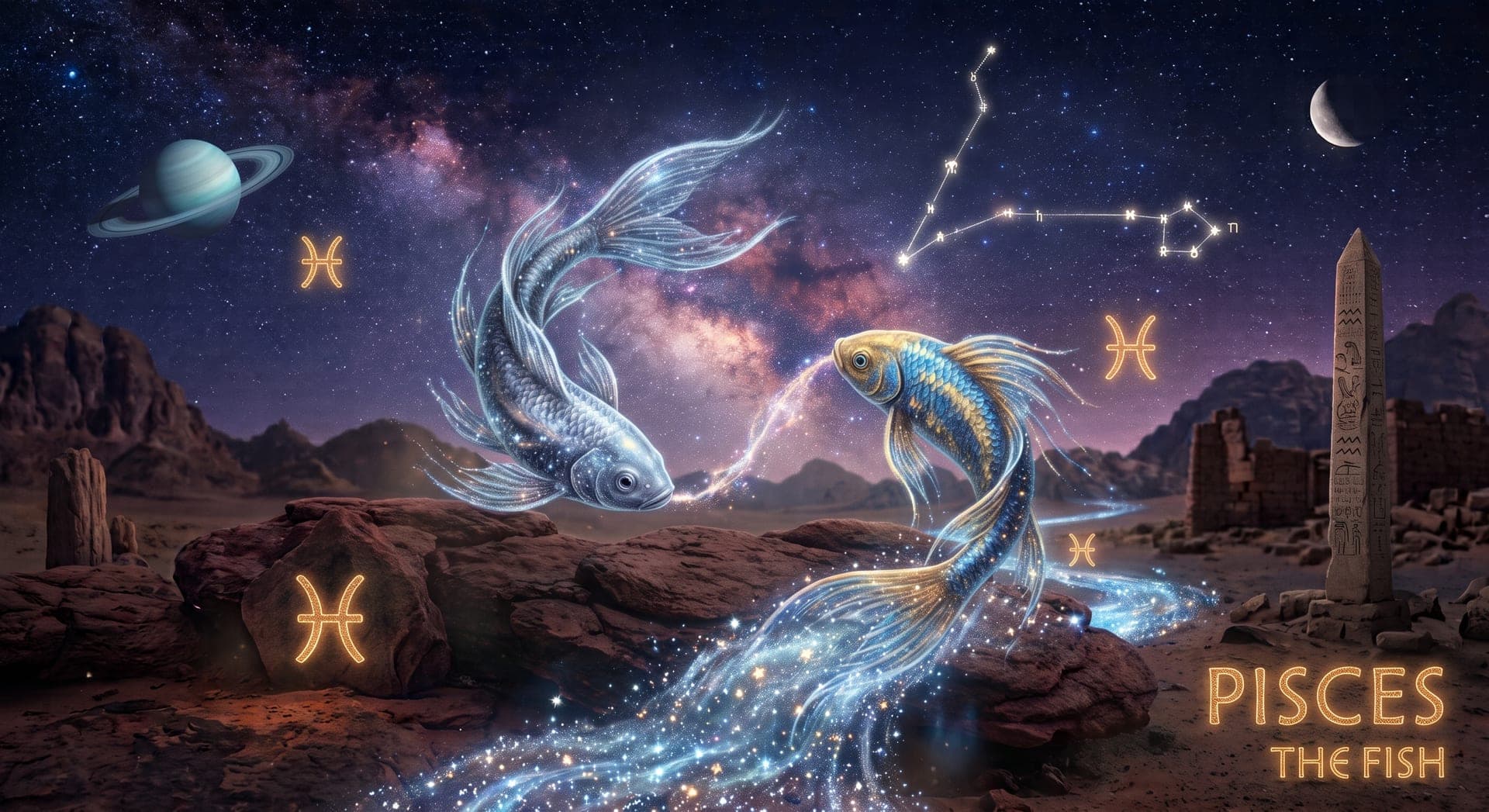
Pisces, the twelfth and final sign of the zodiac, spans February 19 to March 20 and is symbolized by two fish swimming in opposite directions, tied together by a cord, representing the tension between fantasy and reality, or the conscious and subconscious mind. Ruled by Neptune, the planet of dreams, intuition, and illusion, Pisces is widely regarded as the most emotionally sensitive and imaginative sign of the zodiac. As a Water sign, Pisces navigates the world primarily through feeling and empathy, often absorbing the moods of people around it as though they were its own. Its Mutable modality reflects a deep adaptability and fluidity, comfortable going with the flow rather than forcing rigid plans. People born under this sign are often drawn to art, music, and other creative or spiritual pursuits where their vivid imagination can take shape. Compassionate to a fault, Pisces individuals are frequently the ones quietly caring for others, sometimes at the expense of their own boundaries and needs.
Personality Traits
Strengths
- Deeply empathetic and compassionate
- Highly imaginative and artistic
- Intuitive and perceptive
- Selfless and generous
- Adaptable to change
Weaknesses
- Prone to escapism or avoidance
- Overly trusting, can be taken advantage of
- Difficulty setting boundaries
- Tends toward melancholy
- Indecisive
Compatible Signs
Fun Facts
- Pisces' symbol of two fish bound together swimming in opposite directions comes from a Greek myth in which Aphrodite and Eros transformed into fish and tied themselves together to escape the monster Typhon.
- As the twelfth and final sign of the zodiac, Pisces is often described as embodying traits of all the preceding signs, a kind of culmination of the zodiac wheel.
- Neptune, Pisces' modern ruling planet, is the Roman god of the sea, discovered in 1846 and named for its blue, oceanic appearance.
- Notable Pisces include Albert Einstein, Rihanna, Steve Jobs, and Kurt Cobain.
- Classical astrology assigns Jupiter as Pisces' ruler, before Neptune's discovery in the 19th century gave the sign its modern ruling planet.
Born on March 13
- 1764
Charles Grey, 2nd Earl Grey
English politician and Prime Minister of the United Kingdom who oversaw the Reform Act 1832 and the abolition of slavery in the British Empire
- 1855
Percival Lowell
American astronomer who predicted the existence of Pluto
- 1860
Hugo Wolf
Austrian composer known for his art songs
- 1947
Lesley Collier
English ballerina and educator celebrated for decades as a principal with The Royal Ballet
- 1949
Trevor Sorbie
Scottish hairdresser and businessman known for pioneering influential modern haircuts
- 1950
William H. Macy
American actor known for "Fargo" and "Shameless"
- 1956
Dana Delany
American actress
- 1972
Common
American rapper and actor
- 1975
Mark Clattenburg
English football referee who officiated major finals including the 2016 UEFA Champions League final
- 1989
Peaches Geldof
English columnist and television personality, daughter of musician Bob Geldof
- 1992
George MacKay
English actor known for leading roles in films such as 1917
- 1993
Tyrone Mings
English footballer who has played as a centre-back for Aston Villa and the England national team
- 2004
Coco Gauff
American professional tennis player
On This Day in History
- 624
Muslim forces led by the Prophet Muhammad defeat the Quraysh at the Battle of Badr, a pivotal early battle in Islamic history.
A small force of Muslims led by the Prophet Muhammad defeated a much larger Meccan army at the Battle of Badr near Medina, a victory considered a turning point that bolstered the fledgling Muslim community's confidence and standing. The battle holds deep religious and historical significance in Islamic tradition.
- 1741
British forces under Admiral Edward Vernon begin the assault on the Spanish port of Cartagena de Indias, in modern-day Colombia, during the War of Jenkins' Ear.
The campaign was one of the largest amphibious operations in British history to that point, involving a huge fleet and tens of thousands of soldiers and sailors, including colonial troops from British North America. Despite the scale of the force, disease and determined Spanish defence under Blas de Lezo ultimately forced a costly British withdrawal, making it a rare major setback for British arms in the eighteenth century.
- 1781
William Herschel discovers the planet Uranus, the first planet found using a telescope.
British astronomer William Herschel, observing from his garden in Bath, England, initially believed he had spotted a comet before further observation revealed a new planet, later named Uranus. It was the first planet discovered in recorded history using a telescope rather than being visible to the naked eye.
- 1781
British astronomer William Herschel discovers the planet Uranus, the first planet identified using a telescope.
Observing the night sky from his garden in Bath, England, Herschel initially believed he had found a comet before further observation revealed a new planet. The discovery doubled the known size of the Solar System and brought Herschel royal patronage from King George III, who appointed him the King's Astronomer. Herschel briefly proposed naming the planet 'Georgium Sidus' in the king's honour.
- 1811
A British naval squadron defeats a larger Franco-Venetian fleet at the Battle of Lissa in the Adriatic Sea.
Commanded by Captain William Hoste, the outnumbered British force used superior seamanship and gunnery to rout the French and Italian ships attempting to seize the island of Vis, or Lissa, from British control. The victory secured British naval dominance in the Adriatic for the remainder of the Napoleonic Wars and became a celebrated example of Royal Navy tactical skill against the odds.
- 1900
British forces under Lord Roberts occupy Bloemfontein, capital of the Orange Free State, during the Second Boer War.
The capture came after British troops broke through Boer defensive lines at Paardeberg the previous month, forcing a retreat. Bloemfontein served as a major British base for the rest of the campaign, though occupying the Boer republics' capitals did not end the war: Boer commandos shifted to guerrilla tactics that prolonged the conflict for another two years.
- 1930
Lowell Observatory announces the discovery of Pluto.
Clyde Tombaugh, a young astronomer working at Lowell Observatory in Arizona, had discovered a new object beyond Neptune's orbit weeks earlier through painstaking comparison of photographic plates. The observatory publicly announced the discovery of Pluto, later reclassified as a dwarf planet in 2006.
- 1930
The discovery of Pluto is publicly announced by Lowell Observatory in Arizona, based on photographic plates taken by astronomer Clyde Tombaugh.
Tombaugh had been searching for a hypothesised 'Planet X' believed to be perturbing the orbits of Uranus and Neptune. Pluto was classified as the ninth planet for the following seven decades before the International Astronomical Union reclassified it as a dwarf planet in 2006 after the discovery of similarly sized bodies in the outer Solar System.
- 1940
The Winter War between Finland and the Soviet Union officially ends with the signing of the Moscow Peace Treaty.
Finland and the Soviet Union signed the Moscow Peace Treaty, ending the three-and-a-half-month Winter War in which Finland, despite being vastly outnumbered, inflicted heavy Soviet casualties before ceding significant territory including Karelia. Finnish resistance nonetheless preserved the country's independence from full Soviet annexation.
- 1943
German forces liquidate the Jewish ghetto in Krakow, Poland, deporting or killing its remaining residents.
German SS forces liquidated the remaining Jewish ghetto in Krakow, Poland, deporting most residents to the Plaszow forced labor camp and murdering others on the spot. The event, later depicted in the film "Schindler's List," was part of the broader Nazi campaign to eliminate Jewish communities across occupied Europe.
- 1954
Viet Minh forces open a massive artillery barrage, beginning the decisive Battle of Dien Bien Phu.
Viet Minh forces under General Vo Nguyen Giap launched a massive artillery bombardment against the French garrison at Dien Bien Phu, beginning a 56-day siege. The eventual French defeat there led directly to the Geneva Accords and France's withdrawal from Indochina, paving the way for the later Vietnam War.
- 1954
The Battle of Điện Biên Phủ begins as Viet Minh forces open a massive artillery barrage against the French garrison in northern Vietnam.
The 56-day siege ended in a decisive Viet Minh victory in May 1954 that shattered French colonial power in Indochina and led directly to the Geneva Accords, which partitioned Vietnam. The battle is regarded as one of the most significant defeats of a Western colonial power in the twentieth century and set the stage for the later Vietnam War.
- 1964
Kitty Genovese is murdered in New York City, a case that later prompted extensive research into the psychological "bystander effect."
Kitty Genovese was murdered outside her Queens apartment building in an attack that a widely circulated but later disputed New York Times account claimed dozens of neighbors witnessed without intervening. The case, regardless of its exact details, spurred extensive psychological research into what became known as the "bystander effect."
- 1969
Apollo 9 splashes down safely in the Atlantic Ocean after a ten-day mission that tested the Lunar Module in Earth orbit.
The mission was a critical rehearsal for the Moon landings, proving that the Lunar Module could separate from, manoeuvre independently of, and successfully redock with the Command Module. Astronauts James McDivitt, David Scott, and Rusty Schweickart carried out the first crewed flight of the complete Apollo spacecraft, clearing the way for the lunar landing missions that followed.
- 1996
A gunman kills sixteen children and a teacher at a primary school in Dunblane, Scotland, prompting sweeping UK gun control laws.
A gunman entered Dunblane Primary School in Scotland and killed sixteen children and their teacher before taking his own life, in the deadliest mass shooting in British history. The tragedy prompted Parliament to pass some of the strictest gun control laws in the world, effectively banning private ownership of handguns.
- 1996
A gunman kills sixteen young children and their teacher at a primary school in Dunblane, Scotland, before taking his own life.
The massacre remains the deadliest mass shooting in British history and prompted a national outpouring of grief. Public pressure following the attack led directly to the Firearms (Amendment) Acts of 1997, which banned the private ownership of most handguns in Great Britain, among the strictest gun control laws in the world.
- 2013
Cardinal Jorge Mario Bergoglio is elected pope, taking the name Francis.
Argentine Cardinal Jorge Mario Bergoglio was elected pope by the College of Cardinals, becoming the first pope from the Americas and the first Jesuit pope. Taking the name Francis in honor of Saint Francis of Assisi, he emphasized humility, social justice, and reform within the Catholic Church.
- 2013
A papal conclave elects Cardinal Jorge Mario Bergoglio of Argentina as pope, and he takes the name Francis.
He became the first pope from the Americas, the first Jesuit pope, and the first to take the name Francis, after St Francis of Assisi. His election followed the surprise resignation of Pope Benedict XVI weeks earlier, the first papal resignation in nearly 600 years. Francis went on to be known for a more informal style and a focus on poverty and the environment.
- 2020
President Donald Trump declares the COVID-19 pandemic a national emergency in the United States.
President Donald Trump declared a national emergency over the rapidly spreading COVID-19 pandemic, unlocking billions of dollars in federal disaster relief funding and expanded executive authority. The declaration came as case counts rose sharply across the United States and many states began imposing their own restrictions.
- 2020
Breonna Taylor, a 26-year-old emergency medical technician, is shot and killed by police officers executing a warrant at her apartment in Louisville, Kentucky.
Officers used a no-knock warrant connected to a narcotics investigation and fired multiple shots after Taylor's partner, believing intruders had broken in, fired at them first. Her death, along with the killing of George Floyd two months later, became a rallying point for the 2020 Black Lives Matter protests and renewed scrutiny of no-knock warrants and police practices in the United States.