
What’s Observed on March 12
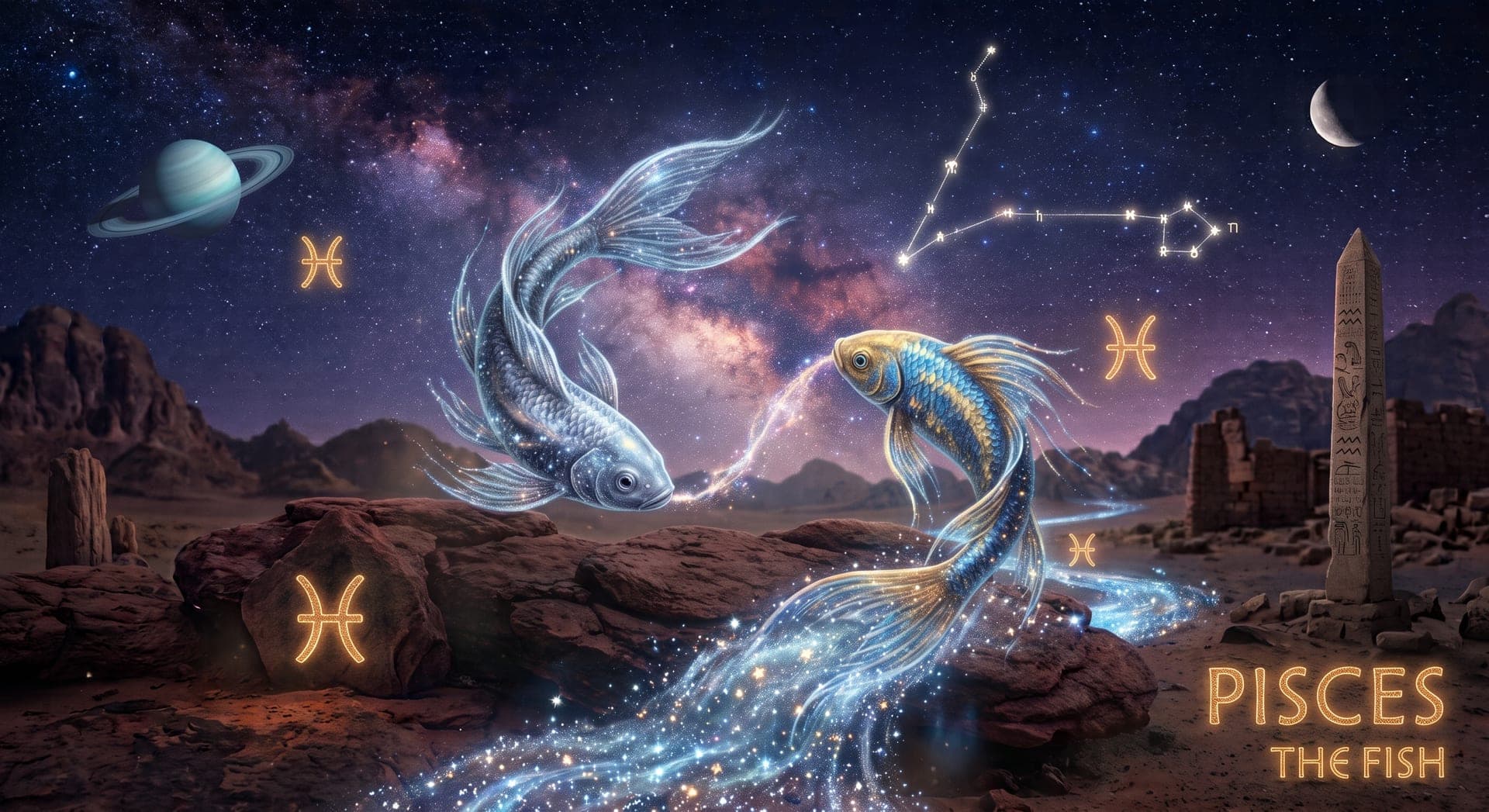
Born on March 12: Pisces ♓
Pisces, the twelfth and final sign of the zodiac, spans February 19 to March 20 and is symbolized by two fish swimming in opposite directions, tied together by a cord, representing the tension between fantasy and reality, or the conscious and subconscious mind. Ruled by Neptune, the planet of dreams, intuition, and illusion, Pisces is widely regarded as the most emotionally sensitive and imaginative sign of the zodiac. As a Water sign, Pisces navigates the world primarily through feeling and empathy, often absorbing the moods of people around it as though they were its own. Its Mutable modality reflects a deep adaptability and fluidity, comfortable going with the flow rather than forcing rigid plans. People born under this sign are often drawn to art, music, and other creative or spiritual pursuits where their vivid imagination can take shape. Compassionate to a fault, Pisces individuals are frequently the ones quietly caring for others, sometimes at the expense of their own boundaries and needs.
Personality Traits
Strengths
- Deeply empathetic and compassionate
- Highly imaginative and artistic
- Intuitive and perceptive
- Selfless and generous
- Adaptable to change
Weaknesses
- Prone to escapism or avoidance
- Overly trusting, can be taken advantage of
- Difficulty setting boundaries
- Tends toward melancholy
- Indecisive
Compatible Signs
Fun Facts
- Pisces' symbol of two fish bound together swimming in opposite directions comes from a Greek myth in which Aphrodite and Eros transformed into fish and tied themselves together to escape the monster Typhon.
- As the twelfth and final sign of the zodiac, Pisces is often described as embodying traits of all the preceding signs, a kind of culmination of the zodiac wheel.
- Neptune, Pisces' modern ruling planet, is the Roman god of the sea, discovered in 1846 and named for its blue, oceanic appearance.
- Notable Pisces include Albert Einstein, Rihanna, Steve Jobs, and Kurt Cobain.
- Classical astrology assigns Jupiter as Pisces' ruler, before Neptune's discovery in the 19th century gave the sign its modern ruling planet.
Born on March 12
- 1626
John Aubrey
English antiquary and writer best known for Brief Lives, his collection of biographical sketches of 17th-century notables
- 1710
Thomas Arne
English composer best known for writing the patriotic song 'Rule, Britannia!'
- 1784
William Buckland
English geologist and palaeontologist who described the first scientifically named dinosaur, Megalosaurus
- 1795
William Lyon Mackenzie
Scottish-born journalist and politician who led the 1837 Upper Canada Rebellion and became Toronto's first mayor
- 1832
Charles Boycott
English land agent in Ireland whose ostracism by tenants gave rise to the word 'boycott'
- 1838
William Henry Perkin
English chemist who accidentally discovered the first synthetic dye, mauveine, at age 18
- 1922
Jack Kerouac
American novelist and central figure of the Beat Generation
- 1923
Wally Schirra
American astronaut, one of the original Mercury Seven
- 1927
Raúl Alfonsín
President of Argentina who restored democracy after military rule
- 1928
Edward Albee
American playwright known for "Who's Afraid of Virginia Woolf?"
- 1946
Liza Minnelli
American actress and singer, Academy Award winner
- 1947
Mitt Romney
American businessman and politician, U.S. Senator
- 1948
James Taylor
American singer-songwriter and guitarist
- 1956
Steve Harris
English bass player and songwriter who co-founded the heavy metal band Iron Maiden

On This Day in History
- 1088
Urban II is elected pope, later launching the First Crusade at the Council of Clermont.
Odo of Lagery was elected pope, taking the name Urban II. Seven years later, at the Council of Clermont, he would deliver the speech launching the First Crusade, calling on European Christians to reclaim Jerusalem from Muslim control, reshaping relations between Europe and the Middle East for centuries.
- 1689
James II of England lands at Kinsale, Ireland, beginning the Williamite War in Ireland.
James II had been deposed in England during the Glorious Revolution of 1688 and fled to France, where Louis XIV backed his bid to reclaim the throne via Ireland. His landing at Kinsale with French support opened a war against the forces of the new king, William III, that culminated in the Battle of the Boyne in 1690 and entrenched Protestant political dominance in Ireland for generations.
- 1811
During the Peninsular War, French Marshal Michel Ney fights a rearguard action against the pursuing Anglo-Portuguese army at the Battle of Redinha in Portugal.
After French forces under Marshal Masséna abandoned their siege lines at Torres Vedras and began retreating from Portugal, Ney's rearguard held off the advancing British and Portuguese troops commanded by Arthur Wellesley, later Duke of Wellington, at Redinha, buying time for the main French army to withdraw. The action was one of several sharp clashes during the French retreat that spring.
- 1918
Moscow becomes the capital of Russia once again, after Saint Petersburg had held that status for over two centuries.
The Bolshevik government relocated Russia's capital from Petrograd back to Moscow, partly out of concern that Petrograd's proximity to advancing German forces made it vulnerable. Moscow has remained the seat of Russian government ever since, a status it had not held since the early 18th century.
- 1930
Mahatma Gandhi begins the Salt March, a 240-mile protest against British taxation of salt in India.
Mahatma Gandhi set out on a 24-day, 240-mile march to the Arabian Sea to produce salt in defiance of the British colonial salt tax and monopoly. The nonviolent Salt March became one of the most iconic acts of civil disobedience in history and galvanized the Indian independence movement.
- 1930
Mahatma Gandhi begins the Salt March, a roughly 200-mile walk to the sea in protest against the British monopoly on salt production in India.
The march was a direct challenge to the Salt Acts, which barred Indians from producing or selling salt independently of the colonial government and imposed a salt tax. Gandhi and his followers walked for over three weeks to the coastal village of Dandi, where he symbolically made salt from seawater. The campaign of civil disobedience drew international attention to the Indian independence movement and pressured British authority in India.
- 1933
President Franklin D. Roosevelt delivers his first "fireside chat" radio address to the American public.
Amid the banking crisis, President Roosevelt delivered the first of his "fireside chats," informal radio addresses explaining his emergency banking measures directly to the American public in accessible language. The broadcasts helped restore public trust and became a hallmark of his communication style throughout his presidency.
- 1938
German troops occupy Austria, formalizing its annexation into Nazi Germany in what became known as the Anschluss.
German troops crossed into Austria largely unopposed, and Hitler declared the Anschluss, formally annexing his native country into the German Reich the following day. The move violated the Treaty of Versailles and the Treaty of Saint-Germain, and was met with only muted protest from other European powers.
- 1938
German troops occupy Austria and the country is annexed to Nazi Germany in the Anschluss.
The annexation, carried out without significant resistance, was Adolf Hitler's first major territorial expansion and a direct violation of the Treaty of Versailles and the Treaty of Saint-Germain-en-Laye. Britain and France, then pursuing a policy of appeasement, did not intervene. The Anschluss brought roughly six million Austrians under Nazi rule and emboldened Hitler's subsequent demands on Czechoslovakia later that year.
- 1942
The Battle of Java ends as the Allied American-British-Dutch-Australian Command surrenders to Japanese forces at Bandung.
The defeat marked the collapse of Allied resistance in the Dutch East Indies during the early, disastrous months of the Pacific War. British, Australian, Dutch, and American troops and warships had fought a losing campaign against a much stronger Japanese invasion force. Thousands of British and Commonwealth prisoners of war captured in the campaign endured brutal captivity for the remainder of the war.
- 1947
President Harry Truman announces the Truman Doctrine, pledging U.S. support to countries resisting communist expansion.
President Truman asked Congress for aid to Greece and Turkey to resist communist pressure, articulating what became known as the Truman Doctrine, a pledge to support free peoples resisting subjugation. The policy marked a foundational shift toward America's Cold War strategy of containment against Soviet expansion.
- 1947
US President Harry Truman proclaims the Truman Doctrine, pledging American support to countries resisting Communist expansion.
The doctrine was prompted directly by Britain's announcement weeks earlier that it could no longer afford to support the Greek government against Communist insurgents or continue propping up Turkey, forcing the United States to step into a role Britain had long played in the eastern Mediterranean. It marked a turning point in Cold War policy and signalled the passing of global strategic leadership from Britain to the US.
- 1950
An Avro Tudor charter aircraft crashes near Sigingstone, Wales, killing 80 of the 83 people aboard in the Llandow air disaster.
The flight was returning a Welsh rugby supporters' party from a match in Dublin when it crashed on approach to Llandow airfield in the Vale of Glamorgan. At the time it was the world's deadliest air disaster, and the tragedy prompted a formal inquiry into the aircraft's loading and centre-of-gravity calculations, contributing to changes in civil aviation safety regulation.
- 1967
General Suharto is inaugurated as Acting President of Indonesia, having taken power from Sukarno.
General Suharto, having effectively seized power from President Sukarno amid an anti-communist purge, was formally installed as Acting President of Indonesia by the country's legislature. His subsequent decades-long authoritarian rule, known as the New Order, brought economic development alongside significant human rights abuses.
- 1968
Mauritius gains independence from the United Kingdom.
The island nation of Mauritius, a former Dutch, French, and finally British colony known for its sugar plantations, gained independence from British colonial rule after peaceful negotiations. It later evolved into a stable multiparty democracy and one of Africa's wealthiest economies per capita, driven by diversification into textiles, financial services, and tourism in the following decades.
- 1968
Mauritius becomes an independent nation, ending British colonial rule over the Indian Ocean island.
Mauritius had been a British colony since 1810, when it was seized from France during the Napoleonic Wars, and later became a major producer of sugar within the empire. Independence came after a decade of negotiation and constitutional reform, and the country remained a member of the Commonwealth, retaining the British monarch as head of state until it became a republic in 1992.
- 1989
Tim Berners-Lee submits his proposal for an information management system to CERN, the origin of the World Wide Web.
While working at the CERN particle physics laboratory, British computer scientist Tim Berners-Lee submitted a proposal for a hypertext-based system to share information among researchers. His idea evolved into the World Wide Web, fundamentally transforming global communication, commerce, and information access within a generation.
- 1989
British computer scientist Tim Berners-Lee submits a proposal to CERN for an information management system that would evolve into the World Wide Web.
Working at the European particle physics laboratory in Switzerland, Berners-Lee wanted a way for researchers to share and link documents easily across different computers. His proposal introduced concepts that would become hypertext links, URLs, and HTTP. By 1991 the technology was publicly available, and it went on to transform global communication, commerce, and culture within a generation.
- 1999
The Czech Republic, Hungary, and Poland join NATO, the first former Warsaw Pact members to do so.
The Czech Republic, Hungary, and Poland formally joined NATO, becoming the first former Warsaw Pact members to enter the alliance after the Cold War's end. Their accession marked a significant expansion of NATO eastward and set a precedent for further enlargement among former Soviet-bloc nations.
- 2019
The UK House of Commons rejects Theresa May's revised Brexit withdrawal agreement by a margin of 149 votes.
The vote was the second time MPs had decisively rejected the deal May had negotiated with the European Union, deepening the parliamentary deadlock over how, or whether, Britain would leave the EU. The defeat came weeks before the UK's scheduled departure date and forced the government to seek an extension to the Article 50 negotiating period from Brussels.