What’s Observed on March 11
Born on March 11: Pisces ♓
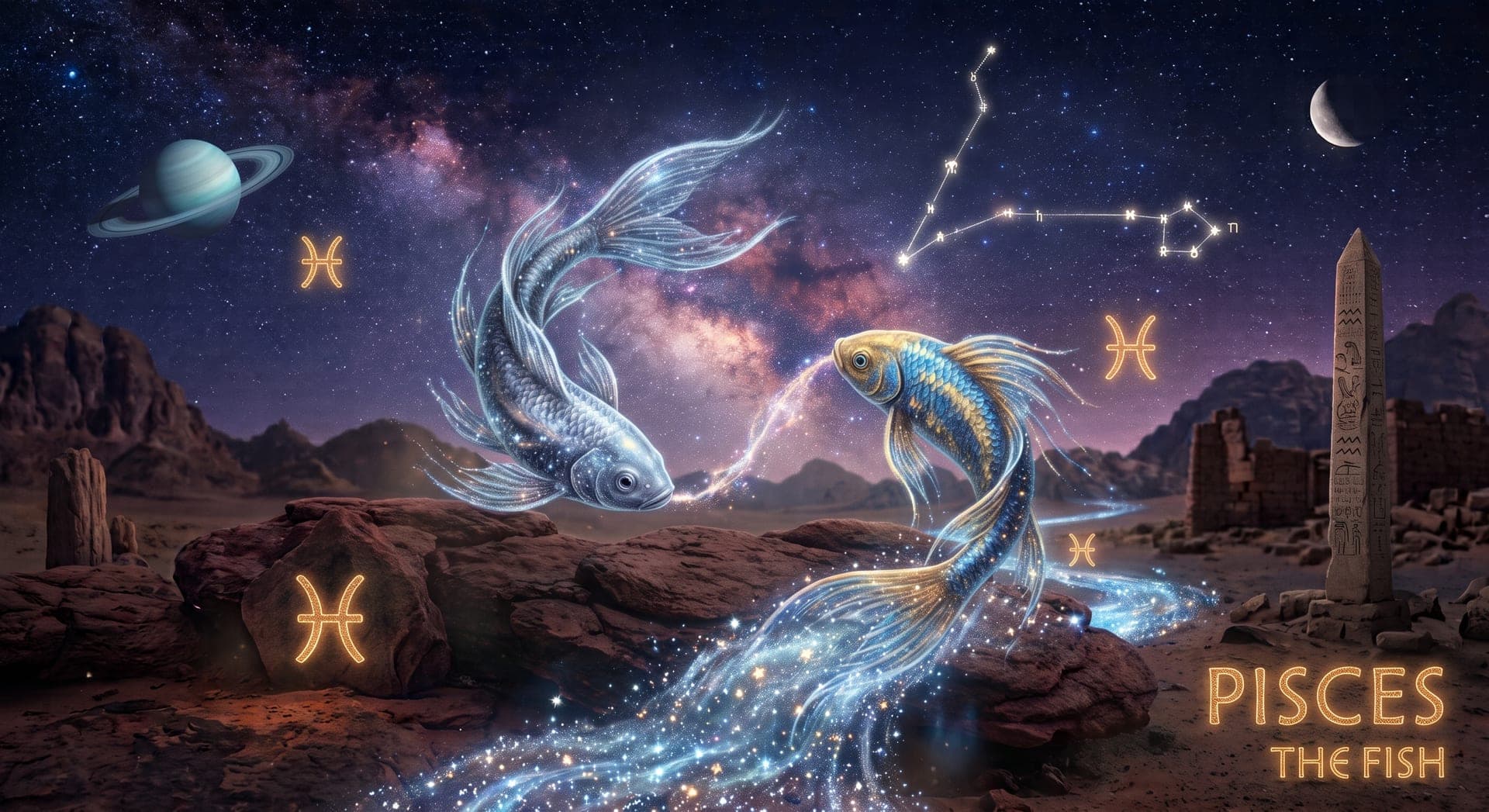
Pisces, the twelfth and final sign of the zodiac, spans February 19 to March 20 and is symbolized by two fish swimming in opposite directions, tied together by a cord, representing the tension between fantasy and reality, or the conscious and subconscious mind. Ruled by Neptune, the planet of dreams, intuition, and illusion, Pisces is widely regarded as the most emotionally sensitive and imaginative sign of the zodiac. As a Water sign, Pisces navigates the world primarily through feeling and empathy, often absorbing the moods of people around it as though they were its own. Its Mutable modality reflects a deep adaptability and fluidity, comfortable going with the flow rather than forcing rigid plans. People born under this sign are often drawn to art, music, and other creative or spiritual pursuits where their vivid imagination can take shape. Compassionate to a fault, Pisces individuals are frequently the ones quietly caring for others, sometimes at the expense of their own boundaries and needs.
Personality Traits
Strengths
- Deeply empathetic and compassionate
- Highly imaginative and artistic
- Intuitive and perceptive
- Selfless and generous
- Adaptable to change
Weaknesses
- Prone to escapism or avoidance
- Overly trusting, can be taken advantage of
- Difficulty setting boundaries
- Tends toward melancholy
- Indecisive
Compatible Signs
Fun Facts
- Pisces' symbol of two fish bound together swimming in opposite directions comes from a Greek myth in which Aphrodite and Eros transformed into fish and tied themselves together to escape the monster Typhon.
- As the twelfth and final sign of the zodiac, Pisces is often described as embodying traits of all the preceding signs, a kind of culmination of the zodiac wheel.
- Neptune, Pisces' modern ruling planet, is the Roman god of the sea, discovered in 1846 and named for its blue, oceanic appearance.
- Notable Pisces include Albert Einstein, Rihanna, Steve Jobs, and Kurt Cobain.
- Classical astrology assigns Jupiter as Pisces' ruler, before Neptune's discovery in the 19th century gave the sign its modern ruling planet.
Born on March 11
- 1544
Torquato Tasso
Italian Renaissance poet
- 1811
Urbain Le Verrier
French astronomer who predicted the existence of Neptune
- 1819
Henry Tate
English businessman and philanthropist who built a sugar-refining fortune and founded London's Tate Gallery
- 1885
Malcolm Campbell
English racing driver who set multiple land and water speed records in vehicles named Bluebird
- 1916
Harold Wilson
English politician who served as British Prime Minister across two spells in the 1960s and 1970s
- 1921
Astor Piazzolla
Argentine composer known for reinventing tango music
- 1932
Nigel Lawson
English politician who served as Chancellor of the Exchequer under Margaret Thatcher
- 1950
Bobby McFerrin
American singer known for "Don't Worry, Be Happy"
- 1952
Douglas Adams
English author best known for the science fiction comedy series The Hitchhiker's Guide to the Galaxy
- 1967
John Barrowman
Scottish-American actor and singer known for playing Captain Jack Harkness in Doctor Who and Torchwood
- 1978
Didier Drogba
Ivorian professional footballer
- 1993
Jodie Comer
English actress who won acclaim and a BAFTA for playing an assassin in the series Killing Eve
- 1994
Andy Robertson
Scottish footballer and left-back who captains Scotland and has played for Liverpool
On This Day in History
- 1702
The Daily Courant, England's first national daily newspaper, begins publication in London.
Printed on a single sheet from an office near Fleet Street, the paper focused on foreign news translated from continental gazettes, deliberately avoiding editorial comment or opinion. It ran for over thirty years and helped establish the format and habits of daily news consumption in Britain, paving the way for Fleet Street's later emergence as the centre of the British newspaper industry.
- 1708
Queen Anne withholds Royal Assent from the Scottish Militia Bill, the last time a British monarch has vetoed an Act of Parliament.
The bill would have authorised arming a Scottish militia at a time when Britain feared a Jacobite invasion backed by France, and ministers worried the weapons might end up in rebel hands. Anne's veto, exercised on government advice, has never since been repeated by any monarch, and the royal veto has become an unused constitutional power in the centuries since.
- 1784
The Treaty of Mangalore ends the Second Anglo-Mysore War between the British East India Company and the Kingdom of Mysore.
Signed after years of inconclusive fighting across southern India, the treaty restored each side's territorial possessions to their pre-war status and required prisoner exchanges. It marked the last occasion on which an Indian power dictated peace terms to the British, whose forces were left frustrated at having fought Mysore's ruler Tipu Sultan to a standstill rather than victory.
- 1845
Māori warriors led by chief Hone Heke destroy the British flagstaff at Kororāreka, New Zealand, opening the Flagstaff War.
Heke saw the flagpole, which flew the British Union Jack, as a symbol of eroded Māori sovereignty following the Treaty of Waitangi, and had already cut it down several times before. Its destruction escalated into open conflict between Māori forces and British troops and settlers in the Bay of Islands, the first serious armed challenge to British authority in the young colony of New Zealand.
- 1848
Robert Baldwin and Louis-Hippolyte LaFontaine become the first jointly responsible premiers of the Province of Canada under a new system of colonial self-government.
Their appointment marked the achievement of 'responsible government,' under which the colonial executive had to command the confidence of the elected assembly rather than answer only to the British-appointed governor. The reform, won after years of political agitation including the Rebellions of 1837, became a model for self-government across other British colonies and a key step toward eventual Canadian confederation.
- 1861
Delegates adopt the Constitution of the Confederate States of America.
Delegates from seven seceded Southern states meeting in Montgomery, Alabama, adopted a permanent constitution for the Confederate States of America, closely modeled on the U.S. Constitution but explicitly protecting slavery. The document formalized the government that would fight the Union in the Civil War beginning weeks later.
- 1864
The Dale Dyke Dam near Sheffield, England collapses, unleashing a flood that kills 238 people.
The newly built reservoir dam burst on the night it was first filled to capacity, sending millions of gallons of water surging through the Loxley and Don valleys into Sheffield. It remains one of the worst civil engineering disasters in British history and led to major reforms in dam construction and inspection standards, along with one of the first large-scale disaster relief funds in Britain.
- 1872
Construction begins on the Seven Sisters Colliery, a new coal mine in the Dulais Valley of South Wales.
The colliery, developed to tap the rich anthracite seams of the Welsh coalfield, helped fuel the rapid industrial growth of South Wales during the late Victorian era. Coal mines like it drew waves of workers into the valleys, transforming small rural communities into densely populated mining towns and making Wales one of the world's leading coal-exporting regions by the early twentieth century.
- 1888
The Great Blizzard of 1888 begins along the U.S. East Coast, eventually burying the region in feet of snow.
An unusually severe blizzard struck the northeastern United States, dumping up to 50 inches of snow and paralyzing New York City and other major urban centers for days. The storm killed several hundred people and prompted infrastructure improvements, including the push to move utility lines underground.
- 1917
Baghdad falls to British-led Anglo-Indian forces during World War I.
British and Indian forces captured Baghdad from Ottoman defenders during the Mesopotamian campaign of World War I, a significant strategic and symbolic victory for Allied forces. The occupation later evolved into the British Mandate for Iraq, shaping the modern borders and politics of the region.
- 1917
Anglo-Indian forces under General Sir Frederick Stanley Maude capture Baghdad from Ottoman defenders during the First World War.
The capture avenged Britain's earlier humiliating defeat at Kut and gave the Allies control of a major Ottoman provincial capital, a significant propaganda and strategic victory in the Mesopotamian campaign. Maude issued a now-famous proclamation assuring residents that British forces came 'as liberators, not conquerors,' though British administration of Iraq afterward proved far more complicated than that promise suggested.
- 1941
President Franklin D. Roosevelt signs the Lend-Lease Act, allowing the U.S. to supply war materiel to Allied nations before entering World War II.
President Roosevelt signed the Lend-Lease Act, authorizing the United States to supply weapons, food, and other war materiel to Britain, the Soviet Union, and other Allied nations without requiring immediate payment. The program provided crucial support before America's own entry into World War II following Pearl Harbor.
- 1946
British troops capture Rudolf Höss, the former commandant of Auschwitz concentration camp, in northern Germany.
Höss had been living under a false identity as a farm worker for nearly a year after the war's end. His capture led to his testimony at the Nuremberg trials, where he gave detailed accounts of the mass murder carried out at Auschwitz. He was later extradited to Poland, tried, and executed by hanging at the camp in 1947.
- 1985
Mikhail Gorbachev is elected General Secretary of the Communist Party, soon launching reforms that reshaped the Soviet Union.
The Communist Party's Central Committee elected Mikhail Gorbachev as General Secretary, making him the youngest Soviet leader in decades. His subsequent reforms of glasnost and perestroika opened Soviet society and economy, ultimately contributing to the collapse of Communist rule and the dissolution of the USSR.
- 1990
Lithuania declares independence from the Soviet Union, the first Soviet republic to do so.
The Lithuanian Supreme Council declared restoration of the country's independence from the Soviet Union, becoming the first Soviet republic to do so during the era of Gorbachev's reforms. Moscow initially refused to recognize the declaration and imposed an economic blockade, but Lithuania's independence was internationally recognized within two years.
- 2004
Coordinated bombings on Madrid commuter trains kill 191 people during the morning rush hour.
Ten coordinated bomb blasts targeted crowded commuter trains in Madrid during the morning rush hour, killing 191 people and wounding around 2,000 in Europe's deadliest terrorist attack since World War II. Islamist militants linked to al-Qaeda were later held responsible, and the attack significantly influenced Spain's subsequent general election.
- 2011
A magnitude 9.0 earthquake strikes off the coast of Japan, triggering a massive tsunami and the Fukushima nuclear disaster.
A massive undersea earthquake off Japan's Tohoku coast triggered a tsunami that killed nearly 20,000 people and caused meltdowns at the Fukushima Daiichi nuclear plant. The combined disaster remains one of the costliest in recorded history and prompted a global reassessment of nuclear power safety standards.
- 2011
A magnitude 9.0 earthquake strikes off the coast of Japan, triggering a massive tsunami and the Fukushima nuclear disaster.
The earthquake, the most powerful ever recorded in Japan, generated waves over 40 metres high in places that devastated coastal communities in the Tōhoku region, killing nearly 20,000 people. The tsunami also overwhelmed the Fukushima Daiichi nuclear plant's cooling systems, causing reactor meltdowns in the worst nuclear accident since Chernobyl and prompting mass evacuations and a global reassessment of nuclear safety.
- 2020
The World Health Organization officially declares the COVID-19 outbreak a pandemic.
As confirmed COVID-19 cases surged across more than 100 countries, the World Health Organization officially characterized the outbreak as a pandemic, a designation reflecting its worldwide spread rather than the severity of the disease itself. The declaration prompted sweeping travel restrictions and lockdowns across the globe.
- 2021
President Joe Biden signs the $1.9 trillion American Rescue Plan into law.
President Joe Biden signed the American Rescue Plan, a $1.9 trillion pandemic relief package that included direct payments to individuals, expanded unemployment benefits, and funding for vaccine distribution. The bill represented one of the largest economic stimulus measures in U.S. history, aimed at accelerating recovery from the COVID-19 downturn.