
What’s Observed on March 10
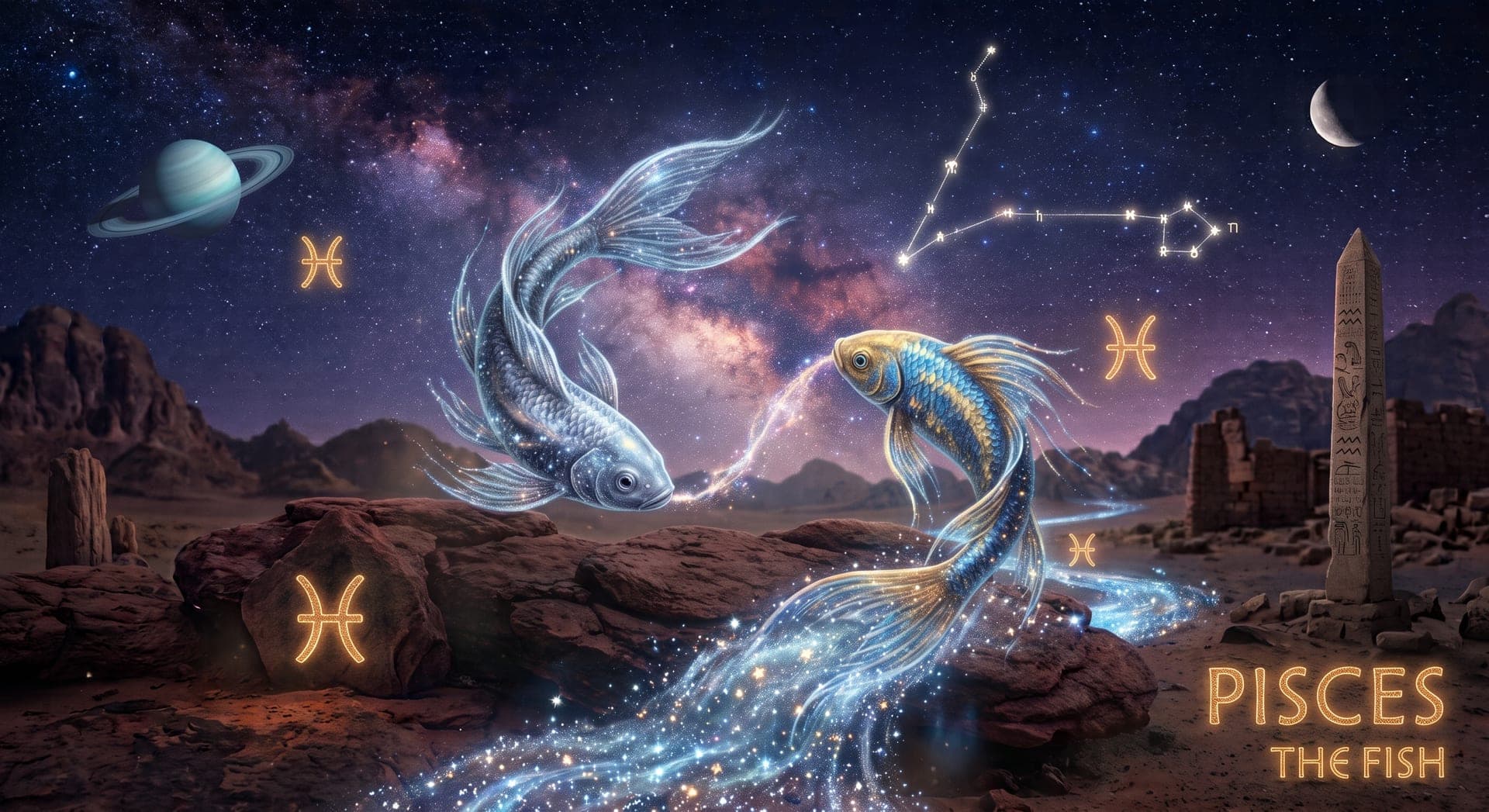
Born on March 10: Pisces ♓
Pisces, the twelfth and final sign of the zodiac, spans February 19 to March 20 and is symbolized by two fish swimming in opposite directions, tied together by a cord, representing the tension between fantasy and reality, or the conscious and subconscious mind. Ruled by Neptune, the planet of dreams, intuition, and illusion, Pisces is widely regarded as the most emotionally sensitive and imaginative sign of the zodiac. As a Water sign, Pisces navigates the world primarily through feeling and empathy, often absorbing the moods of people around it as though they were its own. Its Mutable modality reflects a deep adaptability and fluidity, comfortable going with the flow rather than forcing rigid plans. People born under this sign are often drawn to art, music, and other creative or spiritual pursuits where their vivid imagination can take shape. Compassionate to a fault, Pisces individuals are frequently the ones quietly caring for others, sometimes at the expense of their own boundaries and needs.
Personality Traits
Strengths
- Deeply empathetic and compassionate
- Highly imaginative and artistic
- Intuitive and perceptive
- Selfless and generous
- Adaptable to change
Weaknesses
- Prone to escapism or avoidance
- Overly trusting, can be taken advantage of
- Difficulty setting boundaries
- Tends toward melancholy
- Indecisive
Compatible Signs
Fun Facts
- Pisces' symbol of two fish bound together swimming in opposite directions comes from a Greek myth in which Aphrodite and Eros transformed into fish and tied themselves together to escape the monster Typhon.
- As the twelfth and final sign of the zodiac, Pisces is often described as embodying traits of all the preceding signs, a kind of culmination of the zodiac wheel.
- Neptune, Pisces' modern ruling planet, is the Roman god of the sea, discovered in 1846 and named for its blue, oceanic appearance.
- Notable Pisces include Albert Einstein, Rihanna, Steve Jobs, and Kurt Cobain.
- Classical astrology assigns Jupiter as Pisces' ruler, before Neptune's discovery in the 19th century gave the sign its modern ruling planet.
Born on March 10
- 1653
John Benbow
English Royal Navy admiral celebrated for his defiant last stand against a French squadron in the Caribbean
- 1748
John Playfair
Scottish mathematician and geologist who popularised James Hutton's theories of the Earth's formation
- 1787
William Etty
English painter renowned for his history paintings and nude studies, among the first British artists celebrated for the genre
- 1844
Pablo de Sarasate
Spanish violinist and composer
- 1845
Alexander III of Russia
Russian emperor known for conservative, reactionary rule
- 1850
Spencer Gore
English tennis player who won the first Wimbledon Championship in 1877
- 1892
Arthur Honegger
French-Swiss composer
- 1903
Bix Beiderbecke
American jazz cornetist and pianist
- 1903
Clare Boothe Luce
American playwright, journalist, and diplomat
- 1956
Robert Llewellyn
English actor and presenter best known for playing Kryten in the sci-fi sitcom Red Dwarf
- 1958
Sharon Stone
American actress known for "Basic Instinct"
- 1964
Prince Edward, Duke of Edinburgh
British royal, youngest son of Queen Elizabeth II, known for his charitable work and the Duke of Edinburgh's Award
- 1973
Chris Sutton
English footballer and striker who won the Premier League title with Blackburn Rovers
- 1983
Carrie Underwood
American country music singer-songwriter
- 1983
Rafe Spall
English actor known for film roles in Hot Fuzz, Life of Pi and Prometheus

On This Day in History
- 241 BCE
Rome sinks the Carthaginian fleet at the Battle of the Aegates Islands, ending the First Punic War.
A Roman fleet under Gaius Lutatius Catulus destroyed a Carthaginian relief fleet near Sicily's Aegates Islands, cutting off supplies to Carthaginian forces on the island. The decisive naval victory forced Carthage to sue for peace, ending the 23-year First Punic War and beginning Rome's dominance of the western Mediterranean.
- 1535
Spanish friar Tomas de Berlanga becomes the first European to sight the Galapagos Islands, after his ship drifted off course.
Spanish Dominican friar Tomas de Berlanga, bishop of Panama, became the first documented European to encounter the Galapagos Islands after ocean currents blew his ship off course en route to Peru. His accounts of the giant tortoises and unusual wildlife predated Charles Darwin's famous visit by three centuries.
- 1629
King Charles I dissolves the English Parliament and begins eleven years of Personal Rule without summoning it again.
The dissolution followed years of bitter disputes over taxation, religion and royal authority, and Charles had three MPs physically held down in the Commons so a protest could be read before the session ended. His subsequent Personal Rule, funded through controversial measures like Ship Money, deepened resentment that eventually erupted into the English Civil War in 1642.
- 1661
King Louis XIV of France begins his personal rule after the death of his chief minister, eventually becoming Europe's most powerful absolute monarch.
Following the death of his powerful chief minister, Cardinal Mazarin, the 22-year-old Louis XIV announced he would rule France without a prime minister, governing directly himself. His subsequent decades-long reign, marked by centralized absolute authority and the construction of Versailles, made him the archetype of European absolute monarchy.
- 1848
The US Senate ratifies the Treaty of Guadalupe Hidalgo, formally ending the Mexican-American War.
Under the treaty, Mexico ceded roughly half its territory to the United States, including present-day California, Nevada, Utah, and parts of several other states, in exchange for $15 million and the assumption of certain debts. The vast territorial transfer reshaped the map of North America and set the stage for later disputes over slavery's expansion into the newly acquired lands.
- 1876
Alexander Graham Bell successfully makes the first telephone call, reportedly saying "Mr. Watson, come here, I want to see you."
Working in his Boston laboratory, Alexander Graham Bell successfully transmitted clear speech to his assistant Thomas Watson in another room, reportedly saying "Mr. Watson, come here, I want to see you." The demonstration proved the telephone's practical viability just days after Bell had secured his patent.
- 1876
Scottish-born inventor Alexander Graham Bell conducts the first successful test of the telephone, transmitting intelligible speech to his assistant Thomas Watson.
Bell's famous words, 'Mr. Watson, come here, I want to see you,' were spoken through the device just days after his patent had been granted. The test, conducted in Boston where Bell had settled, proved that the telephone could transmit clear speech rather than just tones, turning his patented invention into a working technology that would soon reshape communication worldwide.
- 1906
An underground explosion at the Courrières coal mine in northern France kills 1,099 miners, the worst mining disaster in European history.
The blast, likely triggered by coal dust or firedamp, tore through kilometres of tunnels serving multiple pits, trapping workers including boys as young as thirteen. Rescue efforts were hampered by fires and toxic gas, and a small number of survivors were found alive nearly three weeks later. The disaster triggered a wave of miners' strikes across France demanding safer working conditions.
- 1909
Siam cedes suzerainty over four northern Malay states to Britain under the Anglo-Siamese Treaty of 1909.
The agreement transferred the states of Kedah, Kelantan, Perlis and Terengganu from Siamese to British control in exchange for financial compensation and railway concessions, fixing the modern border between Thailand and Malaysia. The four states joined other British-controlled Malay territories, later forming part of the Federation of Malaya, which gained independence in 1957 and became modern Malaysia in 1963.
- 1922
Mahatma Gandhi is arrested by British colonial authorities in India and charged with sedition.
The arrest followed Gandhi's calls for non-cooperation with British rule, including a widely read editorial urging Indians to withdraw allegiance from the colonial government. He pleaded guilty at his trial, telling the court that resisting a government that had done more harm to India than any previous system was 'almost a religious duty.' He was sentenced to six years but released early in 1924.
- 1945
American B-29 bombers firebomb Tokyo in a single night, killing more than 100,000 people in the deadliest bombing raid of World War II.
American B-29 Superfortress bombers dropped incendiary bombs over Tokyo in a single overnight raid, creating a firestorm that killed more than 100,000 civilians and destroyed vast swaths of the city. Operation Meetinghouse remains the single deadliest bombing raid in human history, exceeding the immediate death tolls of the atomic bombings.
- 1959
Thousands of Tibetans surround the Dalai Lama's palace in Lhasa to protect him, the start of an uprising against Chinese rule.
Fearing for the Dalai Lama's safety amid rumors of a Chinese plot to abduct him, thousands of Tibetans surrounded his palace in Lhasa to prevent his attendance at a Chinese military event. The standoff escalated into a full uprising against Chinese rule, ending with the Dalai Lama's flight to India weeks later.
- 1959
Thousands of Tibetans surround the Dalai Lama's Lhasa palace to prevent his suspected removal by Chinese authorities, beginning the Tibetan uprising.
Fears that Chinese officials planned to arrest or abduct the Dalai Lama during a suspicious theatre invitation sparked days of mass protest against Chinese rule. The uprising was crushed by Chinese troops within a week, killing thousands, and the Dalai Lama fled across the Himalayas to India, where he established a government in exile that continues to this day.
- 1975
North Vietnamese forces attack Buon Ma Thuot, launching the final offensive of the Vietnam War.
North Vietnamese forces launched a surprise assault on the South Vietnamese city of Buon Ma Thuot in the Central Highlands, catching defenders off guard. The attack's swift success convinced North Vietnamese leadership to press a full offensive, which culminated in the fall of Saigon less than two months later.
- 1977
Astronomers discover a system of rings around the planet Uranus.
Astronomers observing a stellar occultation from an airborne observatory unexpectedly detected a system of narrow rings encircling Uranus, making it only the second planet after Saturn known to have such a feature. The discovery prompted renewed interest in ring systems that was later confirmed by Voyager 2's 1986 flyby.
- 1977
Astronomers discover that the planet Uranus is encircled by a system of rings, only the second planet known to have them after Saturn.
The rings were detected indirectly when Uranus passed in front of a distant star, and observers watched the star's light flicker several times before and after the planet itself blocked it, revealing narrow, previously unknown rings. The discovery, made using telescopes including one aboard a flying observatory, prompted a reassessment of how common planetary ring systems might be.
- 2000
The Nasdaq Composite index peaks at 5,048.62 at the height of the dot-com bubble, just before a prolonged crash.
The technology-heavy Nasdaq Composite index closed at an all-time high of 5,048.62, reflecting the frenzied valuations of internet-related companies during the dot-com boom. Within weeks the bubble began to deflate, wiping out trillions of dollars in market value over the following two years.
- 2019
Ethiopian Airlines Flight 302 crashes shortly after takeoff, leading to the worldwide grounding of the Boeing 737 MAX.
Ethiopian Airlines Flight 302 crashed minutes after takeoff from Addis Ababa, killing all 157 people aboard in the second fatal crash involving a Boeing 737 MAX within five months. The disaster led aviation regulators worldwide to ground the aircraft model for nearly two years pending safety fixes.
- 2019
Ethiopian Airlines Flight 302 crashes minutes after takeoff from Addis Ababa, killing all 157 people on board.
The crash, involving a Boeing 737 MAX, was the second fatal accident with the model in five months, following a similar crash of a Lion Air jet in Indonesia. Investigations pointed to a faulty automated flight-control system, prompting aviation regulators worldwide to ground the entire 737 MAX fleet for nearly two years while Boeing redesigned the system.
- 2023
Silicon Valley Bank collapses and is seized by US regulators, the second-largest bank failure in American history.
The California-based lender, a major financier of technology startups, failed after a bond portfolio hit by rising interest rates and a rapid depositor run left it unable to meet withdrawal demands. Its collapse triggered fears of wider contagion in the banking sector, prompting emergency measures from US regulators to guarantee deposits and stabilise confidence in regional banks.