
What’s Observed on March 9
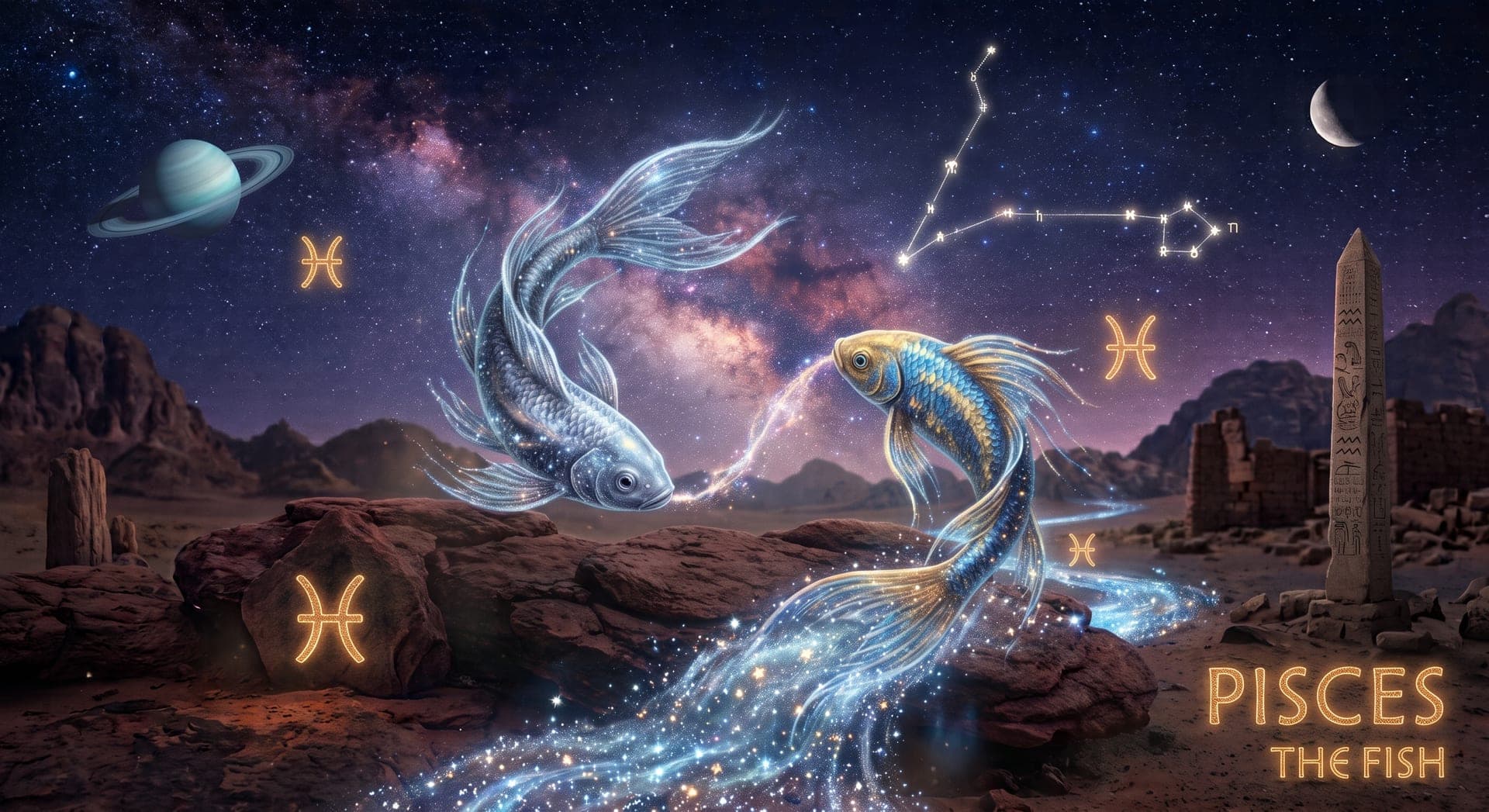
Born on March 9: Pisces ♓
Pisces, the twelfth and final sign of the zodiac, spans February 19 to March 20 and is symbolized by two fish swimming in opposite directions, tied together by a cord, representing the tension between fantasy and reality, or the conscious and subconscious mind. Ruled by Neptune, the planet of dreams, intuition, and illusion, Pisces is widely regarded as the most emotionally sensitive and imaginative sign of the zodiac. As a Water sign, Pisces navigates the world primarily through feeling and empathy, often absorbing the moods of people around it as though they were its own. Its Mutable modality reflects a deep adaptability and fluidity, comfortable going with the flow rather than forcing rigid plans. People born under this sign are often drawn to art, music, and other creative or spiritual pursuits where their vivid imagination can take shape. Compassionate to a fault, Pisces individuals are frequently the ones quietly caring for others, sometimes at the expense of their own boundaries and needs.
Personality Traits
Strengths
- Deeply empathetic and compassionate
- Highly imaginative and artistic
- Intuitive and perceptive
- Selfless and generous
- Adaptable to change
Weaknesses
- Prone to escapism or avoidance
- Overly trusting, can be taken advantage of
- Difficulty setting boundaries
- Tends toward melancholy
- Indecisive
Compatible Signs
Fun Facts
- Pisces' symbol of two fish bound together swimming in opposite directions comes from a Greek myth in which Aphrodite and Eros transformed into fish and tied themselves together to escape the monster Typhon.
- As the twelfth and final sign of the zodiac, Pisces is often described as embodying traits of all the preceding signs, a kind of culmination of the zodiac wheel.
- Neptune, Pisces' modern ruling planet, is the Roman god of the sea, discovered in 1846 and named for its blue, oceanic appearance.
- Notable Pisces include Albert Einstein, Rihanna, Steve Jobs, and Kurt Cobain.
- Classical astrology assigns Jupiter as Pisces' ruler, before Neptune's discovery in the 19th century gave the sign its modern ruling planet.
Born on March 9
- 1454
Amerigo Vespucci
Italian explorer and cartographer after whom the Americas are named
- 1763
William Cobbett
English journalist and political reformer who campaigned for parliamentary reform and founded the Political Register
- 1814
Taras Shevchenko
Ukrainian poet and national literary icon
- 1892
Vita Sackville-West
English author and poet known for her novels, her gardens at Sissinghurst, and her close friendship with Virginia Woolf
- 1915
Johnnie Johnson
English Royal Air Force air marshal and the top-scoring British fighter ace of the Second World War
- 1933
David Weatherall
English physician and geneticist renowned for his pioneering research into inherited blood disorders
- 1934
Yuri Gagarin
Soviet cosmonaut, first human in space
- 1942
John Cale
Welsh musician and composer who co-founded the influential rock band the Velvet Underground
- 1943
Bobby Fischer
American chess grandmaster and World Champion
- 1950
Howard Shelley
English pianist and conductor celebrated for his recordings of Romantic-era piano repertoire
- 1952
Bill Beaumont
English rugby union player who captained England and later chaired World Rugby
- 1964
Juliette Binoche
French actress and Academy Award winner
- 1970
Martin Johnson
English rugby union player who captained England to victory at the 2003 Rugby World Cup
- 1979
Oscar Isaac
Guatemalan-American actor
- 2003
Sunisa Lee
American Olympic gold medalist gymnast

On This Day in History
- 1500
Portuguese navigator Pedro Álvares Cabral departs Lisbon with a fleet bound for India, on a voyage that leads to the European discovery of Brazil.
Cabral's expedition was blown off its intended course across the Atlantic, bringing the fleet unexpectedly to the coast of present-day Brazil in April 1500, which he claimed for Portugal. The voyage then continued on to India, opening a lucrative spice trade route, while Brazil became the cornerstone of Portugal's colonial empire in the Americas for the next three centuries.
- 1776
Scottish economist Adam Smith publishes "The Wealth of Nations," a foundational text of modern economics.
Scottish philosopher Adam Smith published "An Inquiry into the Nature and Causes of the Wealth of Nations," arguing that free markets, guided by self-interest and competition, produce broad prosperity more effectively than mercantilist state control. The work became the foundational text of classical economics and continues to shape economic policy debates today.
- 1776
Scottish economist Adam Smith publishes An Inquiry into the Nature and Causes of the Wealth of Nations.
The book laid out Smith's theory of free markets, the division of labour and the 'invisible hand' guiding self-interested economic activity toward collective benefit. Written over nearly a decade, it became the foundational text of modern economics and profoundly influenced classical liberal thought, shaping debates over trade, taxation and government's role in the economy that continue to this day.
- 1796
Napoleon Bonaparte marries Josephine de Beauharnais just before departing to command the Army of Italy.
Napoleon Bonaparte married Josephine de Beauharnais, a widow six years his senior with two children, in a small civil ceremony days before departing to lead the Army of Italy. Their passionate but tumultuous relationship, chronicled in Napoleon's surviving love letters, ended in divorce in 1810 due to Josephine's inability to bear him an heir.
- 1815
English scientist Francis Ronalds describes the first battery-powered clock, an early application of electricity to timekeeping.
Ronalds, who would later build the world's first working electric telegraph, devised a clock driven by static electricity from a battery rather than a mechanical spring or weights. Though not immediately practical for wide use, the invention demonstrated electricity's potential for precise, continuous mechanical work decades before electrical engineering became a recognised discipline, foreshadowing his later pioneering telegraph experiments.
- 1841
The U.S. Supreme Court rules in the Amistad case that a group of illegally enslaved Africans were free, ordering their release.
The Supreme Court ruled that Africans who had seized control of the slave ship Amistad after being illegally captured were free individuals rather than property, rejecting Spanish claims for their return. Former president John Quincy Adams argued the case before the Court, and the ruling allowed the Africans to eventually return home.
- 1841
The US Supreme Court rules that the African captives who seized the slave ship Amistad were unlawfully enslaved and must be freed.
The captives, led by Sengbe Pieh, had rebelled against their captors during the voyage and were later intercepted off the American coast. Former president John Quincy Adams argued their case before the court, which ruled the Africans had been kidnapped in violation of international treaties banning the slave trade. The verdict became a landmark moment in the American abolitionist movement.
- 1862
The ironclad warships USS Monitor and CSS Virginia fight to a draw at the Battle of Hampton Roads, the first battle between armored warships.
The Confederate ironclad CSS Virginia, rebuilt from the scuttled USS Merrimack, fought the newly arrived Union ironclad USS Monitor to a tactical draw at Hampton Roads, Virginia. The clash rendered wooden warships obsolete overnight and marked the beginning of the modern era of armored naval warfare.
- 1862
The ironclad warships USS Monitor and CSS Virginia fight to a draw at the Battle of Hampton Roads during the American Civil War.
The clash was the first battle between armoured, steam-powered warships and rendered traditional wooden navies instantly obsolete worldwide. Neither vessel could seriously damage the other's iron plating, and the battle ended inconclusively, but naval planners around the world took immediate notice, accelerating a global shift toward ironclad and eventually all-steel warship design in the decades that followed.
- 1933
President Franklin D. Roosevelt submits the Emergency Banking Act to Congress, the first major legislation of the New Deal.
Days after taking office amid a banking crisis, Franklin D. Roosevelt sent Congress the Emergency Banking Act, which passed within hours and gave the government authority to reopen solvent banks under federal supervision. The swift action helped restore public confidence and stemmed the wave of bank runs gripping the nation.
- 1933
US President Franklin D. Roosevelt submits the Emergency Banking Act to Congress during the depths of the Great Depression's banking crisis.
Passed within hours of being introduced, the act gave the federal government sweeping authority to inspect and reorganise struggling banks while restricting gold hoarding and exports. Combined with Roosevelt's reassuring 'fireside chat' to the nation, the legislation helped restore public confidence and end the wave of bank runs that had paralysed the American financial system in early 1933.
- 1945
Japanese forces stage a coup in French Indochina, ending French colonial administration in the region.
As Allied forces closed in on Japan, Japanese troops staged a swift coup against French colonial administrators in Indochina, imprisoning officials and seizing control after France's Vichy government had allowed nominal French rule to continue. The coup ended eight decades of French colonial authority in the region, if only temporarily.
- 1945
US B-29 bombers carry out a massive incendiary raid on Tokyo, killing over 100,000 people in a single night.
Operation Meetinghouse used low-altitude firebombing tactics to ignite the city's densely packed wooden buildings, creating firestorms that destroyed roughly sixteen square miles of the Japanese capital. It remains among the deadliest single bombing raids in history, killing more people outright than either of the atomic bombings later that year, and it left over a million residents homeless.
- 1946
Thirty-three spectators are crushed to death at Bolton Wanderers' Burnden Park stadium when overcrowded terraces give way during an FA Cup tie.
An enormous crowd, far exceeding the ground's safe capacity, surged forward to see the match against Stoke City, causing barriers to collapse and fans to be crushed. The tragedy, one of the worst in British football history at the time, prompted the Moelwyn Hughes inquiry into stadium safety, though many of its recommendations went unenforced for decades, contributing to further disasters later in the century.
- 1959
The Barbie doll makes its debut at the American International Toy Fair in New York.
Mattel introduced the Barbie doll, designed by company co-founder Ruth Handler and modeled partly on a German novelty toy, at the American International Toy Fair in New York. The doll became one of the best-selling toys in history and a lasting, often debated, cultural icon regarding beauty standards and gender roles.
- 1959
The Barbie doll makes its public debut at the American International Toy Fair in New York City.
Created by businesswoman Ruth Handler and named after her daughter Barbara, the doll broke with convention by giving girls a toy modelled as an adult woman rather than a baby or child. Despite lukewarm reactions from some buyers at launch, Barbie became one of the best-selling toys in history and a defining, if often controversial, cultural icon of the twentieth century.
- 1997
Influential rapper The Notorious B.I.G. is killed in a drive-by shooting in Los Angeles.
Rapper Christopher Wallace, known as The Notorious B.I.G., was shot and killed in a drive-by shooting in Los Angeles just months after the similar killing of rival Tupac Shakur. His death, which remains officially unsolved, marked a tragic peak in the East Coast-West Coast hip-hop rivalry of the 1990s.
- 2011
Space Shuttle Discovery completes its final landing after 39 missions, retiring the most-flown orbiter in NASA's fleet.
Space Shuttle Discovery, the most-flown orbiter in NASA's fleet with 39 missions spanning nearly three decades, touched down for the final time at Kennedy Space Center. Discovery had launched the Hubble Space Telescope and carried numerous astronauts to the International Space Station before its retirement to the Smithsonian.
- 2020
Italy becomes the first country to impose a nationwide COVID-19 lockdown.
As COVID-19 infections surged, Italy became the first Western democracy to impose a nationwide lockdown, restricting movement for its entire population of 60 million people. The dramatic measure, initially met with skepticism, foreshadowed similar restrictions soon adopted by countries around the world as the pandemic spread globally.
- 2020
Italian Prime Minister Giuseppe Conte announces a nationwide lockdown, making Italy the first Western country to impose blanket coronavirus restrictions.
The order confined some 60 million residents to their homes except for essential work, medical needs or emergencies, following weeks of rapidly rising infections that had overwhelmed hospitals in the north. Italy's drastic measures, unprecedented outside wartime, became a model closely watched by other governments as the COVID-19 pandemic spread across Europe and the rest of the world in the following weeks.