
What’s Observed on March 8
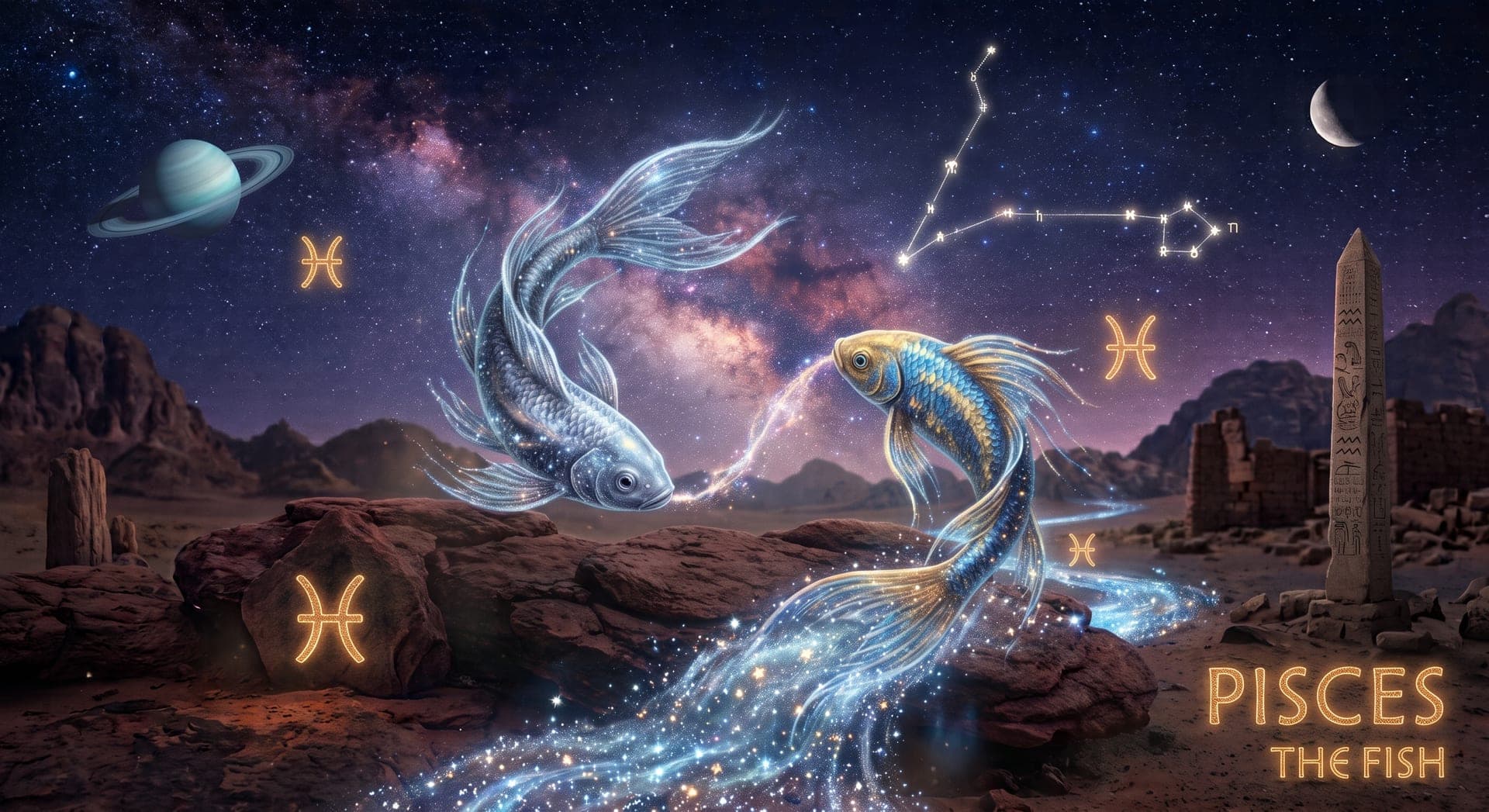
Born on March 8: Pisces ♓
Pisces, the twelfth and final sign of the zodiac, spans February 19 to March 20 and is symbolized by two fish swimming in opposite directions, tied together by a cord, representing the tension between fantasy and reality, or the conscious and subconscious mind. Ruled by Neptune, the planet of dreams, intuition, and illusion, Pisces is widely regarded as the most emotionally sensitive and imaginative sign of the zodiac. As a Water sign, Pisces navigates the world primarily through feeling and empathy, often absorbing the moods of people around it as though they were its own. Its Mutable modality reflects a deep adaptability and fluidity, comfortable going with the flow rather than forcing rigid plans. People born under this sign are often drawn to art, music, and other creative or spiritual pursuits where their vivid imagination can take shape. Compassionate to a fault, Pisces individuals are frequently the ones quietly caring for others, sometimes at the expense of their own boundaries and needs.
Personality Traits
Strengths
- Deeply empathetic and compassionate
- Highly imaginative and artistic
- Intuitive and perceptive
- Selfless and generous
- Adaptable to change
Weaknesses
- Prone to escapism or avoidance
- Overly trusting, can be taken advantage of
- Difficulty setting boundaries
- Tends toward melancholy
- Indecisive
Compatible Signs
Fun Facts
- Pisces' symbol of two fish bound together swimming in opposite directions comes from a Greek myth in which Aphrodite and Eros transformed into fish and tied themselves together to escape the monster Typhon.
- As the twelfth and final sign of the zodiac, Pisces is often described as embodying traits of all the preceding signs, a kind of culmination of the zodiac wheel.
- Neptune, Pisces' modern ruling planet, is the Roman god of the sea, discovered in 1846 and named for its blue, oceanic appearance.
- Notable Pisces include Albert Einstein, Rihanna, Steve Jobs, and Kurt Cobain.
- Classical astrology assigns Jupiter as Pisces' ruler, before Neptune's discovery in the 19th century gave the sign its modern ruling planet.
Born on March 8
- 1714
Carl Philipp Emanuel Bach
German composer, son of Johann Sebastian Bach
- 1859
Kenneth Grahame
Scottish-born British author best known for the children's classic The Wind in the Willows
- 1879
Otto Hahn
German chemist who discovered nuclear fission, Nobel laureate
- 1909
Beatrice Shilling
English motorcycle racer turned aeronautical engineer, famed for a wartime fix to the Spitfire's Merlin engine
- 1922
Cyd Charisse
American actress and dancer known for classic Hollywood musicals
- 1924
Anthony Caro
English sculptor known for large abstract steel and bronze works that transformed modern sculpture
- 1930
Douglas Hurd
English Conservative politician who served as Foreign Secretary and Home Secretary under Margaret Thatcher and John Major
- 1943
Lynn Redgrave
English actress and member of the Redgrave acting dynasty, known for Georgy Girl and later television and film roles
- 1948
Jonathan Sacks
English rabbi, philosopher and Chief Rabbi of the United Hebrew Congregations of the Commonwealth
- 1956
Laurie Cunningham
English footballer and one of the first Black players to represent the England national team
- 1958
Gary Numan
English singer-songwriter and pioneer of synth-pop, known for the hit single Cars
- 1976
Freddie Prinze Jr.
American actor and producer

On This Day in History
- 1702
Queen Anne becomes monarch of England, Scotland, and Ireland.
Following the death of King William III, his sister-in-law Anne ascended to the throne of England, Scotland, and Ireland. Her reign saw the 1707 Acts of Union merging England and Scotland into the Kingdom of Great Britain, and she remains a significant figure in the formation of the modern United Kingdom.
- 1702
Anne becomes queen regnant of England, Scotland and Ireland following the death of her brother-in-law William III.
Anne's reign would prove historic: in 1707 she presided over the Acts of Union that merged England and Scotland into a single Kingdom of Great Britain, and her government fought the War of the Spanish Succession under the Duke of Marlborough. Though she bore seventeen children, none survived her, and her death in 1714 ended the House of Stuart's rule, passing the crown to the House of Hanover.
- 1801
British forces land at Abukir Bay in Egypt, opening the campaign to drive Napoleon's army out of the country.
A British expeditionary force under Sir Ralph Abercromby fought its way ashore against entrenched French defenders, suffering heavy casualties but securing a beachhead. Abercromby himself was mortally wounded weeks later at the Battle of Alexandria, but the campaign succeeded, forcing the remaining French garrison to surrender by the end of the year and ending Napoleon's ambitions of an Egyptian empire.
- 1910
French aviator Raymonde de Laroche becomes the first woman in the world to be awarded a pilot's license.
De Laroche, a former actress and sculptor, took up flying in 1909 and impressed contemporaries with her skill despite the era's primitive and dangerous aircraft. Her licence, issued by the Aéro-Club de France, opened the way for women aviators worldwide. She continued flying competitively and set altitude records before dying in a flying accident in 1919, while testing a new aircraft.
- 1916
A British relief force is repulsed by Ottoman defenders at the Battle of Dujaila, failing to break the siege of Kut in Mesopotamia.
British and Indian troops attacked entrenched Ottoman positions in an attempt to reach the besieged garrison at Kut al-Amara, but poor coordination and strong defences turned the assault into a costly failure. The garrison's eventual surrender weeks later became one of the worst defeats suffered by British arms in the First World War, a humiliation that prompted a parliamentary inquiry into the campaign's mismanagement.
- 1917
International Women's Day protests in Petrograd mark the beginning of the Russian February Revolution, which soon toppled the tsar.
Demonstrations marking International Women's Day in Petrograd, fueled by food shortages and war weariness, escalated into mass strikes and protests that spread rapidly through the city. Within days, the unrest forced Tsar Nicholas II's abdication, beginning the February Revolution that eventually led to Bolshevik rule.
- 1917
International Women's Day demonstrations in Petrograd by female textile workers spiral into mass protests that begin the February Revolution.
Crowds demanding bread and an end to the war were soon joined by striking factory workers and mutinying soldiers, overwhelming the tsarist authorities within days. The unrest forced Tsar Nicholas II to abdicate later that week, ending three centuries of Romanov rule and installing a Provisional Government, setting the stage for the Bolshevik revolution that would follow later that same year.
- 1937
The Battle of Guadalajara begins during the Spanish Civil War, resulting in a rare Republican victory.
Republican forces, aided by international volunteers, decisively defeated an Italian expeditionary corps supporting Franco's Nationalists near Guadalajara, one of the few major Republican victories of the Spanish Civil War. The battle briefly boosted Republican morale despite the eventual Nationalist triumph two years later.
- 1942
Dutch forces in the East Indies surrender the island of Java to the invading Imperial Japanese Army.
Overwhelmed Dutch colonial forces in the Netherlands East Indies surrendered the island of Java to invading Japanese troops, ending Dutch rule that had lasted more than three centuries. The occupation that followed fueled Indonesian nationalist movements that later achieved independence after the war.
- 1942
Imperial Japanese forces capture Rangoon, the capital of British-controlled Burma.
Imperial Japanese forces captured Rangoon, the capital of British Burma, cutting off a critical overland supply route to Nationalist China known as the Burma Road. The loss forced Allied forces into a difficult retreat and shaped the subsequent Burma campaign fought over the following three years.
- 1942
Imperial Japanese forces capture Rangoon, the capital of Burma, forcing a British retreat toward India.
The fall of Rangoon cut off Burma's main port and supply route, compelling British, Indian and Chinese forces to begin a gruelling overland retreat of hundreds of miles through jungle and monsoon conditions toward the Indian border. It marked one of the longest retreats in British military history and left Japan in control of Burma for the next three years, until Allied forces recaptured it in 1945.
- 1963
The Ba'ath Party seizes power in Syria in a military coup, beginning decades of Ba'athist rule in the country.
A group of Ba'athist and allied military officers overthrew the government in a swift, largely bloodless operation, installing a National Council of the Revolutionary Command. The coup entrenched the Ba'ath Party's grip on Syrian politics for the rest of the twentieth century, eventually paving the way for Hafez al-Assad's rise to power in 1970 and the decades-long Assad family dynasty that followed.
- 1965
The first U.S. combat troops, a contingent of Marines, arrive at Da Nang, South Vietnam.
Roughly 3,500 U.S. Marines waded ashore at Da Nang, becoming the first American combat troops openly committed to the Vietnam War, having previously served only in advisory roles. Their arrival marked a significant escalation of direct U.S. military involvement in the conflict.
- 1979
Philips publicly demonstrates the compact disc for the first time.
Electronics company Philips unveiled the compact disc to the public, showcasing a digital audio format that promised clearer sound and greater durability than vinyl records or cassette tapes. Developed jointly with Sony, the CD went on to dominate music sales for the next two decades.
- 1979
Images from Voyager 1 confirm active volcanoes on Jupiter's moon Io, the first found beyond Earth.
Analysis of images sent back by NASA's Voyager 1 spacecraft revealed active volcanic plumes erupting on Jupiter's moon Io, the first confirmed volcanic activity discovered anywhere beyond Earth. The finding transformed scientific understanding of geological activity on other worlds in the solar system.
- 1979
Images from NASA's Voyager 1 spacecraft reveal active volcanoes on Jupiter's moon Io, the first found on another world besides Earth.
Scientists analysing the probe's photographs spotted plumes rising hundreds of kilometres above Io's surface, evidence of ongoing volcanic eruptions driven by tidal forces from Jupiter's gravity. The discovery, made just days after Voyager 1's closest approach to Jupiter, transformed understanding of the outer solar system and showed that small, seemingly inert moons could be among the most geologically active bodies known.
- 1979
Electronics company Philips publicly demonstrates the compact disc for the first time, previewing a technology that would transform recorded music.
The demonstration showcased a small, laser-read optical disc capable of storing digital audio with far greater durability and clarity than vinyl records or cassette tapes. Philips later partnered with Sony to finalise the format's technical standard, and the CD launched commercially in 1982, eventually becoming the dominant music format worldwide for two decades before digital downloads and streaming displaced it.
- 1983
President Ronald Reagan famously labels the Soviet Union an "evil empire" in a speech to the National Association of Evangelicals.
In a speech to the National Association of Evangelicals, President Reagan described the Soviet Union as "the focus of evil in the modern world" and an "evil empire," sharply escalating Cold War rhetoric. The phrase became emblematic of his administration's confrontational approach to Soviet relations.
- 2014
Malaysia Airlines Flight 370 disappears en route from Kuala Lumpur to Beijing, sparking one of aviation history's most extensive searches.
Malaysia Airlines Flight 370, a Boeing 777 carrying 239 people from Kuala Lumpur to Beijing, vanished from radar and was never conclusively located despite one of the most extensive multinational search efforts in aviation history. The disappearance remains one of aviation's most enduring mysteries.
- 2014
Malaysia Airlines Flight 370, carrying 239 people from Kuala Lumpur to Beijing, disappears from radar over the South China Sea.
The Boeing 777 vanished without a distress call after diverting sharply from its planned route, triggering one of the largest and most expensive search operations in aviation history across the southern Indian Ocean. Despite scattered debris later washing ashore on African and Indian Ocean coastlines, the main wreckage was never found, and the disappearance remains one of aviation's most enduring unsolved mysteries.