
What’s Observed on March 7
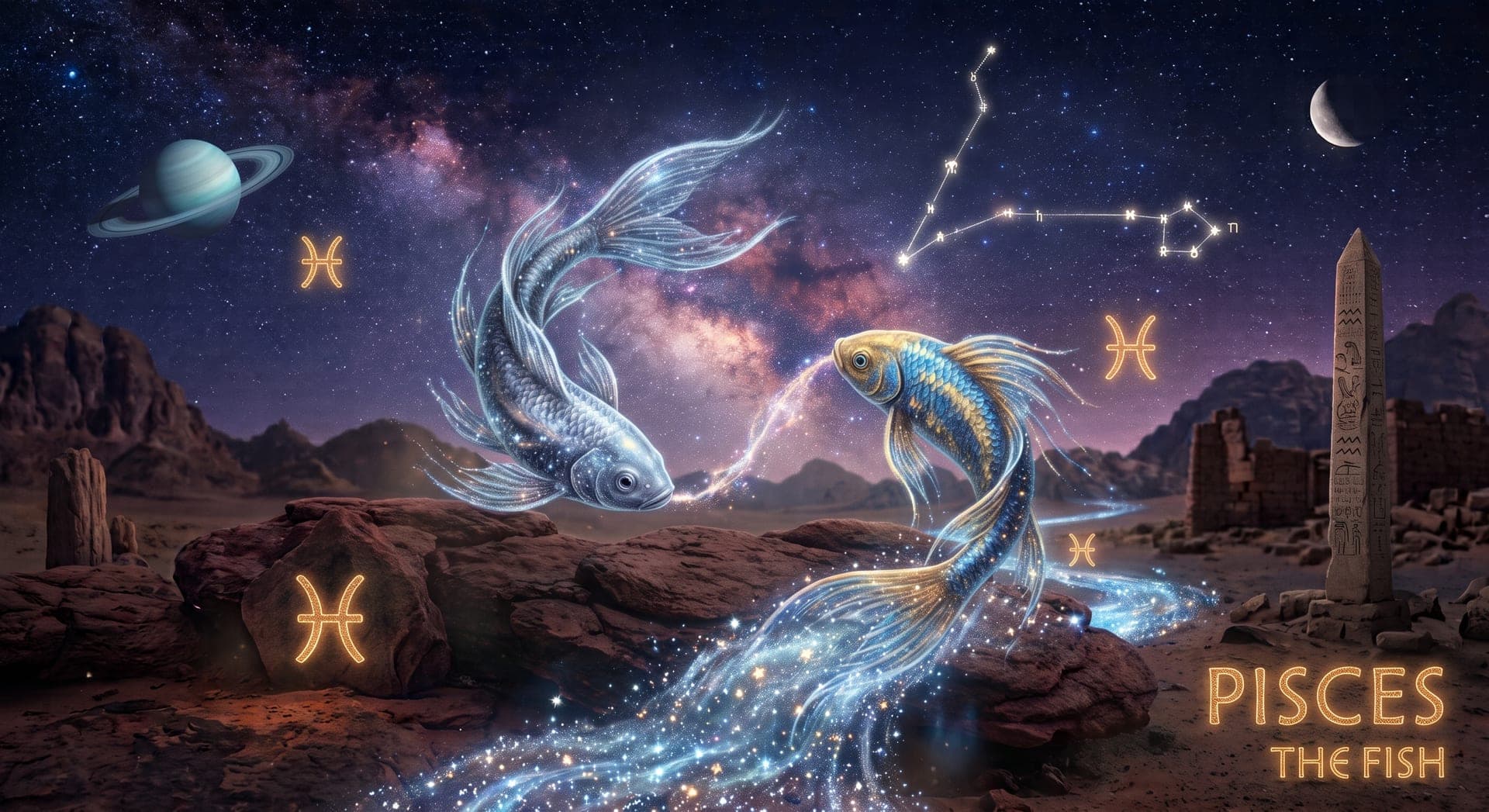
Born on March 7: Pisces ♓
Pisces, the twelfth and final sign of the zodiac, spans February 19 to March 20 and is symbolized by two fish swimming in opposite directions, tied together by a cord, representing the tension between fantasy and reality, or the conscious and subconscious mind. Ruled by Neptune, the planet of dreams, intuition, and illusion, Pisces is widely regarded as the most emotionally sensitive and imaginative sign of the zodiac. As a Water sign, Pisces navigates the world primarily through feeling and empathy, often absorbing the moods of people around it as though they were its own. Its Mutable modality reflects a deep adaptability and fluidity, comfortable going with the flow rather than forcing rigid plans. People born under this sign are often drawn to art, music, and other creative or spiritual pursuits where their vivid imagination can take shape. Compassionate to a fault, Pisces individuals are frequently the ones quietly caring for others, sometimes at the expense of their own boundaries and needs.
Personality Traits
Strengths
- Deeply empathetic and compassionate
- Highly imaginative and artistic
- Intuitive and perceptive
- Selfless and generous
- Adaptable to change
Weaknesses
- Prone to escapism or avoidance
- Overly trusting, can be taken advantage of
- Difficulty setting boundaries
- Tends toward melancholy
- Indecisive
Compatible Signs
Fun Facts
- Pisces' symbol of two fish bound together swimming in opposite directions comes from a Greek myth in which Aphrodite and Eros transformed into fish and tied themselves together to escape the monster Typhon.
- As the twelfth and final sign of the zodiac, Pisces is often described as embodying traits of all the preceding signs, a kind of culmination of the zodiac wheel.
- Neptune, Pisces' modern ruling planet, is the Roman god of the sea, discovered in 1846 and named for its blue, oceanic appearance.
- Notable Pisces include Albert Einstein, Rihanna, Steve Jobs, and Kurt Cobain.
- Classical astrology assigns Jupiter as Pisces' ruler, before Neptune's discovery in the 19th century gave the sign its modern ruling planet.
Born on March 7
- 1671
Rob Roy MacGregor
Scottish outlaw and folk hero whose exploits during the Jacobite era later inspired Walter Scott's novel Rob Roy
- 1765
Nicéphore Niépce
French inventor credited with producing the first permanent photograph
- 1792
John Herschel
English mathematician and astronomer who catalogued thousands of stars and nebulae and helped pioneer photography
- 1872
Piet Mondrian
Dutch painter known for pioneering abstract art
- 1875
Maurice Ravel
French composer known for "Boléro"
- 1908
Anna Magnani
Italian actress celebrated for her neorealist film roles
- 1930
Antony Armstrong-Jones
English photographer and 1st Earl of Snowdon, known for his portraiture and marriage to Princess Margaret
- 1944
Ranulph Fiennes
English explorer and soldier renowned as the first person to reach both poles and cross Antarctica on foot
- 1956
Bryan Cranston
American actor known for "Breaking Bad"
- 1958
Rik Mayall
English comedian and actor celebrated for anarchic roles in The Young Ones and Bottom
- 1960
Ivan Lendl
Czech-American professional tennis player
- 1963
E. L. James
English author best known for the bestselling erotic romance novel Fifty Shades of Grey
- 1970
Rachel Weisz
English actress who won an Academy Award for her role in The Constant Gardener
- 1994
Jordan Pickford
English footballer who has played goalkeeper for Everton and the England national team
On This Day in History
- 161
Marcus Aurelius and Lucius Verus become joint emperors of Rome, the first time the empire is ruled by two co-equal emperors.
Marcus Aurelius, adopted heir of the late Antoninus Pius, insisted the Senate also confirm his adoptive brother Lucius Verus as co-ruler rather than take sole power himself. The arrangement, unprecedented in Roman history, lasted until Verus's death in 169. Marcus Aurelius went on to become one of Rome's most celebrated emperors, remembered for his Stoic philosophy as much as for his rule.
- 1573
The Ottoman Empire and the Republic of Venice sign a peace treaty ending the Ottoman-Venetian War.
The Ottoman Empire and the Republic of Venice signed a treaty ending a war fought partly over control of Cyprus, which the Ottomans had seized from Venice. The settlement forced Venice to cede the island and pay tribute, marking a further decline of Venetian power in the eastern Mediterranean.
- 1799
Napoleon's forces capture Jaffa in Palestine, where his troops subsequently killed thousands of captured soldiers.
During his Egyptian and Syrian campaign, Napoleon's army captured the coastal city of Jaffa after a brief siege, and French troops subsequently massacred several thousand Ottoman prisoners of war, an episode historians regard as one of the darker chapters of Napoleon's military career.
- 1826
English adventurer Edward Gibbon Wakefield abducts 15-year-old heiress Ellen Turner from her boarding school and tricks her into a hasty marriage.
Wakefield lured Turner to Gretna Green in Scotland with a false story that her father's business had failed and that only marriage to him could save the family. The marriage was annulled and Wakefield served three years in prison, but he used his time behind bars to develop influential theories on colonization that later shaped British settlement policy in Australia and New Zealand.
- 1876
Alexander Graham Bell is granted a patent for the telephone.
Alexander Graham Bell received U.S. Patent 174,465 for "the method of, and apparatus for, transmitting vocal or other sounds telegraphically," describing the telephone. The patent, filed just hours before a rival inventor's competing application, became the subject of extensive litigation but secured Bell's place as the telephone's recognized inventor.
- 1876
Alexander Graham Bell, the Scottish-born inventor, is granted a US patent for his invention of the telephone.
Bell had emigrated from Edinburgh to North America as a young man and spent years experimenting with methods of transmitting speech electrically. His patent, filed just hours before a rival inventor's competing claim, covered the basic principle of transmitting sound through variations in electrical current. The telephone went on to transform global communication, and Bell remained a celebrated figure in his native Scotland throughout his life.
- 1902
Boer commandos under Koos de la Rey inflict a heavy defeat on British forces at the Battle of Tweebosch during the Second Boer War.
The battle, fought in the western Transvaal, saw British troops under Lord Methuen ambushed and routed by a smaller but far more mobile Boer force. Methuen himself was wounded and captured, becoming the most senior British officer taken prisoner in the war. The defeat embarrassed the British high command and underlined how difficult the guerrilla-style Boer tactics remained to counter, even as the war drew toward its final months.
- 1941
The German submarine U-47, commanded by celebrated ace Günther Prien, disappears without trace in the Atlantic while hunting a British convoy.
U-47 had become notorious in Britain and Germany alike after sinking the battleship HMS Royal Oak inside the Royal Navy's Scapa Flow anchorage in 1939, a daring raid that shocked the Admiralty. Its loss, likely to a British escort ship's depth charges, went unconfirmed for weeks and marked the disappearance of one of the Kriegsmarine's most feared U-boat commanders from the Battle of the Atlantic.
- 1945
American forces unexpectedly capture an intact bridge over the Rhine at Remagen, accelerating the Allied advance into Germany.
Advancing American forces were stunned to find the Ludendorff Bridge at Remagen still standing despite German efforts to demolish it, allowing troops to rush across the Rhine ahead of schedule. The unexpected crossing accelerated the collapse of German defenses in the war's final weeks, though the bridge itself collapsed days later.
- 1945
American troops of the US 9th Armored Division seize the Ludendorff Bridge at Remagen intact, giving Allied forces their first crossing of the Rhine.
The bridge's capture came as a surprise even to Allied commanders, since German engineers had failed to detonate the demolition charges in time. Thousands of troops poured across before the structure finally collapsed ten days later from earlier damage and Luftwaffe attacks. The crossing shortened the war in the west by weeks, letting Allied armies advance rapidly into the heart of Germany.
- 1965
State troopers violently attack civil rights marchers crossing the Edmund Pettus Bridge in Selma, Alabama, in an event that becomes known as Bloody Sunday.
Alabama state troopers and a deputized posse attacked peaceful civil rights marchers with tear gas and clubs as they attempted to cross the Edmund Pettus Bridge in Selma, an event broadcast nationally and dubbed "Bloody Sunday." The brutal images galvanized public support for the Voting Rights Act signed months later.
- 1965
Alabama state troopers violently attack peaceful civil rights marchers on the Edmund Pettus Bridge in Selma, in an event that becomes known as Bloody Sunday.
Marchers led by activists including John Lewis were beaten with clubs and tear-gassed as they attempted to walk to Montgomery to demand voting rights for Black Americans. Televised images of the violence shocked the nation and drew international condemnation, galvanising support for the Voting Rights Act, which President Lyndon Johnson signed into law later that year.
- 1971
Sheikh Mujibur Rahman delivers a historic speech in Dhaka calling for Bengali self-determination, a precursor to Bangladesh's independence.
In a mass rally in Dhaka, Sheikh Mujibur Rahman delivered an impassioned address calling for Bengali self-rule short of an explicit declaration of independence, amid escalating tensions with West Pakistan's military government. His speech is regarded as a foundational moment leading to Bangladesh's war of independence weeks later.
- 1986
Navy divers locate the crew cabin of the destroyed Space Shuttle Challenger on the ocean floor.
Navy salvage divers located the crew compartment of the Space Shuttle Challenger on the ocean floor off Florida, weeks after the shuttle disintegrated shortly after launch, killing all seven astronauts aboard. The discovery provided investigators with crucial evidence about the crew's fate during the accident.
- 1989
Iran and the United Kingdom break diplomatic relations over the controversy surrounding author Salman Rushdie.
Iran severed diplomatic relations with the United Kingdom after British author Salman Rushdie's novel "The Satanic Verses" prompted Ayatollah Khomeini to issue a fatwa calling for Rushdie's death. The controversy sparked protests worldwide and forced Rushdie into hiding under police protection for years.
- 1989
Iran and the United Kingdom sever diplomatic relations after Britain refuses to renounce Salman Rushdie's novel The Satanic Verses.
The rupture followed Ayatollah Khomeini's fatwa calling for Rushdie's death over the book, which many Muslims considered blasphemous. Britain's government defended freedom of expression while condemning the threat against a UK citizen, and Iranian crowds had already stormed the British embassy in protest. Relations between the two countries remained severely strained for years afterward, with full diplomatic ties only gradually restored.
- 2006
A coordinated series of bombings strikes the Indian city of Varanasi, killing over a dozen people.
A coordinated series of bomb blasts struck a train station, a temple, and other crowded locations in the Indian holy city of Varanasi during a religious festival, killing over a dozen people and wounding dozens more. The attacks heightened communal tensions in the politically and religiously significant city.
- 2007
The British House of Commons votes in favour of a fully elected House of Lords, though the reform is never implemented.
MPs backed a wholly elected upper chamber in a historic but non-binding vote, part of a long-running debate over how to modernise the Lords, which had already lost most hereditary peers in 1999 reforms. The House of Lords itself favoured a fully appointed chamber instead, leaving the two houses at odds. Despite repeated attempts since, comprehensive Lords reform has never been carried into law.
- 2009
Real Irish Republican Army gunmen shoot dead two British Army sappers outside Massereene Barracks in Antrim, Northern Ireland.
The attack targeted soldiers as they collected a pizza delivery at the barracks gate, also wounding two colleagues and two delivery workers. It was the first killing of British soldiers in Northern Ireland since 1997 and came amid a fragile peace, prompting condemnation from across the political spectrum, including Sinn Féin, and renewed fears that dissident republican violence could destabilise the Good Friday Agreement settlement.
- 2024
Sweden formally joins NATO, becoming the alliance's 32nd member.
Sweden formally deposited its accession documents to become NATO's 32nd member, ending two centuries of military non-alignment following Russia's full-scale invasion of Ukraine, which had shattered longstanding Swedish and Finnish assumptions about neutrality. The move, alongside Finland's earlier accession the previous year, significantly reshaped the security architecture of northern Europe and the Baltic Sea region.