
What’s Observed on March 6
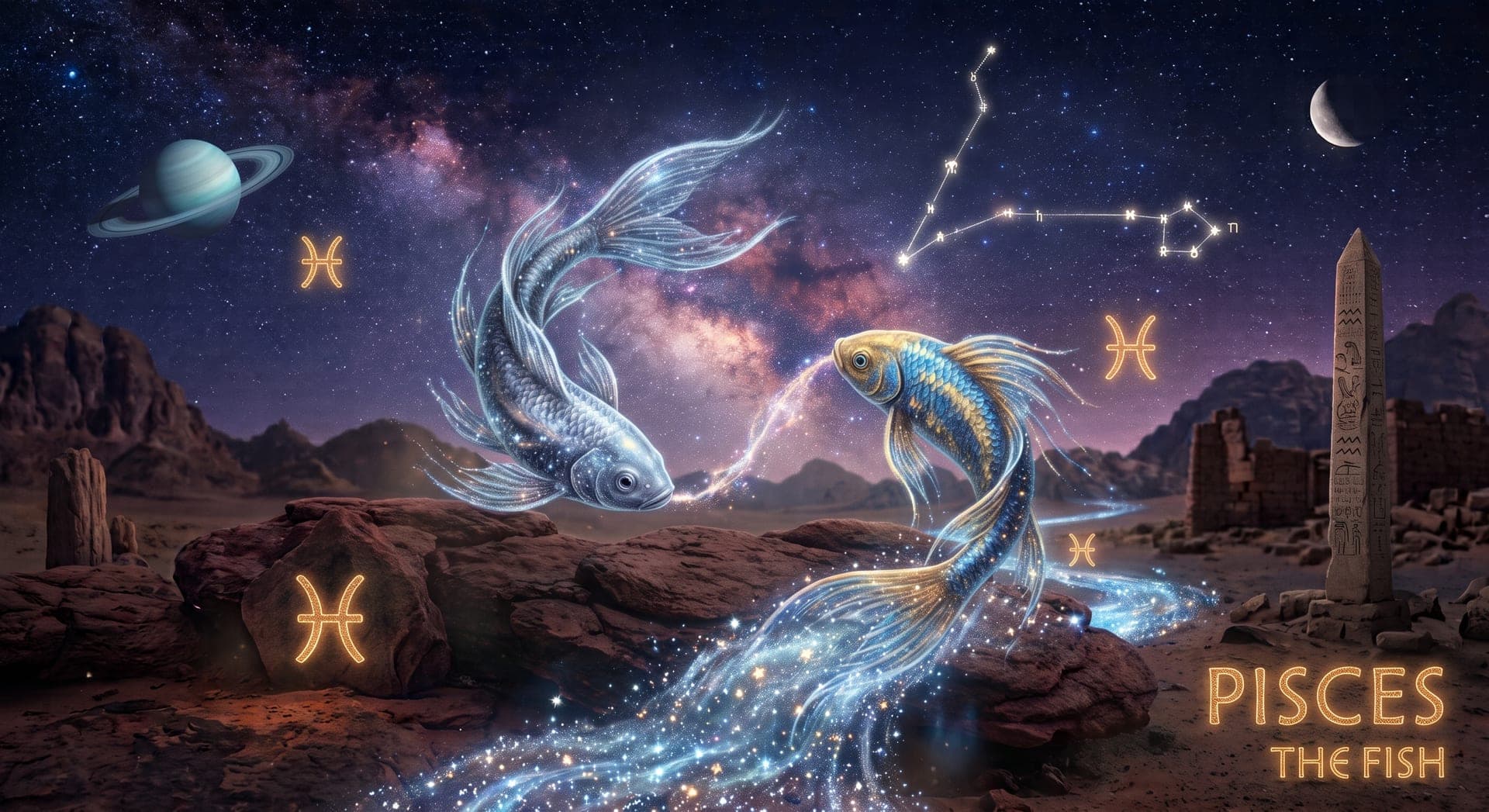
Born on March 6: Pisces ♓
Pisces, the twelfth and final sign of the zodiac, spans February 19 to March 20 and is symbolized by two fish swimming in opposite directions, tied together by a cord, representing the tension between fantasy and reality, or the conscious and subconscious mind. Ruled by Neptune, the planet of dreams, intuition, and illusion, Pisces is widely regarded as the most emotionally sensitive and imaginative sign of the zodiac. As a Water sign, Pisces navigates the world primarily through feeling and empathy, often absorbing the moods of people around it as though they were its own. Its Mutable modality reflects a deep adaptability and fluidity, comfortable going with the flow rather than forcing rigid plans. People born under this sign are often drawn to art, music, and other creative or spiritual pursuits where their vivid imagination can take shape. Compassionate to a fault, Pisces individuals are frequently the ones quietly caring for others, sometimes at the expense of their own boundaries and needs.
Personality Traits
Strengths
- Deeply empathetic and compassionate
- Highly imaginative and artistic
- Intuitive and perceptive
- Selfless and generous
- Adaptable to change
Weaknesses
- Prone to escapism or avoidance
- Overly trusting, can be taken advantage of
- Difficulty setting boundaries
- Tends toward melancholy
- Indecisive
Compatible Signs
Fun Facts
- Pisces' symbol of two fish bound together swimming in opposite directions comes from a Greek myth in which Aphrodite and Eros transformed into fish and tied themselves together to escape the monster Typhon.
- As the twelfth and final sign of the zodiac, Pisces is often described as embodying traits of all the preceding signs, a kind of culmination of the zodiac wheel.
- Neptune, Pisces' modern ruling planet, is the Roman god of the sea, discovered in 1846 and named for its blue, oceanic appearance.
- Notable Pisces include Albert Einstein, Rihanna, Steve Jobs, and Kurt Cobain.
- Classical astrology assigns Jupiter as Pisces' ruler, before Neptune's discovery in the 19th century gave the sign its modern ruling planet.
Born on March 6
- 1475
Michelangelo
Italian Renaissance sculptor and painter of the Sistine Chapel ceiling
- 1806
Elizabeth Barrett Browning
English Victorian poet
- 1831
Philip Sheridan
Union general during the American Civil War
- 1877
Rose Fyleman
English writer and poet best remembered for her children's verse about fairies
- 1906
Lou Costello
American comedian of the Abbott and Costello duo
- 1920
Lewis Gilbert
English film director known for Alfie and three James Bond films including You Only Live Twice
- 1927
Gabriel García Márquez
Colombian novelist, Nobel Prize laureate in Literature
- 1929
David Sheppard
English Test cricketer who later became Bishop of Liverpool
- 1937
Valentina Tereshkova
Soviet cosmonaut, first woman in space
- 1946
David Gilmour
English guitarist and singer-songwriter, longtime member of Pink Floyd
- 1966
Alan Davies
English comedian and actor known as a permanent panellist on QI
- 1972
Shaquille O'Neal
American NBA Hall of Fame basketball player
- 1974
Guy Garvey
English singer-songwriter and frontman of the band Elbow

On This Day in History
- 1204
The Siege of Château Gaillard ends in a French victory, as King Philip II's forces capture Richard the Lionheart's fortress from King John of England.
Built by Richard I in the 1190s as a state-of-the-art stronghold guarding the approach to Normandy, the castle's fall after a lengthy siege was a critical blow to English power in France. Its capture allowed Philip II to overrun the rest of Normandy within months, effectively ending centuries of Anglo-Norman rule there and reshaping the balance of power between England and France for generations.
- 1820
President James Monroe signs the Missouri Compromise into law, temporarily easing tensions over the expansion of slavery.
President James Monroe signed legislation admitting Missouri as a slave state while Maine entered as a free state, maintaining the balance between free and slave states in the Senate. The compromise also banned slavery north of a specific latitude line in the remaining Louisiana Purchase territory, delaying but not resolving sectional conflict.
- 1836
Mexican forces capture the Alamo after a thirteen-day siege, killing all of its roughly 187 Texan defenders.
After a thirteen-day siege, Mexican General Antonio Lopez de Santa Anna's forces overwhelmed the small garrison defending the Alamo mission in San Antonio, killing all the Texan defenders including Davy Crockett and Jim Bowie. The battle became a rallying cry, "Remember the Alamo," for Texan forces who won independence weeks later.
- 1836
Mexican forces capture the Alamo mission in San Antonio after a thirteen-day siege, killing nearly all of its roughly 187 Texan defenders.
The defenders, including figures like Davy Crockett and Jim Bowie, held out against a much larger force under General Antonio López de Santa Anna before being overwhelmed in the final assault. Though a military defeat, the battle became a rallying cry, 'Remember the Alamo,' for Texan forces who won independence from Mexico weeks later at the Battle of San Jacinto.
- 1857
The U.S. Supreme Court rules in Dred Scott v. Sandford that Black Americans could not be citizens, a decision later overturned by constitutional amendment.
The Supreme Court ruled that Dred Scott, an enslaved man who had sued for freedom after living in free territory, remained property and that Black Americans could never be citizens. The decision, widely condemned in the North, inflamed sectional tensions and is often cited as a factor accelerating the path to civil war.
- 1857
The U.S. Supreme Court rules 7-2 against Dred Scott in Dred Scott v. Sandford, denying citizenship to Black Americans.
The court held that people of African descent, whether enslaved or free, could not be American citizens and had no standing to sue in federal court, and further ruled that Congress lacked the power to ban slavery in the territories. Widely regarded as one of the worst decisions in Supreme Court history, it inflamed sectional tensions over slavery and is often cited as a contributing cause of the American Civil War.
- 1943
German field marshal Erwin Rommel launches the Battle of Medenine, attacking British Eighth Army positions in Tunisia.
Rommel's assault aimed to disrupt the Allied buildup before it could threaten his Mareth Line defences, but British commander Bernard Montgomery, forewarned by Ultra intelligence intercepts, had heavily fortified his anti-tank positions. The attack was repulsed with significant German tank losses, marking one of Rommel's last offensives in North Africa before his departure and the eventual Axis surrender in Tunisia two months later.
- 1945
American troops capture the German city of Cologne during the final push into Nazi Germany.
Advancing American forces captured Cologne, one of Germany's largest cities, encountering its heavily damaged medieval cathedral still standing amid the ruins. The capture marked significant progress in the Allied push across the Rhine into the German heartland during the final months of World War II in Europe.
- 1953
Georgy Malenkov succeeds Joseph Stalin as Premier of the Soviet Union.
Following Stalin's death, Georgy Malenkov briefly assumed leadership as Premier of the Soviet Union, initially seen as his chosen successor. His tenure proved short-lived as Nikita Khrushchev maneuvered to consolidate power within the Communist Party, ultimately sidelining Malenkov within a few years.
- 1957
Ghana becomes independent from Britain, the first sub-Saharan African colony to achieve independence in the postwar era.
Under the leadership of Kwame Nkrumah, the Gold Coast became the independent nation of Ghana, the first sub-Saharan African colony to break free of European rule in the post-World War II decolonization wave. Its independence inspired liberation movements across the African continent in the following decades.
- 1957
Ghana becomes the first sub-Saharan African country to gain independence from British colonial rule.
Led by Kwame Nkrumah, who became the nation's first prime minister and later president, Ghana's independence followed a sustained nonviolent campaign for self-government in the former Gold Coast colony. The moment was celebrated as a landmark of African decolonisation and inspired independence movements across the continent over the following decade, as Britain and other European powers gradually relinquished their African colonies.
- 1964
Boxing champion Cassius Clay is given the name Muhammad Ali by Nation of Islam leader Elijah Muhammad.
Nation of Islam leader Elijah Muhammad announced that boxing champion Cassius Clay would henceforth be known as Muhammad Ali, reflecting his conversion to Islam. Ali's name change and outspoken political views made him a controversial and transformative figure both in sports and in the broader civil rights era.
- 1964
Nation of Islam leader Elijah Muhammad publicly gives boxer Cassius Clay the name Muhammad Ali.
Ali had joined the Nation of Islam shortly after winning the world heavyweight championship from Sonny Liston the previous month, and the name change reflected his new religious and political identity. The decision was controversial at the time, with much of the press continuing to use his former name for years afterward, but Ali went on to become one of the most recognised and influential athletes of the 20th century.
- 1967
Svetlana Alliluyeva, daughter of Joseph Stalin, defects to the United States.
Svetlana Alliluyeva, the only daughter of Joseph Stalin, walked into the U.S. embassy in New Delhi and requested political asylum during a visit to India, later flying to the United States. Her defection was a significant propaganda embarrassment for the Soviet Union at the height of the Cold War.
- 1967
Svetlana Alliluyeva, daughter of Soviet dictator Joseph Stalin, defects to the United States.
She left India, where she had travelled to scatter the ashes of her late husband, and sought asylum at the U.S. embassy before eventually making her way to the West. Her defection, and the memoir she later published criticising her father's regime, was a significant propaganda coup for the West during the Cold War and drew intense international media attention.
- 1975
The Zapruder film of President John F. Kennedy's assassination is broadcast to a national television audience for the first time.
Abraham Zapruder's home movie footage of President Kennedy's 1963 assassination in Dallas, previously seen mainly in still frames or by investigators, was broadcast in full motion to American television audiences for the first time. Its graphic content reignited public debate over the official conclusions of the Warren Commission.
- 1984
Miners walk out at Cortonwood Colliery in South Yorkshire, marking the start of the UK miners' strike.
The walkout, triggered by the National Coal Board's announcement of pit closures, spread rapidly under the leadership of National Union of Mineworkers president Arthur Scargill into a nationwide strike involving over 140,000 miners. The bitter year-long dispute with Margaret Thatcher's government became one of the defining industrial conflicts of postwar Britain, ending in defeat for the strikers and accelerating the decline of the UK coal industry.
- 1987
The British ferry Herald of Free Enterprise capsizes off Belgium in about 90 seconds, killing 193 people.
The roll-on roll-off ferry Herald of Free Enterprise capsized shortly after leaving the Belgian port of Zeebrugge because its bow doors had been left open, allowing water to flood the car deck. The rapid capsize killed 193 passengers and crew and led to major reforms in ferry safety regulations.
- 1987
The British ferry MS Herald of Free Enterprise capsizes shortly after leaving Zeebrugge, Belgium, killing 193 people.
The roll-on/roll-off ferry sailed with its bow doors left open, allowing water to flood the car deck and capsize the vessel within minutes in shallow water just outside the harbour. The disaster, one of Britain's worst peacetime maritime tragedies, exposed serious failures in ferry operating procedures and led to sweeping international reforms in ro-ro ferry design and safety regulation.
- 1988
British SAS soldiers shoot dead three unarmed Provisional IRA members in Gibraltar in a controversial operation.
The operation, codenamed Flavius, targeted an IRA active service unit believed to be planning a car bomb attack on a British military ceremony. The killings sparked lasting controversy over whether the SAS could have arrested rather than shot the suspects, and a subsequent European Court of Human Rights ruling found the UK had violated the victims' right to life on procedural grounds, while still finding the soldiers' individual actions were not unlawful.