
What’s Observed on March 5
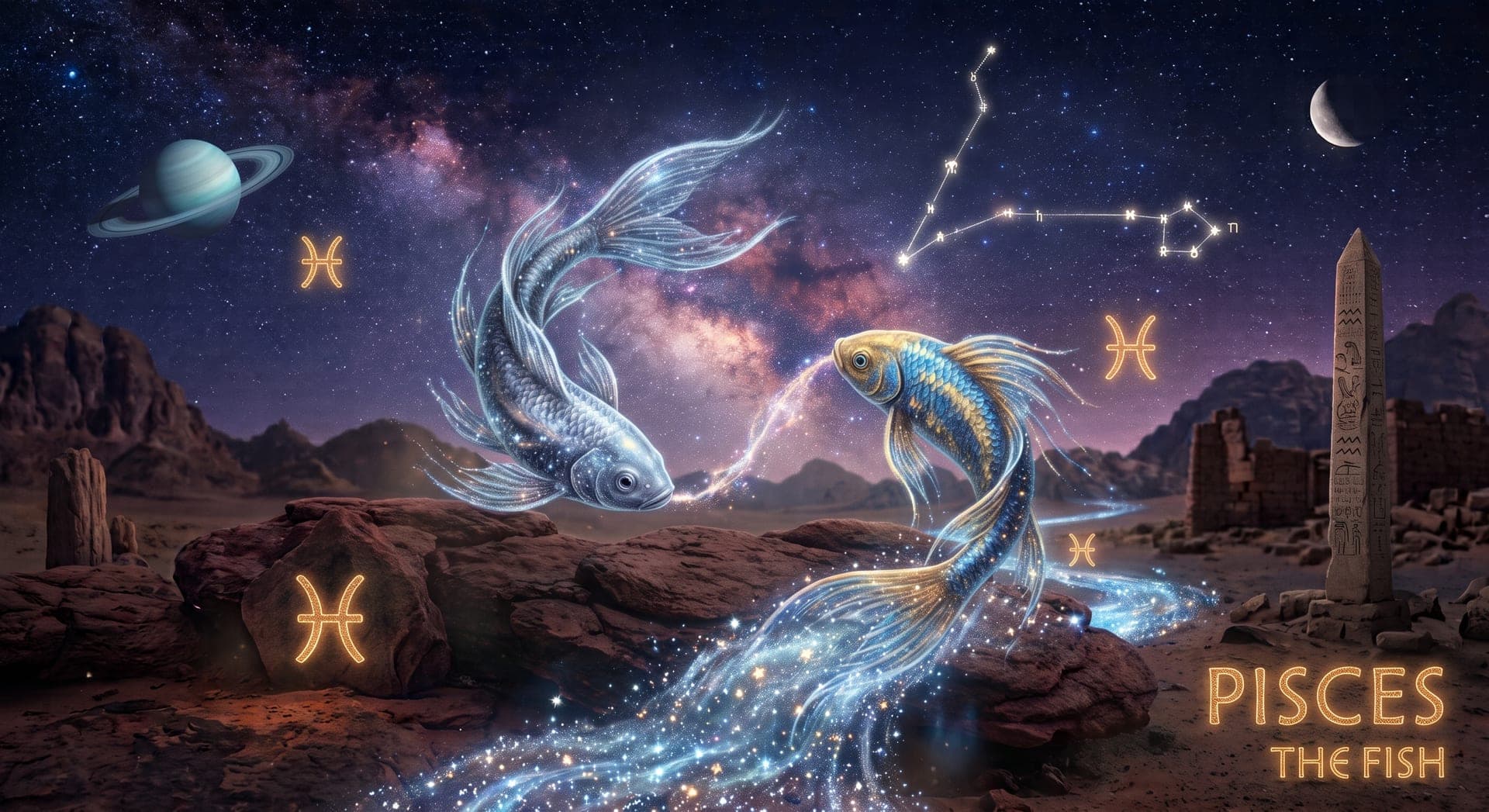
Born on March 5: Pisces ♓
Pisces, the twelfth and final sign of the zodiac, spans February 19 to March 20 and is symbolized by two fish swimming in opposite directions, tied together by a cord, representing the tension between fantasy and reality, or the conscious and subconscious mind. Ruled by Neptune, the planet of dreams, intuition, and illusion, Pisces is widely regarded as the most emotionally sensitive and imaginative sign of the zodiac. As a Water sign, Pisces navigates the world primarily through feeling and empathy, often absorbing the moods of people around it as though they were its own. Its Mutable modality reflects a deep adaptability and fluidity, comfortable going with the flow rather than forcing rigid plans. People born under this sign are often drawn to art, music, and other creative or spiritual pursuits where their vivid imagination can take shape. Compassionate to a fault, Pisces individuals are frequently the ones quietly caring for others, sometimes at the expense of their own boundaries and needs.
Personality Traits
Strengths
- Deeply empathetic and compassionate
- Highly imaginative and artistic
- Intuitive and perceptive
- Selfless and generous
- Adaptable to change
Weaknesses
- Prone to escapism or avoidance
- Overly trusting, can be taken advantage of
- Difficulty setting boundaries
- Tends toward melancholy
- Indecisive
Compatible Signs
Fun Facts
- Pisces' symbol of two fish bound together swimming in opposite directions comes from a Greek myth in which Aphrodite and Eros transformed into fish and tied themselves together to escape the monster Typhon.
- As the twelfth and final sign of the zodiac, Pisces is often described as embodying traits of all the preceding signs, a kind of culmination of the zodiac wheel.
- Neptune, Pisces' modern ruling planet, is the Roman god of the sea, discovered in 1846 and named for its blue, oceanic appearance.
- Notable Pisces include Albert Einstein, Rihanna, Steve Jobs, and Kurt Cobain.
- Classical astrology assigns Jupiter as Pisces' ruler, before Neptune's discovery in the 19th century gave the sign its modern ruling planet.
Born on March 5
- 1133
Henry II of England
King of England from 1154 to 1189 who founded the Angevin Empire and reformed English common law
- 1324
David II of Scotland
King of Scotland from 1329 until his death, son of Robert the Bruce
- 1512
Gerardus Mercator
Flemish cartographer who created the influential Mercator map projection
- 1871
Rosa Luxemburg
Polish-German revolutionary socialist theorist
- 1879
William Beveridge
English economist whose 1942 Beveridge Report laid the foundations for Britain's welfare state
- 1898
Zhou Enlai
First Premier of the People's Republic of China
- 1908
Rex Harrison
English actor known for the film "My Fair Lady"
- 1934
Daniel Kahneman
Israeli-American psychologist, Nobel laureate in Economics
- 1948
Elaine Paige
English singer and actress known as the First Lady of British Musical Theatre
- 1949
Bernard Arnault
French businessman and founder of luxury conglomerate LVMH
- 1957
Mark E. Smith
English singer and songwriter who fronted the post-punk band The Fall
- 1968
Theresa Villiers
English politician who served as Secretary of State for Northern Ireland
- 1974
Matt Lucas
English actor and comedian known for Little Britain

On This Day in History
- 1496
King Henry VII of England grants explorer John Cabot letters patent authorizing a voyage to find new lands, leading to Cabot's landing in North America the following year.
King Henry VII authorized Venetian navigator John Cabot to sail west in search of new lands on England's behalf, motivated by the desire to compete with Spain and Portugal's overseas discoveries. Cabot's subsequent 1497 voyage, which reached the coast of present-day Newfoundland, laid the groundwork for later English claims in North America.
- 1496
King Henry VII of England grants letters patent to Venetian navigator John Cabot and his sons, authorising them to explore unknown lands on England's behalf.
The charter empowered Cabot to sail west across the Atlantic in search of a route to Asia, echoing Columbus's Spanish-backed voyages a few years earlier. Cabot's resulting 1497 expedition reached the coast of North America, likely Newfoundland, becoming the first documented European landfall on the continent since the Norse voyages and establishing the legal basis for later English claims in North America.
- 1770
British soldiers fire on a crowd of colonists in Boston, killing five people in what becomes known as the Boston Massacre.
Tensions between British troops occupying Boston and local colonists erupted into violence when soldiers fired into a taunting crowd, killing five men including Crispus Attucks, often considered the first casualty of the American Revolution. Colonial propagandists, including Paul Revere's engraving, used the incident to inflame anti-British sentiment.
- 1770
British troops fire into a crowd of colonists in Boston, killing five Americans, including Crispus Attucks, in what becomes known as the Boston Massacre.
Tensions had been rising between resentful colonists and the British soldiers stationed to enforce unpopular taxes, and a confrontation outside the Customs House escalated when soldiers, pelted with snowballs and debris, opened fire on the crowd. The incident, amplified by Patriot propaganda including Paul Revere's engraving, became a rallying point for colonial grievances against British rule in the years leading up to the American Revolution.
- 1811
An Anglo-Portuguese-Spanish force under General Thomas Graham routs Marshal Victor's French army at the Battle of Barrosa during the Peninsular War.
Fought near Cádiz in southern Spain, the battle saw heavily outnumbered British troops storm and capture a French Imperial Eagle standard, a rare and prized trophy. Despite the tactical victory, disputes among the allied commanders meant the siege of Cádiz continued, but the battle boosted British morale during the long campaign against Napoleon's forces on the Iberian Peninsula.
- 1824
Britain formally declares war on the Kingdom of Burma, opening the First Anglo-Burmese War.
The conflict arose from disputes over Burmese expansion toward British-held Bengal and Assam. After nearly two years of costly jungle campaigning, Burma was forced to cede Assam, Manipur, Arakan, and Tenasserim to the British East India Company under the 1826 Treaty of Yandabo, marking the beginning of Britain's gradual conquest of Burma over the course of the 19th century.
- 1850
The Britannia Bridge, carrying the railway across the Menai Strait between Anglesey and mainland Wales, opens.
Designed by engineer Robert Stephenson, the bridge used a pioneering design of wrought-iron rectangular tubes through which trains ran, an innovative technique at the time. It connected the railway network to the port of Holyhead, Wales's main link to Ireland, and stood until a 1970 fire severely damaged the original tubular structure, which was later rebuilt as a two-tier road-and-rail bridge.
- 1872
George Westinghouse patents the railway air brake, a major advance in railroad safety.
George Westinghouse patented an air brake system allowing train engineers to simultaneously control brakes on every car in a train, a dramatic improvement over earlier manual systems. The invention greatly improved railroad safety and efficiency, becoming standard equipment and forming the basis of the industrial empire Westinghouse built.
- 1931
Mahatma Gandhi and Viceroy Lord Irwin sign the Gandhi-Irwin Pact, ending the civil disobedience campaign in British India.
Under the agreement, the British government agreed to release political prisoners and allow Indians to produce salt for personal use, while Gandhi agreed to suspend the civil disobedience movement and attend the Second Round Table Conference in London on India's constitutional future. Though limited in scope, it marked a rare moment of direct negotiation between the British Raj and the Indian independence movement.
- 1933
The Nazi Party wins 43.9 percent of the vote in German elections, enough to soon pass the Enabling Act and seize dictatorial power.
In the last relatively free German election before Hitler's consolidation of power, the Nazi Party won a plurality but fell short of an outright majority despite widespread intimidation following the Reichstag fire. The result nonetheless gave Hitler's coalition enough seats to push through the Enabling Act weeks later, legalizing dictatorial rule.
- 1939
Anti-communist Spanish Republican forces seize control of the government in a coup, hastening the end of the Spanish Civil War.
A group of anti-communist Republican officers led by Colonel Segismundo Casado seized control of Madrid from Juan Negrin's government, hoping to negotiate more favorable surrender terms with Franco's Nationalists. The coup fractured remaining Republican resistance and hastened the fall of Madrid weeks later, effectively ending the Spanish Civil War.
- 1940
Soviet officials sign an order authorizing the execution of nearly 22,000 Polish military officers and intellectuals in what becomes known as the Katyn massacre.
Soviet secret police chief Lavrentiy Beria's proposal to execute nearly 22,000 Polish officers, intellectuals, and other prisoners was approved by Stalin and the Politburo. The resulting Katyn massacre, long denied by Soviet authorities and blamed on Nazi Germany, was not officially acknowledged by Russia until 1990.
- 1946
Winston Churchill delivers his famous "Iron Curtain" speech, warning of Soviet domination of Eastern Europe.
Speaking at Westminster College in Missouri with President Truman present, Winston Churchill warned that "an iron curtain has descended across the Continent," describing Soviet control over Eastern Europe. The speech is widely regarded as a defining early statement of Cold War tensions between the Western allies and the Soviet Union.
- 1946
Winston Churchill delivers his famous 'Iron Curtain' speech at Westminster College in Fulton, Missouri.
Speaking as a former British Prime Minister alongside U.S. President Harry Truman, Churchill warned that 'an iron curtain has descended across the Continent,' dividing Soviet-controlled Eastern Europe from the democratic West. The speech is widely regarded as one of the opening declarations of the Cold War, crystallising Western concerns about Soviet expansionism just months after the end of the Second World War.
- 1953
Soviet leader Joseph Stalin dies after his stroke four days earlier, ending nearly three decades of rule.
Joseph Stalin died at his dacha four days after suffering a stroke, having ruled the Soviet Union with absolute authority since the late 1920s through forced collectivization, purges, and victory in World War II. His death triggered a power struggle eventually won by Nikita Khrushchev, who later denounced Stalin's crimes.
- 1957
A Royal Air Force Blackburn Beverley transport aircraft crashes at Sutton Wick in Berkshire, England.
The heavy military transport, used by the RAF to carry troops and cargo, went down killing its crew and passengers along with two people on the ground. The Beverley, though valued for its ability to operate from short, rough airstrips in support of Britain's overseas commitments, suffered a series of accidents during its service life before being retired from RAF use in the late 1960s.
- 1965
A leftist uprising known as the March Intifada erupts in Bahrain against continued British colonial presence in the Gulf.
The unrest was sparked by grievances including layoffs at the British-linked Bahrain Petroleum Company and grew quickly into wider protests against colonial rule and the ruling family's close ties to Britain. Security forces suppressed the demonstrations, but the episode was an early sign of the nationalist and leftist agitation that contributed to Bahrain's eventual independence from British protection in 1971.
- 1966
BOAC Flight 911 breaks apart in turbulence near Mount Fuji, Japan, killing all 124 people aboard.
British Overseas Airways Corporation Flight 911, a Boeing 707 carrying mostly Japanese passengers on a sightseeing route near Mount Fuji, broke apart in extreme clear-air turbulence caused by mountain waves. All 124 people aboard were killed in one of the deadliest turbulence-related air disasters in aviation history.
- 1970
The Treaty on the Non-Proliferation of Nuclear Weapons enters into force after ratification by 43 nations.
The Treaty on the Non-Proliferation of Nuclear Weapons took effect after ratification by dozens of nations, establishing a framework in which recognized nuclear powers pledged disarmament efforts while other states agreed to forgo developing nuclear weapons. It remains the cornerstone international agreement governing global nuclear arms control.
- 1981
Sinclair Research launches the ZX81, a pioneering low-cost British home computer.
Designed by Clive Sinclair and sold for under £70 as a self-assembly kit, the ZX81 was among the first computers affordable enough for mass home use, introducing many Britons to programming and gaming for the first time. It sold over 1.5 million units worldwide and helped spark the early-1980s British home computer boom, paving the way for its more powerful successor, the ZX Spectrum, released the following year.