What’s Observed on March 4
Born on March 4: Pisces ♓
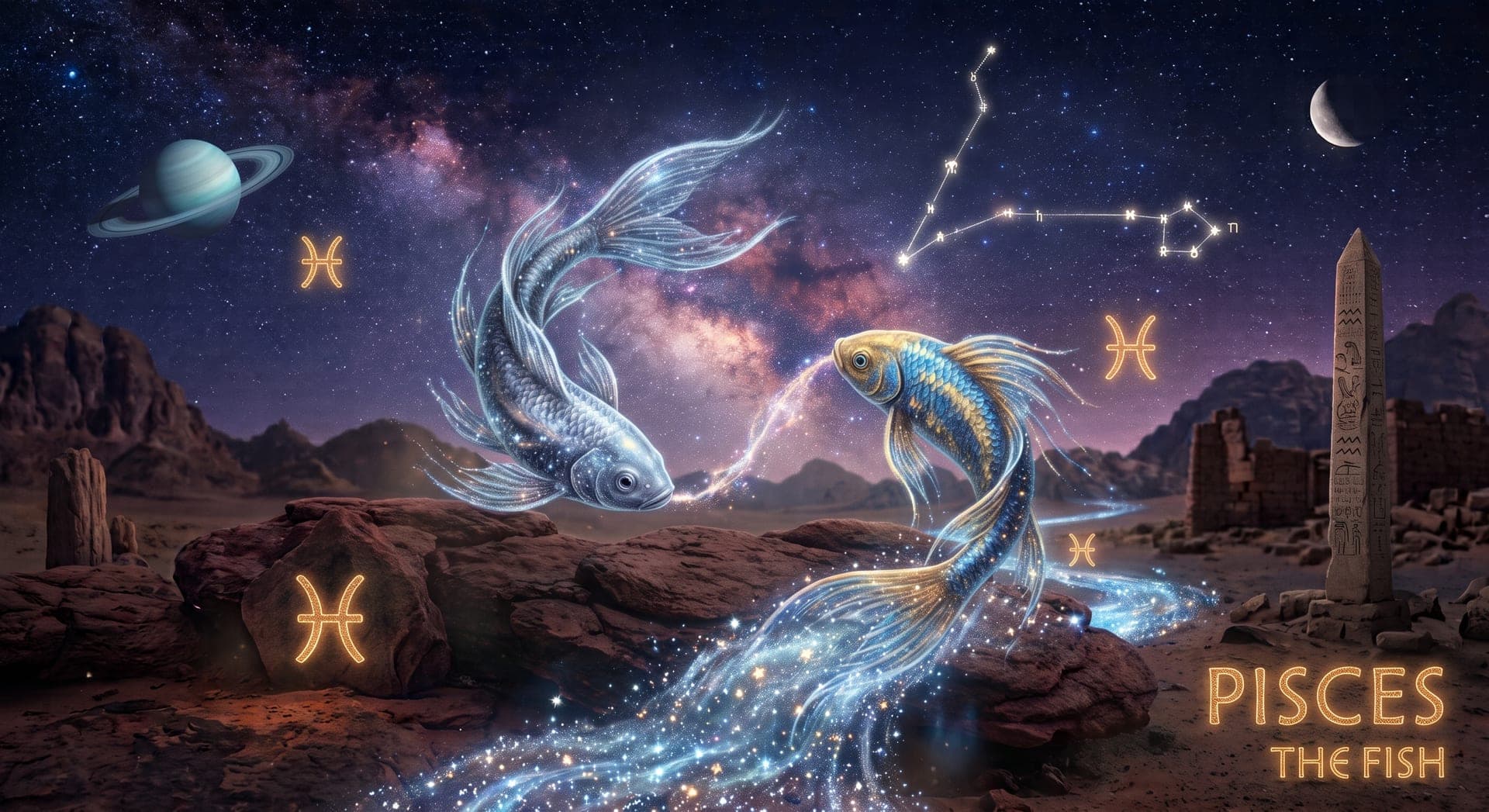
Pisces, the twelfth and final sign of the zodiac, spans February 19 to March 20 and is symbolized by two fish swimming in opposite directions, tied together by a cord, representing the tension between fantasy and reality, or the conscious and subconscious mind. Ruled by Neptune, the planet of dreams, intuition, and illusion, Pisces is widely regarded as the most emotionally sensitive and imaginative sign of the zodiac. As a Water sign, Pisces navigates the world primarily through feeling and empathy, often absorbing the moods of people around it as though they were its own. Its Mutable modality reflects a deep adaptability and fluidity, comfortable going with the flow rather than forcing rigid plans. People born under this sign are often drawn to art, music, and other creative or spiritual pursuits where their vivid imagination can take shape. Compassionate to a fault, Pisces individuals are frequently the ones quietly caring for others, sometimes at the expense of their own boundaries and needs.
Personality Traits
Strengths
- Deeply empathetic and compassionate
- Highly imaginative and artistic
- Intuitive and perceptive
- Selfless and generous
- Adaptable to change
Weaknesses
- Prone to escapism or avoidance
- Overly trusting, can be taken advantage of
- Difficulty setting boundaries
- Tends toward melancholy
- Indecisive
Compatible Signs
Fun Facts
- Pisces' symbol of two fish bound together swimming in opposite directions comes from a Greek myth in which Aphrodite and Eros transformed into fish and tied themselves together to escape the monster Typhon.
- As the twelfth and final sign of the zodiac, Pisces is often described as embodying traits of all the preceding signs, a kind of culmination of the zodiac wheel.
- Neptune, Pisces' modern ruling planet, is the Roman god of the sea, discovered in 1846 and named for its blue, oceanic appearance.
- Notable Pisces include Albert Einstein, Rihanna, Steve Jobs, and Kurt Cobain.
- Classical astrology assigns Jupiter as Pisces' ruler, before Neptune's discovery in the 19th century gave the sign its modern ruling planet.
Born on March 4
- 1651
John Somers, 1st Baron Somers
English lawyer and statesman who served as Lord High Chancellor and helped draft the Bill of Rights 1689
- 1678
Antonio Vivaldi
Italian Baroque composer and violinist known for "The Four Seasons"
- 1745
Casimir Pulaski
Polish military commander who fought for American independence
- 1756
Henry Raeburn
Scottish portrait painter renowned for his depictions of Edinburgh society
- 1800
William Price
Welsh physician and Chartist who pioneered legal cremation in Britain
- 1888
Knute Rockne
American football player and legendary Notre Dame head coach
- 1904
George Gamow
Ukrainian-American physicist who helped develop Big Bang theory
- 1913
John Garfield
American film actor known for tough, working-class roles
- 1921
Joan Greenwood
English actress known for Kind Hearts and Coronets
- 1923
Patrick Moore
English astronomer and broadcaster who presented the BBC's The Sky at Night for over 50 years
- 1928
Alan Sillitoe
English novelist known for Saturday Night and Sunday Morning
- 1932
Miriam Makeba
South African singer and civil rights activist
- 1936
Jim Clark
Scottish racing driver and two-time Formula One World Champion
On This Day in History
- 1461
Henry VI is deposed as King of England after Yorkist forces defeat the Lancastrians, clearing the way for Edward IV's accession.
The deposition marked a decisive turn in the Wars of the Roses, the decades-long dynastic struggle between the houses of Lancaster and York for the English throne. Edward IV was proclaimed king in London within days and confirmed his claim with a crushing victory at the Battle of Towton later that month, though Henry VI briefly regained the throne in 1470 before his final defeat and death in 1471.
- 1493
Christopher Columbus arrives back in Lisbon, Portugal, completing his first voyage to the Americas.
Returning from his first transatlantic voyage aboard the Nina, Christopher Columbus reached Lisbon after being forced off course by storms, allowing him to report his discoveries to the Portuguese court before continuing to Spain. His arrival announced the existence of lands previously unknown to Europeans, launching an era of exploration and colonization.
- 1519
Hernan Cortes arrives on the coast of Mexico, beginning the Spanish conquest of the Aztec Empire.
Spanish conquistador Hernan Cortes landed on the Mexican coast near present-day Veracruz with several hundred men, horses, and cannons. His subsequent alliance-building with rival indigenous groups and eventual siege of Tenochtitlan led to the collapse of the Aztec Empire within two years, reshaping the course of Mesoamerican history.
- 1675
John Flamsteed is appointed the first Astronomer Royal of England by King Charles II.
The post was created to improve navigational astronomy for Britain's growing maritime and naval interests, tasked with compiling accurate star catalogues to help ships determine longitude at sea. Flamsteed went on to found and direct the Royal Observatory at Greenwich, and his decades of meticulous stellar observations, later published as the Historia Coelestis Britannica, became a foundational reference for British astronomy.
- 1681
King Charles II grants William Penn a royal charter for the American colony that becomes Pennsylvania.
The land grant, roughly the size of England itself, settled a substantial debt the Crown owed to Penn's late father, an admiral. Penn, a Quaker, established the colony as a haven for religious dissenters and drafted a relatively liberal charter of rights for settlers, principles that would later influence the framers of the United States Constitution.
- 1776
Continental Army forces fortify Dorchester Heights overlooking Boston, forcing the British to abandon their siege of the city.
Continental Army troops under George Washington secretly fortified Dorchester Heights overnight, positioning artillery captured at Fort Ticonderoga to threaten British ships in Boston Harbor. Facing an untenable position, the British evacuated the city days later, delivering the first major American victory of the Revolutionary War.
- 1776
American Continental Army forces occupy and fortify Dorchester Heights overlooking Boston, a decisive move that forces the besieged British garrison to begin withdrawing from the city.
Overnight, troops under George Washington hauled heavy cannon captured at Fort Ticonderoga onto the heights, putting the British fleet and army below within artillery range. Facing an untenable position, General William Howe began evacuating roughly 11,000 troops and loyalist civilians by sea; the withdrawal to Halifax, Nova Scotia was completed on 17 March, ending the eleven-month Siege of Boston without further major fighting.
- 1789
The first United States Congress convenes in New York, formally putting the Constitution into effect.
The first Congress under the newly ratified U.S. Constitution convened in New York City, though it initially lacked a quorum for several weeks. Its eventual business included passing the Bill of Rights and establishing the framework of the federal government, transforming the young nation from a loose confederation into a functioning republic.
- 1797
John Adams is inaugurated as the second U.S. president, succeeding George Washington in the young republic's first peaceful transfer of power between rival political parties.
John Adams took the oath of office as the second president of the United States, succeeding George Washington in the nation's first peaceful transfer of power between rival political factions. His presidency was marked by tensions with France and the controversial Alien and Sedition Acts.
- 1861
The Confederate States of America adopts its first national flag, known as the "Stars and Bars."
Delegates of the newly formed Confederate States of America adopted the "Stars and Bars" as their first national flag, weeks before the attack on Fort Sumter began the Civil War. Its similarity to the U.S. flag caused battlefield confusion, prompting the Confederacy to later adopt different battle flag designs.
- 1882
Britain's first electric trams begin running in Leytonstone, east London.
The demonstration line offered a glimpse of urban transport powered by electricity rather than horses, which had long dominated Britain's city streets. Though short-lived in its original form, the trial helped prove the feasibility of electric traction for public transport, and municipal electric tram networks subsequently spread rapidly across British cities over the following two decades, transforming urban travel before buses eventually supplanted trams in the 20th century.
- 1890
The Forth Bridge, a cantilever railway bridge across Scotland's Firth of Forth, officially opens.
At over 8,000 feet long, it was the longest single cantilever span in the world at the time and remains one of the great achievements of Victorian civil engineering, built with a heavy margin of safety after the wind-related collapse of the nearby Tay Bridge in 1879. Still in daily use for rail traffic, it was designated a UNESCO World Heritage Site in 2015.
- 1918
The first recorded case of the 1918 influenza pandemic, the "Spanish flu," is documented at a U.S. Army camp in Kansas.
An army cook at Camp Funston, Kansas, reported flu-like symptoms in what is often cited as the first documented case of the 1918 influenza pandemic. The virus spread rapidly through military camps and then the world via troop movements, eventually killing tens of millions in one of history's deadliest pandemics.
- 1933
Franklin D. Roosevelt is inaugurated as the 32nd U.S. president amid the depths of the Great Depression.
Franklin D. Roosevelt took the presidential oath amid the depths of the Great Depression, with unemployment near 25 percent and the banking system near collapse. His inaugural address, declaring "the only thing we have to fear is fear itself," launched the New Deal era of sweeping federal intervention in the economy.
- 1941
British commandos launch Operation Claymore, a raid on German-occupied Norway's Lofoten Islands.
The raid targeted fish-oil processing plants supplying glycerine for German munitions, destroying factories and fuel stores while taking German prisoners and capturing Enigma cipher rotors and code books from the armed trawler Krebs. It was one of the first successful British Commando operations of the Second World War, delivering both an intelligence windfall and a propaganda boost during a difficult period for Britain.
- 1976
The Northern Ireland Constitutional Convention is formally dissolved after failing to reach cross-community agreement, and direct rule from London resumes.
The convention had been elected the previous year to devise a system of government acceptable to both unionist and nationalist communities, but unionist rejection of power-sharing doomed it to failure. Its collapse left Northern Ireland under direct rule by the UK government at Westminster, an arrangement that persisted, with brief interruptions, until the 1998 Good Friday Agreement re-established local government.
- 1986
The Soviet probe Vega 1 begins transmitting the first close-up images of Halley's Comet's nucleus.
The Soviet probe Vega 1, en route to a rendezvous with Halley's Comet, began transmitting the first detailed images of the comet's icy, irregularly shaped nucleus. The mission, part of a coordinated international effort, provided scientists with unprecedented data about cometary composition and structure.
- 2001
A car bomb planted by the Real IRA explodes outside BBC Television Centre in west London.
The device detonated in the early hours after a telephoned warning allowed the area to be evacuated, injuring one person and causing significant damage to the building. The attack, during a period of dissident republican violence following the 1998 Good Friday Agreement, targeted the broadcaster as a symbol of the British state and prompted a review of security at major UK media and public buildings.
- 2018
Former Russian spy Sergei Skripal and his daughter are poisoned with a nerve agent in Salisbury, England.
Former Russian military intelligence officer Sergei Skripal, who had spied for Britain, and his daughter Yulia were found unconscious on a bench in Salisbury after exposure to the Novichok nerve agent. British authorities blamed Russian intelligence operatives, triggering a diplomatic crisis and coordinated expulsions of Russian diplomats across Western nations.
- 2018
Former Russian double agent Sergei Skripal and his daughter Yulia are poisoned with the Novichok nerve agent in Salisbury, England.
Both survived after weeks of critical care, but a police officer who responded to the scene was also poisoned, and a local woman later died after exposure to a discarded perfume bottle containing the nerve agent. The UK government accused Russian military intelligence of carrying out the attack, triggering the mass expulsion of Russian diplomats from Britain and allied countries in one of the largest coordinated diplomatic responses since the Cold War.