What’s Observed on April 3
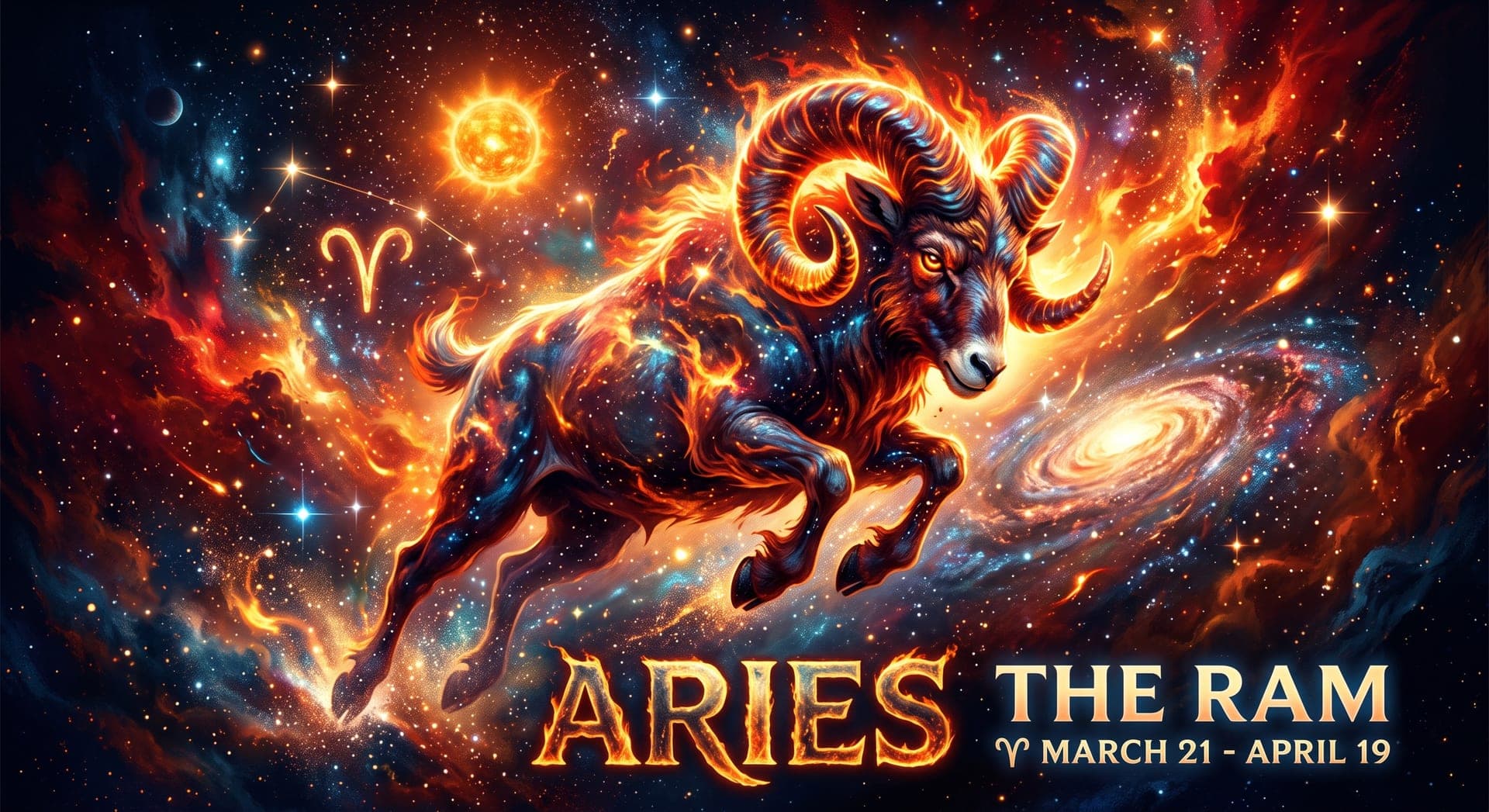
Born on April 3: Aries ♈
Aries, the first sign of the zodiac, spans March 21 to April 19 and is represented by the ram, an animal known for its boldness, stubborn determination, and willingness to charge forward. Ruled by Mars, the planet of action, drive, and war, Aries is often characterized as one of the most energetic and assertive signs in the zodiac, comfortable taking initiative and leading the way into new territory. As a Fire sign, Aries burns with passion and enthusiasm, approaching life with an instinctive, competitive edge and a low tolerance for hesitation. Its Cardinal modality reflects its role as an initiator, the sign that kicks off the astrological year at the spring equinox and each new season's start. People born under this sign are frequently drawn to leadership roles, sports, entrepreneurship, or any pursuit that rewards courage and quick decision-making. Direct and refreshingly honest, Aries individuals tend to say exactly what they think and rarely shy away from a challenge worth having.
Personality Traits
Strengths
- Courageous and determined
- Natural-born leader
- Honest and direct
- Enthusiastic and optimistic
- Quick to act on opportunities
Weaknesses
- Impatient and quick-tempered
- Impulsive, acts before thinking
- Can be overly competitive
- Struggles with follow-through
- Prone to selfishness
Compatible Signs
Fun Facts
- Aries is the first sign of the zodiac, marking the start of the astrological year at the spring equinox.
- The ram symbol is tied to the Greek myth of the golden-fleeced ram that rescued Phrixus, whose fleece later became the prize sought by Jason and the Argonauts.
- Mars, Aries' ruling planet, was the Roman god of war, reflecting the sign's associations with boldness, drive, and aggression.
- As a Cardinal sign, Aries is one of four signs, along with Cancer, Libra, and Capricorn, that initiate a new season.
- Notable Aries include Lady Gaga, Robert Downey Jr., Mariah Carey, and Leonardo da Vinci.
Born on April 3
- 1593
George Herbert
Welsh-born English poet and Anglican priest, celebrated as one of the finest metaphysical poets of the 17th century
- 1783
Washington Irving
American writer known for "The Legend of Sleepy Hollow"
- 1791
Anne Lister
English diarist, mountaineer and landowner from Halifax whose coded journals give a detailed account of lesbian life in Regency England
- 1893
Leslie Howard
English actor best known for starring roles in Gone with the Wind and The Scarlet Pimpernel
- 1922
Doris Day
American actress and singer of classic Hollywood films
- 1924
Marlon Brando
American actor known for "The Godfather" and "A Streetcar Named Desire"
- 1925
Tony Benn
English Labour politician and diarist who served as a cabinet minister and became a leading voice of the party's left
- 1930
Helmut Kohl
Chancellor of Germany who oversaw German reunification
- 1934
Jane Goodall
English primatologist renowned for her pioneering decades-long study of wild chimpanzees in Tanzania
- 1949
Richard Thompson
English singer-songwriter and guitarist, co-founder of the folk-rock band Fairport Convention
- 1958
Alec Baldwin
American actor known for film and television
- 1961
Eddie Murphy
American actor and comedian
- 1964
Nigel Farage
English politician and broadcaster who led the UK Independence Party and campaigned prominently for Brexit
- 1985
Leona Lewis
English singer-songwriter who rose to fame after winning The X Factor in 2006
On This Day in History
- 1043
Edward the Confessor is crowned King of England at Winchester Cathedral.
Edward the Confessor, a member of the House of Wessex who had spent much of his youth in exile in Normandy, was crowned King of England at Winchester Cathedral. His largely peaceful but ultimately childless reign set the stage for the succession crisis that followed his death in 1066, a dispute that culminated in the Norman Conquest led by William the Conqueror.
- 1043
Edward the Confessor is crowned King of England at Winchester Cathedral.
Edward returned from decades of exile in Normandy to take the English throne after the death of the Danish king Harthacnut, restoring the House of Wessex to power. His reign, remembered for its piety, later earned him sainthood, and his childlessness set off the succession crisis that led directly to the Norman Conquest of 1066 under William the Conqueror.
- 1559
The Peace of Cateau-Cambrésis is signed, ending decades of conflict between France, Spain, and other European powers known as the Italian Wars.
France and Spain, along with England, signed the Peace of Cateau-Cambrésis, ending nearly six decades of intermittent warfare fought largely over control of Italian territory. The treaty confirmed Spanish dominance over much of Italy and marked a significant decline in French influence on the peninsula, reshaping the balance of power in Europe for generations to come.
- 1721
Robert Walpole becomes First Lord of the Treasury, generally regarded as making him the first Prime Minister of Great Britain.
Robert Walpole was appointed First Lord of the Treasury by King George I amid the fallout of a major financial scandal, a position from which he came to dominate British politics for the next two decades. Though the title "Prime Minister" was not yet officially recognized, Walpole is widely regarded by historians as Britain's first, establishing many conventions of the modern office.
- 1721
Robert Walpole becomes First Lord of the Treasury, a position from which he is now regarded as Britain's first Prime Minister.
Walpole rose to dominance in the aftermath of the South Sea Bubble financial crisis, using his skill in managing Parliament and the royal court to consolidate power under kings George I and George II. Though the title 'Prime Minister' was not yet official, Walpole effectively invented the role, holding office for an unmatched twenty-one years and shaping the modern British system of cabinet government.
- 1860
The Pony Express begins operation, carrying mail between Missouri and California in record time using relays of horseback riders.
The Pony Express began operation, using a relay system of horseback riders to carry mail nearly 1,900 miles between St. Joseph, Missouri, and Sacramento, California, in about ten days, a dramatic improvement over previous overland routes. Though it operated for only about eighteen months before being rendered obsolete by the transcontinental telegraph, the service became a lasting symbol of the American frontier.
- 1865
Union forces capture Richmond, Virginia, the Confederate capital, as the Civil War nears its end.
Union troops entered Richmond, Virginia, the capital of the Confederacy, after Confederate forces evacuated the city and set fire to warehouses and bridges to prevent supplies from falling into enemy hands. The fires spread and destroyed much of the city's business district. The fall of Richmond came just days before General Robert E. Lee's surrender, effectively signaling the Confederacy's collapse.
- 1882
Outlaw Jesse James is shot and killed by Robert Ford, a member of his own gang seeking a reward.
Robert Ford, a member of Jesse James's own outlaw gang, shot and killed the notorious train and bank robber in his home in St. Joseph, Missouri, hoping to collect a reward and a promised pardon for earlier crimes. Rather than being celebrated as a hero, Ford was widely reviled as a coward and traitor, a reputation immortalized in folk ballads and later films about the incident.
- 1882
Outlaw Jesse James is shot dead by fellow gang member Robert Ford in St. Joseph, Missouri.
Ford, hoping to collect a reward and clear his own outstanding charges, shot the notorious train and bank robber in the back of the head while James was straightening a picture frame in his home. The killing made Ford a notorious figure himself, later immortalised in ballads and film as 'the dirty little coward' who shot Jesse James.
- 1888
The first of eleven unsolved murders later catalogued in Scotland Yard's Whitechapel murders file occurs in London's impoverished East End.
The killing of Emma Elizabeth Smith in Whitechapel is recorded as the opening case in a series of brutal attacks on women in the district over the following years, a file that includes the notorious 'canonical five' killings later attributed to the unidentified murderer known as Jack the Ripper. The case remains unsolved and continues to fascinate criminologists and historians.
- 1895
The libel trial brought by Oscar Wilde against the Marquess of Queensberry opens at the Old Bailey in London.
Wilde had sued Queensberry for publicly accusing him of homosexuality, but the case collapsed when the defence produced evidence supporting the claim, forcing Wilde to drop the suit. The revelations led directly to Wilde's own arrest and prosecution for gross indecency, resulting in his conviction and two years' imprisonment with hard labour, effectively ending his literary career.
- 1933
British aviators complete the first flight over the summit of Mount Everest during the Houston-Mount Everest Flight Expedition.
Two biplanes, funded by Lady Lucy Houston, flew over the world's highest peak in extreme cold and thin air, capturing valuable aerial photographs of the Himalayas. The pilots, including the Marquess of Clydesdale, faced turbulent downdrafts near the summit that nearly forced them down. The expedition demonstrated the feasibility of high-altitude flight two decades before Everest was first climbed in 1953.
- 1948
President Harry Truman signs the Marshall Plan into law, authorizing billions of dollars in aid to rebuild war-torn Europe.
President Harry Truman signed the Economic Cooperation Act, formally launching the Marshall Plan, which authorized more than $12 billion in American aid to help rebuild the shattered economies of Western Europe after World War II. Named for Secretary of State George Marshall, the program is widely credited with speeding European recovery and helping contain the spread of communism during the early Cold War.
- 1968
Martin Luther King Jr. delivers his final speech, known as the 'I've Been to the Mountaintop' address, in Memphis, Tennessee.
Speaking to striking sanitation workers, King reflected on threats to his life and expressed a sense that he might not live to see the fruits of the civil rights struggle. He was assassinated the following evening on the balcony of the Lorraine Motel. The speech is remembered as one of the most powerful and prophetic orations of the American civil rights movement.
- 1973
Motorola engineer Martin Cooper makes the first handheld mobile phone call, calling a rival at Bell Labs.
Standing on a New York City street, Motorola engineer Martin Cooper placed the first call ever made on a handheld, portable cellular telephone, reportedly dialing a rival researcher at Bell Labs to announce the achievement. The bulky prototype, which took another decade to reach consumers, marked a pivotal step toward the mobile phones that would later transform global communication.
- 1973
Motorola engineer Martin Cooper makes the first handheld mobile telephone call, on a street in New York City.
Cooper reportedly used the prototype device, a bulky handset weighing over a kilogram, to call a rival researcher at Bell Labs to announce the achievement. The call marked a milestone in the development of cellular technology, though commercial mobile phones would not reach consumers for another decade. Cooper is now widely regarded as the father of the modern mobile phone.
- 1981
The Osborne 1, the first commercially successful portable computer, is unveiled in San Francisco.
The Osborne 1, designed by Adam Osborne, debuted at the West Coast Computer Faire in San Francisco as the first commercially successful portable computer, weighing about 24 pounds and featuring a small built-in screen, keyboard, and floppy disk drives packaged into a single suitcase-like unit. Though primitive by later standards, it demonstrated real consumer demand for computing power that could travel beyond the office.
- 1993
The Grand National horse race at Aintree is declared void after a chaotic false start, the first time the result has ever been annulled.
A recall flag failed to stop the field after a false start, and most jockeys, unaware the race had not properly begun, continued to ride the full course. Amid confusion, officials eventually voided the result entirely, refunding an estimated £75 million in bets. The farcical episode became known as 'the race that never was' and prompted lasting reforms to starting procedures.
- 1996
Suspected 'Unabomber' Theodore Kaczynski is captured by FBI agents at his remote cabin in Montana.
Kaczynski had waged an 18-year bombing campaign targeting universities and airlines, killing three people and injuring numerous others, while evading identification through meticulous tradecraft. He was ultimately identified after his brother recognised his writing style in a published manifesto and alerted authorities. Kaczynski later pleaded guilty and was sentenced to multiple life terms in prison.
- 2016
The Panama Papers leak becomes public, exposing a vast network of offshore shell companies used by the wealthy and powerful to hide assets.
An anonymous source leaked more than 11 million documents from the Panamanian law firm Mossack Fonseca to journalists, revealing an extensive global network of offshore shell companies used by wealthy individuals, celebrities, and political leaders to shield assets and, in some cases, evade taxes or launder money. The Panama Papers investigation, coordinated by journalists across dozens of countries, led to resignations, investigations, and new financial transparency regulations worldwide.