
What’s Observed on March 28
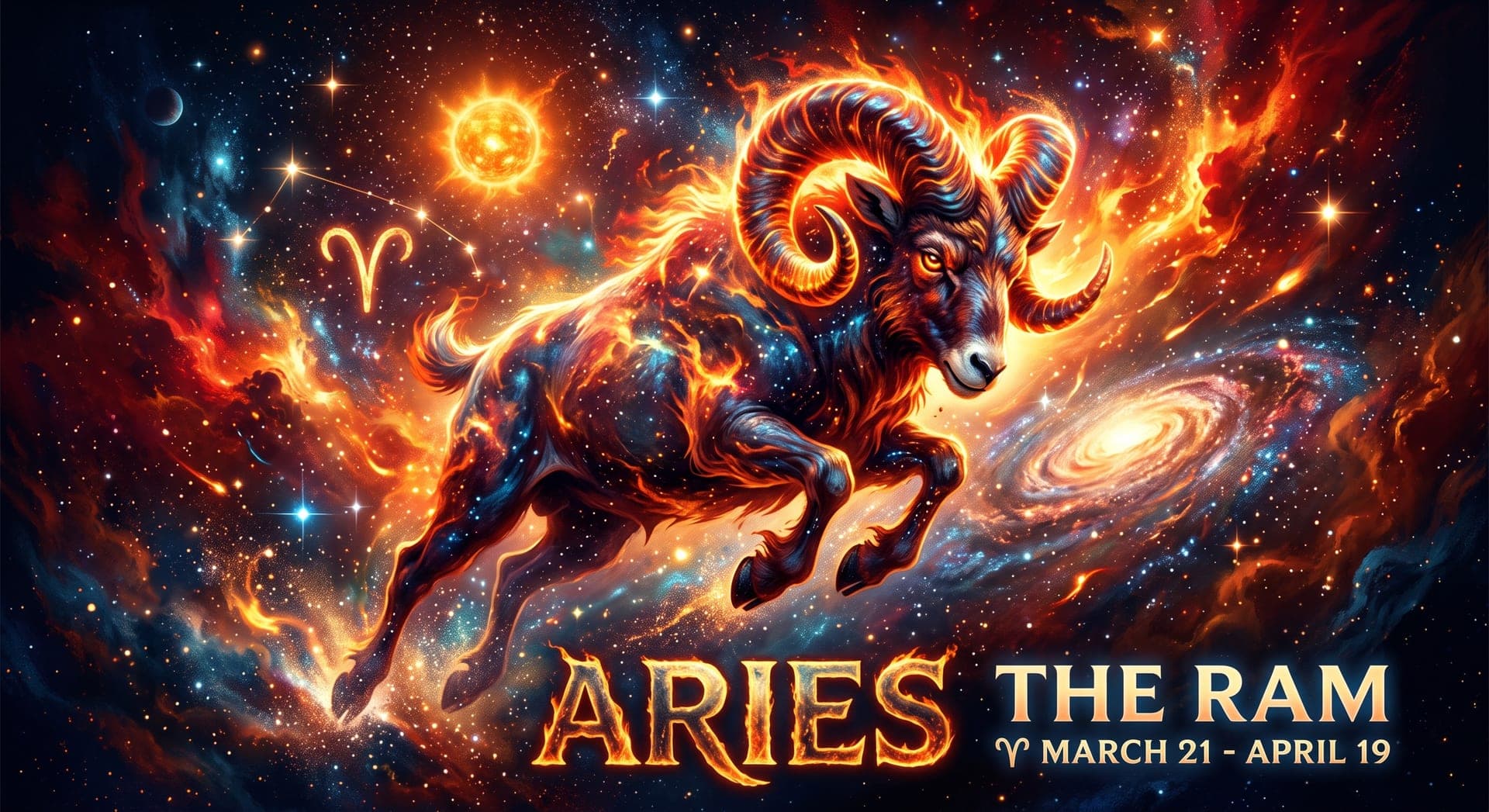
Born on March 28: Aries ♈
Aries, the first sign of the zodiac, spans March 21 to April 19 and is represented by the ram, an animal known for its boldness, stubborn determination, and willingness to charge forward. Ruled by Mars, the planet of action, drive, and war, Aries is often characterized as one of the most energetic and assertive signs in the zodiac, comfortable taking initiative and leading the way into new territory. As a Fire sign, Aries burns with passion and enthusiasm, approaching life with an instinctive, competitive edge and a low tolerance for hesitation. Its Cardinal modality reflects its role as an initiator, the sign that kicks off the astrological year at the spring equinox and each new season's start. People born under this sign are frequently drawn to leadership roles, sports, entrepreneurship, or any pursuit that rewards courage and quick decision-making. Direct and refreshingly honest, Aries individuals tend to say exactly what they think and rarely shy away from a challenge worth having.
Personality Traits
Strengths
- Courageous and determined
- Natural-born leader
- Honest and direct
- Enthusiastic and optimistic
- Quick to act on opportunities
Weaknesses
- Impatient and quick-tempered
- Impulsive, acts before thinking
- Can be overly competitive
- Struggles with follow-through
- Prone to selfishness
Compatible Signs
Fun Facts
- Aries is the first sign of the zodiac, marking the start of the astrological year at the spring equinox.
- The ram symbol is tied to the Greek myth of the golden-fleeced ram that rescued Phrixus, whose fleece later became the prize sought by Jason and the Argonauts.
- Mars, Aries' ruling planet, was the Roman god of war, reflecting the sign's associations with boldness, drive, and aggression.
- As a Cardinal sign, Aries is one of four signs, along with Cancer, Libra, and Capricorn, that initiate a new season.
- Notable Aries include Lady Gaga, Robert Downey Jr., Mariah Carey, and Leonardo da Vinci.
Born on March 28
- 1760
Thomas Clarkson
English abolitionist whose tireless research and campaigning were instrumental in Britain's passage of the Slave Trade Act of 1807, ending the British slave trade.
- 1819
Joseph Bazalgette
English civil engineer who designed London's Victorian sewer network, a project that eliminated the cholera outbreaks caused by the polluted River Thames.
- 1868
Maxim Gorky
Russian writer and political activist
- 1902
Flora Robson
English actress celebrated for her stage and film performances, including her portrayal of Elizabeth I in two separate films of the 1930s.
- 1914
Edmund Muskie
American politician, U.S. Secretary of State
- 1921
Dirk Bogarde
English actor who moved from matinee-idol roles to challenging dramatic work in films such as Victim and Death in Venice, later becoming an acclaimed author.
- 1935
Michael Parkinson
English broadcaster and journalist best known for hosting the long-running talk show Parkinson, which featured interviews with many of the era's biggest stars.
- 1942
Neil Kinnock
Welsh politician who led the Labour Party from 1983 to 1992 and later served as a Vice-President of the European Commission.
- 1943
Richard Eyre
English theatre and film director who ran the National Theatre for a decade and directed acclaimed films including Notes on a Scandal.
- 1955
Reba McEntire
American country music singer and actress
- 1968
Nasser Hussain
Indian-born British cricketer and commentator who captained the England Test team from 1999 to 2003
- 1970
Vince Vaughn
American actor known for comedy films
- 1986
Lady Gaga
American singer-songwriter known for pop music and performance art
On This Day in History
- 1802
German astronomer Heinrich Olbers discovers the asteroid Pallas, the second asteroid ever found.
German astronomer Heinrich Wilhelm Olbers, an amateur observer who also discovered several comets, identified Pallas, the second asteroid ever found after Ceres the previous year. Both objects were initially classified as new planets before astronomers gradually recognized, as more similar bodies were discovered, that they belonged to a much larger population of minor planets orbiting between Mars and Jupiter.
- 1814
The Royal Navy captures two American warships at the Battle of Valparaíso.
HMS Phoebe and HMS Cherub cornered the USS Essex in neutral Chilean waters during the War of 1812, forcing its surrender after a fierce engagement that crippled the American frigate's rigging and guns. The victory ended a successful raiding campaign by the Essex against British whaling ships in the Pacific.
- 1854
Britain and France declare war on Russia, entering the Crimean War.
Britain and France formally declared war on Russia in response to Russian expansion into Ottoman territories, entering the Crimean War in support of the Ottoman Empire. The brutal conflict, notable for the logistical failures exposed by war correspondents, later prompted major military and medical reforms.
- 1854
Britain and France declare war on Russia, beginning the Crimean War.
The declarations followed Russia's occupation of Ottoman territories along the Danube and its destruction of an Ottoman fleet, moves that Britain and France saw as a threat to the balance of power in Europe. The resulting war, fought largely in the Crimean Peninsula, brought heavy casualties and prompted major reforms in military medicine, notably through Florence Nightingale's work.
- 1860
British colonial forces clash with Māori fighters at the Battle of Waireka in New Zealand.
Fought early in the First Taranaki War, the battle saw British troops and colonial militia engage Māori defenders near New Plymouth after tensions over disputed land sales escalated into armed conflict. Waireka was among the opening engagements of the New Zealand Wars, a series of conflicts between the Crown and Māori that shaped the colony for decades.
- 1871
The Paris Commune formally establishes its governing council after the March 18 uprising.
Following the earlier armed uprising in Paris, the Commune's governing council was formally installed after an election, establishing a radical municipal government that pursued socialist and secular reforms before being crushed by French national forces in the "Bloody Week" that May.
- 1930
The Turkish cities of Constantinople and Angora are officially renamed Istanbul and Ankara.
As part of sweeping modernization and secularization reforms pursued by Mustafa Kemal Ataturk, Turkey's government officially adopted the names Istanbul and Ankara for the cities long known internationally as Constantinople and Angora, requiring foreign postal services to use the updated names. The change was part of a broader effort to forge a distinct, modern Turkish national identity.
- 1933
An Imperial Airways biplane is destroyed by sabotage, the first airliner lost to a deliberate act.
The aircraft, flying a scheduled route for Britain's national airline, crashed after a fire believed to have been deliberately set broke out mid-flight over Belgium, killing everyone aboard. The disaster is regarded as the earliest confirmed case of a commercial airliner brought down by sabotage rather than accident or mechanical failure.
- 1939
Madrid falls to Nationalist forces under Francisco Franco, effectively ending the Spanish Civil War.
Nationalist forces under General Francisco Franco entered Madrid unopposed after the city's remaining Republican defenders, exhausted and divided by internal factional fighting, surrendered without further resistance. The fall of the capital effectively ended the nearly three-year Spanish Civil War, and Franco went on to rule Spain as an authoritarian dictator for the next thirty-six years.
- 1939
Nationalist forces under Francisco Franco capture Madrid, effectively ending the Spanish Civil War.
After a grinding siege lasting nearly three years, Republican resistance in the capital finally collapsed, and Franco's Nationalist troops entered the city just days before the war's official end was declared. The victory cemented Franco's dictatorship, which would rule Spain under authoritarian control for the next thirty-six years.
- 1941
British and Australian forces defeat the Italian navy at the Battle of Cape Matapan in the Mediterranean.
In one of the few major Allied naval victories in the Mediterranean theater during World War II's early years, British and Australian warships decisively defeated the Italian fleet near the Greek coast at the Battle of Cape Matapan, sinking several cruisers and destroyers.
- 1941
British and Australian naval forces defeat the Italian fleet at the Battle of Cape Matapan.
Aided by decrypted Italian signals intelligence, a Royal Navy force under Admiral Andrew Cunningham ambushed and destroyed several Italian cruisers and destroyers off the coast of Greece. The battle crippled the Italian navy's surface fleet and secured British naval dominance in the eastern Mediterranean for much of the rest of the war.
- 1942
British commandos disable the Louis Joubert dry dock at Saint-Nazaire in a daring raid.
In Operation Chariot, an obsolete destroyer packed with explosives was rammed into the dock gates and detonated after commandos stormed the port facilities, denying Germany's battleship Tirpitz any dry dock on the Atlantic coast. The raid, though costly in lives, became one of the most celebrated commando operations of the Second World War.
- 1979
A partial meltdown occurs at the Three Mile Island nuclear power plant in Pennsylvania, the worst nuclear accident in U.S. history.
A combination of mechanical failure and operator error caused a partial meltdown of a reactor core at the Three Mile Island nuclear plant near Harrisburg, Pennsylvania, releasing small amounts of radioactive gas. The accident became the worst commercial nuclear incident in U.S. history and reshaped public attitudes toward nuclear power.
- 1979
The House of Commons passes a vote of no confidence in James Callaghan's government.
Losing by a single vote after the collapse of support from smaller parties following the 'Winter of Discontent' strikes, Callaghan's Labour government became the first to fall this way since 1924. The defeat triggered a general election that brought Margaret Thatcher and the Conservatives to power the following May.
- 1990
Nelson Mandela is elected deputy president of the African National Congress.
Nelson Mandela, having been released from prison the previous year after 27 years of incarceration, was elected deputy president of the African National Congress, positioning him as the organization's leading figure ahead of South Africa's transition to democratic, multiracial elections.
- 2003
American A-10 aircraft mistakenly attack British tanks in Iraq, killing one soldier.
The attack near Basra during the early days of the Iraq War struck Household Cavalry vehicles that had been marked as coalition forces, highlighting persistent difficulties in battlefield identification between allied units. The incident prompted a formal inquiry and renewed scrutiny of coalition procedures for avoiding fratricide.
- 2005
A magnitude 8.6 earthquake strikes off the coast of Sumatra, Indonesia, killing over a thousand people.
A powerful undersea earthquake struck off the coast of Sumatra, Indonesia, killing over a thousand people and triggering fears of another major tsunami following the catastrophic Indian Ocean tsunami just three months earlier, though the resulting waves proved less devastating.
- 2005
A magnitude 8.6 earthquake strikes off the coast of Sumatra, killing over 1,000 people.
The quake struck near Nias Island, just months after the catastrophic 2004 Indian Ocean earthquake and tsunami devastated the same region. Though it caused fewer casualties than its predecessor thanks to improved early warning and lower population density near the epicenter, it still caused widespread destruction and heightened fears across the Indian Ocean basin.
- 2014
The Chelyabinsk-sized asteroid 2014 FR is discovered, part of ongoing efforts to track near-Earth objects.
Astronomers cataloged the small near-Earth asteroid 2014 FR as part of ongoing international survey efforts to identify and track potentially hazardous objects whose orbits bring them close to our planet. Such cataloging work, using ground-based telescopes and automated detection systems, reflects the growing global emphasis on planetary defense following several high-profile close approaches and impact events in preceding years.