What’s Observed on March 27
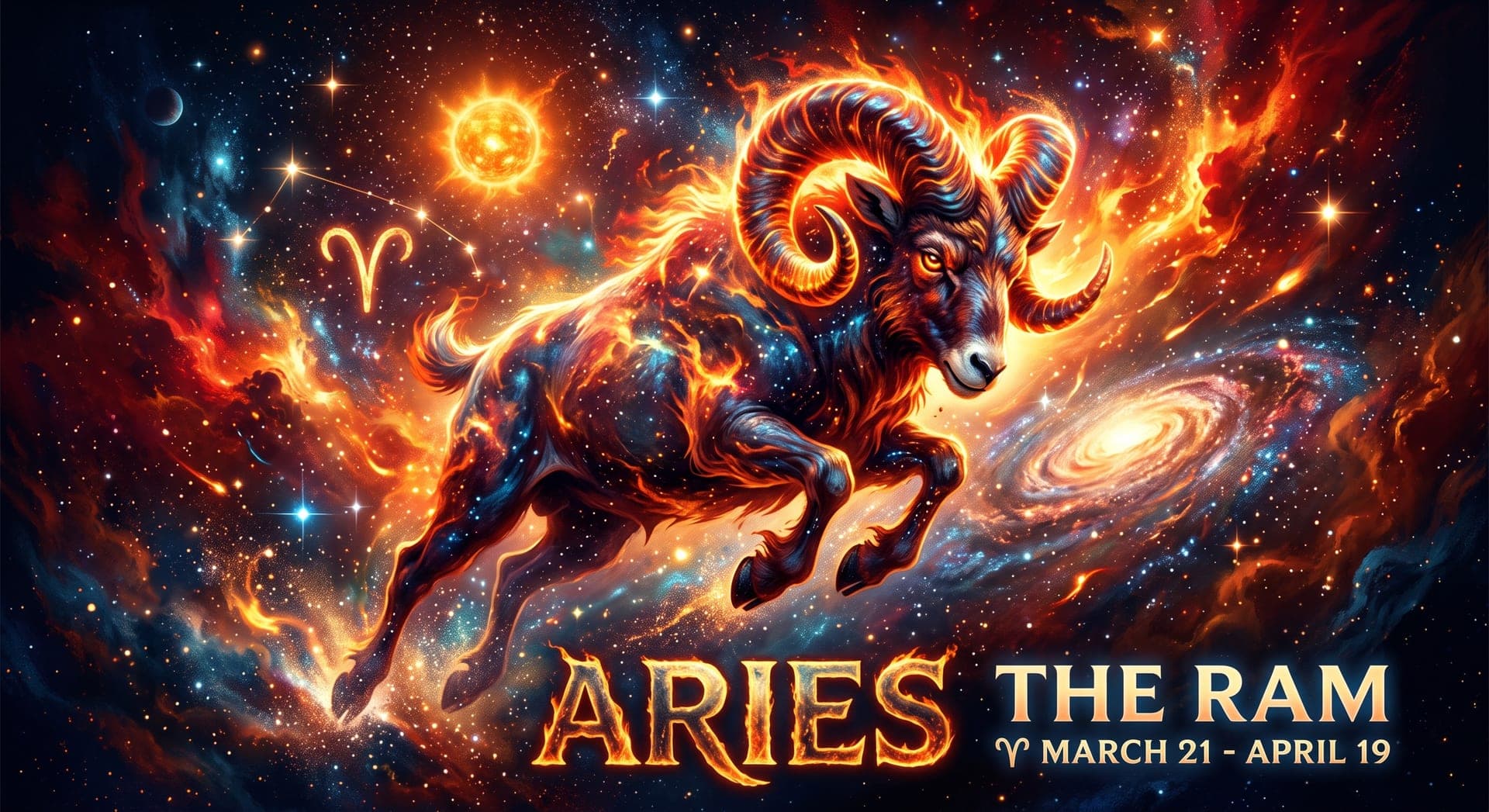
Born on March 27: Aries ♈
Aries, the first sign of the zodiac, spans March 21 to April 19 and is represented by the ram, an animal known for its boldness, stubborn determination, and willingness to charge forward. Ruled by Mars, the planet of action, drive, and war, Aries is often characterized as one of the most energetic and assertive signs in the zodiac, comfortable taking initiative and leading the way into new territory. As a Fire sign, Aries burns with passion and enthusiasm, approaching life with an instinctive, competitive edge and a low tolerance for hesitation. Its Cardinal modality reflects its role as an initiator, the sign that kicks off the astrological year at the spring equinox and each new season's start. People born under this sign are frequently drawn to leadership roles, sports, entrepreneurship, or any pursuit that rewards courage and quick decision-making. Direct and refreshingly honest, Aries individuals tend to say exactly what they think and rarely shy away from a challenge worth having.
Personality Traits
Strengths
- Courageous and determined
- Natural-born leader
- Honest and direct
- Enthusiastic and optimistic
- Quick to act on opportunities
Weaknesses
- Impatient and quick-tempered
- Impulsive, acts before thinking
- Can be overly competitive
- Struggles with follow-through
- Prone to selfishness
Compatible Signs
Fun Facts
- Aries is the first sign of the zodiac, marking the start of the astrological year at the spring equinox.
- The ram symbol is tied to the Greek myth of the golden-fleeced ram that rescued Phrixus, whose fleece later became the prize sought by Jason and the Argonauts.
- Mars, Aries' ruling planet, was the Roman god of war, reflecting the sign's associations with boldness, drive, and aggression.
- As a Cardinal sign, Aries is one of four signs, along with Cancer, Libra, and Capricorn, that initiate a new season.
- Notable Aries include Lady Gaga, Robert Downey Jr., Mariah Carey, and Leonardo da Vinci.
Born on March 27
- 1845
Wilhelm Röntgen
German physicist who discovered X-rays, first Nobel laureate in Physics
- 1857
Karl Pearson
English mathematician and biostatistician who founded the field of mathematical statistics, developing tools such as the chi-squared test and the Pearson correlation coefficient.
- 1863
Henry Royce
English engineer who co-founded Rolls-Royce Limited, building a reputation for meticulous engineering that made the marque synonymous with luxury automobiles and aero engines.
- 1899
Gloria Swanson
American actress of the silent film era
- 1912
James Callaghan
English politician who served as Prime Minister of the United Kingdom from 1976 to 1979, the only person to have held all four great offices of state.
- 1924
Sarah Vaughan
American jazz singer
- 1942
Michael York
English actor known for films including Cabaret, Logan's Run, and the Three Musketeers series, as well as his stage work in classical theatre.
- 1942
John Sulston
English biologist awarded the Nobel Prize for his work on genetic regulation of organ development, and a leading figure in sequencing the human genome.
- 1969
Mariah Carey
American singer-songwriter known for her vocal range
- 1971
David Coulthard
Scottish racing driver who won thirteen Formula One Grands Prix across a career with Williams, McLaren, and Red Bull, later becoming a broadcaster.
- 1988
Jessie J
English singer-songwriter known for hits such as 'Price Tag' and 'Domino,' and for her role as a coach on the British and international editions of The Voice.
On This Day in History
- 1625
Charles I becomes King of England, Scotland, and Ireland.
Charles succeeded his father James I upon his death, inheriting thrones whose religious and constitutional tensions would eventually erupt into civil war. His belief in the divine right of kings and repeated clashes with Parliament over taxation and royal authority defined a turbulent 24-year reign that ended with his execution in 1649.
- 1782
The second Rockingham ministry takes office in Great Britain.
Charles Watson-Wentworth, Marquess of Rockingham, returned as Prime Minister after the collapse of Lord North's government following British defeat in the American Revolutionary War. His short-lived administration began peace negotiations with the American colonies and pushed through economic reforms, but Rockingham died just months later, ending his second term abruptly.
- 1871
Scotland defeats England in the first international rugby union match.
Played at Raeburn Place in Edinburgh before a crowd of around 4,000, Scotland won by a goal and a try to a single try, under rules distinct from later codified laws. The fixture is regarded as the birth of international rugby and launched what became the oldest rivalry in the sport.
- 1886
Apache leader Geronimo surrenders to the U.S. Army, ending the main phase of the Apache Wars.
After years leading raids across the Southwest and evading capture in the rugged terrain of Arizona and Mexico, Geronimo negotiated terms with General George Crook at Cañon de los Embudos. Although he briefly fled again before a final surrender months later, the episode effectively closed decades of armed Apache resistance to American expansion.
- 1899
Guglielmo Marconi transmits the first wireless radio signal across the English Channel.
Italian inventor Guglielmo Marconi successfully transmitted a wireless radio signal across the English Channel from England to France, a significant advance beyond his earlier shorter-range experiments demonstrating the practical long-distance potential of wireless telegraphy. The achievement helped secure funding and public attention for his ongoing work, which culminated years later in the first transatlantic radio transmission.
- 1912
First Lady Helen Herron Taft plants the first of Washington, D.C.'s famous Japanese cherry trees, a gift from Tokyo.
First Lady Helen Herron Taft and the Viscountess Chinda, wife of the Japanese ambassador, planted the first two Japanese cherry trees along the Tidal Basin in Washington, D.C., a gift from the city of Tokyo that grew into the capital's beloved annual Cherry Blossom Festival tradition.
- 1933
Japan formally withdraws from the League of Nations.
The withdrawal followed the League's adoption of the Lytton Report, which condemned Japan's invasion and occupation of Manchuria and refused to recognize the puppet state of Manchukuo. Japan's departure exposed the League's growing inability to restrain aggressive expansionism among major powers, foreshadowing the broader collapse of collective security that preceded the Second World War.
- 1958
Nikita Khrushchev becomes Premier of the Soviet Union, consolidating his leadership.
Following a period of collective leadership within the Communist Party's Presidium after Stalin's death, Nikita Khrushchev formally became Premier of the Soviet Union, consolidating the power he had been steadily accumulating since becoming First Secretary of the Communist Party years earlier. His subsequent rule brought de-Stalinization reforms alongside continued Cold War confrontation with the West.
- 1964
A magnitude 9.2 earthquake, the second-strongest ever recorded, strikes Alaska, triggering deadly tsunamis.
The most powerful earthquake ever recorded in North America, magnitude 9.2, struck Prince William Sound in Alaska, triggering tsunamis that devastated coastal communities across the Pacific and killed around 130 people in one of the largest seismic events in recorded history.
- 1964
A magnitude 9.2 earthquake strikes Alaska, killing around 125 people.
Centered near Prince William Sound, the Good Friday earthquake remains the most powerful ever recorded in North America and the second most powerful in recorded history worldwide. It triggered devastating tsunamis along the Pacific coast and prompted major advances in the scientific understanding of plate tectonics and earthquake-generated waves.
- 1968
Soviet cosmonaut Yuri Gagarin, the first person in space, is killed in a jet training accident.
Soviet cosmonaut Yuri Gagarin, the first human to travel into space in 1961, was killed along with a flight instructor when their MiG-15 training jet crashed during a routine flight, a death whose exact circumstances remain the subject of ongoing investigation and speculation.
- 1977
Two Boeing 747s collide on a foggy runway in Tenerife, killing 583 people in the deadliest accident in aviation history.
Two Boeing 747 jumbo jets, operated by Pan Am and KLM, collided on a fog-shrouded runway at Los Rodeos Airport in Tenerife after a series of miscommunications between air traffic control and the KLM crew, who began takeoff without clearance. The disaster killed 583 people and remains, decades later, the deadliest accident in the history of civil aviation.
- 1977
Two Boeing 747s collide on the runway at Tenerife, killing 583 people.
A Pan Am and a KLM jumbo jet collided in dense fog at Los Rodeos Airport after the KLM aircraft began its takeoff roll without clearance, the result of a fatal chain of miscommunication and poor visibility. It remains the deadliest accident in aviation history, prompting sweeping reforms to cockpit procedure and air traffic control communication worldwide.
- 1980
The Alexander L. Kielland oil platform capsizes in the North Sea, killing 123 workers.
The semi-submersible oil platform Alexander L. Kielland, serving as a floating dormitory for oil workers in the Norwegian North Sea, capsized during a storm after a structural failure, killing 123 of the 212 people aboard in one of the worst offshore disasters in the industry's history.
- 1981
Around twelve million Polish workers stage a warning strike organized by Solidarity.
The nationwide four-hour walkout, the largest strike action in the Eastern Bloc up to that point, was organized by the independent trade union Solidarity in protest against police violence and government intransigence. It demonstrated the movement's mass support and set the stage for years of confrontation that eventually helped bring down communist rule in Poland.
- 1994
Italian voters go to the polls in the country's first elections under a new electoral system, ushering media mogul Silvio Berlusconi to power.
Italy held its first general election under a new mostly majoritarian electoral system, resulting in victory for a center-right coalition led by media magnate Silvio Berlusconi, who became prime minister and remained one of the most dominant and controversial figures in Italian politics for two decades.
- 1998
The FDA approves Viagra, the first oral drug for erectile dysfunction, for sale in the United States.
The U.S. Food and Drug Administration approved sildenafil, marketed as Viagra, as the first oral medication for treating erectile dysfunction, a breakthrough that quickly became a cultural phenomenon and transformed the treatment of a condition previously considered difficult to discuss openly.
- 1998
The U.S. Food and Drug Administration approves Viagra for treating erectile dysfunction.
Developed by Pfizer originally as a treatment for angina, sildenafil citrate proved far more effective at addressing erectile dysfunction and became the first oral medication approved for the condition. Its approval was followed by a rapid, highly publicized rise in popularity that reshaped public conversation around men's health.
- 2002
A Hamas suicide bomber kills 30 people at a Passover Seder in Netanya, Israel, prompting a major Israeli military response.
A Hamas suicide bomber detonated explosives at a Passover Seder in a hotel in Netanya, Israel, killing 30 people and wounding over a hundred. The attack, among the deadliest of the Second Intifada, prompted Israel to launch a major military operation in the West Bank days later.
- 2004
The decommissioned Royal Navy frigate HMS Scylla is sunk off Cornwall as an artificial reef.
Scuttled in Whitsand Bay near Plymouth after decades of naval service, Scylla became Europe's first vessel purpose-sunk to create an artificial reef for recreational diving and marine conservation. Stripped of hazardous materials beforehand, the wreck now hosts a thriving ecosystem of marine life and remains one of the most popular dive sites along the Cornish coast.