
What’s Observed on March 29
Born on March 29: Aries ♈
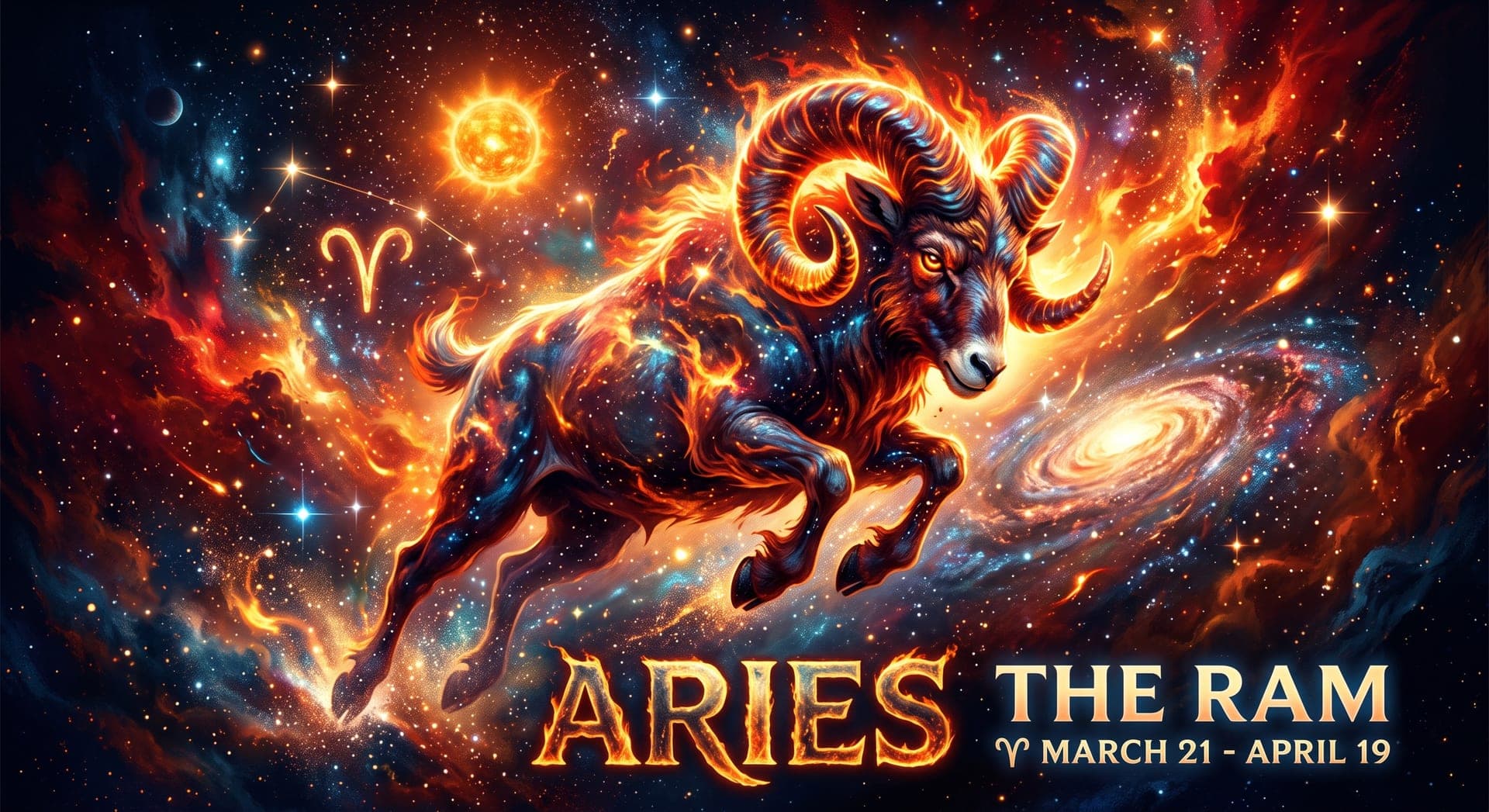
Aries, the first sign of the zodiac, spans March 21 to April 19 and is represented by the ram, an animal known for its boldness, stubborn determination, and willingness to charge forward. Ruled by Mars, the planet of action, drive, and war, Aries is often characterized as one of the most energetic and assertive signs in the zodiac, comfortable taking initiative and leading the way into new territory. As a Fire sign, Aries burns with passion and enthusiasm, approaching life with an instinctive, competitive edge and a low tolerance for hesitation. Its Cardinal modality reflects its role as an initiator, the sign that kicks off the astrological year at the spring equinox and each new season's start. People born under this sign are frequently drawn to leadership roles, sports, entrepreneurship, or any pursuit that rewards courage and quick decision-making. Direct and refreshingly honest, Aries individuals tend to say exactly what they think and rarely shy away from a challenge worth having.
Personality Traits
Strengths
- Courageous and determined
- Natural-born leader
- Honest and direct
- Enthusiastic and optimistic
- Quick to act on opportunities
Weaknesses
- Impatient and quick-tempered
- Impulsive, acts before thinking
- Can be overly competitive
- Struggles with follow-through
- Prone to selfishness
Compatible Signs
Fun Facts
- Aries is the first sign of the zodiac, marking the start of the astrological year at the spring equinox.
- The ram symbol is tied to the Greek myth of the golden-fleeced ram that rescued Phrixus, whose fleece later became the prize sought by Jason and the Argonauts.
- Mars, Aries' ruling planet, was the Roman god of war, reflecting the sign's associations with boldness, drive, and aggression.
- As a Cardinal sign, Aries is one of four signs, along with Cancer, Libra, and Capricorn, that initiate a new season.
- Notable Aries include Lady Gaga, Robert Downey Jr., Mariah Carey, and Leonardo da Vinci.
Born on March 29
- 1790
John Tyler
Tenth President of the United States
- 1799
Edward Smith-Stanley
English statesman who served three separate terms as Prime Minister as the 14th Earl of Derby, longer as Conservative Party leader than anyone before him.
- 1867
Cy Young
American baseball pitcher for whom the Cy Young Award is named
- 1869
Edwin Lutyens
English architect renowned for designing New Delhi's imperial buildings, the Cenotaph in Whitehall, and numerous country houses in a distinctive blend of classical and vernacular styles.
- 1902
William Walton
English composer known for orchestral and choral works including Belshazzar's Feast, Façade, and his coronation marches for British monarchs.
- 1918
Sam Walton
American businessman who founded Walmart
- 1927
Martin Fleischmann
Czech-born British chemist known for his research in electrochemistry and for the controversial 1989 announcement of "cold fusion" with Stanley Pons
- 1931
Norman Tebbit
English politician who served as a senior cabinet minister under Margaret Thatcher and became one of the most prominent voices of 1980s Conservative politics.
- 1935
Ruby Murray
Northern Irish singer whose smooth vocal style made her a major recording star of the 1950s, at one point holding five songs simultaneously in the UK singles chart.
- 1943
John Major
English politician who succeeded Margaret Thatcher as Prime Minister in 1990, leading the Conservative government through the Gulf War and the Maastricht Treaty ratification.
- 1943
Eric Idle
English actor, comedian, and writer, a founding member of the Monty Python comedy troupe known for Monty Python's Flying Circus and Life of Brian.
- 1964
Elle Macpherson
Australian model and actress
- 1972
Priti Patel
English politician who served as Home Secretary from 2019 to 2022, overseeing major changes to the UK's immigration and policing policy.

On This Day in History
- 1461
The Yorkist victory at the Battle of Towton secures the English throne for Edward IV.
Fought in a snowstorm near York, Towton is considered the largest and bloodiest battle ever fought on English soil, with tens of thousands of combatants and enormous casualties on the Lancastrian side. The decisive Yorkist win drove Henry VI into exile and confirmed Edward IV's claim during the Wars of the Roses.
- 1638
Swedish colonists establish New Sweden, the first Swedish colony in North America, near present-day Wilmington, Delaware.
Swedish colonists led by the Dutch-born governor Peter Minuit established New Sweden along the Delaware River near present-day Wilmington, Delaware, founding the first and only Swedish colony in North America. The small, sparsely populated settlement struggled to attract enough colonists and was ultimately absorbed by the larger neighboring Dutch colony of New Netherland roughly seventeen years later.
- 1792
King Gustav III of Sweden dies after being shot at a masquerade ball, an assassination later dramatized in opera.
King Gustav III of Sweden was shot by a group of conspirators during a masked ball at the Royal Opera House in Stockholm and died of his wounds weeks later. The dramatic assassination later inspired Giuseppe Verdi's opera "A Masked Ball."
- 1806
Construction begins on the Cumberland Road, the first major U.S. federal highway.
Construction began on the Cumberland Road, later known as the National Road, the first major infrastructure project funded directly by the U.S. federal government under authority granted by Congress. Eventually connecting Cumberland, Maryland, to Illinois, the road became a vital artery for westward migration, trade, and settlement during the early nineteenth century, predating the railroad era.
- 1849
Britain formally annexes the Punjab region of India after defeating the Sikh Empire.
Following its victory in the Second Anglo-Sikh War, Britain formally annexed the Punjab region of the Indian subcontinent, incorporating the once-powerful Sikh Empire's territory directly into British India. The annexation ended Sikh political sovereignty in the region and brought under British control valuable agricultural lands and a large population that would later supply many soldiers to the British Indian Army.
- 1849
The United Kingdom formally annexes the Punjab region into British India.
Annexation followed the East India Company's victory over Sikh forces in the Second Anglo-Sikh War, ending the independent Sikh Empire founded by Ranjit Singh. The move extended direct British control to the subcontinent's northwestern frontier and brought the young Maharaja Duleep Singh into British custody, later exiled to England.
- 1867
Queen Victoria grants royal assent to the British North America Act, paving the way for Canadian confederation.
Queen Victoria gave royal assent to the British North America Act, the constitutional legislation drafted following negotiations among British colonial leaders that established the Dominion of Canada by uniting the provinces of Canada, Nova Scotia, and New Brunswick under a federal system. Canada formally came into existence as a confederation on July 1 of that same year.
- 1867
Queen Victoria gives royal assent to the British North America Act, creating Canada.
The act united the colonies of Canada, Nova Scotia, and New Brunswick into a single self-governing dominion within the British Empire, establishing a federal system of government that took effect on 1 July 1867. It became the foundational document of the Canadian constitution and a landmark in the evolution of the British Empire toward Commonwealth-style self-rule.
- 1871
The Royal Albert Hall opens in London.
Built as a memorial to Prince Albert, Queen Victoria's late consort, the domed concert hall in South Kensington was funded partly through the sale of long-term seat leases. Queen Victoria herself opened the hall, which went on to host the Proms and countless other major concerts, becoming one of Britain's most recognizable cultural venues.
- 1879
British forces decisively defeat a Zulu army of around 20,000 at the Battle of Kambula.
Fought during the Anglo-Zulu War, the battle saw a fortified British camp under Colonel Evelyn Wood repel repeated Zulu assaults with devastating rifle and artillery fire. The victory marked a turning point in the war, breaking Zulu offensive momentum and paving the way for the British invasion that ended at Ulundi weeks later.
- 1911
The U.S. Army officially adopts the Colt M1911 pistol, which remained in service for over seven decades.
The United States Army officially adopted the Colt Model 1911 semi-automatic pistol as its standard sidearm following extensive trials that tested its stopping power and reliability against various competing designs. Created by prolific firearms designer John Browning, the pistol proved so durable and effective that it remained in official U.S. military service for more than seven decades.
- 1936
Adolf Hitler receives overwhelming approval in a plebiscite ratifying Germany's remilitarization of the Rhineland.
In a plebiscite widely regarded by historians as manipulated and held under pervasive conditions of intimidation and propaganda, German voters overwhelmingly approved Hitler's recent remilitarization of the Rhineland in direct violation of the Treaty of Versailles. The lopsided result bolstered his domestic standing considerably and emboldened him to pursue further aggressive territorial moves across Europe in subsequent years.
- 1941
The Battle of Cape Matapan concludes as a major British and Australian naval victory over Italy.
News of the victory, achieved with the help of codebreakers who had cracked Italian naval ciphers, boosted British morale early in the North African campaign. Admiral Andrew Cunningham's fleet suffered no significant losses of its own, and the battle is remembered as one of the most one-sided naval engagements of the war.
- 1942
RAF Bomber Command achieves its first major success with the bombing of Lübeck.
The raid on the medieval Baltic port town caused extensive fire damage to its historic centre, demonstrating for the first time the destructive potential of concentrated incendiary bombing against a German city. It marked a shift in RAF strategy toward area bombing under Air Marshal Arthur Harris and provoked German reprisal raids on English cathedral cities.
- 1971
Lieutenant William Calley is convicted by a court-martial for his role in the My Lai massacre in Vietnam.
A U.S. Army court-martial convicted Lieutenant William Calley of premeditated murder for his role commanding the platoon responsible for the My Lai massacre, though his sentence was later substantially reduced and he served only a few years under house arrest.
- 1973
The last United States combat troops leave Vietnam, formally ending direct American military involvement.
The last American ground combat troops departed South Vietnam following the Paris Peace Accords, formally ending direct U.S. military engagement in the war, though American support and involvement in the broader conflict continued in various forms until Saigon's fall two years later.
- 1982
The Canada Act 1982 receives royal assent in the British Parliament.
The act formally ended the last vestiges of British legislative authority over Canada, allowing the country to amend its own constitution without recourse to London. Passed at the request of the Canadian government, it completed a process of gradual constitutional independence that had unfolded over more than a century.
- 2004
Ireland becomes the first country in the world to ban smoking in all workplaces, including pubs and restaurants.
Ireland became the first country in the world to implement a comprehensive nationwide ban on smoking in all enclosed workplaces, including pubs and restaurants long central to Irish social life, despite initial industry warnings of economic harm. The pioneering public health measure proved broadly popular and durable, and numerous other countries subsequently adopted similar bans in modified forms.
- 2014
The first same-sex marriages take place in England and Wales.
The ceremonies followed the passage of the Marriage (Same Sex Couples) Act 2013, which extended the legal definition of marriage to same-sex couples after years of campaigning and parliamentary debate. England and Wales joined a growing number of countries recognizing same-sex marriage, marking a landmark moment in British LGBT rights.
- 2017
Prime Minister Theresa May formally invokes Article 50, beginning the Brexit process.
The letter to European Council President Donald Tusk triggered a two-year countdown for the United Kingdom's withdrawal from the European Union, following the 2016 referendum in which a majority voted to leave. The move launched years of negotiation over trade, borders, and citizens' rights that reshaped British politics.