What’s Observed on March 30
Born on March 30: Aries ♈
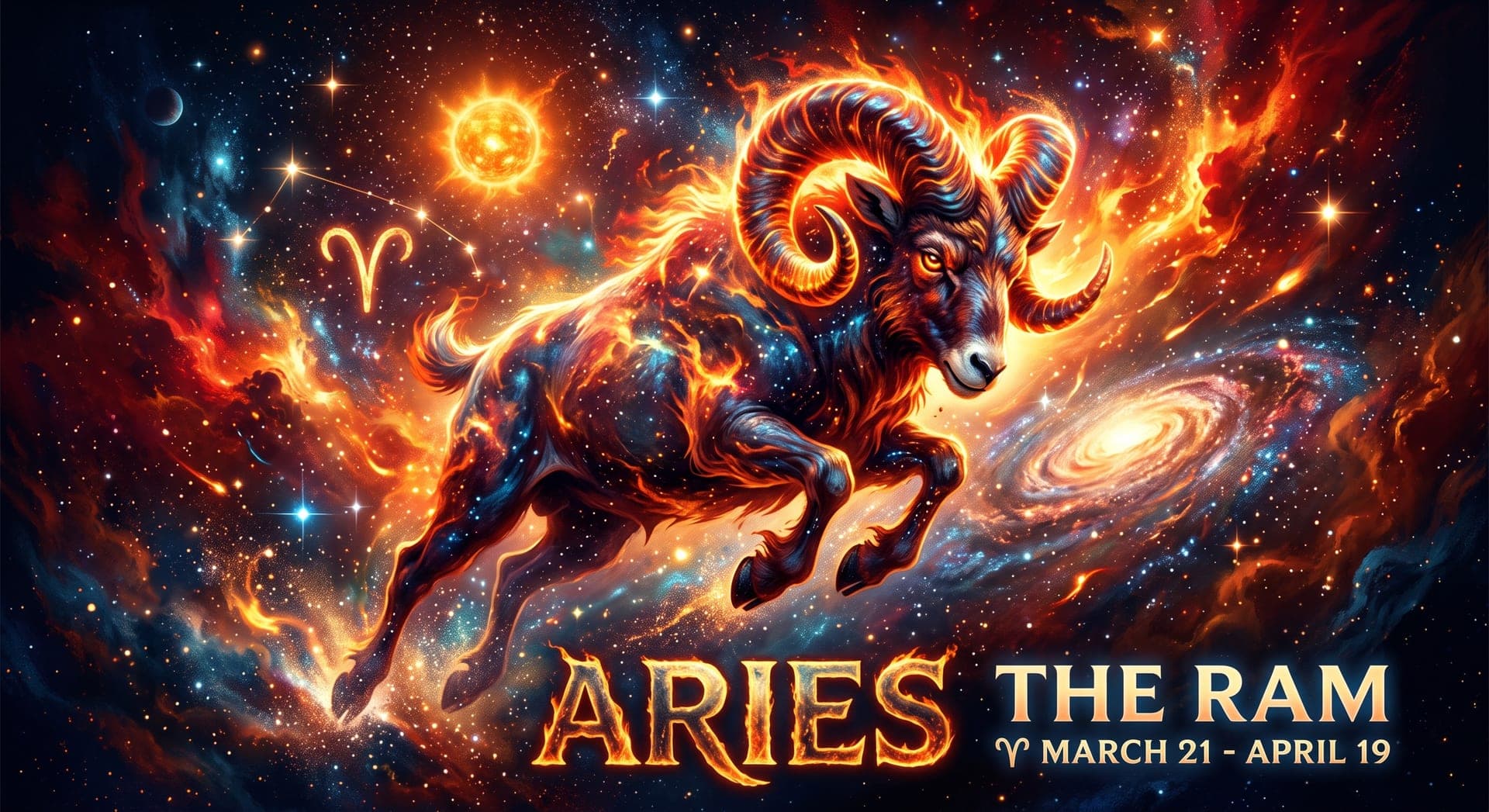
Aries, the first sign of the zodiac, spans March 21 to April 19 and is represented by the ram, an animal known for its boldness, stubborn determination, and willingness to charge forward. Ruled by Mars, the planet of action, drive, and war, Aries is often characterized as one of the most energetic and assertive signs in the zodiac, comfortable taking initiative and leading the way into new territory. As a Fire sign, Aries burns with passion and enthusiasm, approaching life with an instinctive, competitive edge and a low tolerance for hesitation. Its Cardinal modality reflects its role as an initiator, the sign that kicks off the astrological year at the spring equinox and each new season's start. People born under this sign are frequently drawn to leadership roles, sports, entrepreneurship, or any pursuit that rewards courage and quick decision-making. Direct and refreshingly honest, Aries individuals tend to say exactly what they think and rarely shy away from a challenge worth having.
Personality Traits
Strengths
- Courageous and determined
- Natural-born leader
- Honest and direct
- Enthusiastic and optimistic
- Quick to act on opportunities
Weaknesses
- Impatient and quick-tempered
- Impulsive, acts before thinking
- Can be overly competitive
- Struggles with follow-through
- Prone to selfishness
Compatible Signs
Fun Facts
- Aries is the first sign of the zodiac, marking the start of the astrological year at the spring equinox.
- The ram symbol is tied to the Greek myth of the golden-fleeced ram that rescued Phrixus, whose fleece later became the prize sought by Jason and the Argonauts.
- Mars, Aries' ruling planet, was the Roman god of war, reflecting the sign's associations with boldness, drive, and aggression.
- As a Cardinal sign, Aries is one of four signs, along with Cancer, Libra, and Capricorn, that initiate a new season.
- Notable Aries include Lady Gaga, Robert Downey Jr., Mariah Carey, and Leonardo da Vinci.
Born on March 30
- 1746
Francisco Goya
Spanish painter and printmaker
- 1811
Robert Bunsen
German chemist known for the Bunsen burner
- 1820
Anna Sewell
English author best known for her only novel, Black Beauty, an enormously influential story advocating the humane treatment of horses.
- 1853
Vincent van Gogh
Dutch Post-Impressionist painter
- 1874
Charles Lightoller
English mariner who served as second officer aboard RMS Titanic and became the most senior officer to survive the 1912 sinking, later helping rescue troops at Dunkirk.
- 1902
Ted Heath
English bandleader and trombonist whose orchestra was one of the most popular and influential British dance bands of the 1940s and 1950s.
- 1905
Albert Pierrepoint
English executioner who carried out an estimated 400 hangings over a 25-year career, including the executions of numerous convicted Nazi war criminals after the Second World War.
- 1937
Warren Beatty
American actor, director, and producer
- 1945
Eric Clapton
English guitarist and singer-songwriter regarded as one of the greatest guitarists in rock history, known for his work with Cream, Derek and the Dominos, and his solo career.
- 1950
Robbie Coltrane
Scottish actor known for playing Rubeus Hagrid in the Harry Potter film series and for his role as a criminal psychologist in the television series Cracker.
- 1965
Piers Morgan
English journalist and broadcaster who edited the Daily Mirror before becoming a prominent television presenter on shows including Good Morning Britain.
- 1968
Celine Dion
Canadian singer known for "My Heart Will Go On"
- 1979
Norah Jones
American singer-songwriter and pianist
On This Day in History
- 1282
An uprising known as the Sicilian Vespers erupts against French rule on the island of Sicily.
An uprising against French Angevin rule erupted in Sicily following an incident at a church in Palermo, quickly spreading across the island and resulting in the massacre of French residents. The Sicilian Vespers rebellion led to a prolonged war involving multiple European powers over control of the island.
- 1296
Edward I sacks Berwick-upon-Tweed at the outset of war between England and Scotland.
The assault on the prosperous border town, then Scotland's wealthiest trading port, resulted in a massacre of much of its population and marked the opening of Edward I's campaign to assert English overlordship over Scotland. Berwick changed hands repeatedly over the following centuries, becoming a lasting symbol of the Anglo-Scottish border conflict.
- 1842
American surgeon Crawford Long becomes the first to use ether as a general anesthetic during surgery.
American surgeon Crawford Long administered ether to a patient before removing a tumor from his neck, performing what is considered the first operation using general anesthesia, though he did not publish his findings for several years, delaying wider recognition of the breakthrough.
- 1856
The Treaty of Paris is signed, ending the Crimean War between Russia and an alliance including Britain and France.
Russia, along with allies including the Ottoman Empire, Britain, and France, signed the Treaty of Paris, ending the Crimean War on terms that neutralized the Black Sea and curtailed Russian naval power there, a significant check on Russian expansionist ambitions.
- 1856
The Treaty of Paris is signed, ending the Crimean War.
Negotiated after the fall of Sevastopol, the treaty forced Russia to cede territory and accept the neutralization of the Black Sea, curbing its naval power in the region. Britain, France, and the Ottoman Empire emerged as the war's principal victors, and the settlement reshaped the balance of power in eastern Europe for a generation.
- 1867
U.S. Secretary of State William Seward agrees to purchase Alaska from Russia for $7.2 million.
U.S. Secretary of State William Seward signed a treaty to purchase Alaska from Russia for $7.2 million, a deal initially mocked in the press as "Seward's Folly" but later recognized as a remarkably favorable acquisition given the territory's vast natural resources.
- 1867
The United States agrees to purchase Alaska from Russia for $7.2 million.
Negotiated by Secretary of State William H. Seward, the deal transferred roughly 586,000 square miles of territory to American control at a price widely mocked at the time as 'Seward's Folly.' The purchase later proved enormously valuable following the discovery of gold and, decades afterward, oil in the territory.
- 1870
Texas is readmitted to the United States Congress following the Civil War and Reconstruction.
Texas was formally readmitted to representation in the United States Congress, completing its return to the Union following the Civil War and the Reconstruction-era requirements imposed on former Confederate states, including ratifying constitutional amendments abolishing slavery and guaranteeing civil rights.
- 1885
A clash at Kushka triggers the Panjdeh Incident between Russian and British imperial forces.
Russian troops overran an Afghan garrison near the disputed border of Afghanistan, alarming British authorities who feared a Russian push toward British India. The confrontation brought Britain and Russia to the brink of war during the broader rivalry known as the Great Game, before diplomacy defused tensions and a boundary commission settled the frontier.
- 1900
British archaeologist Arthur Evans's team discovers the first clay tablet inscribed with Linear B script at Knossos.
Excavating the Bronze Age palace complex on Crete, Evans's team uncovered inscribed tablets in an unknown script he named Linear B, distinct from the pictographic Linear A he had also identified. The find was a landmark in Aegean archaeology, though the script itself would not be deciphered as an early form of Greek for another half-century.
- 1912
France establishes a protectorate over Morocco under the Treaty of Fez.
France and Morocco signed the Treaty of Fez, establishing a French protectorate over the bulk of Moroccan territory while a separate agreement gave Spain control of smaller northern and southern zones, ending Morocco's formal independence. The colonial arrangement, which provoked periodic uprisings, persisted until Morocco regained its full independence in 1956 following growing nationalist pressure.
- 1944
RAF Bomber Command suffers its heaviest single-night losses of the war in the Nuremberg raid.
Of nearly 800 bombers dispatched, 95 were shot down and dozens more damaged after German night fighters intercepted the bomber stream in clear moonlit conditions, exploiting a poorly planned route. The catastrophic losses, the worst suffered by Bomber Command in a single operation, prompted a reassessment of British bombing tactics for the remainder of the war.
- 1945
Soviet forces invade Austria and capture Vienna as the Second World War nears its end.
The Vienna Offensive drove out the remaining German garrison after weeks of hard fighting, liberating the Austrian capital from Nazi occupation just weeks before Germany's surrender. The city was subsequently divided into occupation zones among the Allied powers, an arrangement that persisted for a decade until Austria regained full sovereignty in 1955.
- 1949
Iceland votes to join NATO, prompting riots in Reykjavik by opponents of the alliance.
Iceland's parliament voted to join the newly formed NATO alliance despite significant domestic opposition from those who feared entanglement in great-power conflicts, triggering riots outside the parliament building in Reykjavik that police had to forcibly disperse. Iceland's accession, notable given the small nation maintains no standing military of its own, reflected Cold War-era strategic concerns about the North Atlantic.
- 1959
The 14th Dalai Lama flees Tibet for India amid a failed uprising against Chinese rule.
Amid a failed popular uprising against Chinese rule in Tibet, the 14th Dalai Lama fled his palace in Lhasa disguised as a common soldier under cover of darkness, beginning an arduous, weeks-long mountain journey toward the Indian border. His flight, aided by loyal guards and sympathetic villagers along the route, would end in permanent exile and the eventual establishment of a Tibetan government-in-exile.
- 1959
The 14th Dalai Lama flees Tibet and crosses into India seeking asylum.
Following a failed uprising against Chinese rule in Lhasa, the Dalai Lama undertook a perilous two-week journey across the Himalayas disguised as a soldier. India granted him political asylum, and he established a government-in-exile in Dharamshala that continues to represent the Tibetan cause on the world stage.
- 1979
Conservative MP Airey Neave is killed by a car bomb at the Palace of Westminster.
The bomb detonated as Neave, a close ally of Margaret Thatcher and a decorated wartime escapee from Colditz, drove his car out of the House of Commons car park. The Irish National Liberation Army claimed responsibility, and Neave's death came just weeks before Thatcher led the Conservatives to victory in the general election.
- 1981
President Ronald Reagan is shot and wounded outside a Washington hotel by John Hinckley Jr.
President Ronald Reagan was shot in the chest by John Hinckley Jr. outside a Washington, D.C. hotel, along with three others including press secretary James Brady, who was left permanently disabled. Reagan underwent emergency surgery and made a full recovery within weeks.
- 1981
President Ronald Reagan is shot and wounded outside a Washington hotel.
John Hinckley Jr. fired six shots as Reagan left the Hilton Hotel, wounding the president and three others including his press secretary James Brady, who was left permanently disabled. Reagan underwent emergency surgery and recovered quickly, and the attempt prompted renewed debate over gun control and the protection of public figures.