
What’s Observed on February 11
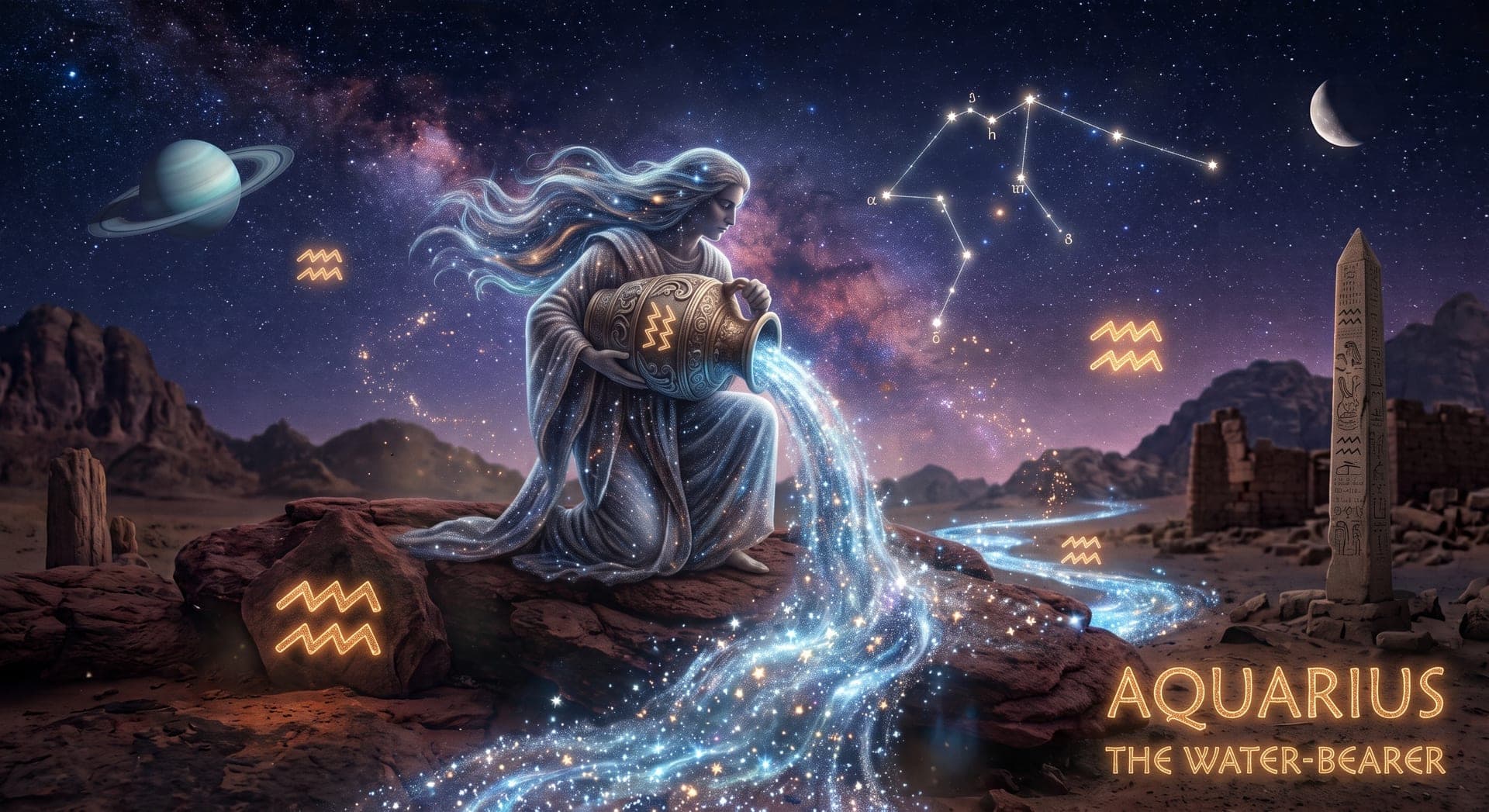
Born on February 11: Aquarius ♒
Aquarius, the eleventh sign of the zodiac, spans January 20 to February 18 and is symbolized by the water bearer, an image of someone pouring out knowledge and life-giving ideas to the world, despite Aquarius actually being an air sign rather than a water sign. Traditionally ruled by disciplined Saturn and, in modern astrology, by unpredictable Uranus, the planet of innovation and rebellion, Aquarius carries a distinctive blend of structure and originality. People born under this sign are often described as independent thinkers, forward-looking, and drawn to humanitarian causes, valuing the collective good over convention. As a Fixed sign, Aquarius can be famously stubborn once its mind is made up, even while championing change for everyone else. Intellectually curious and sometimes emotionally guarded, Aquarians tend to value friendship and community deeply, often serving as the visionary of their social circle, more comfortable debating ideas than discussing feelings.
Personality Traits
Strengths
- Original and forward-thinking
- Strong sense of fairness and justice
- Independent and self-sufficient
- Loyal to friends and causes alike
- Sees the bigger picture others miss
Weaknesses
- Can run from emotional expression
- Uncompromising once a position is fixed
- Prone to aloofness or detachment
- Sometimes contrarian just to stand apart
- Can prioritize ideas over people's feelings
Compatible Signs
Fun Facts
- Despite its watery name and imagery, Aquarius is classified as an air sign, grouped with Gemini and Libra as a sign of thought and communication rather than emotion.
- Aquarius has two ruling planets: Saturn in classical astrology, and Uranus, discovered in 1781, in the modern system most Western astrologers use today.
- The water bearer symbol traces back to Ganymede in Greek mythology, a cupbearer to the gods said to pour out a life-giving stream from the heavens.
- Notable Aquarians include Oprah Winfrey, Abraham Lincoln, Charles Darwin, Thomas Edison, and Bob Marley.
- Aquarius is one of the rarer signs to be represented by a person rather than an animal or object, alongside Gemini, Virgo, and Sagittarius's centaur half.
Born on February 11
- 1466
Elizabeth of York
Queen consort of England as the wife of Henry VII, whose marriage united the rival houses of Lancaster and York after the Wars of the Roses
- 1800
Henry Fox Talbot
English scientist and inventor who pioneered photography, developing the calotype process that produced the first photographic negatives
- 1847
Thomas Edison
Inventor of the practical light bulb and phonograph
- 1915
Patrick Leigh Fermor
English soldier, travel writer, and scholar celebrated for his wartime exploits in Crete and his acclaimed travel books
- 1930
Mary Quant
British fashion designer credited with popularising the miniskirt and defining the look of 1960s London
- 1932
Dennis Skinner
English politician and former coal miner who served as a Labour Member of Parliament for nearly five decades
- 1936
Burt Reynolds
American actor and director
- 1962
Sheryl Crow
Grammy-winning singer-songwriter
- 1969
Jennifer Aniston
American actress known for "Friends"
- 1971
Damian Lewis
English actor known for starring in the television series Band of Brothers and Homeland
- 1979
Brandy Norwood
American R&B singer and actress
- 1982
Natalie Dormer
English actress known for roles in the television series Game of Thrones and The Tudors
- 1992
Taylor Lautner
American actor known for the "Twilight" film series
- 1997
Rose (Roseanne Park)
Singer and member of K-pop group Blackpink

On This Day in History
- 660 BCE
Traditional Japanese chronicles date the legendary founding of Japan and the accession of its first emperor, Jimmu, to this day, though the account is considered mythological rather than historical.
According to Japan's earliest chronicles, compiled centuries later, Emperor Jimmu descended from the sun goddess Amaterasu and founded the imperial line on this date. While modern historians regard the account as legendary rather than factual, the date was later adopted as a national holiday, National Foundation Day.
- 1534
The Convocation of Canterbury agrees to recognize King Henry VIII as supreme head of the Church of England, a key step in England's break from Rome.
The Convocation's declaration formalized Henry VIII's break from papal authority, a rupture driven largely by his desire to annul his marriage to Catherine of Aragon, which the pope had refused to grant. It laid the institutional groundwork for the establishment of the independent Church of England.
- 1534
At the Convocation of Canterbury, the assembled Catholic bishops of England agree to recognise King Henry VIII as supreme head of the Church of England.
The declaration came amid Henry's break with Rome, driven largely by the Pope's refusal to annul his marriage to Catherine of Aragon. It paved the way for the 1534 Act of Supremacy, which formally established the Church of England independent of papal authority, a decisive turning point in the English Reformation that reshaped religion, politics, and society for centuries.
- 1586
English privateer Sir Francis Drake captures the Spanish port city of Cartagena de Indias, holding it for two months during his Caribbean raiding expedition.
Drake's fleet, sailing with the tacit approval of Elizabeth I, had already sacked Santo Domingo before turning on Cartagena, one of Spain's wealthiest New World ports. The raid extracted a large ransom from the Spanish and demonstrated England's growing naval reach, further inflaming tensions with Spain that culminated two years later in the Spanish Armada's failed invasion attempt.
- 1826
University College London is founded in London as the University of London, the first English university to admit students regardless of religion.
Unlike Oxford and Cambridge, which at the time required religious tests linked to the Church of England, the new institution was open to students of any faith or none, and it later pioneered the admission of women to degree courses. It became a founding college of the federal University of London and a model for secular higher education in Britain.
- 1856
The British East India Company annexes the Kingdom of Awadh in northern India, deposing its ruler, Nawab Wajid Ali Shah.
The annexation was justified by the Company on grounds of alleged misgovernment, but it dispossessed a wealthy and culturally significant state and angered many Indian soldiers and elites. Resentment over the annexation was among the grievances that helped spark the Indian Rebellion of 1857 just over a year later, a major uprising against British East India Company rule.
- 1889
Japan adopts the Meiji Constitution, its first modern constitution, establishing a constitutional monarchy with an elected parliament.
The Meiji Constitution, modeled partly on Prussia's constitutional monarchy, granted the emperor broad sovereign authority while establishing an elected lower house of parliament. It governed Japan through its rapid modernization and imperial expansion until being replaced by a more democratic constitution after World War II.
- 1929
Italy and the Vatican sign the Lateran Treaty, creating Vatican City as a sovereign state and settling decades of dispute over the papacy's territorial status.
The Lateran Treaty resolved the decades-long "Roman Question" that had lingered since Italian unification stripped the papacy of its temporal territories in 1870. It recognized the pope's sovereignty over Vatican City, a tiny enclave within Rome, establishing the arrangement that persists today.
- 1938
The BBC broadcasts an adaptation of Karel Čapek's play R.U.R., widely regarded as the world's first science fiction television programme.
The broadcast, produced from Alexandra Palace in London just over a year after the BBC had launched the world's first regular television service, adapted the 1920 Czech play that introduced the word 'robot' to the English language. Only a shortened excerpt of the production was aired live, as was standard for the era, since videotape recording did not yet exist.
- 1942
Japanese forces fight British and Commonwealth defenders for control of Bukit Timah, Singapore's highest point, during the closing days of the Battle of Singapore.
Capturing Bukit Timah gave Japanese troops control of Singapore's main military supply depots and water reservoirs, hastening the collapse of British defences. The overall battle for Singapore ended just four days later with the surrender of Lieutenant-General Arthur Percival's forces, one of the largest capitulations in British military history.
- 1959
Britain establishes the Federation of Arab Emirates of the South, a protectorate uniting several sheikhdoms in what is now Yemen.
The federation was formed as part of Britain's efforts to consolidate its protected territories surrounding the colony of Aden into a more governable bloc ahead of eventual self-rule. It was later expanded and renamed the Federation of South Arabia, but British control in the region collapsed amid an insurgency, leading to full withdrawal and the creation of an independent South Yemen in 1967.
- 1963
The Beatles record almost their entire debut album, Please Please Me, in a single marathon session at EMI's Abbey Road Studios in London.
Working under producer George Martin, the band recorded ten of the album's fourteen tracks in about ten hours, aiming to capture the energy of their live stage act. Released the following month, Please Please Me topped the British album charts and helped launch the wave of Beatlemania that soon spread across Britain and beyond.
- 1979
The Iranian Revolution culminates in the establishment of an Islamic theocracy under the Ayatollah Ruhollah Khomeini.
Just days after the collapse of the Shah's government, Khomeini's supporters seized control of key government buildings and military installations, and a national referendum soon confirmed the establishment of an Islamic republic, fundamentally reshaping Iran's political and religious identity for decades to come.
- 1979
The Iranian Revolution culminates in the collapse of the monarchy and the establishment of an Islamic theocracy under Ayatollah Ruhollah Khomeini.
Mass protests and strikes through 1978 had already forced Shah Mohammad Reza Pahlavi into exile weeks earlier. Khomeini, who had returned from exile in France, moved quickly to consolidate power, and a referendum two months later established the Islamic Republic of Iran. The revolution reshaped Middle Eastern politics and set Iran on a new geopolitical course.
- 1990
Nelson Mandela is released from prison after 27 years, a pivotal moment in the eventual dismantling of apartheid in South Africa.
Mandela's release, broadcast live around the world, came after sustained international pressure, including economic sanctions, had made apartheid increasingly untenable for the South African government. He walked free hand in hand with his wife, Winnie, before addressing enormous crowds, launching the final phase of negotiations toward democratic elections four years later.
- 1990
Boxer Buster Douglas, a 42-to-1 underdog, knocks out heavyweight champion Mike Tyson in one of the greatest upsets in sports history.
Tyson entered the Tokyo bout as an overwhelming favorite and reportedly undertrained, while Douglas fought the performance of his career despite recently losing his mother. The stunning upset remains one of the most celebrated underdog victories in boxing history.
- 2011
Egyptian President Hosni Mubarak resigns after 18 days of mass protests, a landmark moment of the Arab Spring.
Mubarak's resignation came after 18 days of massive, sustained protests centered in Cairo's Tahrir Square, part of the broader wave of uprisings known as the Arab Spring. Though celebrated as a democratic breakthrough at the time, Egypt's subsequent political transition proved turbulent, ultimately resulting in a return to military-backed rule.
- 2011
Egyptian President Hosni Mubarak resigns after eighteen days of mass protests, ending nearly thirty years of authoritarian rule.
The uprising, part of the wider Arab Spring, was driven by demands for political freedom, economic opportunity, and an end to police repression, with hundreds of thousands gathering in Cairo's Tahrir Square. Mubarak handed power to the military, opening a turbulent period of transition that eventually saw Egypt's first democratically elected president removed by another military takeover two years later.
- 2013
The Vatican announces that Pope Benedict XVI will resign, the first pope to do so voluntarily in nearly 600 years.
Benedict's resignation, citing his declining strength of mind and body at age 85, stunned the Catholic world, since no pope had voluntarily stepped down since Gregory XII in 1415. His decision paved the way for the election of Pope Francis, the first pope from the Americas.
- 2020
The World Health Organization officially names the new coronavirus disease "COVID-19," as the outbreak began spreading beyond China.
The WHO's naming decision, following weeks in which the virus and disease lacked an official name, was designed to avoid stigmatizing any specific location or group, a practice the organization had adopted after past outbreaks were named for places, leading to unintended discrimination.