What’s Observed on September 16
Born on September 16: Virgo ♍
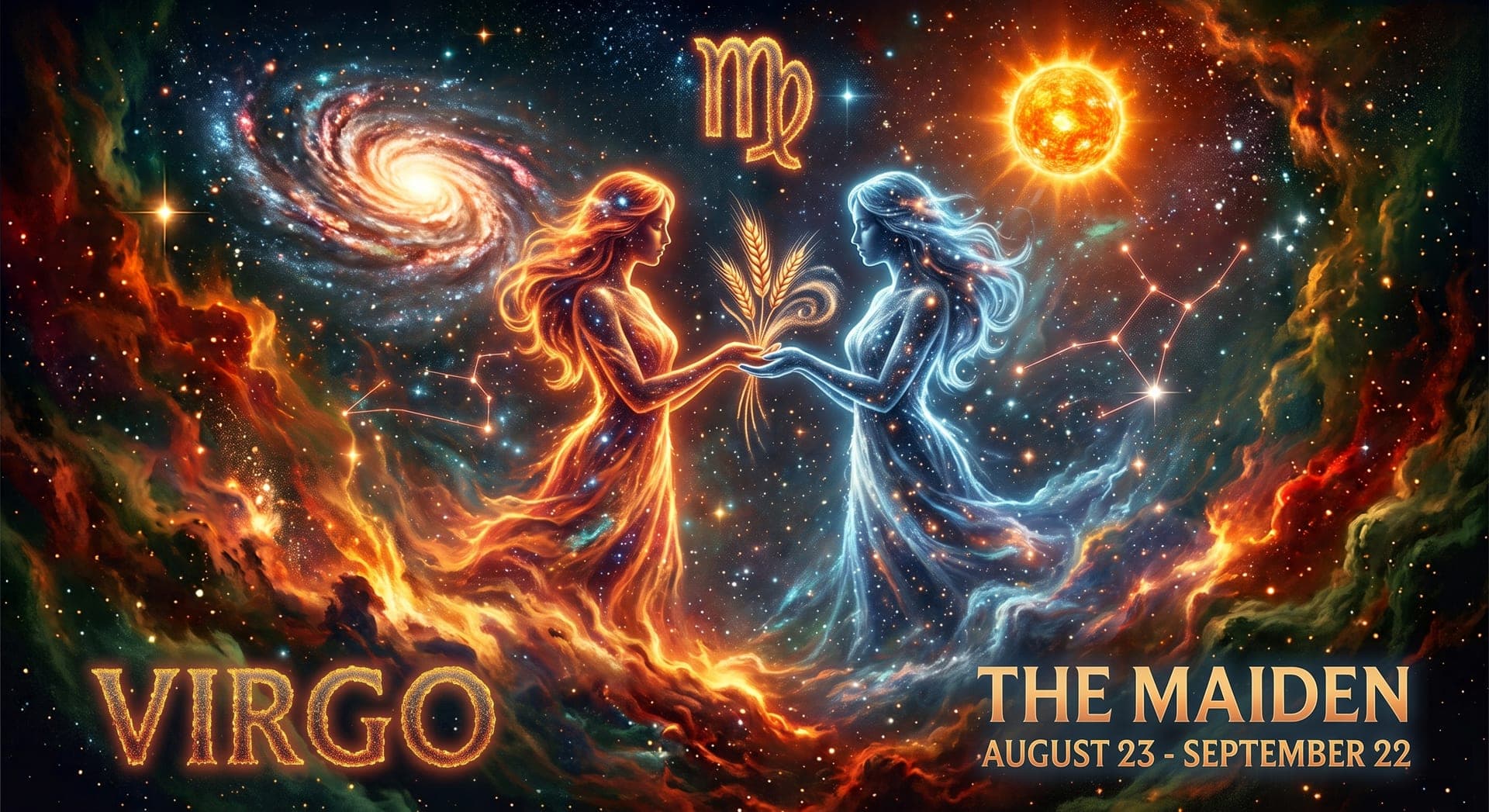
Virgo, the sixth sign of the zodiac, spans August 23 to September 22 and is symbolized by the maiden, often depicted holding a sheaf of wheat, representing purity, meticulous care, and the harvest. Ruled by Mercury, the planet of communication and intellect, Virgo channels its mental energy toward precision, analysis, and practical problem-solving rather than idle chatter. As an Earth sign, Virgo is grounded and detail-oriented, finding genuine satisfaction in organizing, refining, and perfecting the world around it. Its Mutable modality gives Virgo an adaptable, service-oriented nature, often finding purpose in quietly helping others and improving systems rather than seeking the spotlight. People born under this sign are frequently drawn to work requiring precision, research, or care for others, from science and medicine to editing and organization. Virgo's high standards make it an excellent problem-solver and a reliable presence others can count on, though that same perfectionism can turn inward as self-criticism or outward as an exacting, sometimes overly critical, eye toward the people and world around it.
Personality Traits
Strengths
- Highly organized and detail-oriented
- Reliable and hardworking
- Analytical problem-solver
- Genuinely helpful to others
- Modest and unpretentious
Weaknesses
- Prone to overcritical perfectionism
- Tends to worry excessively
- Can be overly critical of others
- Reserved to the point of aloofness
- Struggles to relax
Compatible Signs
Fun Facts
- Virgo's maiden symbol is often associated with Astraea, the Greek goddess of justice and purity, said to have been the last immortal to live among humans.
- Virgo is the only zodiac sign represented by a female human figure.
- Virgo and Gemini share Mercury as their ruling planet, though Virgo channels the planet's communicative energy toward analysis and precision rather than pure talkativeness.
- Notable Virgos include Beyoncé, Michael Jackson, Mother Teresa, and Stephen King.
- Virgo season falls at the tail end of summer, a period traditionally associated with harvest, meticulous preparation, and gathering resources for the colder months ahead.
Born on September 16
- 1386
Henry V of England
English king born in Monmouth, Wales, remembered for his decisive victory over the French at the Battle of Agincourt in 1415
- 1678
Henry St John, 1st Viscount Bolingbroke
English politician and political philosopher whose writings influenced Enlightenment thought and the American founders
- 1777
Nathan Mayer Rothschild
German-English banker of the Rothschild banking family
- 1875
James Cash Penney
American businessman who founded J.C. Penney
- 1880
Alfred Noyes
English poet best known for narrative poems such as The Highwayman
- 1888
W. O. Bentley
English automotive engineer who founded Bentley Motors, maker of luxury and racing cars
- 1923
Lee Kuan Yew
First Prime Minister of Singapore
- 1924
Lauren Bacall
American actress known for film noir roles
- 1925
B.B. King
American blues guitarist and singer
- 1927
Peter Falk
American actor known for playing Columbo
- 1948
Julia Donaldson
English author of children's books, including The Gruffalo, and a former Children's Laureate
- 1948
Kenney Jones
English rock drummer who played with the Small Faces, the Faces, and the Who
- 1950
David Bellamy
English botanist, environmental campaigner, and television broadcaster known for popularizing natural history
- 1958
Neville Southall
Welsh goalkeeper widely regarded as one of the greatest to play in English football, most notably for Everton
- 1968
Marc Anthony
American salsa and pop singer
On This Day in History
- 1400
Owain Glyndwr is proclaimed Prince of Wales by his supporters, beginning a Welsh revolt against English rule.
Welsh nobleman Owain Glyndwr was proclaimed Prince of Wales by his supporters, launching a major and prolonged rebellion against English rule that, though ultimately unsuccessful, remains celebrated in Welsh national memory as a significant assertion of Welsh identity and self-determination.
- 1400
Owain Glyndwr is proclaimed Prince of Wales by his followers, launching a widespread Welsh revolt against English rule.
The uprising, which began as a personal land dispute with a neighboring English lord, grew into a national rebellion that at its height controlled most of Wales and won military support from France. Though King Henry IV and later Henry V eventually suppressed the revolt, Glyndwr himself was never captured, and the rising remains a cornerstone of Welsh national identity.
- 1620
The Pilgrims depart Plymouth, England, aboard the Mayflower, bound for the New World.
The roughly 100 passengers, many seeking freedom to practice their faith outside the Church of England, endured a grueling 66-day Atlantic crossing before sighting land far north of their intended destination in Virginia. Their eventual landing at what became Plymouth Colony, and the Mayflower Compact drafted en route, are foundational episodes in American colonial history.
- 1701
Following the death of the exiled King James II, his son James Francis Edward Stuart is recognized by Louis XIV of France as the rightful king of England and Scotland.
Known to supporters as 'James III and VIII' and derided by opponents as 'the Old Pretender,' his claim was never recognized by the British government, which upheld the Protestant succession established after the Glorious Revolution. His cause fueled decades of Jacobite unrest, including the major uprisings of 1715 and 1745, the latter led by his son Charles Edward Stuart.
- 1776
American forces achieve a morale-boosting victory at the Battle of Harlem Heights during the Revolutionary War.
American troops under George Washington repelled a British advance on Manhattan at Harlem Heights, a modest but psychologically important victory following the demoralizing loss of New York City days earlier. The engagement, though militarily minor compared to later battles, helped restore some confidence and discipline within the struggling Continental Army during a particularly difficult stretch of the war's early campaigns.
- 1776
American Continental Army troops defeat British forces at the Battle of Harlem Heights on Manhattan Island, their first tactical victory of the New York campaign.
After a demoralizing string of defeats around New York City, General George Washington's troops repulsed a British light infantry advance in a sharply fought engagement across the heights of upper Manhattan. Though militarily minor, the win significantly boosted American morale during a bleak period of the Revolutionary War, proving colonial troops could stand against British regulars.
- 1810
Father Miguel Hidalgo delivers the Grito de Dolores, launching Mexico's war of independence from Spain.
In the small town of Dolores, Catholic priest Miguel Hidalgo y Costilla delivered an impassioned call to arms against Spanish colonial rule, an event known as the Grito de Dolores that ignited Mexico's eleven-year war of independence, now commemorated annually as Mexico's independence day.
- 1863
Robert College is founded in Istanbul, the first American educational institution established outside the United States.
American missionaries and educators established Robert College overlooking the Bosphorus in Istanbul, creating what became the first American educational institution founded outside the United States. The college was named for its principal benefactor, New York merchant Christopher Rhinelander Robert, and it continues operating today, having educated generations of prominent regional leaders across the Balkans, Turkey, and the wider Middle East.
- 1908
General Motors Corporation is founded, becoming one of the world's largest automotive manufacturers.
William Durant founded General Motors as a holding company for the Buick Motor Company and subsequently acquired numerous other automobile manufacturers, building it into one of the largest and most influential industrial corporations in American history over the following decades.
- 1920
A bomb hidden in a horse-drawn wagon explodes on Wall Street outside the J.P. Morgan building, killing dozens.
A powerful bomb concealed in a horse-drawn wagon detonated on Wall Street outside the headquarters of J.P. Morgan and Company, killing dozens of people in an attack widely attributed to anarchist or radical political extremists, though the case was never definitively solved.
- 1920
A horse-drawn wagon packed with explosives detonates on Wall Street in New York City, killing 38 people and injuring hundreds.
The bombing, one of the deadliest acts of terrorism on American soil at the time, was widely believed to have been carried out by Italian anarchists targeting the J.P. Morgan bank, though the case was never definitively solved. It heightened the 'Red Scare' atmosphere of the period and led to permanent increases in financial-district security.
- 1935
Nazi Germany adopts the swastika as its sole national flag and announces the Nuremberg Race Laws, stripping Jews of German citizenship and civil rights.
Unveiled at the annual Nuremberg party rally, the laws defined Jewishness by ancestry and banned marriage and sexual relations between Jews and other Germans. They formed a legal foundation for the escalating persecution that culminated in the Holocaust, and remain among the starkest examples of state-sponsored racial discrimination in modern history.
- 1963
Malaysia is formed through the merger of the Federation of Malaya, Singapore, Sabah, and Sarawak.
Following negotiations among British colonial territories in Southeast Asia, the Federation of Malaya merged with Singapore, Sabah, and Sarawak to form the new nation of Malaysia, though Singapore would separate to become independent just two years later amid political tensions.
- 1963
Malaysia is formed through the merger of the Federation of Malaya with the former British territories of Singapore, North Borneo, and Sarawak.
The new federation emerged from Britain's postwar decolonization of Southeast Asia, combining former crown colonies and protectorates into a single independent state. The union proved short-lived for one member, however, as political tensions with the federal government led Singapore to separate and become fully independent just two years later, in 1965.
- 1987
Nations sign the Montreal Protocol, a landmark international treaty to phase out substances that deplete the ozone layer.
Responding to mounting scientific evidence of ozone layer depletion caused by certain industrial chemicals, nations worldwide signed the Montreal Protocol committing to phase out ozone-depleting substances, an agreement widely considered one of the most successful international environmental treaties in history.
- 1987
Representatives from dozens of countries sign the Montreal Protocol, a landmark international treaty committing signatories to phase out substances that deplete Earth's ozone layer.
Negotiated in response to scientific findings of a growing hole in the ozone layer over Antarctica, the treaty required nations to phase out chlorofluorocarbons and other ozone-depleting chemicals used in refrigeration and aerosols. Widely regarded as one of the most successful environmental agreements ever adopted, it has since been ratified by every member state of the United Nations.
- 1992
The British government is forced to withdraw the pound sterling from the European Exchange Rate Mechanism after failing to keep it above its agreed floor, a debacle that became known as Black Wednesday.
Chancellor Norman Lamont raised interest rates repeatedly in a single day and spent billions of pounds in foreign currency reserves defending sterling against speculative selling, notably by investor George Soros, before conceding defeat. The crisis badly damaged the Conservative government's reputation for economic competence, though some economists later credited it with setting Britain up for years of steadier growth.
- 1994
The British government lifts its broadcasting ban on the voices of Sinn Fein members being heard on radio and television.
The ban, imposed in 1988, had forced broadcasters to dub the voices of Sinn Fein figures such as Gerry Adams with actors whenever their words were reported. Its lifting followed the Provisional IRA's ceasefire announced earlier that month, marking a significant, if largely symbolic, step in the peace process that eventually produced the 1998 Good Friday Agreement in Northern Ireland.
- 2021
Inspiration4 launches as the first orbital spaceflight crewed entirely by private citizens.
A crew of four private citizens, with no professional astronauts aboard, launched into orbit on a SpaceX Crew Dragon capsule, spending three days circling Earth in a landmark mission demonstrating the growing feasibility of commercial human spaceflight beyond government space agencies.
- 2022
The death of Mahsa Amini in Tehran sparks widespread protests across Iran demanding human rights and greater freedoms.
The death in police custody of Mahsa Amini, a young Kurdish-Iranian woman detained for allegedly violating Iran's mandatory hijab laws, ignited months of widespread protests across Iran under the slogan "Woman, Life, Freedom," representing one of the most significant challenges to the Iranian government in years.