
What’s Observed on August 28
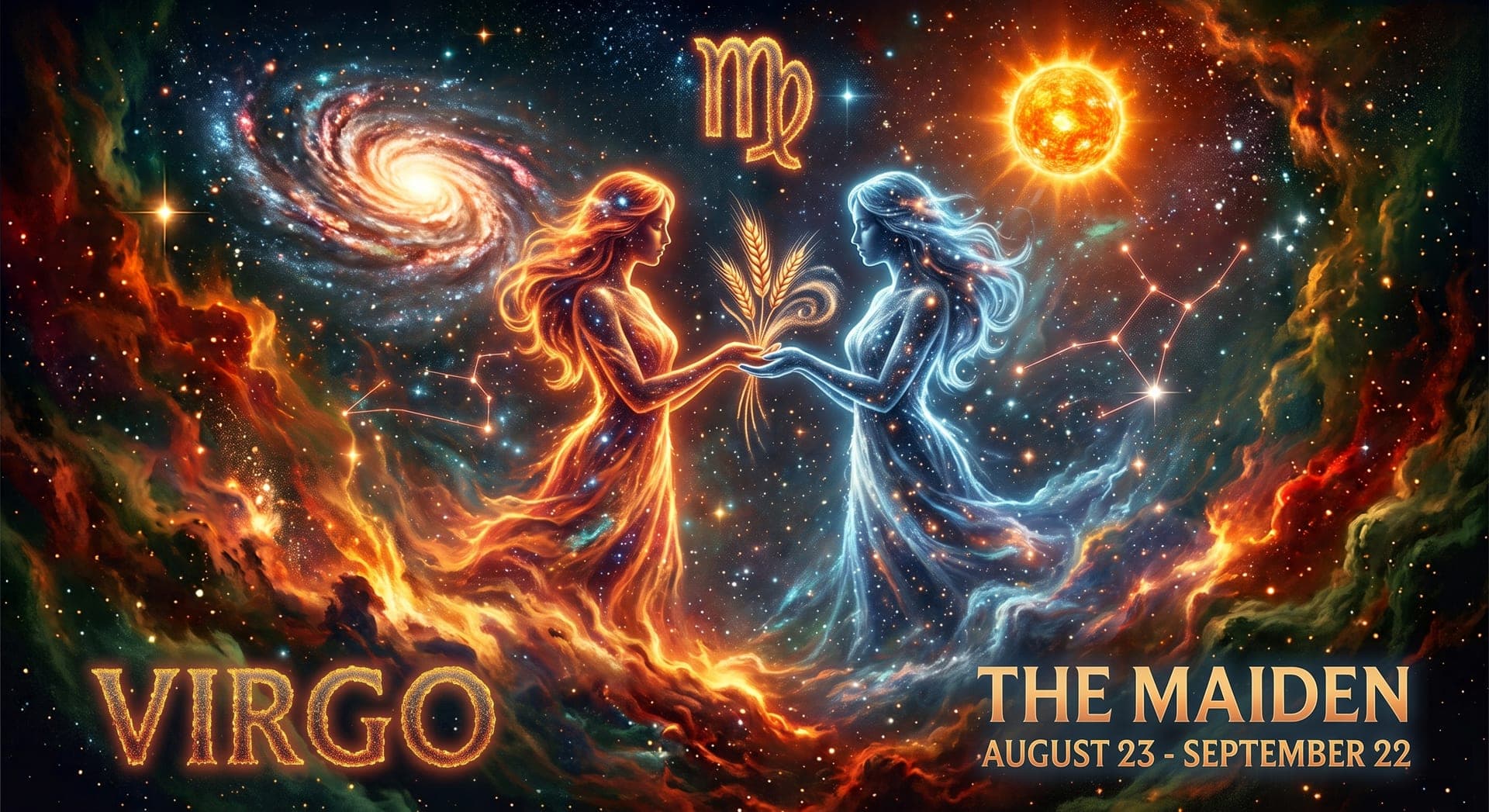
Born on August 28: Virgo ♍
Virgo, the sixth sign of the zodiac, spans August 23 to September 22 and is symbolized by the maiden, often depicted holding a sheaf of wheat, representing purity, meticulous care, and the harvest. Ruled by Mercury, the planet of communication and intellect, Virgo channels its mental energy toward precision, analysis, and practical problem-solving rather than idle chatter. As an Earth sign, Virgo is grounded and detail-oriented, finding genuine satisfaction in organizing, refining, and perfecting the world around it. Its Mutable modality gives Virgo an adaptable, service-oriented nature, often finding purpose in quietly helping others and improving systems rather than seeking the spotlight. People born under this sign are frequently drawn to work requiring precision, research, or care for others, from science and medicine to editing and organization. Virgo's high standards make it an excellent problem-solver and a reliable presence others can count on, though that same perfectionism can turn inward as self-criticism or outward as an exacting, sometimes overly critical, eye toward the people and world around it.
Personality Traits
Strengths
- Highly organized and detail-oriented
- Reliable and hardworking
- Analytical problem-solver
- Genuinely helpful to others
- Modest and unpretentious
Weaknesses
- Prone to overcritical perfectionism
- Tends to worry excessively
- Can be overly critical of others
- Reserved to the point of aloofness
- Struggles to relax
Compatible Signs
Fun Facts
- Virgo's maiden symbol is often associated with Astraea, the Greek goddess of justice and purity, said to have been the last immortal to live among humans.
- Virgo is the only zodiac sign represented by a female human figure.
- Virgo and Gemini share Mercury as their ruling planet, though Virgo channels the planet's communicative energy toward analysis and precision rather than pure talkativeness.
- Notable Virgos include Beyoncé, Michael Jackson, Mother Teresa, and Stephen King.
- Virgo season falls at the tail end of summer, a period traditionally associated with harvest, meticulous preparation, and gathering resources for the colder months ahead.
Born on August 28
- 1749
Johann Wolfgang von Goethe
German writer and statesman
- 1833
Edward Burne-Jones
English Pre-Raphaelite painter and designer renowned for stained glass and mythological works such as The Legend of Briar Rose.
- 1899
Charles Boyer
French actor
- 1906
John Betjeman
English poet who served as Poet Laureate from 1972, celebrated for witty, nostalgic verse and his passionate advocacy for Victorian architecture.
- 1919
Godfrey Hounsfield
English electrical engineer and Nobel laureate who invented the computed tomography (CT) scanner, revolutionising medical diagnostic imaging.
- 1925
Donald O'Connor
American dancer and actor known for "Singin' in the Rain"
- 1930
Windsor Davies
English character actor best known for playing Battery Sergeant Major Williams in the sitcom It Ain't Half Hot Mum.
- 1938
Paul Martin
21st Prime Minister of Canada
- 1941
Michael Craig-Martin
Irish-born British conceptual artist best known for his work "An Oak Tree" and for mentoring the Young British Artists
- 1947
Emlyn Hughes
English footballer who captained Liverpool and England, winning multiple league titles and European Cups during the 1970s.
- 1949
Hugh Cornwell
English singer-songwriter and guitarist, founding member and frontman of the punk rock band the Stranglers.
- 1952
Rita Dove
American poet and U.S. Poet Laureate
- 1962
David Fincher
American film director known for "Se7en" and "Fight Club"
- 1965
Satoshi Tajiri
Japanese video game designer who created Pokemon
- 1981
Kezia Dugdale
Scottish politician who led the Scottish Labour Party from 2015 to 2017 and served as a Member of the Scottish Parliament for Lothian.

On This Day in History
- 475
Roman general Orestes forces Western Emperor Julius Nepos to flee the capital at Ravenna.
Amid the chronic instability of the collapsing Western Roman Empire, the ambitious general Orestes forced Emperor Julius Nepos to abandon his capital at Ravenna, installing his own young son as a puppet emperor shortly afterward in one of the empire's final political convulsions.
- 489
Theodoric the Great's Ostrogoths defeat Odoacer at the Battle of Isonzo, beginning their conquest of Italy.
Ostrogothic King Theodoric the Great decisively defeated the forces of Odoacer, the Germanic ruler who had deposed the last Western Roman emperor over a decade earlier, at the Battle of Isonzo in present-day Slovenia. The victory marked a crucial early step in Theodoric's subsequent multi-year campaign to conquer and rule Italy on behalf of the Byzantine emperor.
- 1189
Crusader forces under Guy of Lusignan begin the Siege of Acre during the Third Crusade.
Crusader forces under King Guy of Lusignan began a grueling two-year siege of the strategically vital port city of Acre, recently recaptured by Saladin, in a campaign that eventually drew the combined forces of the Third Crusade, including Richard the Lionheart.
- 1565
Spanish admiral Pedro Menendez de Aviles founds St. Augustine, Florida, the oldest continuously occupied European-established settlement in the continental United States.
Spanish admiral Pedro Menendez de Aviles founded a settlement on Florida's northeastern Atlantic coast that developed into St. Augustine, which remains recognized as the oldest continuously occupied European-established city within the continental United States, predating the English settlement of Jamestown by more than four decades.
- 1640
Scottish Covenanter forces routed King Charles I's English army at the Battle of Newburn during the Second Bishops' War.
The Covenanters, resisting Charles I's attempts to impose Anglican religious practices on Scotland, crossed the River Tyne and scattered the poorly prepared English defenders near Newcastle. The humiliating defeat forced Charles to negotiate and left Scottish forces occupying northern England, a financial and political crisis that helped push the king toward summoning the Long Parliament and, ultimately, civil war.
- 1648
Royalist defenders surrendered to Parliamentary forces after an eleven-week siege of Colchester during the Second English Civil War.
Trapped inside the Essex town's walls, the Royalist garrison endured starvation and disease before finally capitulating to the besieging New Model Army. In the siege's grim aftermath, two Royalist commanders, Sir Charles Lucas and Sir George Lisle, were summarily executed, an act that hardened Parliamentarian resolve and foreshadowed the fate awaiting King Charles I himself.
- 1833
Britain's Slavery Abolition Act receives royal assent, setting in motion the abolition of slavery across most of the British Empire.
Following years of sustained abolitionist campaigning led by figures including William Wilberforce, Britain's Parliament passed legislation formally ending slavery throughout most of the British Empire, receiving royal assent from King William IV. The act set the stage for gradual emancipation to begin the following year, though it initially imposed a controversial unpaid "apprenticeship" system that delayed full freedom for several more years.
- 1833
The Slavery Abolition Act 1833 received royal assent, outlawing slavery across most of the British Empire.
The act freed enslaved people throughout Britain's colonies, with limited exceptions, following decades of campaigning by abolitionists such as William Wilberforce, who died just days after learning the bill would pass. The government compensated slave owners rather than the enslaved themselves, a debt so large it was only fully repaid by British taxpayers in 2015, but the act remains a landmark in the history of abolition.
- 1859
The Carrington Event, the most powerful geomagnetic storm on record, strikes Earth.
A massive solar storm, the most powerful ever recorded, produced auroras visible as far south as the Caribbean and caused telegraph systems across Europe and North America to spark, fail, or even continue transmitting messages after being disconnected from their power sources.
- 1859
The Carrington Event, the most powerful geomagnetic storm on record, struck Earth and disrupted telegraph systems worldwide.
Triggered by an intense solar flare observed by astronomer Richard Carrington, the resulting geomagnetic storm produced spectacular auroras visible as far south as the Caribbean and caused telegraph wires to spark, shock operators, and in some cases keep transmitting even after being disconnected from their power sources. Scientists still study the event as a benchmark for the damage a similar storm could cause to modern electrical infrastructure.
- 1862
The Second Battle of Bull Run began in Virginia, leading to another major Union defeat in the American Civil War.
Confederate forces under Robert E. Lee, Stonewall Jackson, and James Longstreet outmanoeuvred and overwhelmed Union General John Pope's army over three days of fighting near the site of the war's first major battle. The decisive Confederate victory opened the way for Lee's first invasion of the North, culminating weeks later in the bloody Battle of Antietam.
- 1879
British forces captured Cetshwayo, the last king of an independent Zulu nation, ending major resistance in the Anglo-Zulu War.
Cetshwayo kaMpande had led Zulu forces to a stunning early victory over the British at Isandlwana earlier in the war, but was ultimately hunted down and captured near the Ngome forest after his kingdom's defeat at Ulundi. His capture effectively ended Zulu independence, and Britain subsequently partitioned Zululand, absorbing it into the colonial framework of southern Africa.
- 1898
Pharmacist Caleb Bradham's beverage "Brad's Drink" is renamed Pepsi-Cola.
Pharmacist Caleb Bradham's popular soda fountain beverage, originally marketed as "Brad's Drink" for its supposed digestive and energizing benefits, was officially renamed Pepsi-Cola, drawing on the ingredient pepsin that Bradham believed aided digestion. The rebranded beverage went on to become one of the world's most recognized and widely consumed soft drink brands.
- 1914
The Royal Navy inflicted a sharp defeat on the German fleet at the Battle of Heligoland Bight, the first naval engagement of the First World War.
British light cruisers and destroyers ambushed German patrols in the Heligoland Bight, sinking three light cruisers and a torpedo boat while suffering only damage to their own ships. The victory boosted British morale in the war's opening weeks and made the German High Seas Fleet more cautious about risking its surface ships against the Royal Navy for the remainder of the war.
- 1955
Fourteen-year-old Emmett Till was lynched in Mississippi after being accused of offending a white woman, galvanizing the American civil rights movement.
Till, a Black teenager visiting from Chicago, was abducted, tortured, and murdered days after the accusation; his killers were acquitted by an all-white jury despite overwhelming evidence. His mother's decision to hold an open-casket funeral exposed the brutality of the killing to the nation and became a catalyst for the civil rights activism that followed in the ensuing decade.
- 1963
Martin Luther King Jr. delivers his "I Have a Dream" speech at the March on Washington.
Before an enormous crowd gathered at the Lincoln Memorial during the March on Washington for Jobs and Freedom, civil rights leader Martin Luther King Jr. delivered his historic "I Have a Dream" speech, becoming one of the most celebrated orations in American history.
- 1963
Martin Luther King Jr. delivered his 'I Have a Dream' speech at the March on Washington for Jobs and Freedom.
Speaking from the steps of the Lincoln Memorial to a crowd of some 250,000 people, King called for an end to racism and for civil and economic rights for Black Americans. The speech became one of the most celebrated in American history and helped build momentum for the Civil Rights Act of 1964 and the Voting Rights Act of 1965.
- 1973
A hostage standoff in Stockholm ends, later giving rise to the psychological term "Stockholm syndrome."
A tense hostage standoff at a Stockholm bank ended after captives, held for nearly a week by armed robbers, unexpectedly expressed sympathy toward and even defended their captors against police, an unusual psychological phenomenon that puzzled criminologists and psychiatrists at the time, who subsequently coined the now widely recognized term "Stockholm syndrome" to describe it.
- 1990
Iraq declares occupied Kuwait to be its nineteenth province.
Amid escalating tensions following its invasion weeks earlier, Iraq formally declared occupied Kuwait to be annexed as its nineteenth province, a move rejected outright by the international community and the United Nations Security Council, further hardening international resolve behind the developing U.S.-led military coalition that ultimately expelled Iraqi forces the following year.
- 1990
Iraq formally declared occupied Kuwait to be its nineteenth province during the Gulf War crisis.
The declaration followed Iraq's invasion of Kuwait earlier that month and was intended to cement its annexation, but it was rejected by the international community, which had already condemned the invasion. The crisis led to a UN-authorized coalition, led by the United States, that liberated Kuwait in early 1991 during the Gulf War.