What’s Observed on August 2
Born on August 2: Leo ♌
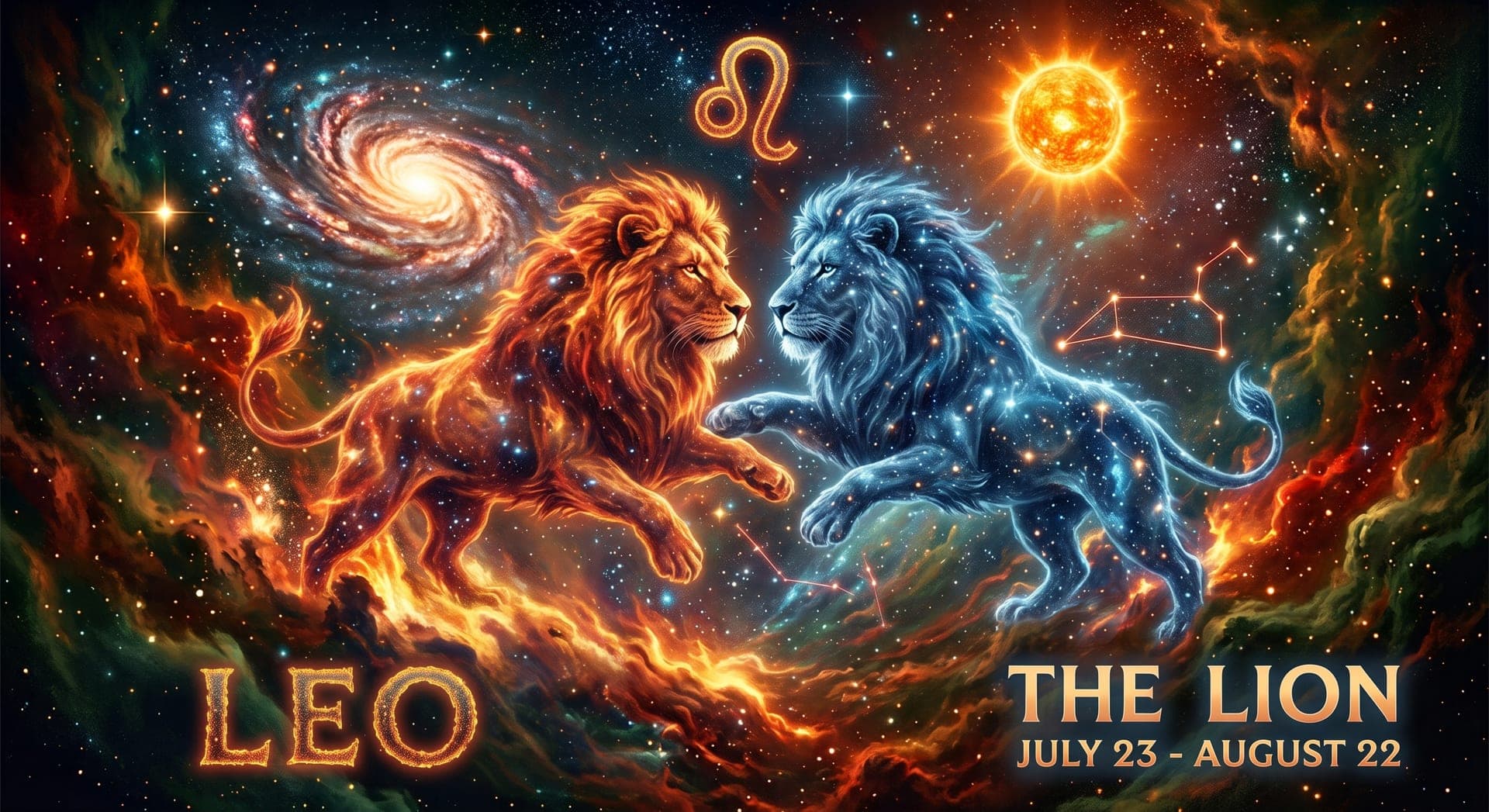
Leo, the fifth sign of the zodiac, spans July 23 to August 22 and is symbolized by the lion, an animal long associated with courage, pride, and natural leadership. Ruled by the Sun, the center of the solar system and the source of light and life, Leo is widely regarded as one of the most confident, warm, and charismatic signs of the zodiac, naturally drawn to the spotlight. As a Fire sign, Leo approaches life with passion, enthusiasm, and a flair for the dramatic, rarely content to blend quietly into the background. Its Fixed modality gives Leo a strong sense of loyalty and consistency, along with a stubborn streak once its mind is made up. People born under this sign are often natural performers, leaders, or creatives who thrive when appreciated and celebrated by those around them. Leo's generosity and warmth make it a beloved friend and steadfast ally, though its genuine need for recognition and admiration can tip into vanity or a demand for center stage if left unchecked.
Personality Traits
Strengths
- Naturally charismatic leader
- Generous and warm-hearted
- Confident and self-assured
- Creative and expressive
- Loyal to friends and family
Weaknesses
- Prone to arrogance
- Craves attention and validation
- Stubborn once decided
- Can be domineering
- Sensitive to criticism of their ego
Compatible Signs
Fun Facts
- Leo's lion symbol connects to the Greek myth of the Nemean Lion, slain by Hercules as the first of his twelve labors.
- Leo is ruled by the Sun, the only zodiac sign ruled directly by a star rather than a planet or moon.
- As a Fixed Fire sign, Leo season falls at the height of summer, when the sun's warmth and intensity are strongest in the Northern Hemisphere.
- Notable Leos include Barack Obama, Madonna, Jennifer Lawrence, and Napoleon Bonaparte.
- Leo rules the heart in traditional medical astrology, reflecting the sign's association with vitality, courage, and life force.
Born on August 2
- 1834
Frederic Auguste Bartholdi
French sculptor who designed the Statue of Liberty
- 1867
Ernest Dowson
English poet and novelist associated with the Decadent movement, remembered for phrases from his poems that became famous titles
- 1868
Constantine I of Greece
King of Greece
- 1891
Arthur Bliss
English composer and conductor who served as Master of the Queen's Music
- 1899
Charles Bennett
English screenwriter and director best known for writing several early Alfred Hitchcock thrillers
- 1910
Roger MacDougall
Scottish playwright and screenwriter known for the comedy film The Man in the White Suit
- 1924
James Baldwin
American novelist and essayist known for exploring race and identity
- 1932
Peter O'Toole
English-born actor celebrated for his Oscar-nominated role in Lawrence of Arabia
- 1942
Isabel Allende
Chilean-American novelist known for magical realism
- 1951
Steve Hillage
English guitarist and singer-songwriter known for his work with the progressive rock band Gong
- 1962
Lee Mavers
English singer-songwriter and guitarist who fronted the band The La's
- 1970
Kevin Smith
American filmmaker and actor
- 1976
Sam Worthington
Australian actor known for "Avatar"
- 1992
Charli XCX
English pop singer-songwriter
On This Day in History
- 338 BCE
A Macedonian army led by Philip II defeats the combined forces of Athens and Thebes at the Battle of Chaeronea.
Philip II's disciplined Macedonian phalanx, alongside cavalry commanded by his young son Alexander, crushed the combined citizen armies of Athens and Thebes in central Greece. The victory effectively ended meaningful Greek city-state resistance to Macedonian dominance and paved the way for Philip's formation of the League of Corinth, setting the stage for his son's later conquests.
- 216 BCE
Hannibal's Carthaginian forces annihilate a much larger Roman army at the Battle of Cannae.
Despite being significantly outnumbered, Hannibal's Carthaginian army encircled and annihilated a Roman force of roughly 80,000 soldiers near the village of Cannae in southern Italy, inflicting one of the worst single-day military defeats in Roman history. The battle remains studied in military academies today as a textbook example of a successful double-envelopment tactic.
- 216 BCE
Hannibal's Carthaginian army annihilates a much larger Roman force at the Battle of Cannae, one of the costliest defeats in Roman military history.
Using a double-envelopment tactic that surrounded the Roman legions from both flanks, Hannibal's smaller army killed tens of thousands of Roman soldiers in a single day. The battle is still studied at military academies today as a model of tactical encirclement. Despite the catastrophic loss, Rome refused to negotiate and eventually turned the tide of the Second Punic War against Carthage.
- 49 BCE
Julius Caesar's forces defeat Pompey's generals near the Ebro River in Spain.
As the Roman civil war between Caesar and Pompey unfolded across multiple fronts, Caesar personally led a campaign into Hispania against Pompeian forces commanded by his legates. The victory near the Ebro River secured Spain for Caesar and eliminated a significant threat to his rear, allowing him to concentrate his subsequent efforts against Pompey himself in Greece.
- 1274
Edward I of England returns from the Ninth Crusade and is crowned king seventeen days later.
Edward had been returning from crusading in the Holy Land when his father, Henry III, died in 1272, but rather than rush home he continued a leisurely progress through Europe, only reaching England in August 1274. He was crowned at Westminster Abbey seventeen days after his return, beginning a reign later noted for legal reform, the conquest of Wales, and the expansion of parliamentary government.
- 1274
Edward I returns to England from the Ninth Crusade, several months after already having been proclaimed king following his father's death.
Edward had been on crusade in the Holy Land when Henry III died in November 1272; the throne was considered his by right and he was proclaimed king without an immediate coronation. He and his wife Eleanor of Castile did not reach England until August 1274, after which Edward was formally crowned. He went on to become one of medieval England's most formidable and reforming kings.
- 1415
Sir Thomas Grey is executed for his role in the Southampton Plot, a failed conspiracy to depose King Henry V of England on the eve of his French campaign.
The plot aimed to replace Henry V with his cousin Edmund Mortimer, 5th Earl of March, who himself revealed the conspiracy to the king. Grey and two other ringleaders, including Richard, Earl of Cambridge, were tried and executed at Southampton just days before the English fleet sailed for France, a campaign that would culminate weeks later in the famous victory at Agincourt.
- 1492
Spain's expulsion of Jews takes effect, forcing tens of thousands to leave the kingdom.
Issued by Ferdinand and Isabella earlier that year as the Alhambra Decree, the expulsion order gave Spain's Jewish population until this date to convert to Catholicism or leave the kingdom entirely. Tens of thousands of Jews fled to Portugal, North Africa, and the Ottoman Empire, marking one of the largest forced migrations in medieval European history and effectively ending centuries of Jewish presence in Spain.
- 1610
English explorer Henry Hudson, sailing aboard the Discovery on a voyage funded by English investors, enters what is now known as Hudson Bay while searching for a Northwest Passage to Asia.
Hudson's voyage mapped a vast inland sea in northern Canada that would later bear his name, along with Hudson Strait and the Hudson River. The expedition ended in tragedy the following year when his crew mutinied during a harsh winter, setting Hudson, his son, and several loyal crew members adrift in a small boat; none were ever seen again.
- 1776
Most delegates of the Second Continental Congress formally sign the Declaration of Independence.
While the Continental Congress had voted for independence on July 2 and adopted the Declaration's text on July 4, the formal engrossed parchment copy bearing the signatures of most delegates was not actually signed until several weeks later. John Hancock's famously large signature and the document's now-iconic appearance date to this later signing ceremony.
- 1784
Britain's first mail coach service begins running between Bristol and London, dramatically speeding up postal delivery.
The scheme was devised by theatre manager and postal reformer John Palmer, who convinced the government that fast, guarded coaches on set schedules would beat the existing system of mounted post-boys, which was slow and prone to robbery. The mail coach network expanded rapidly across Britain over the following years and became a familiar symbol of Georgian and Victorian road travel until the railways replaced it.
- 1830
King Charles X of France abdicates the throne following the July Revolution.
Facing widespread unpopularity following economic hardship and unpopular ordinances restricting the press, Charles X abdicated after Parisian citizens rose up in the July Revolution, barricading streets and clashing with royal troops. His fall ended the senior Bourbon line's rule in France, and he was replaced by his cousin Louis Philippe under a more constitutional "July Monarchy."
- 1858
The Government of India Act 1858 comes into force, transferring rule of India from the British East India Company directly to the British Crown.
The change followed the Indian Rebellion of 1857, which exposed the Company's inability to maintain control, and it established the office of Secretary of State for India along with a Viceroy who governed on the monarch's behalf. The Act marked the formal beginning of the British Raj, the period of direct Crown rule over the Indian subcontinent that lasted until independence in 1947.
- 1870
The Tower Subway, the world's first underground tube railway, opens in London.
Built beneath the River Thames using an innovative tunneling shield, the Tower Subway briefly operated as a cable-hauled railway before being converted into a pedestrian tunnel. Though short-lived as a railway, it demonstrated key engineering principles that influenced the later development of the London Underground, the world's first large-scale metropolitan subway system.
- 1870
Tower Subway, the world's first underground tube railway, opens beneath the River Thames in London.
Built using a cylindrical tunnelling shield developed by engineer Peter William Barlow with James Henry Greathead, the line originally carried a small cable-hauled car between Tower Hill and Bermondsey before switching to a pedestrian tunnel. Though short-lived as a railway, its tunnelling technique proved so successful that it became the model for London's later deep-level Underground lines.
- 1897
British relief forces reach the besieged garrison at Malakand on the North-West Frontier of British India, ending a siege by Pashtun tribesmen.
The uprising against British rule in the frontier region had trapped colonial troops inside the Malakand fort for several days under fierce attack. The campaign to relieve the siege was notably chronicled by a young war correspondent named Winston Churchill, whose dispatches from the frontier later formed his first book, 'The Story of the Malakand Field Force.'
- 1943
Jewish prisoners stage an armed uprising at the Treblinka extermination camp.
As deportations to gas chambers accelerated at the Treblinka extermination camp in occupied Poland, a group of prisoners secretly organized an armed revolt, seizing weapons from the camp armory and setting fire to buildings before attempting to escape. Though most participants were killed, the uprising forced the Nazis to accelerate the camp's closure soon afterward.
- 1945
The Potsdam Conference, at which the Allied leaders decided the fate of postwar Germany, concludes outside Berlin.
British Prime Minister Clement Attlee, who had just replaced Winston Churchill partway through the talks after Labour's general election victory, joined US President Harry Truman and Soviet leader Joseph Stalin in setting terms for Germany's occupation, reparations, and new borders. The conference also issued the Potsdam Declaration demanding Japan's unconditional surrender, setting the stage for the war's final weeks.
- 1947
A British South American Airways airliner, Star Dust, disappears in the Andes mountains after sending a cryptic final radio message ending in the word 'STENDEC.'
The Avro Lancastrian aircraft was flying from Buenos Aires to Santiago when it vanished, and its fate remained a mystery for over half a century. The wreckage was finally discovered in 1998 on a glacier, revealing the plane had struck a mountain in bad weather. The strange final transmission has never been fully explained and remains one of aviation's enduring puzzles.
- 1990
Iraq invades Kuwait, initiating the crisis that leads to the Gulf War.
Iraqi forces under Saddam Hussein invaded and rapidly overran neighboring Kuwait, citing longstanding territorial and oil-production disputes. The invasion prompted immediate international condemnation and United Nations sanctions, ultimately leading to the U.S.-led Gulf War coalition that expelled Iraqi forces from Kuwait the following year through Operation Desert Storm.