
What’s Observed on August 3
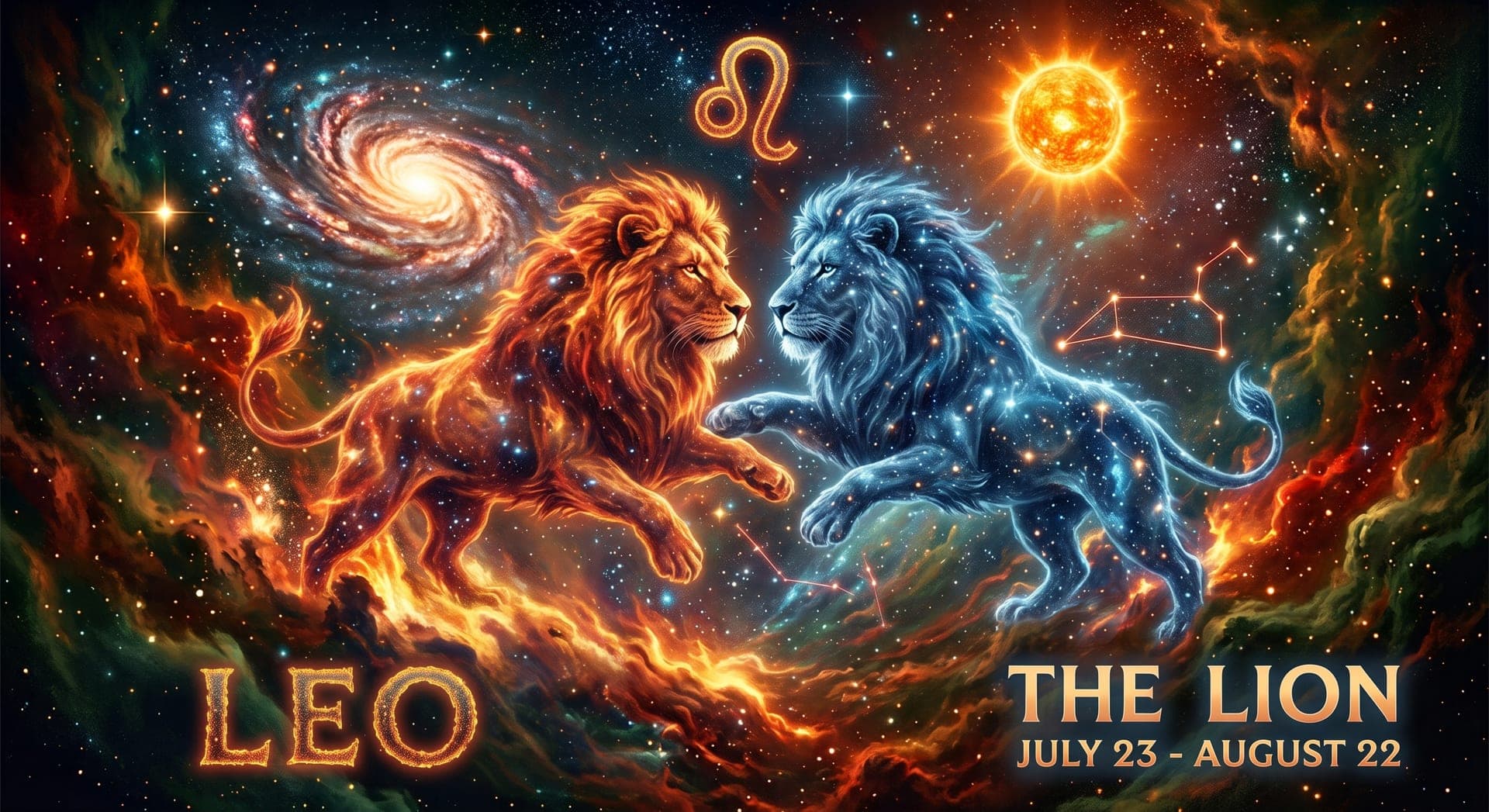
Born on August 3: Leo ♌
Leo, the fifth sign of the zodiac, spans July 23 to August 22 and is symbolized by the lion, an animal long associated with courage, pride, and natural leadership. Ruled by the Sun, the center of the solar system and the source of light and life, Leo is widely regarded as one of the most confident, warm, and charismatic signs of the zodiac, naturally drawn to the spotlight. As a Fire sign, Leo approaches life with passion, enthusiasm, and a flair for the dramatic, rarely content to blend quietly into the background. Its Fixed modality gives Leo a strong sense of loyalty and consistency, along with a stubborn streak once its mind is made up. People born under this sign are often natural performers, leaders, or creatives who thrive when appreciated and celebrated by those around them. Leo's generosity and warmth make it a beloved friend and steadfast ally, though its genuine need for recognition and admiration can tip into vanity or a demand for center stage if left unchecked.
Personality Traits
Strengths
- Naturally charismatic leader
- Generous and warm-hearted
- Confident and self-assured
- Creative and expressive
- Loyal to friends and family
Weaknesses
- Prone to arrogance
- Craves attention and validation
- Stubborn once decided
- Can be domineering
- Sensitive to criticism of their ego
Compatible Signs
Fun Facts
- Leo's lion symbol connects to the Greek myth of the Nemean Lion, slain by Hercules as the first of his twelve labors.
- Leo is ruled by the Sun, the only zodiac sign ruled directly by a star rather than a planet or moon.
- As a Fixed Fire sign, Leo season falls at the height of summer, when the sun's warmth and intensity are strongest in the Northern Hemisphere.
- Notable Leos include Barack Obama, Madonna, Jennifer Lawrence, and Napoleon Bonaparte.
- Leo rules the heart in traditional medical astrology, reflecting the sign's association with vitality, courage, and life force.
Born on August 3
- 1803
Joseph Paxton
English gardener and architect who designed the Crystal Palace for the Great Exhibition of 1851
- 1811
Elisha Otis
American businessman who founded the Otis Elevator Company
- 1867
Stanley Baldwin
English Conservative statesman who served three terms as Prime Minister of the United Kingdom
- 1887
Rupert Brooke
English poet best known for his idealistic war sonnets written during the First World War
- 1926
Tony Bennett
American singer known for "I Left My Heart in San Francisco"
- 1937
Steven Berkoff
English actor, director, and playwright known for his highly physical, expressionist theatre style
- 1939
Jimmie Nicol
English drummer who briefly filled in for Ringo Starr on a Beatles tour in 1964
- 1941
Martha Stewart
American businesswoman and lifestyle media founder
- 1946
Jack Straw
English Labour politician who served as Home Secretary and Foreign Secretary
- 1963
James Hetfield
American singer and guitarist for Metallica
- 1977
Tom Brady
American football quarterback and seven-time Super Bowl champion

On This Day in History
- 881
Louis III of France defeats Viking raiders at the Battle of Saucourt-en-Vimeu.
A Viking fleet raiding along the coast of what is now northern France was intercepted and defeated by the West Frankish king near the Somme River. The battle was later commemorated in the "Ludwigslied," one of the earliest surviving pieces of Old High German literature, composed to celebrate the young king's martial success against the Norse raiders.
- 1031
Olaf II of Norway is canonized as Saint Olaf by English Bishop Grimketel.
Roughly two centuries after his death in battle against pagan forces, King Olaf II of Norway was formally canonized as a saint, becoming Norway's patron saint under the title Rex Perpetuus Norvegiae, or "Eternal King of Norway." His cult became central to medieval Norwegian religious and national identity for centuries afterward.
- 1347
Calais surrenders to English forces after a prolonged siege, remaining in English hands for more than 200 years.
After a grueling eleven-month siege during the Hundred Years' War, the starving French port city of Calais finally surrendered to English forces under Edward III. The English subsequently expelled much of the French population and resettled the town with English colonists, retaining control of the strategically vital port for more than two centuries.
- 1347
Calais surrenders to King Edward III of England after an eleven-month siege during the Hundred Years' War.
The prolonged siege had starved the French port town into submission, and legend holds that Edward spared the town's residents only after six leading burghers offered themselves for execution in the citizens' place, a story later immortalised in Auguste Rodin's sculpture 'The Burghers of Calais.' English forces held Calais for over two centuries afterward, until it was finally lost in 1558.
- 1492
Christopher Columbus departs from Palos de la Frontera, Spain, beginning his first voyage across the Atlantic.
With backing from the Spanish crown, Columbus set sail with three ships, the Nina, the Pinta, and the Santa Maria, seeking a westward route to Asia. His subsequent landfall in the Caribbean weeks later initiated sustained European contact with the Americas, setting in motion centuries of colonization, exchange, and conflict.
- 1492
Christopher Columbus departs from Palos de la Frontera in Spain with three ships, beginning the voyage that would lead to his landfall in the Americas.
Columbus sailed under the patronage of Spain's Catholic Monarchs, Ferdinand and Isabella, hoping to find a westward route to Asia. Instead, his expedition reached islands in the Caribbean in October 1492, an encounter that opened the way for sustained European contact with and colonisation of the Americas, reshaping world history over the following centuries.
- 1527
English mariner John Rut writes the earliest known letter sent from North America, reporting to King Henry VIII on his exploration of the Newfoundland coast.
Rut had been commissioned by Henry VIII to search for a Northwest Passage to Asia, and after his ships became separated in Arctic ice, he sailed south along the coast and put in at St. John's harbour, Newfoundland. His letter home described the fishing fleets he encountered there and stands as one of the earliest English accounts of North America.
- 1678
Explorer Robert La Salle's ship Le Griffon is completed, the first known ship built on the Great Lakes.
Explorer Robert de La Salle oversaw construction of a small sailing vessel above Niagara Falls, intended to support his fur trading and exploration ventures in the upper Great Lakes region. Though the ship vanished mysteriously on its return voyage later that year, it holds the distinction of being the first known ship built specifically for use on the Great Lakes.
- 1692
French forces defeat an Anglo-Dutch army led by King William III of England at the Battle of Steenkerque during the Nine Years' War.
William III, who ruled England jointly with Mary II, personally commanded the allied army in the Spanish Netherlands against French Marshal the Duke of Luxembourg. Despite a promising surprise attack, the allied forces were ultimately repulsed with heavy casualties. The defeat was part of a long, grinding conflict fought largely to contain the expansionist ambitions of Louis XIV of France.
- 1778
La Scala theater in Milan opens with the premiere of Antonio Salieri's opera "Europa riconosciuta."
Milan's famed opera house opened its doors for the first time, built on the site of a church destroyed by fire, with a premiere performance honoring the newly crowned Holy Roman Emperor. La Scala went on to become one of the world's most prestigious and influential venues for opera, hosting premieres by Verdi, Puccini, and countless other renowned composers.
- 1852
Harvard defeats Yale in the inaugural intercollegiate boat race, considered the first American intercollegiate athletic event.
A crew from Harvard defeated their counterparts from Yale in a rowing race on Lake Winnipesaukee in New Hampshire, an event now regarded as the first organized intercollegiate athletic competition in American history. The rivalry between the two universities' rowing programs continued for generations, helping establish collegiate athletics as a fixture of American university life.
- 1889
An Anglo-Egyptian army decisively defeats Mahdist forces at the Battle of Toski in southern Egypt.
The battle halted a Mahdist invasion of Egypt from Sudan and marked a turning point in Britain's long campaign against the Mahdist State, which had earlier defeated General Charles Gordon at Khartoum in 1885. The victory at Toski helped stabilise British-controlled Egypt and laid the groundwork for the eventual Anglo-Egyptian reconquest of Sudan a decade later.
- 1914
The German Empire declares war on France, widening the conflict that had begun days earlier following Austria-Hungary's declaration of war on Serbia.
Germany's war plan called for a rapid strike through neutral Belgium to defeat France before turning against Russia. That invasion of Belgium, which followed the next day, violated a treaty Britain had guaranteed and brought Britain into the war against Germany within 48 hours, transforming a continental conflict into what became the First World War.
- 1936
Jesse Owens wins the 100-meter dash at the Berlin Olympics, defeating Ralph Metcalfe.
Competing before a hostile crowd in Nazi Germany's showcase Olympics, African American sprinter Jesse Owens won the 100-meter dash, one of four gold medals he claimed at the Games. His dominant performance directly undermined Nazi propaganda about supposed Aryan racial superiority and remains one of the most celebrated achievements in Olympic history.
- 1940
Italian forces invade British Somaliland from neighbouring Italian East Africa, opening a new front against British colonial territory in the Horn of Africa.
Heavily outnumbered British and Commonwealth troops fought a delaying action before withdrawing by sea to Aden later that month, marking one of the few territorial defeats for the British Empire early in the Second World War. The setback was reversed the following year when British forces retook Somaliland during the broader East African Campaign against Italian forces.
- 1948
Former Communist Party member Whittaker Chambers publicly accuses U.S. State Department official Alger Hiss of having been a Soviet spy, testifying before the House Un-American Activities Committee.
The accusation triggered one of the most sensational political controversies of the early Cold War, ultimately leading to Hiss's conviction for perjury in 1950. The case helped launch the career of a young congressman on the committee, Richard Nixon, and became a touchstone in American debates over Soviet espionage and domestic communism during the McCarthy era.
- 1958
USS Nautilus becomes the first submarine to complete a submerged transit of the geographic North Pole.
The nuclear-powered submarine USS Nautilus completed a historic voyage beneath the Arctic ice cap, passing directly under the geographic North Pole while fully submerged. The mission demonstrated the strategic potential of nuclear submarines to operate covertly beneath polar ice, a capability that took on significant importance during the Cold War.
- 1958
The USS Nautilus, the world's first nuclear-powered submarine, becomes the first vessel to reach the geographic North Pole, passing beneath the Arctic ice cap.
The submarine's voyage, codenamed Operation Sunshine, demonstrated the extended range and endurance that nuclear propulsion gave submarines compared to diesel-electric vessels. Sailing entirely submerged under the polar ice, Nautilus proved a strategic and technological milestone of the Cold War, showcasing American naval power at a moment when the space race with the Soviet Union was also intensifying.
- 1960
Niger declares independence from France, becoming a sovereign republic after decades as a French colonial territory.
Niger's independence came amid a wave of African decolonisation in 1960, when more than a dozen African nations gained sovereignty from their European colonial rulers. Hamani Diori became the country's first president. Like many newly independent African states, Niger continued to face economic dependency on its former colonial power and political instability in the decades that followed.
- 1997
Auckland's Sky Tower opens as the tallest free-standing structure in the Southern Hemisphere at the time.
Standing at 328 meters, Auckland's Sky Tower opened as an observation and telecommunications tower offering panoramic views across the city and its harbor. At the time of its completion, it held the title of tallest free-standing structure in the entire Southern Hemisphere, becoming an iconic symbol of the city's skyline.