
What’s Observed on August 4
Born on August 4: Leo ♌
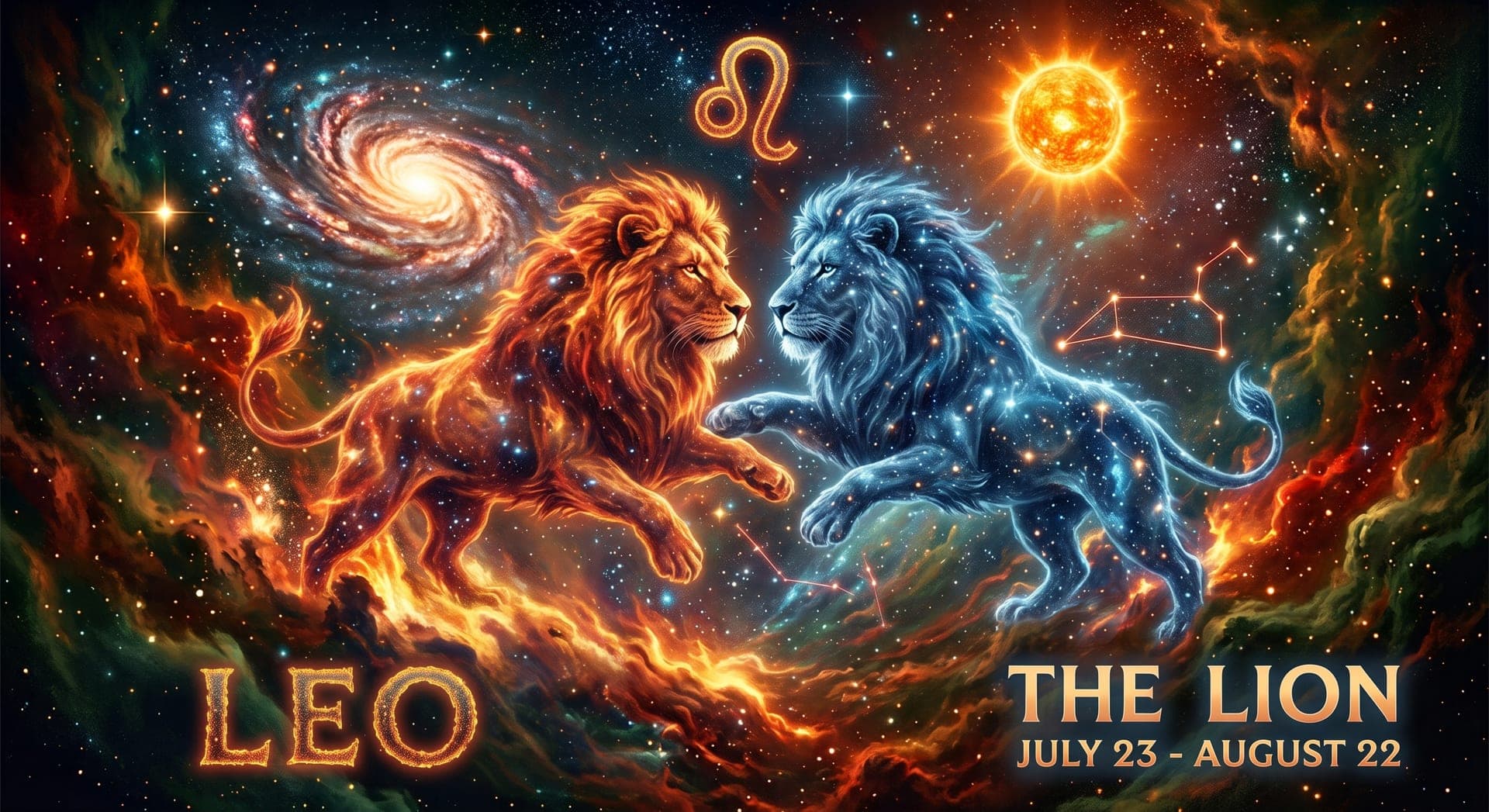
Leo, the fifth sign of the zodiac, spans July 23 to August 22 and is symbolized by the lion, an animal long associated with courage, pride, and natural leadership. Ruled by the Sun, the center of the solar system and the source of light and life, Leo is widely regarded as one of the most confident, warm, and charismatic signs of the zodiac, naturally drawn to the spotlight. As a Fire sign, Leo approaches life with passion, enthusiasm, and a flair for the dramatic, rarely content to blend quietly into the background. Its Fixed modality gives Leo a strong sense of loyalty and consistency, along with a stubborn streak once its mind is made up. People born under this sign are often natural performers, leaders, or creatives who thrive when appreciated and celebrated by those around them. Leo's generosity and warmth make it a beloved friend and steadfast ally, though its genuine need for recognition and admiration can tip into vanity or a demand for center stage if left unchecked.
Personality Traits
Strengths
- Naturally charismatic leader
- Generous and warm-hearted
- Confident and self-assured
- Creative and expressive
- Loyal to friends and family
Weaknesses
- Prone to arrogance
- Craves attention and validation
- Stubborn once decided
- Can be domineering
- Sensitive to criticism of their ego
Compatible Signs
Fun Facts
- Leo's lion symbol connects to the Greek myth of the Nemean Lion, slain by Hercules as the first of his twelve labors.
- Leo is ruled by the Sun, the only zodiac sign ruled directly by a star rather than a planet or moon.
- As a Fixed Fire sign, Leo season falls at the height of summer, when the sun's warmth and intensity are strongest in the Northern Hemisphere.
- Notable Leos include Barack Obama, Madonna, Jennifer Lawrence, and Napoleon Bonaparte.
- Leo rules the heart in traditional medical astrology, reflecting the sign's association with vitality, courage, and life force.
Born on August 4
- 1725
John Newton
English clergyman and former slave ship captain who wrote the hymn 'Amazing Grace'
- 1792
Percy Bysshe Shelley
English Romantic poet
- 1839
Walter Pater
English essayist and critic whose aestheticist writing influenced the Decadent movement
- 1859
Knut Hamsun
Norwegian author and Nobel laureate
- 1870
Harry Lauder
Scottish singer and comedian who became one of the biggest music hall stars of his era
- 1877
Laura Knight
English painter and one of the first women elected to full membership of the Royal Academy
- 1900
Queen Elizabeth The Queen Mother
British royal consort to King George VI
- 1901
Louis Armstrong
American jazz trumpeter and vocalist
- 1941
Martin Jarvis
English actor known for his stage work and audiobook narrations, including the Just William stories
- 1955
Billy Bob Thornton
American actor and filmmaker
- 1957
John Wark
Scottish footballer who played for Ipswich Town and Liverpool and earned over 20 Scotland caps
- 1961
Barack Obama
44th President of the United States
- 1962
Roger Clemens
American Major League Baseball pitcher

On This Day in History
- 70 BCE
The corruption trial of Roman governor Gaius Verres opens, with Cicero serving as prosecutor.
Cicero, then a rising young advocate, prosecuted Gaius Verres, the corrupt former governor of Sicily, for extensive extortion and plunder of the province. Verres's defense team, led by a prominent orator, ultimately abandoned the case partway through given the overwhelming evidence Cicero presented, and Verres fled into exile, cementing Cicero's reputation as Rome's foremost legal orator.
- 1265
Prince Edward's royalist forces defeat rebel barons led by Simon de Montfort at the Battle of Evesham.
Prince Edward, later King Edward I, led royalist forces against the rebel baronial army commanded by Simon de Montfort, who had effectively ruled England for the preceding year. Montfort was killed and his body mutilated in the battle's aftermath, restoring royal authority under Henry III, though the conflict left a lasting legacy in the development of English parliamentary governance.
- 1265
Prince Edward, the future Edward I, leads royalist forces to victory over the rebel baron Simon de Montfort at the Battle of Evesham, effectively ending the Second Barons' War.
Simon de Montfort, who had captured King Henry III and briefly ruled England through a reformist parliament, was killed and his body mutilated in the battle's aftermath. The victory restored royal authority under Henry III, though Montfort's parliamentary experiment left a lasting legacy on the development of English representative government.
- 1320
A parliament held at Scone, later known as the 'Black Parliament,' tries and convicts William de Soules and other Scottish nobles of plotting to assassinate King Robert I of Scotland.
The conspiracy came only months after Scotland's nobles had affirmed Robert the Bruce's kingship in the Declaration of Arbroath, and its exposure underscored the fragility of his authority even after his victory at Bannockburn. Soules was sentenced to life imprisonment rather than execution, reportedly in recognition of a confession, while several other conspirators were put to death.
- 1327
Scottish commander James Douglas leads a night raid on the English camp at Weardale, nearly capturing the teenage King Edward III of England.
The raid came during a Scottish invasion of northern England early in Edward III's reign, when the young king's forces had struggled to bring the elusive Scottish army to battle. Douglas's men slipped past English pickets and cut down tent ropes near the king's own quarters before withdrawing, an embarrassment that hastened English willingness to negotiate peace with Scotland the following year.
- 1578
Both the Moroccan and Portuguese kings die at the Battle of Al Kasr al Kebir.
Portuguese King Sebastian led an ill-fated crusade into Morocco, where his army was catastrophically defeated by Moroccan forces. Sebastian himself died in the battle along with the deposed Moroccan sultan he supported and his rival, leaving Portugal without a clear heir and precipitating a succession crisis that ultimately led to Spanish annexation of Portugal two years later.
- 1704
Gibraltar is captured by an English and Dutch fleet during the War of the Spanish Succession.
During the War of the Spanish Succession, a combined English and Dutch naval force bombarded and captured the strategically vital rock of Gibraltar from Spain. Despite subsequent Spanish attempts to retake it, Britain retained control of Gibraltar under the Treaty of Utrecht, and it remains a British Overseas Territory guarding the entrance to the Mediterranean to this day.
- 1704
An Anglo-Dutch fleet captures Gibraltar from Spain during the War of the Spanish Succession.
The amphibious assault, led by Admiral George Rooke and Prince George of Hesse-Darmstadt, seized the strategic rock at the mouth of the Mediterranean with relatively little resistance. Although captured in the name of a rival Habsburg claimant to the Spanish throne, Gibraltar was formally ceded to Britain in the 1713 Treaty of Utrecht and has remained a British Overseas Territory ever since.
- 1781
British East India Company ships raid Dutch trading posts on Sumatra during the Fourth Anglo-Dutch War.
The war broke out after Britain accused the Dutch Republic of covertly supplying arms to American rebels during the American Revolutionary War. Fighting extended well beyond European waters into colonial trading networks in Asia, where the East India Company sought to weaken Dutch commercial power in the East Indies and strengthen Britain's own position in the region.
- 1789
France's National Constituent Assembly abolishes feudalism during the French Revolution.
In a sweeping session held during the early upheaval of the French Revolution, the National Constituent Assembly voted to abolish the centuries-old feudal system, eliminating noble privileges, tithes, and manorial dues that had bound peasants to the land. The dramatic overnight session fundamentally restructured French society's legal and economic foundations.
- 1789
France's National Constituent Assembly abolishes feudal privileges in a sweeping overnight session during the early French Revolution.
Facing widespread peasant uprisings against the old feudal order, nobles and clergy in the Assembly voluntarily renounced centuries of manorial dues, tithes, and legal privileges in a dramatic session that stretched past midnight. The August Decrees dismantled the legal foundation of the Ancien Régime and paved the way for the Declaration of the Rights of Man later that month.
- 1814
The Siege of Fort Erie begins during the War of 1812.
American forces under General Edmund Gaines successfully defended Fort Erie against a besieging British army during the War of 1812. The prolonged siege, one of the war's bloodiest engagements, ultimately ended in an American withdrawal from the fort months later, though the defense inflicted heavy casualties on British forces attempting to breach its walls.
- 1887
A snakelocks sea anemone nicknamed 'Granny,' believed to be around 60 years old, dies at the University of Edinburgh after decades in captivity.
The anemone had originally been collected in the 1820s by naturalist Sir John Dalyell, who kept it in his study before it passed into the care of the university's natural history collection. Its remarkable longevity made it a minor celebrity of Victorian science and a notable early example of extended survival in a marine invertebrate kept outside its natural habitat.
- 1914
Belgium and Britain declare war on Germany in response to the German invasion of Belgium, drawing Britain into World War I.
In response to Germany's invasion of neutral Belgium as part of its broader strategy against France, Britain declared war on Germany, honoring its treaty obligations to protect Belgian neutrality. Belgium's own declaration of war followed the German invasion directly, and the small nation's fierce initial resistance became an early symbolic rallying point for the Allied cause.
- 1914
Britain declares war on Germany after Germany refuses to withdraw its invading forces from neutral Belgium, bringing the British Empire into the First World War.
Britain had guaranteed Belgian neutrality under an 1839 treaty, and Germany's invasion as part of its Schlieffen Plan against France gave Britain both a legal pretext and a strategic imperative to intervene. The declaration committed millions of soldiers from across the British Empire, including India, Canada, Australia, and New Zealand, to a war that would last over four devastating years.
- 1944
Anne Frank and her family are arrested by the Gestapo in Amsterdam after being hidden for over two years.
Acting on a tip from an informant, the Gestapo raided the secret annex in Amsterdam where Anne Frank, her family, and four other Jewish residents had been hiding for over two years. All were deported to concentration camps; Anne died in Bergen-Belsen the following year, but her diary, recovered afterward, became one of the most widely read accounts of the Holocaust.
- 1972
Ugandan dictator Idi Amin announces that Britain is no longer responsible for Ugandan citizens of South Asian descent, setting in motion the mass expulsion of Uganda's Asian population.
Amin gave Uganda's roughly 60,000 Asians, many of whom held British passports, just 90 days to leave the country, seizing their businesses and property. Tens of thousands fled to the United Kingdom, creating a significant refugee resettlement effort and permanently reshaping British South Asian communities, particularly in cities like Leicester.
- 1984
Upper Volta officially changes its name to Burkina Faso.
The West African nation formerly known as Upper Volta, a name reflecting its French colonial-era designation tied to the Volta River, was renamed Burkina Faso by revolutionary President Thomas Sankara. The new name, combining words from two major local languages, translates roughly to "land of upright people," reflecting Sankara's broader push for national self-determination.
- 2020
A massive explosion at the Port of Beirut kills at least 220 people and wounds thousands more.
A massive stockpile of ammonium nitrate stored unsafely at the Port of Beirut for years detonated, generating one of the largest non-nuclear explosions in recorded history. The blast devastated large portions of the Lebanese capital, killed over 200 people, injured thousands more, and intensified an already severe political and economic crisis in the country.
- 2020
A massive explosion of improperly stored ammonium nitrate devastates the port of Beirut, Lebanon, killing over 200 people and destroying large parts of the city.
The blast, one of the largest non-nuclear explosions in history, was traced to thousands of tonnes of ammonium nitrate that had been stored unsafely in a port warehouse for years despite repeated warnings to officials. It caused billions of dollars in damage, left an estimated 300,000 people temporarily homeless, and triggered mass protests over government negligence and corruption.