What’s Observed on August 1
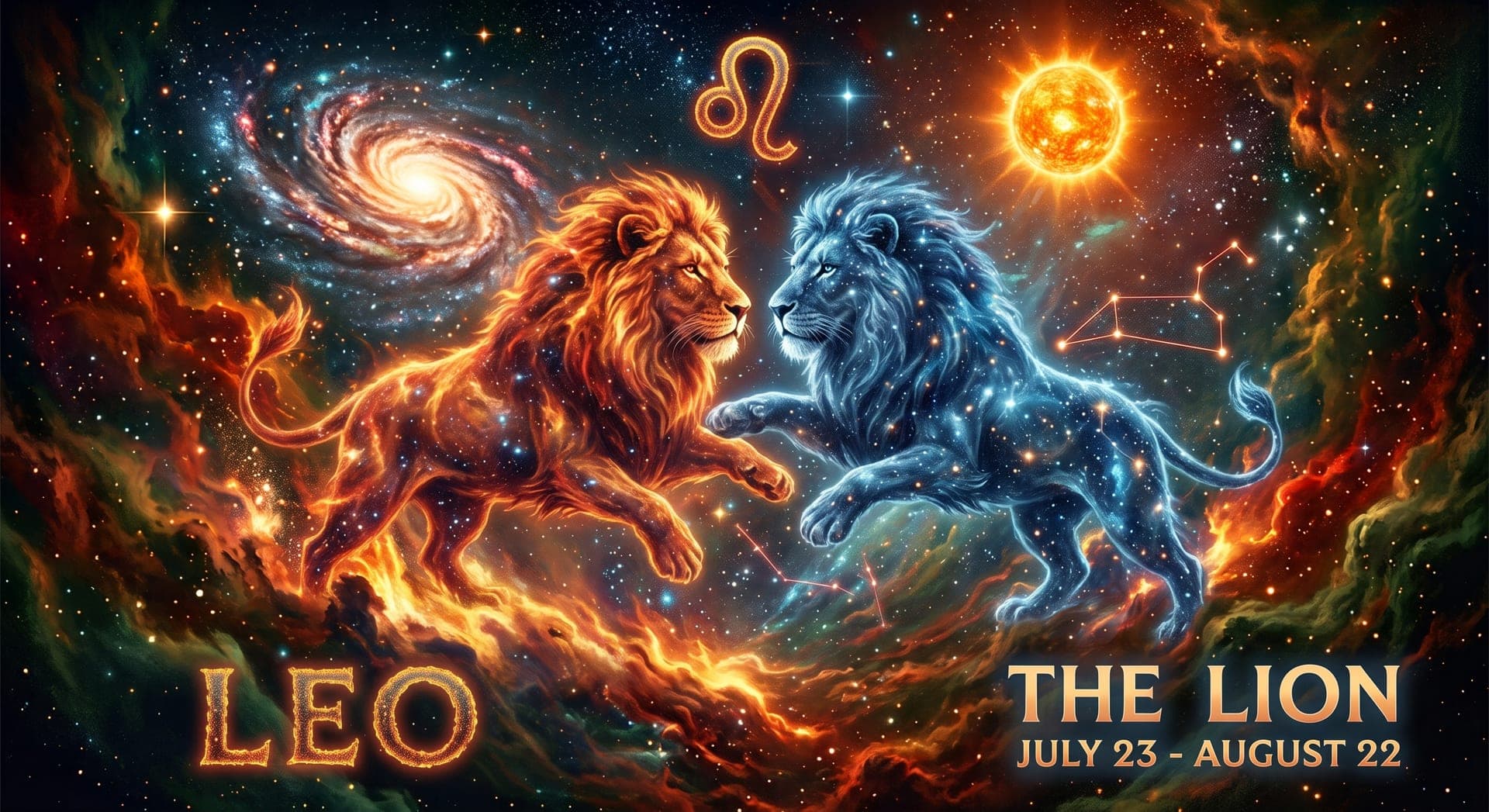
Born on August 1: Leo ♌
Leo, the fifth sign of the zodiac, spans July 23 to August 22 and is symbolized by the lion, an animal long associated with courage, pride, and natural leadership. Ruled by the Sun, the center of the solar system and the source of light and life, Leo is widely regarded as one of the most confident, warm, and charismatic signs of the zodiac, naturally drawn to the spotlight. As a Fire sign, Leo approaches life with passion, enthusiasm, and a flair for the dramatic, rarely content to blend quietly into the background. Its Fixed modality gives Leo a strong sense of loyalty and consistency, along with a stubborn streak once its mind is made up. People born under this sign are often natural performers, leaders, or creatives who thrive when appreciated and celebrated by those around them. Leo's generosity and warmth make it a beloved friend and steadfast ally, though its genuine need for recognition and admiration can tip into vanity or a demand for center stage if left unchecked.
Personality Traits
Strengths
- Naturally charismatic leader
- Generous and warm-hearted
- Confident and self-assured
- Creative and expressive
- Loyal to friends and family
Weaknesses
- Prone to arrogance
- Craves attention and validation
- Stubborn once decided
- Can be domineering
- Sensitive to criticism of their ego
Compatible Signs
Fun Facts
- Leo's lion symbol connects to the Greek myth of the Nemean Lion, slain by Hercules as the first of his twelve labors.
- Leo is ruled by the Sun, the only zodiac sign ruled directly by a star rather than a planet or moon.
- As a Fixed Fire sign, Leo season falls at the height of summer, when the sun's warmth and intensity are strongest in the Northern Hemisphere.
- Notable Leos include Barack Obama, Madonna, Jennifer Lawrence, and Napoleon Bonaparte.
- Leo rules the heart in traditional medical astrology, reflecting the sign's association with vitality, courage, and life force.
Born on August 1
- 1630
Thomas Clifford, 1st Baron Clifford
English politician who served as Lord High Treasurer under King Charles II
- 1714
Richard Wilson
Welsh landscape painter regarded as one of the founders of the British landscape painting tradition
- 1779
Francis Scott Key
American lawyer and poet who wrote the lyrics to "The Star-Spangled Banner"
- 1818
Maria Mitchell
American astronomer, the first professional woman astronomer in the United States
- 1819
Herman Melville
American novelist known for "Moby-Dick"
- 1899
Raymond Mays
English racing driver and engineer who founded the BRM Formula One racing team
- 1914
J. Lee Thompson
English film director best known for The Guns of Navarone and Cape Fear
- 1919
Stanley Middleton
English novelist who won the Booker Prize for his 1974 novel Holiday
- 1920
Henrietta Lacks
American woman whose cancer cells became the source of the HeLa cell line used in medical research
- 1920
James Mourilyan Tanner
British paediatrician and auxologist known for developing the Tanner stages of human development
- 1921
Jack Kramer
American tennis player and sportscaster
- 1926
George Habash
Palestinian political leader who founded the PFLP
- 1936
Yves Saint Laurent
French fashion designer who founded the YSL fashion house
- 1942
Jerry Garcia
American guitarist and founding member of the Grateful Dead

On This Day in History
- 30 BCE
Octavian enters Alexandria, Egypt, bringing the city under Roman control and effectively ending the Ptolemaic Kingdom.
After defeating Mark Antony and Cleopatra's forces at the Battle of Actium the previous year, Octavian marched into Alexandria virtually unopposed. He had Antony's son by a previous marriage executed and, soon after, both Antony and Cleopatra died by suicide. Egypt was annexed as a Roman province, ending the last major Hellenistic kingdom and leaving Octavian the unrivaled master of the Roman world.
- 69
The Batavian rebellion begins in Germania Inferior under the leadership of Gaius Julius Civilis.
Civilis, a Batavian nobleman serving in the Roman auxiliary forces, exploited unrest following the chaos of Rome's Year of the Four Emperors to lead a revolt among Germanic and Gallic tribes along the Rhine. The uprising briefly threatened Roman control of the region before Roman legions, once stabilized under Vespasian, crushed the rebellion and restored order to the frontier provinces.
- 527
Justinian I becomes sole ruler of the Byzantine Empire.
Justinian had already effectively co-ruled alongside his uncle Justin I for several years before formally becoming sole emperor upon Justin's death. His subsequent reign proved one of the most consequential in Byzantine history, marked by the codification of Roman law, the construction of the Hagia Sophia, and ambitious military campaigns to reclaim former western Roman territories.
- 1291
The Old Swiss Confederacy is established through the signing of the Federal Charter.
Representatives from the cantons of Uri, Schwyz, and Unterwalden signed a mutual defense pact pledging assistance against common threats to their traditional liberties. Though its exact founding date is debated by historians, this alliance is traditionally regarded as the founding document of what became the Swiss Confederation, a political entity that would gradually expand over subsequent centuries.
- 1498
Christopher Columbus becomes the first European to visit present-day Venezuela.
During his third voyage to the New World, Columbus sighted the South American mainland near present-day Venezuela, becoming the first European recorded to do so. Prior to this, he had only encountered Caribbean islands, and this voyage marked a significant moment in Europeans' gradual recognition that they had encountered an entirely new continent rather than the outskirts of Asia.
- 1714
George, Elector of Hanover, becomes King George I of Great Britain, beginning the Georgian era.
Following the death of Queen Anne without surviving heirs, the throne passed under the Act of Settlement to her closest Protestant relative, George, a German prince who spoke little English. His accession began the Hanoverian dynasty's rule over Britain, a line that would eventually produce Queen Victoria and continue in modified form to the present British monarchy.
- 1714
George, Elector of Hanover, is proclaimed King George I of Great Britain following the death of Queen Anne, who died without surviving children.
George's accession under the Act of Settlement 1701 barred the closer-related but Catholic Stuart claimants from the throne, since it required the monarch be Protestant. He spoke little English and relied heavily on his ministers, a dynamic that helped strengthen the role of the Prime Minister and cabinet government. His reign began the Hanoverian dynasty, which ruled Britain for nearly two centuries and shaped the constitutional monarchy that followed.
- 1759
Allied Anglo-German forces defeat the French at the Battle of Minden during the Seven Years' War.
During the Seven Years' War, an allied army of British, Hanoverian, and other German troops under Ferdinand of Brunswick decisively defeated a larger French force near the German town of Minden. The victory, notable for a controversial infantry advance that broke the French cavalry, helped secure Hanover from French occupation and bolstered British strategic position in the conflict.
- 1759
During the Seven Years' War, an Anglo-German allied army defeats French forces at the Battle of Minden in Germany.
The battle is best remembered for an extraordinary episode in which British and Hanoverian infantry regiments, having misunderstood their orders, advanced in line against French cavalry and repelled repeated charges through disciplined volley fire. The victory helped secure Hanover from French occupation. British regiments involved still commemorate the day as 'Minden Day,' traditionally wearing roses in their headgear.
- 1774
English chemist Joseph Priestley isolates a gas by heating mercuric oxide, a gas later identified as oxygen, though he initially called it 'dephlogisticated air.'
Priestley's experiment was one of several independent discoveries of oxygen around this period, alongside work by Swedish chemist Carl Wilhelm Scheele. It was the French chemist Antoine Lavoisier who later recognized the gas's true role in combustion and respiration and gave it the name 'oxygen.' Priestley's finding nonetheless became a landmark moment in the emergence of modern chemistry.
- 1798
The Royal Navy under Rear-Admiral Horatio Nelson attacks and destroys a French fleet at Aboukir Bay, Egypt, in the Battle of the Nile.
Nelson's decisive victory trapped Napoleon's army in Egypt and shattered French naval power in the Mediterranean, ending French hopes of threatening Britain's route to India. Of thirteen French ships of the line, all but two were destroyed or captured. The triumph made Nelson a national hero and marked a turning point in Britain's naval dominance during the French Revolutionary Wars.
- 1800
The British Parliament passes the Acts of Union 1800, merging the Kingdom of Great Britain and the Kingdom of Ireland into the United Kingdom of Great Britain and Ireland.
The union, which took effect on 1 January 1801, abolished the Irish Parliament in Dublin and gave Ireland representation at Westminster instead. It was passed partly in response to the 1798 Irish Rebellion, as British ministers sought tighter control. A promised companion measure of Catholic emancipation was blocked by King George III, leaving Irish Catholics without full political rights for decades and fuelling later nationalist grievance.
- 1834
The Slavery Abolition Act comes into force throughout the British Empire.
The act formally ended slavery throughout most of the British Empire, freeing over 800,000 enslaved people in the Caribbean, South Africa, and elsewhere, though it initially imposed a controversial system of unpaid "apprenticeship" that delayed full freedom for several more years. The legislation followed decades of abolitionist campaigning and remains a landmark moment in the global fight against slavery.
- 1834
The Slavery Abolition Act 1833 comes into force, formally abolishing slavery across most of the British Empire.
The Act freed more than 800,000 enslaved people in Britain's Caribbean colonies, South Africa, and parts of Canada, though many were initially forced into a period of 'apprenticeship' that delayed full freedom for years. The British government compensated slave owners for the loss of their human 'property' with a huge sum, a debt British taxpayers only finished repaying in 2015.
- 1876
Colorado is admitted as the 38th U.S. state.
Following a lengthy territorial dispute and a brief but bloody war with the Cheyenne, Arapaho, and Ute nations, the Colorado Territory achieved statehood exactly one century after the signing of the Declaration of Independence, earning it the nickname "the Centennial State." Its admission reflected the rapid westward expansion driven by mining booms and railroad construction.
- 1907
Robert Baden-Powell opens the first Scout camp on Brownsea Island in Poole Harbour, England, launching what would become the worldwide Scouting movement.
Baden-Powell, a British Army officer celebrated for his defence of Mafeking during the Boer War, gathered 20 boys from different social backgrounds for a week of camping, tracking, and teamwork exercises. The experiment's success led him to publish 'Scouting for Boys' the following year, and the movement he founded spread rapidly across Britain and then the world, eventually reaching tens of millions of members.
- 1927
The Nanchang Uprising marks the first major battle of the Chinese Civil War, later commemorated as the founding of the People's Liberation Army.
Communist forces led by Zhou Enlai and Zhu De launched an armed uprising against the Nationalist government in the city of Nanchang, marking the first significant military engagement of what became the Chinese Communist Party's decades-long struggle for power. Though the uprising itself was militarily unsuccessful, the date is now commemorated annually as the founding anniversary of the People's Liberation Army.
- 1936
The 1936 Summer Olympics open in Berlin, with Adolf Hitler's Nazi government using the Games as a propaganda showcase.
The Games are best remembered for the performance of African-American athlete Jesse Owens, who won four gold medals and undercut Nazi claims of Aryan racial superiority. Britain competed among the 49 nations present, and the event drew international controversy over whether democracies should participate in a Games hosted by an increasingly repressive regime. It remains one of the most politically charged Olympics in history.
- 1984
Commercial peat-cutters uncover the preserved bog body of a man, later called Lindow Man, at Lindow Moss in Cheshire, England.
Radiocarbon dating placed his death in the Iron Age or early Roman period, and his remarkably preserved remains showed he had suffered a violent death, including a blow to the head, strangulation, and a cut throat, leading some archaeologists to suggest ritual sacrifice. The find became one of Britain's most significant bog body discoveries and is now held by the British Museum.
- 1988
A Provisional IRA bomb kills a British soldier at Inglis Barracks in Mill Hill, north London.
The attack was part of the IRA's sustained campaign against British military and political targets during the Troubles, the decades-long conflict over Northern Ireland's constitutional status. Mainland England bombings like this one were intended to pressure the British government by bringing the conflict directly to the British public, and they contributed to heightened security measures around military installations in the following years.