What’s Observed on July 31
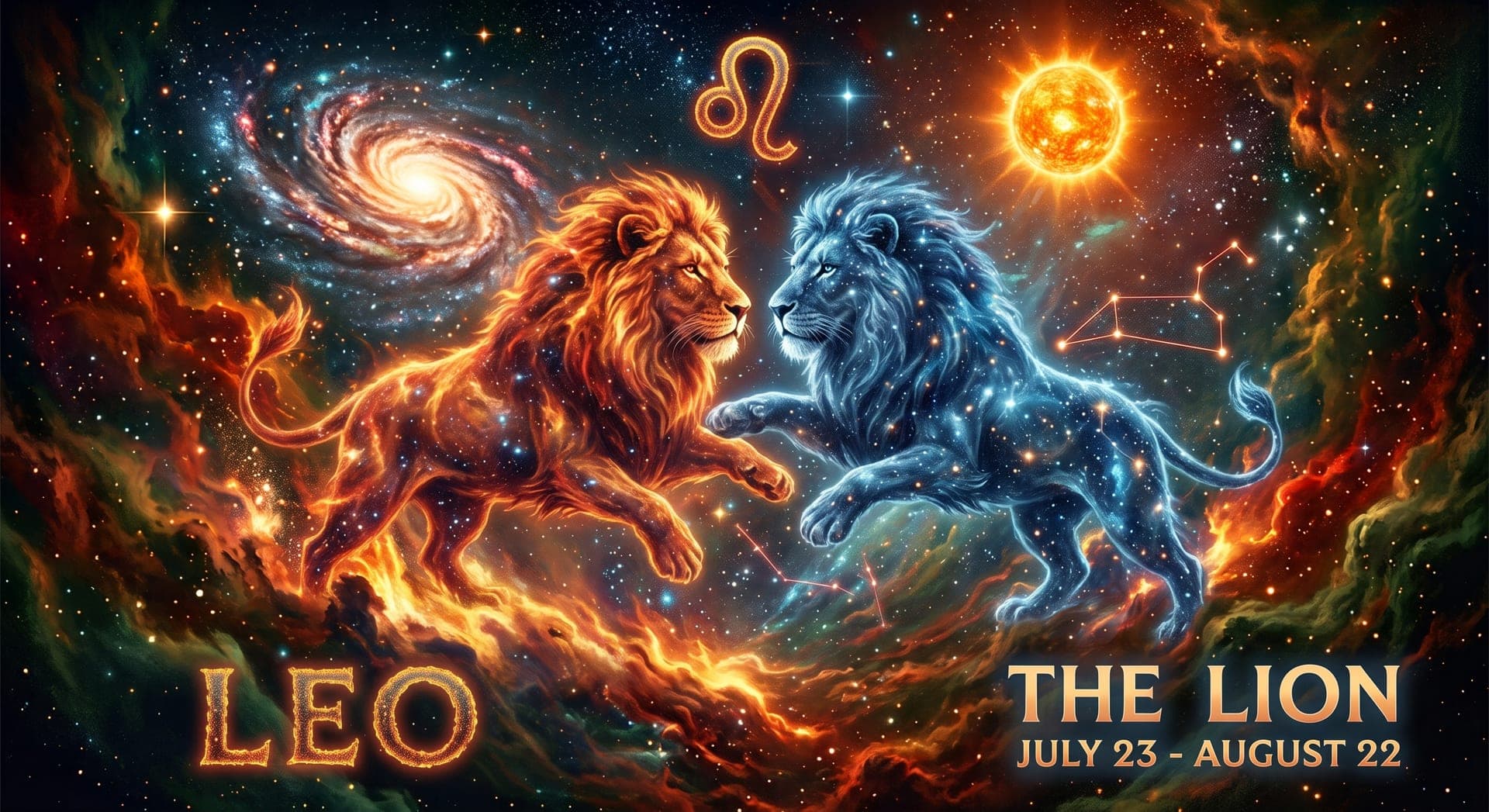
Born on July 31: Leo ♌
Leo, the fifth sign of the zodiac, spans July 23 to August 22 and is symbolized by the lion, an animal long associated with courage, pride, and natural leadership. Ruled by the Sun, the center of the solar system and the source of light and life, Leo is widely regarded as one of the most confident, warm, and charismatic signs of the zodiac, naturally drawn to the spotlight. As a Fire sign, Leo approaches life with passion, enthusiasm, and a flair for the dramatic, rarely content to blend quietly into the background. Its Fixed modality gives Leo a strong sense of loyalty and consistency, along with a stubborn streak once its mind is made up. People born under this sign are often natural performers, leaders, or creatives who thrive when appreciated and celebrated by those around them. Leo's generosity and warmth make it a beloved friend and steadfast ally, though its genuine need for recognition and admiration can tip into vanity or a demand for center stage if left unchecked.
Personality Traits
Strengths
- Naturally charismatic leader
- Generous and warm-hearted
- Confident and self-assured
- Creative and expressive
- Loyal to friends and family
Weaknesses
- Prone to arrogance
- Craves attention and validation
- Stubborn once decided
- Can be domineering
- Sensitive to criticism of their ego
Compatible Signs
Fun Facts
- Leo's lion symbol connects to the Greek myth of the Nemean Lion, slain by Hercules as the first of his twelve labors.
- Leo is ruled by the Sun, the only zodiac sign ruled directly by a star rather than a planet or moon.
- As a Fixed Fire sign, Leo season falls at the height of summer, when the sun's warmth and intensity are strongest in the Northern Hemisphere.
- Notable Leos include Barack Obama, Madonna, Jennifer Lawrence, and Napoleon Bonaparte.
- Leo rules the heart in traditional medical astrology, reflecting the sign's association with vitality, courage, and life force.
Born on July 31
- 1718
John Canton
English physicist known for his early experiments demonstrating the compressibility of water and his work on electricity
- 1858
Richard Dixon Oldham
English geologist and seismologist who provided the first evidence for the Earth's molten core
- 1901
Jean Dubuffet
French painter and sculptor of the Art Brut movement
- 1912
Milton Friedman
American economist and Nobel laureate
- 1921
Peter Benenson
English lawyer who founded the human rights organisation Amnesty International
- 1923
Ahmet Ertegun
Turkish-American music executive who founded Atlantic Records
- 1947
Richard Griffiths
English actor known for his roles in the Harry Potter films and the television series Pie in the Sky
- 1951
Evonne Goolagong Cawley
Australian tennis champion
- 1958
Mark Cuban
American businessman and owner of the Dallas Mavericks
- 1959
Andrew Marr
Scottish journalist and broadcaster known for his political interviews and analysis
- 1962
Wesley Snipes
American actor
- 1965
J.K. Rowling
English author of the "Harry Potter" series
- 1965
J. K. Rowling
English author best known for the Harry Potter series of novels
- 1974
Emilia Fox
English actress known for her role as pathologist Nikki Alexander in the television series Silent Witness
On This Day in History
- 1423
A Franco-Scottish army is defeated by Anglo-Burgundian forces at the Battle of Cravant during the Hundred Years' War.
The battle, fought on the banks of the Yonne River in Burgundy, saw the Scottish contingent supporting the French Dauphin suffer especially heavy losses, including the capture of their commander. The defeat was a significant setback for the Dauphin's cause during the darkest years of the Hundred Years' War, before the fortunes of the French crown were later revived by Joan of Arc.
- 1451
Vlad III, later known as Vlad the Impaler, becomes voivode of Wallachia for the first time.
Vlad III, later infamous as Vlad the Impaler and a partial inspiration for the fictional Dracula, became voivode, or ruling prince, of Wallachia for the first of what would be several turbulent reigns marked by brutal methods of enforcing order and resisting Ottoman expansion.
- 1492
Spain's Alhambra Decree takes effect, expelling practicing Jews who refuse conversion from the kingdom.
Spain's Catholic monarchs enforced their earlier Alhambra Decree, requiring practicing Jews who had not converted to Christianity to leave the kingdom or face execution, resulting in the expulsion of tens of thousands of people and the loss of a centuries-old Jewish community from Spanish society.
- 1498
Christopher Columbus becomes the first European to sight the island of Trinidad during his third voyage.
During his third voyage westward, Christopher Columbus became the first European recorded to sight the island of Trinidad off the coast of present-day Venezuela, part of a journey that also brought him into contact with the South American mainland for the first time.
- 1658
Aurangzeb is crowned Mughal emperor of India after defeating his brothers in a war of succession.
After a bitter war of succession against his brothers following their father's illness, Aurangzeb was formally crowned Mughal emperor of India, going on to rule for nearly five decades and expand the empire to its greatest territorial extent, though his reign also sowed seeds of later imperial decline.
- 1667
The Treaty of Breda ends the Second Anglo-Dutch War, with England gaining possession of New Amsterdam.
Under the treaty's terms of territorial exchange, England kept the North American colony it had seized from the Dutch in 1664 and renamed New York, while the Dutch retained the valuable sugar colony of Suriname. The agreement also relaxed the restrictive Navigation Acts that had helped provoke the war, offering some trade concessions to Dutch merchants.
- 1703
Writer Daniel Defoe is placed in a pillory in London, having been convicted of seditious libel.
Defoe's offence was publishing a satirical pamphlet mocking High Church intolerance of religious dissenters, which was read literally by some and taken as a genuine call to persecute nonconformists. Rather than pelting him with rotten produce as was customary, sympathetic crowds reportedly threw flowers, and Defoe later channelled the experience into his poem 'Hymn to the Pillory.'
- 1763
Odawa forces under Chief Pontiac ambush and defeat a British detachment at the Battle of Bloody Run near Detroit.
The clash came during Pontiac's War, a widespread uprising by Native American nations against British rule in the Great Lakes region following the end of the French and Indian War. British troops attempting to break the ongoing siege of Fort Detroit were caught in an ambush along a creek that, according to tradition, ran red with the blood of the fallen.
- 1777
The Marquis de Lafayette, aged just 19, is commissioned as a major general in the Continental Army.
At just nineteen years old, the French aristocrat Marquis de Lafayette received a commission as a major general in the Continental Army, having volunteered to support the American cause without pay. He became a trusted aide to George Washington and a lasting symbol of French-American friendship.
- 1790
The United States issues its first patent, granted to Samuel Hopkins for a potash production process.
Samuel Hopkins received the first patent ever issued by the newly formed United States federal government, covering an improved industrial process for producing potash, a chemical compound widely used at the time in fertilizer and soap manufacturing. The patent was signed personally by President George Washington.
- 1856
The city of Christchurch, New Zealand, is officially established.
British colonial settlers formally established the city of Christchurch on New Zealand's South Island, planned as an Anglican settlement modeled on English cathedral cities. It later grew into one of New Zealand's largest urban centers, retaining strong architectural and cultural ties to its English colonial origins.
- 1930
The long-running American radio drama "The Shadow" airs for the first time.
The long-running American radio drama "The Shadow," featuring a mysterious crime-fighter with the power to cloud men's minds, made its broadcast debut, later helping launch the career of actor Orson Welles, who voiced the title character during part of the show's popular run.
- 1964
NASA's Ranger 7 probe transmits the first close-up photographs of the Moon's surface before its planned impact.
After traveling roughly 240,000 miles through space, NASA's Ranger 7 probe transmitted the first close-up photographs of the Moon's surface before deliberately crashing into it, providing scientists with dramatically more detailed lunar imagery than any earlier mission and informing planning for future crewed landings.
- 1966
The pleasure cruiser MV Darlwyne disappears off the coast of Cornwall, England, with the loss of all 31 people aboard.
The vessel vanished during a day trip from Mylor to Fowey amid deteriorating weather, and only scattered wreckage and a handful of bodies were ever recovered. The disaster, one of the worst peacetime maritime losses in British waters in decades, led to a formal inquiry into the boat's seaworthiness and licensing, though the full circumstances of its sinking were never conclusively established.
- 1970
The Royal Navy issues its last officially sanctioned daily rum ration, a day later remembered as Black Tot Day.
The tradition of issuing sailors a daily tot of rum dated back over three centuries, but growing concern that the ration was incompatible with operating increasingly complex modern machinery led the Admiralty to abolish it. Some sailors marked the occasion with mock funeral ceremonies, throwing symbolic tots overboard in protest at the end of the historic custom.
- 1971
Apollo 15 astronauts David Scott and James Irwin take the Lunar Roving Vehicle on its first drive across the Moon's surface.
Apollo 15 astronauts David Scott and James Irwin took the mission's battery-powered Lunar Roving Vehicle out for its first drive across the lunar surface, dramatically extending the range of their exploration compared to earlier missions that had required astronauts to travel entirely on foot.
- 1972
The British Army launches Operation Motorman, retaking the urban 'no-go' areas controlled by paramilitaries in Northern Ireland.
The operation, one of the largest British military actions since the Suez Crisis, deployed thousands of troops backed by armoured vehicles to dismantle barricades in Belfast and Derry that republican paramilitaries had used to keep security forces out. It followed the atrocities of Bloody Friday days earlier and marked a major escalation of British military engagement during the Troubles.
- 1972
Nine civilians are killed when car bombs explode in the village of Claudy, Northern Ireland.
The bombings, attributed to the Provisional IRA though no group ever claimed responsibility, devastated the small County Londonderry village on the same day as the British Army's Operation Motorman. Allegations that a Catholic priest suspected of involvement was protected from prosecution by church and state authorities have made the case one of the more controversial unresolved episodes of the Troubles.
- 1975
Three members of the Miami Showband are killed alongside two gunmen in an ambush by loyalist paramilitaries in Northern Ireland.
The band, a popular cross-community musical act, was stopped at a fake military checkpoint while travelling home from a gig when a bomb the attackers were planting on their minibus detonated prematurely, killing two of the paramilitaries and prompting the gunmen to open fire on the surviving band members. The attack, involving members of the Ulster Volunteer Force, was one of the most notorious of the Troubles.
- 2007
Operation Banner, the British Army's deployment in Northern Ireland, formally ends after 38 years.
Launched in 1969 to support police during escalating sectarian violence, the operation became the longest continuous deployment in British military history, involving hundreds of thousands of soldiers over its duration. Its end followed the 2005 IRA declaration renouncing armed struggle and reflected the consolidation of the peace achieved through the Good Friday Agreement.