
What’s Observed on July 30
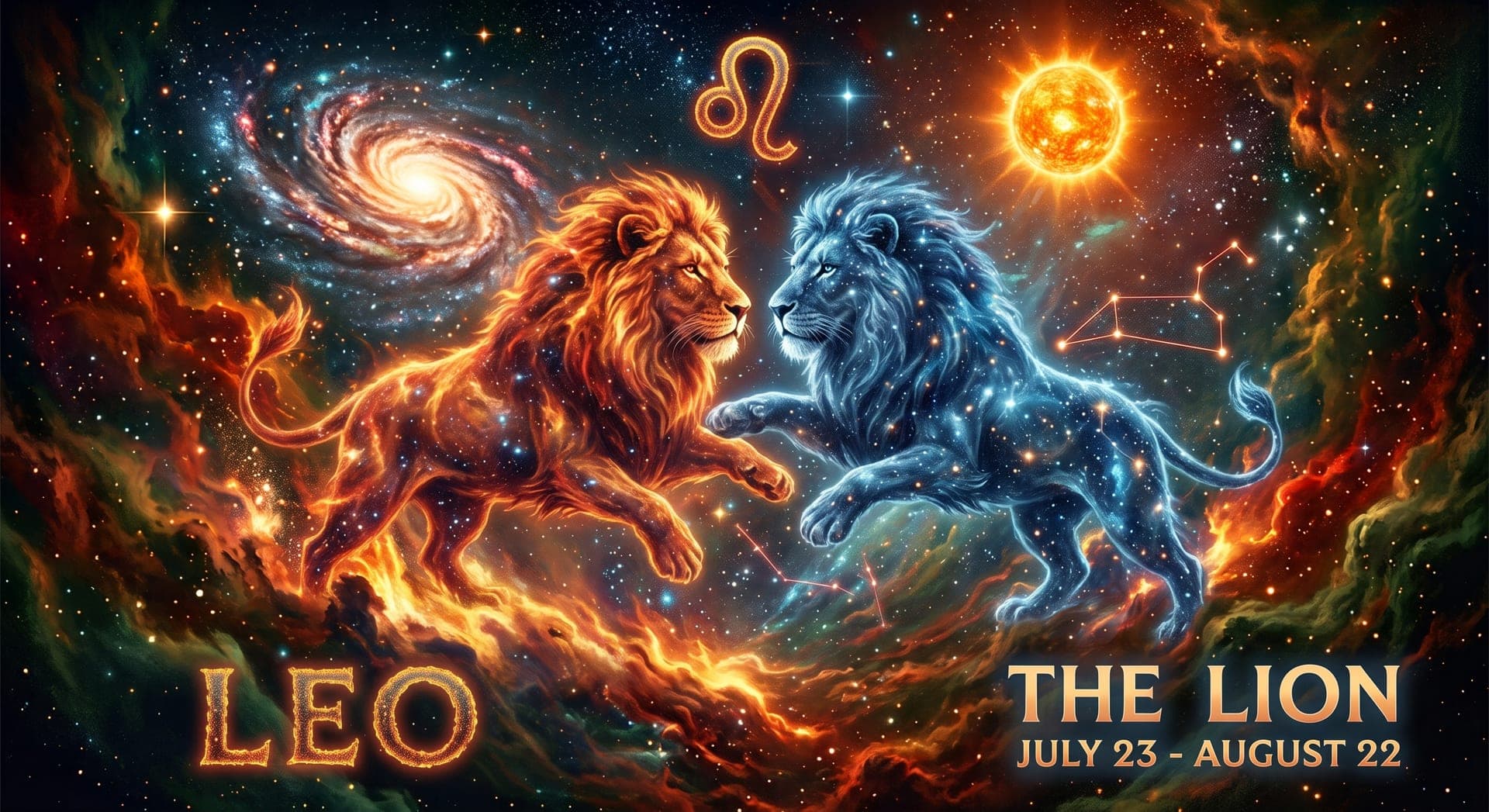
Born on July 30: Leo ♌
Leo, the fifth sign of the zodiac, spans July 23 to August 22 and is symbolized by the lion, an animal long associated with courage, pride, and natural leadership. Ruled by the Sun, the center of the solar system and the source of light and life, Leo is widely regarded as one of the most confident, warm, and charismatic signs of the zodiac, naturally drawn to the spotlight. As a Fire sign, Leo approaches life with passion, enthusiasm, and a flair for the dramatic, rarely content to blend quietly into the background. Its Fixed modality gives Leo a strong sense of loyalty and consistency, along with a stubborn streak once its mind is made up. People born under this sign are often natural performers, leaders, or creatives who thrive when appreciated and celebrated by those around them. Leo's generosity and warmth make it a beloved friend and steadfast ally, though its genuine need for recognition and admiration can tip into vanity or a demand for center stage if left unchecked.
Personality Traits
Strengths
- Naturally charismatic leader
- Generous and warm-hearted
- Confident and self-assured
- Creative and expressive
- Loyal to friends and family
Weaknesses
- Prone to arrogance
- Craves attention and validation
- Stubborn once decided
- Can be domineering
- Sensitive to criticism of their ego
Compatible Signs
Fun Facts
- Leo's lion symbol connects to the Greek myth of the Nemean Lion, slain by Hercules as the first of his twelve labors.
- Leo is ruled by the Sun, the only zodiac sign ruled directly by a star rather than a planet or moon.
- As a Fixed Fire sign, Leo season falls at the height of summer, when the sun's warmth and intensity are strongest in the Northern Hemisphere.
- Notable Leos include Barack Obama, Madonna, Jennifer Lawrence, and Napoleon Bonaparte.
- Leo rules the heart in traditional medical astrology, reflecting the sign's association with vitality, courage, and life force.
Born on July 30
- 1818
Emily Brontë
English novelist and poet best known for her only novel, Wuthering Heights
- 1863
Henry Ford
American founder of the Ford Motor Company
- 1898
Henry Moore
English sculptor renowned for his large-scale abstract bronze and stone figures
- 1938
Terry O'Neill
English photographer celebrated for his portraits of 1960s and 1970s celebrities and musicians
- 1940
Clive Sinclair
English inventor and businessman who pioneered affordable home computers and calculators
- 1947
Arnold Schwarzenegger
Austrian-American actor and Governor of California
- 1958
Kate Bush
English singer-songwriter known for hits including Wuthering Heights and Running Up That Hill
- 1958
Daley Thompson
English decathlete who won Olympic gold in 1980 and 1984
- 1963
Lisa Kudrow
American actress known for "Friends"
- 1970
Christopher Nolan
English-American filmmaker
- 1974
Hilary Swank
American actress
- 1982
James Anderson
English fast bowler and the most prolific wicket-taker in Test cricket history
- 1999
Joey King
American actress

On This Day in History
- 762
Caliph al-Mansur formally lays the foundation for the city of Baghdad, which becomes the capital of the Abbasid Caliphate.
The Abbasid Caliph al-Mansur selected a site along the Tigris River for a new capital city, designed in a distinctive circular plan and intended to serve as a center of Islamic learning and governance. Baghdad grew rapidly into one of the largest and most culturally significant cities in the medieval world.
- 1419
Radical Hussites storm Prague's New Town Hall and throw several officials from the windows in the First Defenestration of Prague.
Radical followers of the executed reformer Jan Hus stormed Prague's New Town Hall and threw several town councilors from the windows to their deaths below, an act of political violence that helped ignite the prolonged and destructive Hussite Wars against the Catholic establishment.
- 1502
Christopher Columbus arrives at the mainland of Central America during his fourth and final voyage to the New World.
During his fourth and final voyage to the New World, an aging and increasingly ill Christopher Columbus reached the coast of present-day Honduras, marking his first actual contact with the American mainland after his earlier voyages had focused primarily on exploring Caribbean islands and their surrounding waters.
- 1619
The Virginia General Assembly convenes at Jamestown, the first elected representative legislative body in the Americas.
Established under a charter from the Virginia Company, an English trading enterprise, the assembly brought together the colonial governor, his council, and elected burgesses from each settlement to make laws for the colony. Though its authority was limited by English oversight, the gathering set an important precedent for representative government that later influenced colonial and American political institutions.
- 1645
Scottish Covenanter forces under the Earl of Leven begin the siege of Hereford, one of the remaining Royalist strongholds in the English Civil War.
The Covenanters, allied with the English Parliamentarians under the terms of the Solemn League and Covenant, sought to capture the city to weaken Royalist control of the west of England. The siege proved unsuccessful and was abandoned after several weeks, but it reflected the close military cooperation between Scottish and English forces against King Charles I during the civil wars.
- 1729
The city of Baltimore, Maryland, is founded.
English colonists, including prominent leaders such as Cecil Calvert, established a settlement along the Patapsco River in the Province of Maryland that developed into the city of Baltimore, which grew into a major American port and industrial center in the centuries that followed.
- 1930
Uruguay defeats Argentina to win the first FIFA World Cup, held on home soil in Montevideo.
Hosting the first-ever FIFA World Cup on home soil, Uruguay defeated rival Argentina 4-2 in the final match played before an enthusiastic crowd in Montevideo, securing the inaugural title. The tournament's success established the World Cup as a major recurring event in international sport for decades to come.
- 1930
Uruguay wins the first FIFA World Cup, defeating Argentina in the final in Montevideo.
The inaugural tournament was held in Uruguay partly to mark the centenary of its independence, and the host nation triumphed 4-2 in front of a passionate home crowd. Several European teams, including England, declined to travel for the competition due to the long sea voyage, but the event laid the foundation for what would become the world's most-watched sporting tournament.
- 1932
The Summer Olympic Games open in Los Angeles.
The Summer Olympic Games opened in Los Angeles amid the difficult economic backdrop of the Great Depression, with organizers introducing several lasting innovations, including the first purpose-built Olympic Village to house competing athletes, despite significantly reduced international participation caused by the high costs of travel during the crisis.
- 1956
The U.S. Congress passes legislation adding "In God We Trust" as the nation's official motto.
The United States Congress passed legislation formally establishing "In God We Trust" as the country's official national motto, supplementing its earlier unofficial use on currency and coinage. The move reflected Cold War-era efforts to religiously and ideologically distinguish the United States from officially atheist communist adversaries abroad.
- 1966
England defeats West Germany 4-2 to win its only FIFA World Cup title, at Wembley Stadium in London.
Playing before a home crowd at Wembley Stadium, England defeated West Germany 4-2 in extra time to win its only FIFA World Cup title to date, with striker Geoff Hurst scoring a hat-trick in the final, a feat still unmatched in World Cup final history.
- 1966
England defeats West Germany 4-2 after extra time to win the FIFA World Cup at Wembley Stadium.
The victory, achieved with a controversial hat-trick from Geoff Hurst including a disputed goal that may not have fully crossed the line, remains England's only men's World Cup triumph. Captain Bobby Moore lifted the Jules Rimet Trophy before a home crowd, and the match is still widely regarded as the greatest moment in English football history.
- 1971
Apollo 15 astronauts David Scott and James Irwin land on the Moon, beginning the mission's extended lunar surface exploration.
Apollo 15 astronauts David Scott and James Irwin successfully landed their lunar module in the Hadley-Apennine region of the Moon, beginning a mission notable for its extended surface stay and the first use of a Lunar Roving Vehicle to explore terrain farther from the landing site than any previous mission.
- 1971
Apollo 15 astronauts David Scott and James Irwin land on the Moon, using the first Lunar Roving Vehicle.
The mission marked a new phase of lunar exploration, with the battery-powered rover allowing the astronauts to travel far greater distances across the surface than earlier missions had permitted on foot. Over three days, Scott and Irwin explored the Hadley-Apennine region, collecting geological samples that included some of the oldest rocks ever returned from the Moon.
- 1975
Union leader Jimmy Hoffa disappears from a restaurant parking lot in Bloomfield Hills, Michigan, never to be found.
Hoffa, the former president of the Teamsters union with well-documented ties to organised crime, had gone to meet reputed mob figures shortly before vanishing. Despite decades of investigation, searches, and numerous theories, his body has never been recovered, and his disappearance remains one of the most enduring unsolved mysteries in American criminal history.
- 1980
Vanuatu gains independence, ending nearly a century of joint British-French colonial administration.
The Pacific archipelago had been governed since 1906 as an unusual Anglo-French Condominium, informally nicknamed the 'Pandemonium' for its dual, often contradictory administrative and legal systems. Independence followed years of growing local political movements, and Vanuatu emerged as a sovereign nation while retaining ties to both former colonial powers through language and institutions.
- 1990
Ian Gow, a Conservative Member of Parliament, is assassinated by the Provisional IRA in a car bomb attack at his home in East Sussex.
Gow, a close ally of Prime Minister Margaret Thatcher and a vocal opponent of the Anglo-Irish Agreement, was killed instantly when a bomb planted under his car exploded as he prepared to leave for Parliament. His murder was one of a series of high-profile IRA attacks on British political figures during the Troubles.
- 2003
The last original Volkswagen Beetle rolls off the assembly line in Puebla, Mexico, ending 65 years of production.
After sixty-five years of continuous production across multiple countries, the last original-style Volkswagen Beetle rolled off the assembly line at a factory in Puebla, Mexico, marking the end of an era for one of the best-selling and most iconic automobile designs in history.
- 2006
Top of the Pops, the world's longest-running weekly music chart show, is broadcast for the final time on BBC Two.
The programme had aired continuously on the BBC since 1964, showcasing performances from the biggest acts in pop music and shaping British popular culture for over four decades. Declining viewing figures amid the rise of music television channels and the internet led to the decision to end the show, though repeats and specials continued to air occasionally afterward.
- 2011
Zara Phillips, granddaughter of Queen Elizabeth II, marries former rugby union player Mike Tindall in Edinburgh.
The wedding at Canongate Kirk in Edinburgh drew members of the extended royal family and large crowds along the Royal Mile. Zara, the daughter of Princess Anne, was already an accomplished equestrian who would go on to compete at the London 2012 Olympics, while Tindall, an England rugby international, had been part of the squad that won the 2003 Rugby World Cup.