What’s Observed on July 29
Born on July 29: Leo ♌
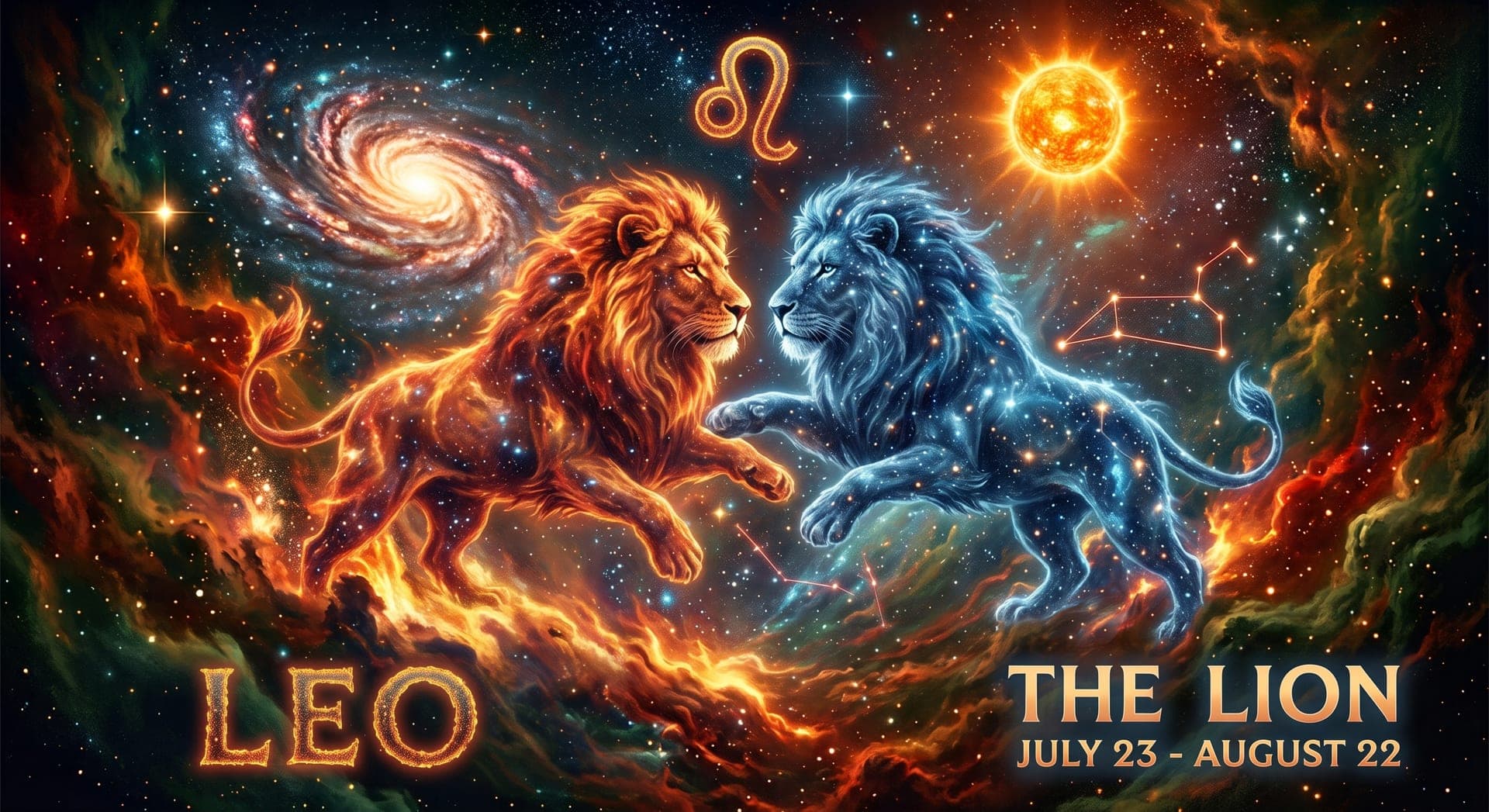
Leo, the fifth sign of the zodiac, spans July 23 to August 22 and is symbolized by the lion, an animal long associated with courage, pride, and natural leadership. Ruled by the Sun, the center of the solar system and the source of light and life, Leo is widely regarded as one of the most confident, warm, and charismatic signs of the zodiac, naturally drawn to the spotlight. As a Fire sign, Leo approaches life with passion, enthusiasm, and a flair for the dramatic, rarely content to blend quietly into the background. Its Fixed modality gives Leo a strong sense of loyalty and consistency, along with a stubborn streak once its mind is made up. People born under this sign are often natural performers, leaders, or creatives who thrive when appreciated and celebrated by those around them. Leo's generosity and warmth make it a beloved friend and steadfast ally, though its genuine need for recognition and admiration can tip into vanity or a demand for center stage if left unchecked.
Personality Traits
Strengths
- Naturally charismatic leader
- Generous and warm-hearted
- Confident and self-assured
- Creative and expressive
- Loyal to friends and family
Weaknesses
- Prone to arrogance
- Craves attention and validation
- Stubborn once decided
- Can be domineering
- Sensitive to criticism of their ego
Compatible Signs
Fun Facts
- Leo's lion symbol connects to the Greek myth of the Nemean Lion, slain by Hercules as the first of his twelve labors.
- Leo is ruled by the Sun, the only zodiac sign ruled directly by a star rather than a planet or moon.
- As a Fixed Fire sign, Leo season falls at the height of summer, when the sun's warmth and intensity are strongest in the Northern Hemisphere.
- Notable Leos include Barack Obama, Madonna, Jennifer Lawrence, and Napoleon Bonaparte.
- Leo rules the heart in traditional medical astrology, reflecting the sign's association with vitality, courage, and life force.
Born on July 29
- 1763
Philip Charles Durham
Scottish admiral and politician who commanded Royal Navy ships during the Napoleonic Wars
- 1801
George Bradshaw
English cartographer and publisher whose railway guides and timetables became a byword for reliable travel information
- 1805
Alexis de Tocqueville
French historian and political thinker
- 1817
Ivan Aivazovsky
Armenian-Russian seascape painter
- 1883
Benito Mussolini
Italian fascist dictator
- 1905
Clara Bow
American silent film actress
- 1905
Dag Hammarskjöld
Swedish diplomat and UN Secretary-General
- 1938
Peter Jennings
Canadian-American news anchor
- 1941
David Warner
English actor known for roles in films including Time Bandits and Titanic
- 1946
Diane Keen
English actress known for television roles including Rings on Their Fingers
- 1952
Joe Johnson
English snooker player who won the World Championship in 1986
- 1953
Ken Burns
American documentary filmmaker
- 1966
Sally Gunnell
English hurdler who won Olympic gold in the 400 metres hurdles at the 1992 Barcelona Games
- 1981
Fernando Alonso
Spanish Formula One driver
On This Day in History
- 1030
King Olaf II of Norway is killed at the Battle of Stiklestad, later becoming Norway's patron saint.
King Olaf II of Norway, who had earlier been driven into exile after imposing Christianity forcefully on his subjects, was killed attempting to reclaim his throne at the Battle of Stiklestad. He was later canonized as Norway's patron saint, and his cult became central to Norwegian national and religious identity.
- 1565
Mary, Queen of Scots, marries her cousin Henry Stuart, Lord Darnley, at Holyrood Palace in Edinburgh.
The marriage angered Mary's cousin Elizabeth I of England, since Darnley also had a strong claim to the English throne, and it deepened factional divisions among the Scottish nobility. The union quickly soured amid Darnley's ambition and jealousy, and it produced the future King James VI and I before Darnley was murdered under suspicious circumstances less than two years later.
- 1567
The infant James VI is crowned King of Scotland at Stirling.
James became king at just thirteen months old after his mother, Mary, Queen of Scots, was forced to abdicate following the scandal surrounding Darnley's murder and her subsequent marriage to the Earl of Bothwell. James went on to rule Scotland for decades before also inheriting the English throne in 1603 as James I, uniting the two crowns.
- 1588
The English navy decisively defeats the Spanish Armada in the Battle of Gravelines.
In a decisive engagement off the French coast, the English fleet, aided by fireships and favorable winds, inflicted a crucial defeat on the Spanish Armada, forcing the battered fleet to abandon its planned invasion and retreat around the British Isles, where storms caused further devastating losses.
- 1588
English naval forces decisively defeat the Spanish Armada at the Battle of Gravelines.
After a week of running skirmishes up the English Channel, English fireships forced the crowded Spanish fleet to break formation off Calais, allowing the English navy under Lord Howard of Effingham and Sir Francis Drake to inflict a crushing defeat. Storms then scattered the retreating Armada around Scotland and Ireland, cementing England's naval reputation and Elizabeth I's legacy.
- 1602
Queen Elizabeth I visits Harefield Place in Middlesex, where elaborate entertainments are staged in her honour.
Royal progresses like this one were a hallmark of Elizabeth's reign, as she toured the homes of nobles to display royal favour, ease the strain on royal finances, and allow subjects across the country to see their monarch in person. The visit to Harefield came in the final year of her life, as the aging queen's reign drew to a close.
- 1836
The Arc de Triomphe is formally inaugurated in Paris after decades of construction.
After decades of construction commissioned by Napoleon to honor his military campaigns, the Arc de Triomphe was formally completed and dedicated in Paris. The monument became an enduring symbol of French national pride and later the site of the tomb of the unknown soldier from World War I.
- 1848
British authorities suppress the Young Irelander uprising, known as the Tipperary Revolt, in Ireland.
The brief rebellion, led by members of the Young Ireland movement amid the devastation of the Great Famine, culminated in a confrontation at a farmhouse in Ballingarry, County Tipperary, where police besieged a group of rebels. The revolt's swift failure led to the transportation of several of its leaders to penal colonies, though it later inspired subsequent generations of Irish nationalists.
- 1858
The United States and Japan sign the Harris Treaty, opening additional Japanese ports to American trade.
American Commodore Matthew Perry's diplomatic efforts culminated in the Harris Treaty, which opened additional Japanese ports to American trade and granted extraterritorial rights to U.S. citizens. The unequal treaty accelerated the opening of Japan to Western influence during the final years of the Tokugawa shogunate.
- 1900
King Umberto I of Italy is assassinated by anarchist Gaetano Bresci.
King Umberto I of Italy was shot and killed by the anarchist Gaetano Bresci, who claimed the assassination as revenge for the king's harsh suppression of bread riots in Milan two years earlier. Umberto's death brought his son, Victor Emmanuel III, to the Italian throne.
- 1907
Robert Baden-Powell holds the first Scouting encampment on Brownsea Island, England, launching the global Scouting movement.
British Army officer Robert Baden-Powell organized an experimental camping trip for boys on Brownsea Island off England's southern coast, testing outdoor skills and teamwork activities that formed the basis of his subsequent Scouting movement, which rapidly spread into a global youth organization.
- 1907
Robert Baden-Powell establishes an experimental camp for boys on Brownsea Island, England, laying the groundwork for the Scout movement.
Baden-Powell, a British Army officer celebrated for his defence of Mafeking during the Second Boer War, brought together 20 boys from different social backgrounds to test activities like camping, tracking, and teamwork. The camp's success led him to publish Scouting for Boys the following year, sparking a movement that spread rapidly across Britain and around the world.
- 1945
The BBC launches the Light Programme, a national radio station devoted to popular entertainment and music.
Introduced as Britain emerged from the Second World War, the station was designed to offer lighter fare than the more serious BBC Home Service, reflecting a public appetite for entertainment after years of wartime broadcasting. It became hugely popular over the following decades before being replaced in 1967 by BBC Radio 1 and Radio 2 as part of a broader restructuring.
- 1948
The Summer Olympics open in London, the first Games held since 1936.
Known as the 'Austerity Games,' the event took place while Britain was still under wartime rationing, and organisers reused existing venues and asked competing nations to bring their own food and accommodation. Despite the constraints, the Games were considered a success, symbolising post-war recovery and Britain's ability to host the world despite continuing economic hardship.
- 1958
President Eisenhower signs the National Aeronautics and Space Act, establishing NASA.
President Dwight Eisenhower signed legislation creating the National Aeronautics and Space Administration, consolidating various government aeronautics research efforts into a single civilian agency dedicated to space exploration. NASA went on to lead the American effort in the Space Race, including the Apollo Moon landings.
- 1967
A fire aboard the USS Forrestal off the coast of Vietnam kills 134 sailors, one of the U.S. Navy's worst peacetime disasters.
A devastating fire swept through the aircraft carrier USS Forrestal while it was operating off the coast of Vietnam, triggered by an accidental rocket launch that ignited fuel and munitions on the crowded flight deck. The disaster killed 134 sailors and remains one of the U.S. Navy's worst losses of life since World War II.
- 1981
Britain's Prince Charles marries Lady Diana Spencer at St Paul's Cathedral in a globally televised ceremony.
Britain's Prince Charles married Lady Diana Spencer in a lavish ceremony at St Paul's Cathedral in London, watched by a global television audience estimated at hundreds of millions. Though initially celebrated as a fairy-tale royal wedding, the marriage later became strained and ended in divorce.
- 1981
Charles, Prince of Wales, marries Lady Diana Spencer at St Paul's Cathedral in London, watched by a global television audience of around 750 million people.
The lavish ceremony, held amid huge public celebration, made Diana the Princess of Wales and one of the most photographed women in the world. Though the marriage was troubled from early on and ended in divorce in 1996, the wedding itself remains one of the most watched royal events in history and a defining image of 1980s Britain.
- 1987
Prime Minister Margaret Thatcher and French President François Mitterrand sign an agreement to build the Channel Tunnel.
The treaty committed Britain and France to constructing a rail tunnel beneath the English Channel, a project that had been proposed and abandoned multiple times since the 19th century. Built by a private consortium without government funding, the tunnel opened in 1994, finally providing a fixed rail link between the British and European mainlands.
- 1993
The Cambodian monarchy is restored under King Norodom Sihanouk following years of political upheaval.
Following years of political upheaval, including the brutal rule of the Khmer Rouge and subsequent Vietnamese occupation, Cambodia's monarchy was restored under King Norodom Sihanouk as part of a broader United Nations-brokered peace settlement aimed at stabilizing the country's fractured political landscape.