What’s Observed on July 28
Born on July 28: Leo ♌
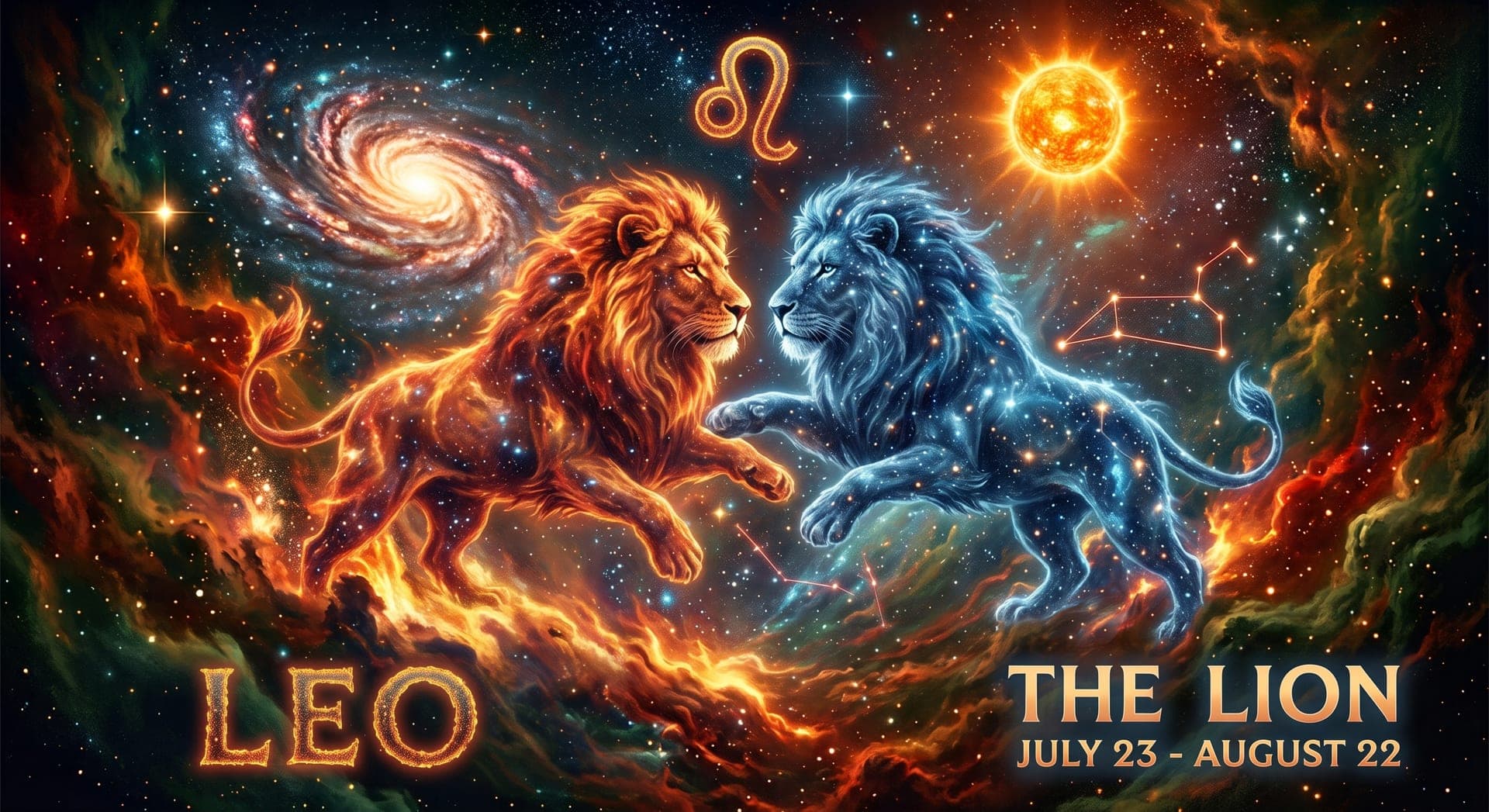
Leo, the fifth sign of the zodiac, spans July 23 to August 22 and is symbolized by the lion, an animal long associated with courage, pride, and natural leadership. Ruled by the Sun, the center of the solar system and the source of light and life, Leo is widely regarded as one of the most confident, warm, and charismatic signs of the zodiac, naturally drawn to the spotlight. As a Fire sign, Leo approaches life with passion, enthusiasm, and a flair for the dramatic, rarely content to blend quietly into the background. Its Fixed modality gives Leo a strong sense of loyalty and consistency, along with a stubborn streak once its mind is made up. People born under this sign are often natural performers, leaders, or creatives who thrive when appreciated and celebrated by those around them. Leo's generosity and warmth make it a beloved friend and steadfast ally, though its genuine need for recognition and admiration can tip into vanity or a demand for center stage if left unchecked.
Personality Traits
Strengths
- Naturally charismatic leader
- Generous and warm-hearted
- Confident and self-assured
- Creative and expressive
- Loyal to friends and family
Weaknesses
- Prone to arrogance
- Craves attention and validation
- Stubborn once decided
- Can be domineering
- Sensitive to criticism of their ego
Compatible Signs
Fun Facts
- Leo's lion symbol connects to the Greek myth of the Nemean Lion, slain by Hercules as the first of his twelve labors.
- Leo is ruled by the Sun, the only zodiac sign ruled directly by a star rather than a planet or moon.
- As a Fixed Fire sign, Leo season falls at the height of summer, when the sun's warmth and intensity are strongest in the Northern Hemisphere.
- Notable Leos include Barack Obama, Madonna, Jennifer Lawrence, and Napoleon Bonaparte.
- Leo rules the heart in traditional medical astrology, reflecting the sign's association with vitality, courage, and life force.
Born on July 28
- 1844
Gerard Manley Hopkins
English poet known for his innovative use of 'sprung rhythm' in works such as The Windhover
- 1866
Beatrix Potter
English author and illustrator celebrated for children's books including The Tale of Peter Rabbit
- 1887
Marcel Duchamp
French-American conceptual artist
- 1902
Karl Popper
Austrian-British philosopher of science
- 1929
Jacqueline Kennedy Onassis
First Lady of the United States
- 1936
Garfield Sobers
Barbadian cricketer
- 1943
Bill Bradley
American basketball player and U.S. senator
- 1943
Richard Wright
English keyboardist and founding member of the rock band Pink Floyd
- 1954
Hugo Chávez
President of Venezuela
- 1956
Robert Swan
English explorer who became the first person to walk to both the North and South Poles
- 1958
Terry Fox
Canadian athlete and cancer research activist
- 1981
Michael Carrick
English footballer who played as a midfielder for Manchester United and the national team
- 1993
Harry Kane
English footballer and prolific striker who has captained the national team
- 1993
Cher Lloyd
English singer-songwriter who rose to fame on the X Factor

On This Day in History
- 1540
Thomas Cromwell, chief minister to King Henry VIII, is executed on charges of treason.
Thomas Cromwell, the chief architect of Henry VIII's break from the Catholic Church and dissolution of the monasteries, was executed on charges of treason and heresy after falling out of royal favor, notably following the king's disastrous marriage to Anne of Cleves, which Cromwell had arranged.
- 1540
Henry VIII marries his fifth wife, Catherine Howard, at Oatlands Palace.
The marriage took place on the very day Thomas Cromwell was executed, just weeks after Henry's annulment from Anne of Cleves. Catherine, a teenage cousin of Anne Boleyn, was roughly 30 years younger than the king. The marriage proved short-lived: accusations of infidelity led to her execution less than two years later, in February 1542.
- 1540
Thomas Cromwell, chief minister to Henry VIII, is executed on Tower Hill for treason and heresy.
Cromwell had risen from humble origins to become one of the most powerful men in England, engineering the break with Rome and the dissolution of the monasteries. His downfall followed the disastrous royal marriage to Anne of Cleves, which he had arranged, and rivals at court seized the opportunity to have him condemned without trial under an act of attainder.
- 1794
Revolutionary leader Maximilien Robespierre is executed by guillotine, effectively ending the Reign of Terror in France.
Maximilien Robespierre, the dominant figure behind France's Reign of Terror, was arrested and executed by guillotine after a coalition of rivals in the National Convention turned against him, fearing they themselves would become targets of his revolutionary tribunal. His death effectively ended the most violent phase of the French Revolution.
- 1809
British forces under Sir Arthur Wellesley defeat a French army at the Battle of Talavera in Spain.
Fought during the Peninsular War, the battle was a costly victory that saw Wellesley's Anglo-Spanish force hold off repeated French assaults over two days near Talavera de la Reina. The win earned Wellesley the title Viscount Wellington, marking an early step in the career of the future Duke of Wellington, who would later defeat Napoleon at Waterloo.
- 1821
Peru formally declares independence from Spain.
Following years of struggle led by figures such as Jose de San Martin, Peru formally proclaimed its independence from Spanish colonial rule in Lima. Full military victory over remaining Spanish royalist forces was not achieved for several more years, but the declaration marked the symbolic birth of the Peruvian republic.
- 1821
José de San Martín formally declares the independence of Peru from Spanish rule.
San Martín's declaration came after his army had occupied Lima, capital of the Viceroyalty of Peru, during his campaign to liberate South America from Spanish colonial control. He was proclaimed Protector of Peru, though the country's independence was not fully secured until further military victories over remaining Spanish royalist forces in the following years.
- 1868
The 14th Amendment to the U.S. Constitution is certified as ratified, granting citizenship and equal protection under the law.
Secretary of State William Seward certified that the 14th Amendment had been ratified by the requisite number of states, formally enshrining birthright citizenship and equal protection under the law into the U.S. Constitution. The amendment became a cornerstone of subsequent civil rights litigation throughout American history.
- 1868
The Fourteenth Amendment to the United States Constitution is certified, establishing citizenship rights for all persons born or naturalized in the country.
Adopted in the aftermath of the Civil War, the amendment was designed to secure the citizenship and civil rights of formerly enslaved people, overturning the Supreme Court's 1857 Dred Scott decision. Its guarantees of due process and equal protection later became the constitutional foundation for numerous landmark civil rights rulings throughout American history.
- 1914
Austria-Hungary declares war on Serbia, marking the formal beginning of World War I.
Following the assassination of Archduke Franz Ferdinand a month earlier, Austria-Hungary declared war on Serbia after deeming Serbia's response to its ultimatum insufficient. The declaration triggered a rapid cascade of mobilizations and alliance obligations among the major European powers, plunging the continent into World War I within days.
- 1914
Austria-Hungary declares war on Serbia, beginning the First World War.
The declaration followed the assassination of Archduke Franz Ferdinand a month earlier and triggered a rapid cascade of alliance obligations across Europe. Within days, Russia, Germany, and France were drawn into the conflict, and Britain entered the war on August 4 after Germany invaded neutral Belgium, transforming a regional crisis into a global catastrophe.
- 1917
Thousands march in New York City's Silent Parade to protest lynching and racial violence against Black Americans.
Thousands of Black New Yorkers marched silently down Fifth Avenue to protest lynching, racial violence, and discriminatory treatment, notably following a deadly riot in East St. Louis weeks earlier. Organized largely by the NAACP, the demonstration is considered one of the first major civil rights protests of its kind in the United States.
- 1932
U.S. troops forcibly disperse the Bonus Army, a group of impoverished World War I veterans camped in Washington, D.C.
On orders from President Herbert Hoover, U.S. Army troops under General Douglas MacArthur forcibly evicted thousands of unemployed World War I veterans and their families who had camped in Washington to demand early payment of promised service bonuses. The harsh crackdown drew significant public criticism and damaged Hoover's political standing.
- 1939
Archaeologists uncover the ship-burial helmet at Sutton Hoo in Suffolk, England.
The excavation, led by self-taught archaeologist Basil Brown on the estate of landowner Edith Pretty, revealed the undisturbed burial of an Anglo-Saxon ship laden with treasures, believed to belong to a 7th-century East Anglian king. The ornate iron and bronze helmet found among the grave goods became one of the most iconic artefacts of early medieval Britain.
- 1943
The Royal Air Force and United States Army Air Forces launch Operation Gomorrah, a devastating bombing campaign against Hamburg.
The joint air offensive created a firestorm that destroyed much of the German city and killed an estimated 37,000 people over the course of a week, making it one of the most destructive bombing campaigns of the Second World War. RAF Bomber Command's night raids combined with daylight American attacks in a strategy intended to break German civilian morale.
- 1976
A massive earthquake devastates Tangshan, China, killing hundreds of thousands of people in one of the deadliest quakes in recorded history.
A massive earthquake struck the industrial city of Tangshan in northeastern China while most residents were asleep, collapsing buildings across the densely populated area. Official death toll estimates vary widely but are commonly cited in the hundreds of thousands, making it one of the deadliest earthquakes ever recorded.
- 1976
A powerful earthquake devastates the Chinese city of Tangshan, killing an estimated 242,000 people.
The earthquake struck without significant warning in the early morning, flattening the industrial city and making it one of the deadliest earthquakes in recorded history. China's initial refusal of international aid, reflecting the political climate of the time, drew later criticism, and the disaster's scale spurred major reforms in the country's earthquake monitoring and building codes.
- 1996
Britain's Prince Charles and Princess Diana finalize their divorce.
After a period of prolonged marital difficulties and public scrutiny, Britain's Prince Charles and Diana, Princess of Wales, finalized their divorce, formally ending their fifteen-year marriage. Diana died in a car accident in Paris just over a year later, an event that prompted an extraordinary global outpouring of grief.
- 2005
The Provisional IRA formally orders an end to its armed campaign in Northern Ireland.
The Provisional Irish Republican Army formally announced an end to its armed campaign against British rule in Northern Ireland, instructing its members to pursue exclusively political and peaceful means going forward. The declaration represented a landmark step in the broader Northern Ireland peace process following the 1998 Good Friday Agreement.
- 2005
The Provisional Irish Republican Army formally announces an end to its armed campaign in Northern Ireland.
The statement instructed IRA members to pursue exclusively peaceful means and ordered the organisation to decommission its remaining weapons, a process overseen by international observers in the following months. The declaration marked a pivotal moment in the Northern Ireland peace process, building on the 1998 Good Friday Agreement's framework for ending decades of sectarian violence known as the Troubles.