
What’s Observed on July 27
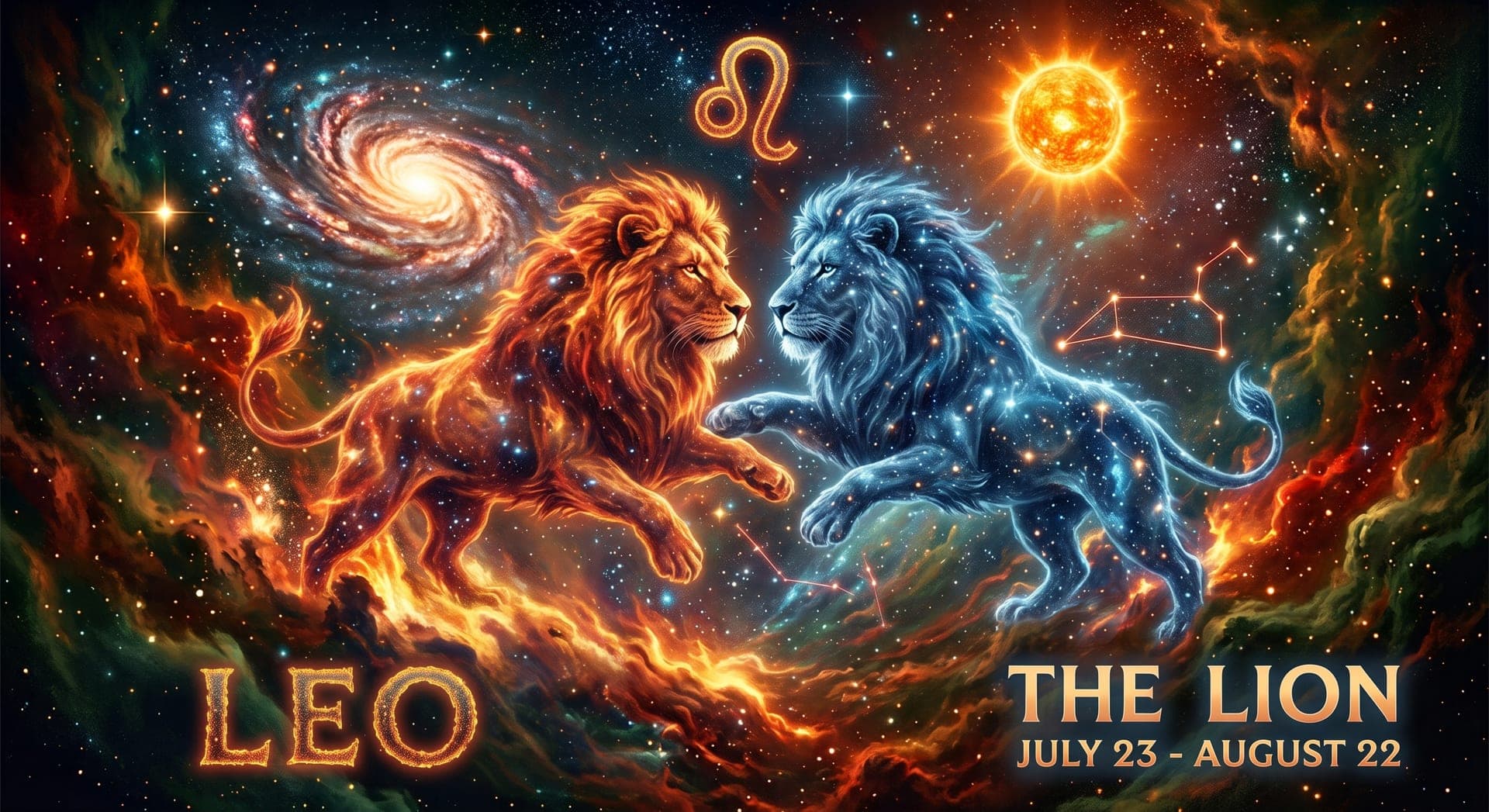
Born on July 27: Leo ♌
Leo, the fifth sign of the zodiac, spans July 23 to August 22 and is symbolized by the lion, an animal long associated with courage, pride, and natural leadership. Ruled by the Sun, the center of the solar system and the source of light and life, Leo is widely regarded as one of the most confident, warm, and charismatic signs of the zodiac, naturally drawn to the spotlight. As a Fire sign, Leo approaches life with passion, enthusiasm, and a flair for the dramatic, rarely content to blend quietly into the background. Its Fixed modality gives Leo a strong sense of loyalty and consistency, along with a stubborn streak once its mind is made up. People born under this sign are often natural performers, leaders, or creatives who thrive when appreciated and celebrated by those around them. Leo's generosity and warmth make it a beloved friend and steadfast ally, though its genuine need for recognition and admiration can tip into vanity or a demand for center stage if left unchecked.
Personality Traits
Strengths
- Naturally charismatic leader
- Generous and warm-hearted
- Confident and self-assured
- Creative and expressive
- Loyal to friends and family
Weaknesses
- Prone to arrogance
- Craves attention and validation
- Stubborn once decided
- Can be domineering
- Sensitive to criticism of their ego
Compatible Signs
Fun Facts
- Leo's lion symbol connects to the Greek myth of the Nemean Lion, slain by Hercules as the first of his twelve labors.
- Leo is ruled by the Sun, the only zodiac sign ruled directly by a star rather than a planet or moon.
- As a Fixed Fire sign, Leo season falls at the height of summer, when the sun's warmth and intensity are strongest in the Northern Hemisphere.
- Notable Leos include Barack Obama, Madonna, Jennifer Lawrence, and Napoleon Bonaparte.
- Leo rules the heart in traditional medical astrology, reflecting the sign's association with vitality, courage, and life force.
Born on July 27
- 774
Kūkai
Japanese Buddhist monk who founded Shingon Buddhism
- 1733
Jeremiah Dixon
English surveyor and astronomer who, with Charles Mason, drew the Mason-Dixon line marking the boundary between several American colonies
- 1801
George Biddell Airy
English mathematician and astronomer who served as Astronomer Royal for over four decades
- 1835
Giosuè Carducci
Italian poet and Nobel laureate
- 1857
E. A. Wallis Budge
English Egyptologist and philologist known for his translations of ancient Egyptian texts, including The Book of the Dead
- 1882
Geoffrey de Havilland
English aviation pioneer who founded the de Havilland Aircraft Company, designer of the Mosquito and the Comet
- 1905
Leo Durocher
American baseball player and manager
- 1922
Norman Lear
American television writer and producer
- 1938
Gary Gygax
American co-creator of Dungeons & Dragons
- 1939
Michael Longley
Northern Irish poet celebrated for his lyric verse addressing nature, war, and Ulster's Troubles
- 1948
Peggy Fleming
American figure skater and Olympic champion
- 1958
Christopher Dean
English figure skater who, with partner Jayne Torvill, won Olympic gold in ice dancing
- 1975
Alex Rodriguez
American Major League Baseball player

On This Day in History
- 1054
Siward, Earl of Northumbria, invades Scotland with an English army and defeats Macbeth, King of Scotland, at the Battle of Dunsinane.
Siward's campaign was launched on behalf of the exiled Scottish prince Malcolm Canmore, whose father Duncan I had been killed by Macbeth years earlier. Although Macbeth survived the defeat and continued to rule for several more years before being killed in 1057, the battle became legendary through Shakespeare's later dramatisation, which telescoped these events into the climax of his play Macbeth.
- 1214
French forces under Philip II defeat an allied coalition at the Battle of Bouvines, a decisive engagement in medieval European history.
King Philip II of France led a coalition of French forces to a decisive victory over an alliance of English, Flemish, and Holy Roman Imperial troops near Bouvines in present-day northern France, significantly strengthening the French monarchy's power and prestige in medieval Europe.
- 1663
England's Parliament passes the second Navigation Act, tightening trade restrictions on the American colonies.
The English Parliament passed a second Navigation Act reinforcing earlier trade restrictions requiring that colonial goods be shipped primarily through England and on English vessels. The mercantilist policy aimed to maximize England's economic benefit from its colonies but gradually bred resentment that contributed to later revolutionary sentiment.
- 1663
The English Parliament passes the second Navigation Act, tightening restrictions on colonial trade.
The act required that most goods imported into England's American colonies pass first through English ports on English ships, reinforcing the mercantilist system designed to keep colonial trade profits within England. The Navigation Acts of this period fostered growing resentment in the colonies over the following century, becoming one of the underlying grievances that fed into the American Revolution.
- 1689
Jacobite forces defeat troops loyal to the new government of William and Mary at the Battle of Killiecrankie in Scotland.
The battle, an early clash of the Jacobite risings, saw Highland clansmen under Viscount Dundee rout a larger government force in a fierce charge through a mountain pass. Despite the victory, Dundee was killed in the fighting, and the loss of his leadership contributed to the rising's eventual collapse weeks later at the Battle of Dunkeld.
- 1694
The Bank of England is chartered by royal charter, becoming one of the world's oldest central banks.
William III of England granted a royal charter establishing the Bank of England, created initially to help finance the government's war effort against France. The institution became a model for modern central banking and remains one of the world's oldest and most influential financial institutions.
- 1694
A royal charter is granted establishing the Bank of England.
Founded to help fund King William III's war against France, the bank was created as a private institution that lent money to the government in exchange for banking privileges. It became the model for modern central banking, eventually taking on roles such as issuing currency and acting as lender of last resort, functions it still performs as the United Kingdom's central bank today.
- 1778
The First Battle of Ushant sees British and French fleets fight to an inconclusive standoff off the coast of Brittany.
The engagement, fought early in France's intervention on the American side of the Revolutionary War, pitted the Channel Fleet under Admiral Augustus Keppel against a French fleet under the Comte d'Orvilliers. Neither side gained a decisive advantage, but the battle's aftermath triggered a bitter political and court-martial dispute in Britain over Keppel's conduct.
- 1857
British-led forces at Arrah in Bihar, numbering fewer than 70 men, hold out against thousands of rebel mutineers during the Indian Rebellion of 1857.
A small garrison of European and loyal Indian troops, holed up in a fortified bungalow, withstood repeated assaults by rebel sepoys and local forces for over a week until a relief column arrived. The defence became one of the celebrated episodes of British resistance during the rebellion, later commemorated in colonial-era accounts as an example of endurance against overwhelming odds.
- 1866
The first successful permanent transatlantic telegraph cable is completed, dramatically speeding communication between Europe and North America.
Engineers completed the first permanent transatlantic telegraph cable connecting North America and Europe after earlier attempts had failed due to technical problems. The successful cable dramatically reduced communication times between the continents from weeks to mere minutes, transforming international commerce and diplomacy.
- 1866
The first permanent transatlantic telegraph cable is completed, connecting Valentia Island, Ireland, to Heart's Content, Newfoundland.
The achievement followed years of failed attempts, including a short-lived cable in 1858 that quickly stopped working. Engineered under Cyrus Field's direction using the steamship SS Great Eastern to lay the line, the successful cable allowed messages to cross the Atlantic in minutes rather than the weeks a ship voyage required, transforming transatlantic communication and commerce.
- 1880
Afghan forces decisively defeat a British and Indian army at the Battle of Maiwand during the Second Anglo-Afghan War.
A numerically superior Afghan force under Ayub Khan overwhelmed the British and Indian brigade near Kandahar, inflicting heavy casualties in one of the worst defeats suffered by British arms in the region. The disaster prompted a rapid British relief expedition under General Frederick Roberts, whose subsequent march and victory at Kandahar helped restore British prestige.
- 1890
Painter Vincent van Gogh is shot, dying from his wound two days later.
Dutch Post-Impressionist painter Vincent van Gogh shot himself in a wheat field near Auvers-sur-Oise, France, and died from his wound two days later. His death came during a period of intense creative productivity despite his ongoing struggles with mental illness, and his work achieved widespread recognition only after his passing.
- 1917
Allied forces reach the Yser Canal as the opening phase of the Battle of Passchendaele continues in Flanders.
The wider offensive, formally known as the Third Battle of Ypres, involved British, Commonwealth, and French troops attempting to break through German lines in Belgium. Fought in increasingly waterlogged conditions, the campaign became infamous for its enormous casualties and churned, muddy battlefield, and it remains one of the most notorious symbols of First World War attrition.
- 1921
Researchers at the University of Toronto announce the successful isolation of insulin.
Researchers Frederick Banting, Charles Best, and their colleagues at the University of Toronto announced the successful isolation of insulin, a breakthrough that transformed diabetes from a near-certain death sentence into a manageable chronic condition. The discovery earned Banting and colleague John Macleod the Nobel Prize the following year.
- 1940
Bugs Bunny makes his official debut in the animated short "A Wild Hare."
Warner Bros. released the animated short "A Wild Hare," widely regarded as the official debut of Bugs Bunny in his fully developed personality and appearance, including his signature carrot-chewing nonchalance and the catchphrase "What's up, Doc?" The character became one of the most enduring icons in American animation.
- 1949
The de Havilland Comet, the world's first commercial jet airliner, makes its initial flight.
Developed by the British aircraft manufacturer de Havilland, the Comet promised a revolutionary leap in speed and comfort over propeller-driven airliners when it entered service in 1952. Early enthusiasm was cut short by a series of fatal crashes caused by metal fatigue around its square window frames, but the lessons learned reshaped aircraft design standards worldwide.
- 1953
An armistice agreement is signed at Panmunjom, ending active hostilities in the Korean War.
Representatives of the United Nations Command, North Korea, and China signed an armistice agreement at Panmunjom, halting active combat in the Korean War after three years of fighting. Because no formal peace treaty was ever signed, the two Koreas technically remain in a state of war to this day.
- 1974
The House Judiciary Committee approves the first article of impeachment against President Richard Nixon.
The House Judiciary Committee voted to approve the first of several articles of impeachment against President Richard Nixon, charging him with obstruction of justice in connection with the Watergate scandal. The committee's action significantly increased pressure that led to Nixon's resignation just weeks later.
- 1996
A pipe bomb explodes at Centennial Olympic Park during the Atlanta Summer Olympics, killing one person and injuring more than a hundred.
A pipe bomb concealed in a backpack exploded in Centennial Olympic Park during the Atlanta Summer Games, killing one person directly and contributing to the death of a cameraman who suffered a heart attack, while injuring more than a hundred others. The attack, carried out by a domestic anti-abortion extremist, initially led investigators to wrongly suspect an innocent security guard.