What’s Observed on August 18
Born on August 18: Leo ♌
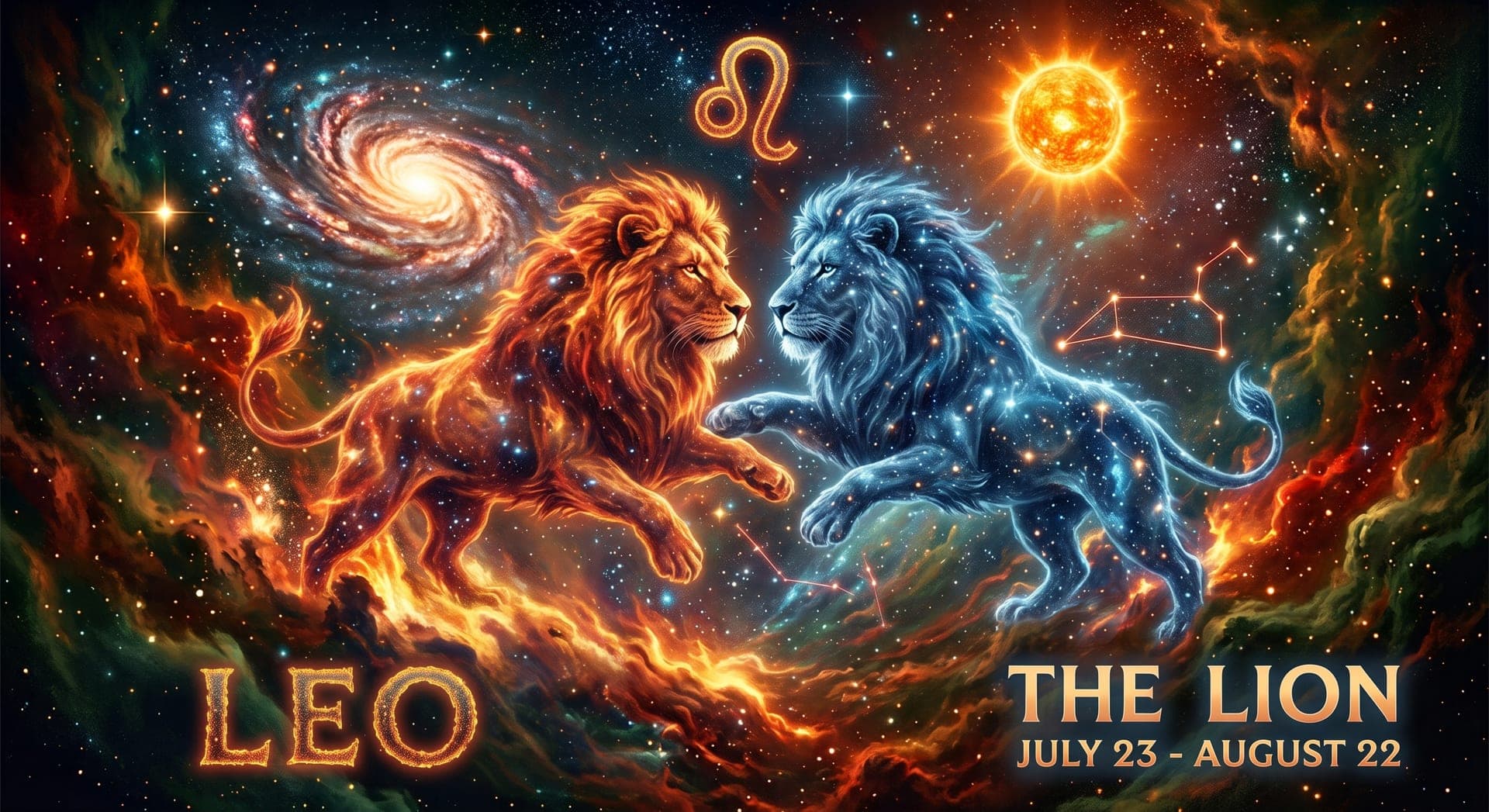
Leo, the fifth sign of the zodiac, spans July 23 to August 22 and is symbolized by the lion, an animal long associated with courage, pride, and natural leadership. Ruled by the Sun, the center of the solar system and the source of light and life, Leo is widely regarded as one of the most confident, warm, and charismatic signs of the zodiac, naturally drawn to the spotlight. As a Fire sign, Leo approaches life with passion, enthusiasm, and a flair for the dramatic, rarely content to blend quietly into the background. Its Fixed modality gives Leo a strong sense of loyalty and consistency, along with a stubborn streak once its mind is made up. People born under this sign are often natural performers, leaders, or creatives who thrive when appreciated and celebrated by those around them. Leo's generosity and warmth make it a beloved friend and steadfast ally, though its genuine need for recognition and admiration can tip into vanity or a demand for center stage if left unchecked.
Personality Traits
Strengths
- Naturally charismatic leader
- Generous and warm-hearted
- Confident and self-assured
- Creative and expressive
- Loyal to friends and family
Weaknesses
- Prone to arrogance
- Craves attention and validation
- Stubborn once decided
- Can be domineering
- Sensitive to criticism of their ego
Compatible Signs
Fun Facts
- Leo's lion symbol connects to the Greek myth of the Nemean Lion, slain by Hercules as the first of his twelve labors.
- Leo is ruled by the Sun, the only zodiac sign ruled directly by a star rather than a planet or moon.
- As a Fixed Fire sign, Leo season falls at the height of summer, when the sun's warmth and intensity are strongest in the Northern Hemisphere.
- Notable Leos include Barack Obama, Madonna, Jennifer Lawrence, and Napoleon Bonaparte.
- Leo rules the heart in traditional medical astrology, reflecting the sign's association with vitality, courage, and life force.
Born on August 18
- 1685
Brook Taylor
English mathematician best known for developing the Taylor series and Taylor's theorem in calculus.
- 1750
Antonio Salieri
Italian classical composer
- 1792
John Russell, 1st Earl Russell
English statesman who served twice as Prime Minister and helped pass the Great Reform Act of 1832.
- 1830
Franz Joseph I
Emperor of Austria
- 1855
Alfred Wallis
English self-taught painter whose naive maritime scenes influenced a generation of modern British artists.
- 1916
Moura Lympany
English concert pianist celebrated for her interpretations of Rachmaninoff and other Romantic composers.
- 1920
Godfrey Evans
English cricketer regarded as one of the greatest wicketkeepers in Test match history.
- 1933
Roman Polanski
French-Polish film director
- 1934
Roberto Clemente
Puerto Rican Major League Baseball player
- 1937
Sheila Cassidy
English physician and author known for surviving torture in Pinochet-era Chile and later campaigning for human rights and palliative care.
- 1948
John Scarlett
English intelligence officer who served as Chief of the Secret Intelligence Service (MI6).
- 1952
Patrick Swayze
American actor known for "Dirty Dancing"
- 1961
Huw Edwards
Welsh journalist and former BBC News at Ten presenter.
- 1969
Edward Norton
American actor
- 1978
Andy Samberg
American comedian and actor
- 1988
G-Dragon
South Korean rapper and singer
On This Day in History
- 707
Princess Abe becomes Empress Genmei, ascending the Japanese imperial throne.
Empress Genmei ascended the Japanese imperial throne following the abdication of her daughter, going on to oversee the establishment of a permanent imperial capital at Heijo-kyo, in what is now the city of Nara, ending the earlier practice of relocating the capital with each new emperor. Her reign also saw the commissioning of the Kojiki, Japan's oldest surviving written historical chronicle, compiled to legitimize imperial rule through mythological and genealogical record.
- 1304
The Battle of Mons-en-Pevele ends in a draw between French and Flemish forces.
French and Flemish forces clashed inconclusively near Mons-en-Pevele during ongoing conflict between the Kingdom of France and the rebellious County of Flanders, with neither side achieving a decisive tactical victory despite substantial casualties on both sides. The stalemate ultimately contributed to a negotiated peace settlement the following year that restored a degree of Flemish autonomy within the French feudal system.
- 1487
The Siege of Malaga concludes with Castilian and Aragonese forces capturing the city.
After a prolonged siege, the strategically important Muslim stronghold of Malaga fell to the combined Christian forces of Castile and Aragon during the Reconquista, with much of the surviving population subsequently enslaved or ransomed, marking a significant step toward the eventual conquest of Granada.
- 1572
Henry of Navarre marries Margaret of Valois in an attempt to reconcile Catholic and Protestant factions in France.
In an attempt to heal the bitter religious divide fueling France's Wars of Religion, the Protestant Henry of Navarre married the Catholic princess Margaret of Valois in Paris, though the union failed to prevent the devastating St. Bartholomew's Day massacre that erupted just days later.
- 1612
The trials of the Pendle and Samlesbury witches, among the most notorious witch trials in English history, begin at Lancaster Assizes.
Twenty people, mostly from villages around Pendle Hill in Lancashire, were accused of witchcraft after a chain of local accusations and confessions extracted under questioning. Ten were hanged following the trial, one of the best-documented witchcraft cases of the era thanks to the court clerk's published account. The Pendle trials remain one of the most studied episodes of England's witch-hunting period.
- 1759
A British fleet defeats a French fleet attempting to slip through the Strait of Gibraltar at the Battle of Lagos.
Admiral Edward Boscawen's Royal Navy squadron intercepted and destroyed a French force trying to break out of the Mediterranean to join an invasion fleet massing for a planned assault on Britain. The victory, part of the Seven Years' War's 'Year of Victories,' helped cripple French naval power and thwart French invasion plans against the British Isles.
- 1783
A huge fireball meteor is seen streaking across Great Britain as it passes over the east coast.
The 1783 Great Meteor was witnessed by thousands across the country and as far as continental Europe, generating widespread public fascination and scientific debate about its nature. Contemporary astronomers and natural philosophers documented and discussed the phenomenon, making it one of the most widely observed and recorded meteor events of eighteenth-century Britain.
- 1868
French astronomer Pierre Janssen discovers helium while observing a solar eclipse.
While analyzing the spectrum of light emitted during a solar eclipse observed from India, French astronomer Pierre Janssen detected an unfamiliar spectral line that could not be attributed to any known element, leading to the identification of a previously unknown element later named helium.
- 1868
French astronomer Pierre Janssen observes a new spectral line in the Sun's chromosphere during an eclipse, leading to the discovery of helium.
While studying a total solar eclipse from India, Janssen detected a bright yellow line in the solar spectrum that did not match any known element. Astronomer Norman Lockyer identified the same line independently soon after and proposed the element be named helium, after the Greek sun god Helios. It became the first element discovered in space before later being found on Earth.
- 1877
American astronomer Asaph Hall discovers Phobos, one of the two moons of Mars.
American astronomer Asaph Hall, working at the U.S. Naval Observatory in Washington, discovered the smaller and more distant of Mars's two tiny moons after weeks of painstaking telescopic observation, naming it Phobos after the Greek personification of fear. Its companion moon, discovered the same week and named Deimos for dread, together honor the mythological sons who accompanied the war god Ares into battle.
- 1877
American astronomer Asaph Hall discovers Phobos, the larger and inner of Mars's two small moons.
Working at the US Naval Observatory in Washington, D.C., Hall had nearly given up his systematic search for Martian satellites when his wife reportedly urged him to continue. Days after finding Deimos, he spotted Phobos, named after the Greek god of fear. The discovery of Mars's two moons was a landmark in nineteenth-century observational astronomy and planetary science.
- 1920
The 19th Amendment to the U.S. Constitution is ratified, guaranteeing women's suffrage nationwide.
After more than seven decades of organized activism dating back to the 1848 Seneca Falls Convention, the 19th Amendment to the U.S. Constitution was officially ratified when Tennessee became the decisive thirty-sixth state needed for adoption. The amendment constitutionally guaranteed American women the right to vote nationwide, though significant barriers to voting persisted for many women of color for decades afterward.
- 1920
The Nineteenth Amendment to the United States Constitution, guaranteeing women the right to vote, is ratified.
The amendment's ratification came after decades of campaigning by the American women's suffrage movement, capping a fight that stretched back to the Seneca Falls Convention of 1848. Tennessee's ratification provided the decisive thirty-sixth state needed for the amendment to take effect, extending the franchise to millions of American women in time for that year's presidential election.
- 1923
The first British women's track and field championships are held in London.
Organized by the Women's Amateur Athletic Association, the event gave female athletes in Britain an official national championship for the first time, at a period when women's participation in competitive sport was still contested. The championships became an annual fixture and played an important role in establishing women's athletics as a recognized and organized sport in the United Kingdom.
- 1940
The Royal Air Force and Luftwaffe suffer their heaviest combined losses of the Battle of Britain on what becomes known as "The Hardest Day."
In the largest single-day aerial engagement of the Battle of Britain, both the Royal Air Force and the German Luftwaffe suffered their heaviest combined losses of the entire campaign, a costly clash that historians have since dubbed "The Hardest Day."
- 1940
The Hardest Day, the largest air battle of the Battle of Britain to that point, is fought between the RAF and the Luftwaffe.
German bombers and fighters launched a massive series of raids against RAF airfields in southeast England, aiming to cripple Fighter Command ahead of a planned invasion. Both sides suffered heavy losses in a day of intense aerial combat. The RAF's resilience that day is remembered as a turning point in the broader Battle of Britain, which ultimately forced Hitler to abandon invasion plans.
- 1945
Sukarno assumes office as the first president of Indonesia.
Indonesian nationalist leader Sukarno was formally installed as the newly independent nation's first president, beginning a rule that combined charismatic nationalist leadership with increasingly authoritarian governance over more than two decades. His presidency lasted until 1967, when he was gradually stripped of power amid political turmoil and replaced by General Suharto following a failed coup attempt two years earlier.
- 1945
Sukarno is formally installed as the first president of the newly proclaimed Republic of Indonesia.
Following the proclamation of independence two days earlier, Indonesia's new Central Indonesian National Committee confirmed Sukarno as president and Mohammad Hatta as vice president. Indonesia's independence was not yet recognized by the Netherlands, which fought to reassert colonial control, but Sukarno's installation marked the formal beginning of the republic's government structure.
- 1963
James Meredith becomes the first African American to graduate from the University of Mississippi.
Meredith's enrollment at the university a year earlier had sparked deadly riots and required federal troops to enforce a court order desegregating the institution. His graduation marked a hard-won milestone in the American civil rights movement, demonstrating that federal authority could override staunch local resistance to school integration in the Deep South.
- 2005
A massive power blackout affects nearly 100 million people across Java, Indonesia.
A combination of severe regional drought reducing hydroelectric power generation and cascading technical grid failures triggered a massive blackout across the densely populated Indonesian island of Java and neighboring Bali, leaving an estimated 100 million people without electricity for several hours. The outage disrupted transportation, businesses, and hospitals, highlighting significant vulnerabilities in Indonesia's aging and increasingly strained electrical grid infrastructure.