What’s Observed on August 19
Born on August 19: Leo ♌
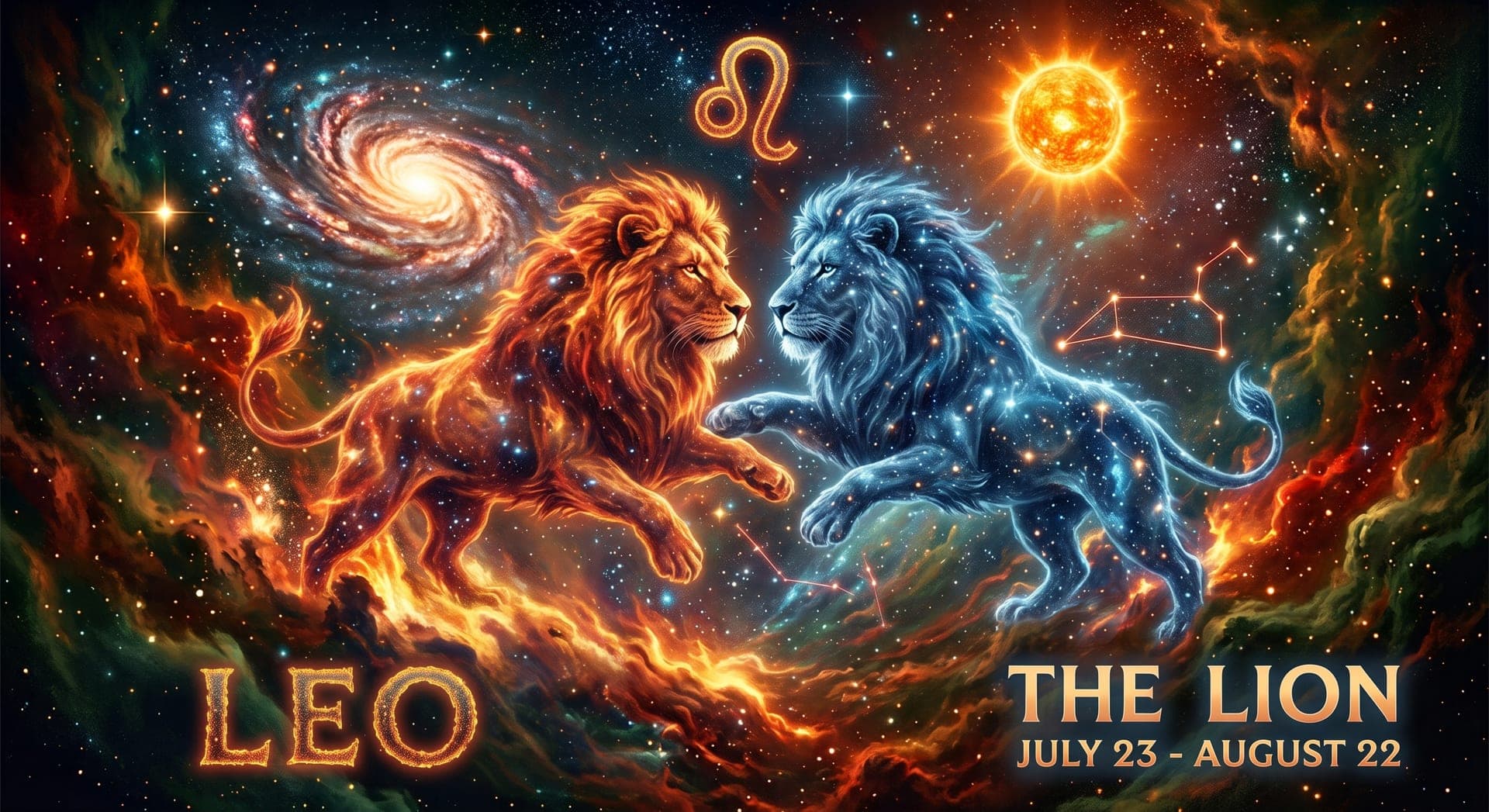
Leo, the fifth sign of the zodiac, spans July 23 to August 22 and is symbolized by the lion, an animal long associated with courage, pride, and natural leadership. Ruled by the Sun, the center of the solar system and the source of light and life, Leo is widely regarded as one of the most confident, warm, and charismatic signs of the zodiac, naturally drawn to the spotlight. As a Fire sign, Leo approaches life with passion, enthusiasm, and a flair for the dramatic, rarely content to blend quietly into the background. Its Fixed modality gives Leo a strong sense of loyalty and consistency, along with a stubborn streak once its mind is made up. People born under this sign are often natural performers, leaders, or creatives who thrive when appreciated and celebrated by those around them. Leo's generosity and warmth make it a beloved friend and steadfast ally, though its genuine need for recognition and admiration can tip into vanity or a demand for center stage if left unchecked.
Personality Traits
Strengths
- Naturally charismatic leader
- Generous and warm-hearted
- Confident and self-assured
- Creative and expressive
- Loyal to friends and family
Weaknesses
- Prone to arrogance
- Craves attention and validation
- Stubborn once decided
- Can be domineering
- Sensitive to criticism of their ego
Compatible Signs
Fun Facts
- Leo's lion symbol connects to the Greek myth of the Nemean Lion, slain by Hercules as the first of his twelve labors.
- Leo is ruled by the Sun, the only zodiac sign ruled directly by a star rather than a planet or moon.
- As a Fixed Fire sign, Leo season falls at the height of summer, when the sun's warmth and intensity are strongest in the Northern Hemisphere.
- Notable Leos include Barack Obama, Madonna, Jennifer Lawrence, and Napoleon Bonaparte.
- Leo rules the heart in traditional medical astrology, reflecting the sign's association with vitality, courage, and life force.
Born on August 19
- 1631
John Dryden
English poet, literary critic, and playwright who became England's first official Poet Laureate.
- 1646
John Flamsteed
English astronomer who became the first Astronomer Royal and founded the Royal Observatory's stellar catalogue.
- 1689
Samuel Richardson
English novelist and printer whose epistolary novel "Pamela" helped establish the modern English novel.
- 1711
Edward Boscawen
English admiral and politician known for his naval victories, including the Battle of Lagos.
- 1871
Orville Wright
American aviation pioneer who co-invented the first successful airplane
- 1881
George Enescu
Romanian composer and violinist
- 1883
Coco Chanel
French fashion designer who founded the Chanel brand
- 1900
Gilbert Ryle
English philosopher best known for his critique of Cartesian dualism in "The Concept of Mind."
- 1921
Gene Roddenberry
American writer who created "Star Trek"
- 1931
Bill Shoemaker
American jockey
- 1939
Ginger Baker
English drummer known for his powerful, jazz-influenced playing style with the rock band Cream.
- 1945
Ian Gillan
English singer-songwriter best known as the lead vocalist of the rock band Deep Purple.
- 1946
Bill Clinton
42nd President of the United States
- 1951
John Deacon
English bass guitarist and songwriter for the rock band Queen.
- 1969
Matthew Perry
American actor known for "Friends"
On This Day in History
- 43 BCE
Octavian compels the Roman Senate to elect him consul in the aftermath of Julius Caesar's assassination.
In the political chaos following his adoptive father Julius Caesar's assassination, the nineteen-year-old Octavian marched on Rome at the head of loyal legions and pressured the Senate into electing him consul despite his young age and lack of prior political office. The bold, unprecedented move marked a crucial early step in Octavian's methodical rise toward becoming Rome's first emperor under the name Augustus.
- 1274
Edward I is crowned King of England at Westminster Abbey.
Edward I's coronation at Westminster Abbey came seventeen days after his return to England from the Ninth Crusade, in a ceremony attended by the King of Scotland and several Welsh princes among the assembled nobility. The occasion was marked by lavish celebrations, including a reported outpouring of wine from the abbey's conduits for the public, as England welcomed a monarch whose reign would prove transformative for English law and governance.
- 1274
Edward I is crowned King of England at Westminster Abbey.
Edward had been abroad on crusade when his father, Henry III, died in 1272, and his coronation took place nearly two years later once he returned to England. Known as 'Longshanks' and later as the 'Hammer of the Scots,' Edward went on to reorganize English law and government and wage extensive military campaigns in Wales and Scotland during his thirty-five-year reign.
- 1561
Mary, Queen of Scots, returns to Scotland after spending thirteen years in France.
After the sudden death of her French husband left her a young widow, Mary returned to rule Scotland directly for the first time since childhood, though her turbulent reign, marked by controversial marriages and political intrigue, ultimately ended in her forced abdication and long imprisonment in England.
- 1561
Mary, Queen of Scots, aged eighteen, returns to Scotland after thirteen years in France.
Widowed by the death of her husband, King Francis II of France, Mary sailed back to a Scotland that had turned decisively Protestant during her absence, while she remained Catholic. Her return set in motion the turbulent personal and political struggles of her reign, which would end in imprisonment and eventual execution ordered by her cousin, Elizabeth I of England.
- 1604
A besieging Dutch and English army under Maurice of Orange forces the Spanish garrison of Sluis to surrender.
English troops fighting alongside Dutch forces during the Eighty Years' War helped capture the strategically important port town of Sluis in Flanders. English participation reflected the alliance between Protestant England and the Dutch Republic against Habsburg Spain, part of a broader pattern of English military involvement on the continent during the reign of James I.
- 1659
Parliamentarian forces under John Lambert defeat Royalist troops led by George Booth at the Battle of Winnington Bridge, crushing Booth's Uprising.
The rising, launched in Cheshire in support of the exiled Charles Stuart, was one of several royalist plots during the unstable final year of the English Commonwealth. Lambert's swift victory ended the rebellion but also strengthened his own political standing, contributing to the power struggles that led to the collapse of republican government and the Restoration of the monarchy the following year.
- 1666
English Rear Admiral Robert Holmes leads a devastating raid on the Dutch island of Terschelling, destroying well over a hundred merchant ships.
During the Second Anglo-Dutch War, Holmes's squadron landed on Terschelling and torched a huge fleet of Dutch merchant vessels sheltering in the roadstead, an act that became known as 'Holmes's Bonfire.' The destruction dealt a serious blow to Dutch trade and prestige, and the Dutch retaliated the following year with their own devastating raid on the English fleet at Chatham.
- 1745
Prince Charles Edward Stuart raises his standard at Glenfinnan, launching the Jacobite rising known as 'the Forty-Five.'
Bonnie Prince Charlie's landing in Scotland rallied Highland clans loyal to the exiled Stuart dynasty in an attempt to reclaim the British throne for his father. The rebellion initially achieved striking success, advancing as far south as Derby, before being decisively crushed at the Battle of Culloden the following year, ending Jacobite hopes and transforming the Scottish Highlands forever.
- 1812
USS Constitution defeats HMS Guerriere during the War of 1812, earning the nickname "Old Ironsides."
In one of the most celebrated naval duels of the War of 1812, the American frigate USS Constitution defeated the British warship HMS Guerriere off the coast of Nova Scotia, with cannonballs reportedly bouncing off the American ship's thick oak hull, earning it the enduring nickname "Old Ironsides."
- 1812
The American frigate USS Constitution defeats the British frigate HMS Guerriere off the coast of Nova Scotia.
In one of the first major naval engagements of the War of 1812, Constitution's guns battered Guerriere until she was left dismasted and unable to continue, forcing her surrender and eventual destruction. British cannonballs reportedly bounced off Constitution's oak hull, earning the American ship the enduring nickname 'Old Ironsides' and dealing a psychological blow to the Royal Navy's reputation.
- 1839
France announces Louis Daguerre's photographic process as a free gift to the world.
The French government, having purchased the rights to Louis Daguerre's photographic process from its inventor in exchange for a lifetime pension, announced it would make the groundbreaking image-capturing technology freely available to the entire world without patent restriction. The generous decision rapidly accelerated photography's global adoption and development, transforming visual documentation, portraiture, and eventually journalism within just a few decades.
- 1839
The French government announces the daguerreotype photographic process as a free gift to the world.
Developed by Louis Daguerre, the process produced a detailed, permanent image on a silver-coated copper plate and was the first commercially practical form of photography. Its public unveiling before the French Academy of Sciences is widely regarded as the birth of practical photography, launching a technology that would transform art, science, journalism, and personal memory within decades.
- 1944
Paris rises against German occupation, aided by advancing Allied troops.
As Allied forces approached the city following the Normandy landings, French Resistance fighters and civilians rose in armed insurrection against the German occupying garrison, holding out for several days until Free French and American troops arrived to complete the city's liberation.
- 1953
A CIA- and MI6-backed coup overthrows Iranian Prime Minister Mohammad Mosaddegh.
A joint operation by the American CIA and British intelligence services helped orchestrate the overthrow of Iran's democratically elected Prime Minister Mohammad Mosaddegh, who had nationalized the country's oil industry, restoring the Shah's authoritarian rule for the following 26 years.
- 1953
The CIA and Britain's MI6 help engineer the overthrow of Iran's democratically elected prime minister, Mohammad Mosaddegh.
Mosaddegh had nationalized Iran's British-controlled oil industry, prompting British intelligence to enlist American help in orchestrating his removal. The coup reinstated the authority of Shah Mohammad Reza Pahlavi under a more pliant government. Long shrouded in secrecy, the operation later became a defining example of Cold War-era covert action and a lasting source of Iranian resentment toward Britain and the United States.
- 1987
Michael Ryan shoots and kills sixteen people in the English town of Hungerford before taking his own life.
Armed with semi-automatic rifles, Ryan went on a rampage through the Berkshire town, killing his mother among his victims before being cornered by police and dying by suicide. The massacre, one of the deadliest mass shootings in British history, prompted the UK government to tighten firearms legislation significantly, including new restrictions on semi-automatic weapons.
- 1989
Hundreds of East Germans cross into Austria during the Pan-European Picnic, an early crack in the Iron Curtain.
Hundreds of East German citizens took advantage of a Hungarian-Austrian border-opening event billed as a symbolic "peace picnic" to cross into the West, an early breach in the Iron Curtain that foreshadowed the fall of the Berlin Wall just months later.
- 1991
Soviet hardliners place President Mikhail Gorbachev under house arrest, beginning the August Coup.
Hardline Soviet officials opposed to Mikhail Gorbachev's reform agenda attempted a coup, placing him under house arrest at his vacation dacha in Crimea, though the poorly organized putsch collapsed within days amid public resistance led by Boris Yeltsin, accelerating the Soviet Union's ultimate dissolution.
- 2004
Google holds its initial public offering on the Nasdaq stock exchange.
Search engine company Google went public on the Nasdaq stock exchange using an unconventional Dutch auction process intended to democratize share allocation rather than favoring large institutional investors, raising roughly $1.9 billion. The unusual approach, along with the company's rapid subsequent growth, instantly made founders Larry Page and Sergey Brin, along with numerous early employees, enormously wealthy.