
What’s Observed on August 17
Born on August 17: Leo ♌
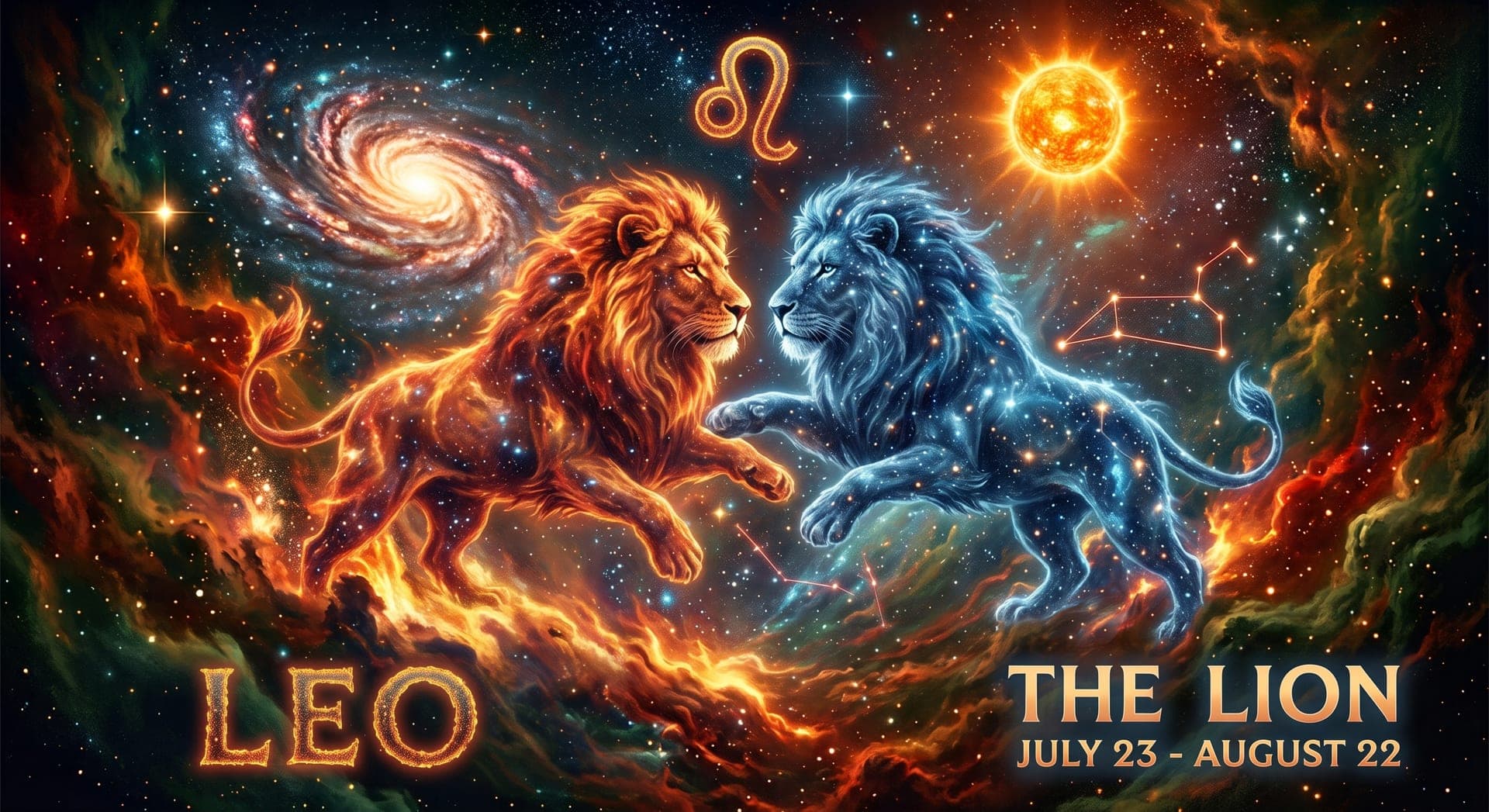
Leo, the fifth sign of the zodiac, spans July 23 to August 22 and is symbolized by the lion, an animal long associated with courage, pride, and natural leadership. Ruled by the Sun, the center of the solar system and the source of light and life, Leo is widely regarded as one of the most confident, warm, and charismatic signs of the zodiac, naturally drawn to the spotlight. As a Fire sign, Leo approaches life with passion, enthusiasm, and a flair for the dramatic, rarely content to blend quietly into the background. Its Fixed modality gives Leo a strong sense of loyalty and consistency, along with a stubborn streak once its mind is made up. People born under this sign are often natural performers, leaders, or creatives who thrive when appreciated and celebrated by those around them. Leo's generosity and warmth make it a beloved friend and steadfast ally, though its genuine need for recognition and admiration can tip into vanity or a demand for center stage if left unchecked.
Personality Traits
Strengths
- Naturally charismatic leader
- Generous and warm-hearted
- Confident and self-assured
- Creative and expressive
- Loyal to friends and family
Weaknesses
- Prone to arrogance
- Craves attention and validation
- Stubborn once decided
- Can be domineering
- Sensitive to criticism of their ego
Compatible Signs
Fun Facts
- Leo's lion symbol connects to the Greek myth of the Nemean Lion, slain by Hercules as the first of his twelve labors.
- Leo is ruled by the Sun, the only zodiac sign ruled directly by a star rather than a planet or moon.
- As a Fixed Fire sign, Leo season falls at the height of summer, when the sun's warmth and intensity are strongest in the Northern Hemisphere.
- Notable Leos include Barack Obama, Madonna, Jennifer Lawrence, and Napoleon Bonaparte.
- Leo rules the heart in traditional medical astrology, reflecting the sign's association with vitality, courage, and life force.
Born on August 17
- 1786
Davy Crockett
American frontiersman and politician
- 1840
Wilfrid Scawen Blunt
English poet and anti-imperialist activist known for his campaigns against British colonial rule in Egypt, India, and Ireland.
- 1887
Marcus Garvey
Jamaican political activist and orator
- 1893
Mae West
American actress and screenwriter
- 1894
William Rootes, 1st Baron Rootes
English businessman who built the Rootes Group into one of Britain's largest car manufacturing companies.
- 1911
Mikhail Botvinnik
Soviet chess grandmaster
- 1921
Geoffrey Elton
German-born British historian best known for his work on Tudor government, including "The Tudor Revolution in Government"
- 1930
Ted Hughes
English poet and Poet Laureate, celebrated for collections such as "The Hawk in the Rain" and "Crow."
- 1932
V. S. Naipaul
Trinidad-born British writer and Nobel laureate best known for novels such as "A House for Mr Biswas" and "A Bend in the River"
- 1957
Robin Cousins
British figure skater who won Olympic gold in 1980, one of Britain's most successful figure skaters.
- 1960
Sean Penn
American actor and director
- 1977
Thierry Henry
French professional footballer
- 1982
Phil Jagielka
English footballer who made his name as a defender for Everton and the England national team.
- 1989
Rachel Corsie
Scottish footballer who has captained the Scotland women's national team.
- 1992
Saraya-Jade Bevis (Paige)
English professional wrestler who became a WWE Divas Champion known by the ring name Paige.

On This Day in History
- 1424
English forces defeat a much larger French army at the Battle of Verneuil during the Hundred Years' War.
During the Hundred Years' War, an English force under the Earl of Salisbury and John Talbot decisively defeated a considerably larger French and Scottish army near Verneuil in Normandy, temporarily consolidating English control over the region and dealing a significant setback to French resistance efforts.
- 1424
An English army under John, Duke of Bedford, crushes a much larger French and Scottish force at the Battle of Verneuil.
Fighting during the Hundred Years' War, Bedford's outnumbered English troops routed the combined French and Scottish army, killing the Earl of Douglas among the enemy dead. Sometimes called a 'second Agincourt,' the victory secured English control over Normandy for several more years and stood as one of the most one-sided English triumphs of the entire war.
- 1549
English government forces crush the Prayer Book Rebellion at the Battle of Sampford Courtenay in Devon.
Catholic commoners in Devon and Cornwall had risen up against the imposition of the new English-language Book of Common Prayer under Edward VI, laying siege to Exeter. Royal troops finally broke the rebellion at Sampford Courtenay, inflicting heavy casualties on the rebels. The defeat cemented Protestant liturgy in England and marked one of the bloodiest domestic uprisings of the Tudor period.
- 1560
The Scottish Parliament abolishes papal authority and establishes Protestantism as the national religion of Scotland.
Meeting in Edinburgh, the Reformation Parliament repudiated the authority of the Pope and outlawed the Catholic Mass, formally breaking Scotland from Rome. The move, driven by reformers such as John Knox, aligned Scotland with Protestant England and reshaped the religious and political landscape of the British Isles for centuries, setting the stage for the eventual union of the Scottish and English crowns.
- 1585
The Siege of Antwerp ends with Spanish forces capturing the city after more than half its population flees.
After a lengthy siege that severely depleted the city's population through starvation and disease, Spanish forces under Alexander Farnese finally captured the major commercial port of Antwerp, prompting a substantial exodus of the city's skilled merchant and artisan population northward to Amsterdam.
- 1585
The first English colonists land at Roanoke Island under the leadership of Ralph Lane.
Under Sir Walter Raleigh's sponsorship, the first group of English colonists established a settlement on Roanoke Island off the coast of present-day North Carolina, an early attempt at permanent English colonization that ultimately failed and later became famous as the mysterious "Lost Colony."
- 1585
The first group of English colonists sent by Sir Walter Raleigh lands on Roanoke Island to found England's earliest American colony.
Led by Ralph Lane, the settlers established a foothold on the coast of present-day North Carolina under Raleigh's royal charter to colonize the New World. Plagued by poor relations with local Native Americans and dwindling supplies, the colony was abandoned within a year, but it marked England's first serious attempt at establishing a permanent presence in North America.
- 1597
Robert Devereux, 2nd Earl of Essex, and Sir Walter Raleigh set sail on the Islands Voyage, an English naval expedition to the Azores.
Authorized by Elizabeth I, the expedition aimed to intercept Spanish treasure fleets and strike at Spanish naval power in the Azores. Command friction between Essex and Raleigh, along with poor weather, undermined the mission's effectiveness. Though largely unsuccessful, the voyage was one of several English naval campaigns of the late Elizabethan era aimed at weakening Spain's hold on the Atlantic.
- 1648
Parliamentarian forces led by Oliver Cromwell decisively defeat a Royalist and Scottish army at the Battle of Preston.
The battle effectively ended the Second English Civil War, as Cromwell's New Model Army destroyed an invading force raised by Scottish Engagers allied with supporters of the captive Charles I. The victory reasserted Parliamentarian control over England and paved the way for the king's trial and execution the following January.
- 1807
Robert Fulton's steamboat inaugurates the world's first commercial steamboat service on the Hudson River.
Inventor Robert Fulton's steamboat, formally named the North River Steamboat, completed its inaugural commercial voyage up the Hudson River from New York City to Albany in roughly 32 hours, a journey that previously took sailing vessels several days depending on wind conditions. The successful demonstration proved the practical commercial viability of steam-powered water transportation and helped launch a transportation revolution across America's rivers and eventually the oceans.
- 1836
The British Parliament passes an act establishing the civil registration of births, marriages, and deaths in England and Wales.
The Births and Deaths Registration Act 1836 created a national system of civil registration, run by a new General Register Office, that operated independently of parish christening and burial records. It gave the state, rather than the church, responsibility for recording vital life events, laying the foundation for the genealogical and statistical records still used in Britain today.
- 1876
Wagner's final Ring cycle opera premieres at the Bayreuth Festspielhaus, completing the first full cycle.
Richard Wagner's "Gotterdammerung," the fourth and final opera in his monumental "Der Ring des Nibelungen" cycle, received its premiere performance, completing the first full presentation of the epic work at the Bayreuth Festival theater Wagner had specifically designed for it. The complete cycle's premiere, attended by figures including Kaiser Wilhelm I, marked the culmination of over two decades of composition and represented one of the most ambitious artistic undertakings of the nineteenth century.
- 1896
Bridget Driscoll becomes the first pedestrian recorded to be killed in a collision with a motor car in the United Kingdom.
Driscoll was struck by a demonstration car travelling at roughly four miles per hour in the grounds of Crystal Palace, London. The coroner's jury returned a verdict of accidental death, and the coroner reportedly expressed hope such a tragedy would never happen again. Her death is widely cited as the first British traffic fatality of the motor age.
- 1945
Indonesia proclaims independence, sparking years of conflict with the Dutch.
Indonesian nationalist leader Sukarno proclaimed independence from Dutch colonial rule just two days after Japan's surrender created a power vacuum in the region following its wartime occupation of the Dutch East Indies. The declaration launched a bitter four-year armed and diplomatic struggle against Dutch efforts to reassert colonial control before the Netherlands finally formally recognized full Indonesian sovereignty in 1949.
- 1945
George Orwell's allegorical novel "Animal Farm" is first published.
George Orwell's satirical allegory depicting a group of farm animals who overthrow their human owner only to fall under a new, equally oppressive leadership, was published, offering a thinly veiled critique of Soviet totalitarianism that became a landmark of twentieth-century political literature.
- 1945
George Orwell's allegorical novella Animal Farm, a satire of Soviet totalitarianism, is first published in England.
Written during the final years of the Second World War, the book uses a fable about farm animals overthrowing their human owner to critique the corruption of the Russian Revolution's ideals under Stalin. Orwell struggled to find a publisher willing to print a critique of a wartime ally, but the book went on to become one of the most influential political satires of the twentieth century.
- 1945
Sukarno proclaims the independence of Indonesia from Dutch colonial rule.
Just two days after Japan's surrender ended its wartime occupation of the Dutch East Indies, nationalist leader Sukarno read out a brief proclamation of independence in Jakarta and was installed as the new republic's first president. The declaration launched a four-year armed and diplomatic struggle against the returning Dutch before independence was internationally recognized in 1949.
- 1947
The Radcliffe Line, dividing India and Pakistan, is publicly revealed.
British judge Cyril Radcliffe's hastily drawn boundary line dividing British India into the new nations of India and Pakistan was made public, having been kept secret until after the independence ceremonies to avoid immediate unrest, though its announcement still triggered massive and often violent population displacement.
- 1962
Peter Fechter is fatally shot by East German guards while attempting to cross the newly built Berlin Wall.
East German teenager Peter Fechter was shot by border guards while attempting to climb over the Berlin Wall and was left to bleed to death in the border zone for nearly an hour, as guards on both sides declined to render aid, an incident that became a powerful symbol of Cold War brutality.
- 2008
Michael Phelps becomes the first person to win eight gold medals at a single Olympic Games.
American swimmer Michael Phelps won his eighth gold medal of the Beijing Olympics as part of the U.S. men's 4x100-meter medley relay team, surpassing Mark Spitz's previous record of seven gold medals won at a single Olympic Games in 1972. The extraordinary achievement, accomplished across eight different events, cemented Phelps's status as widely regarded as the most decorated Olympian in modern history.