What’s Observed on August 16
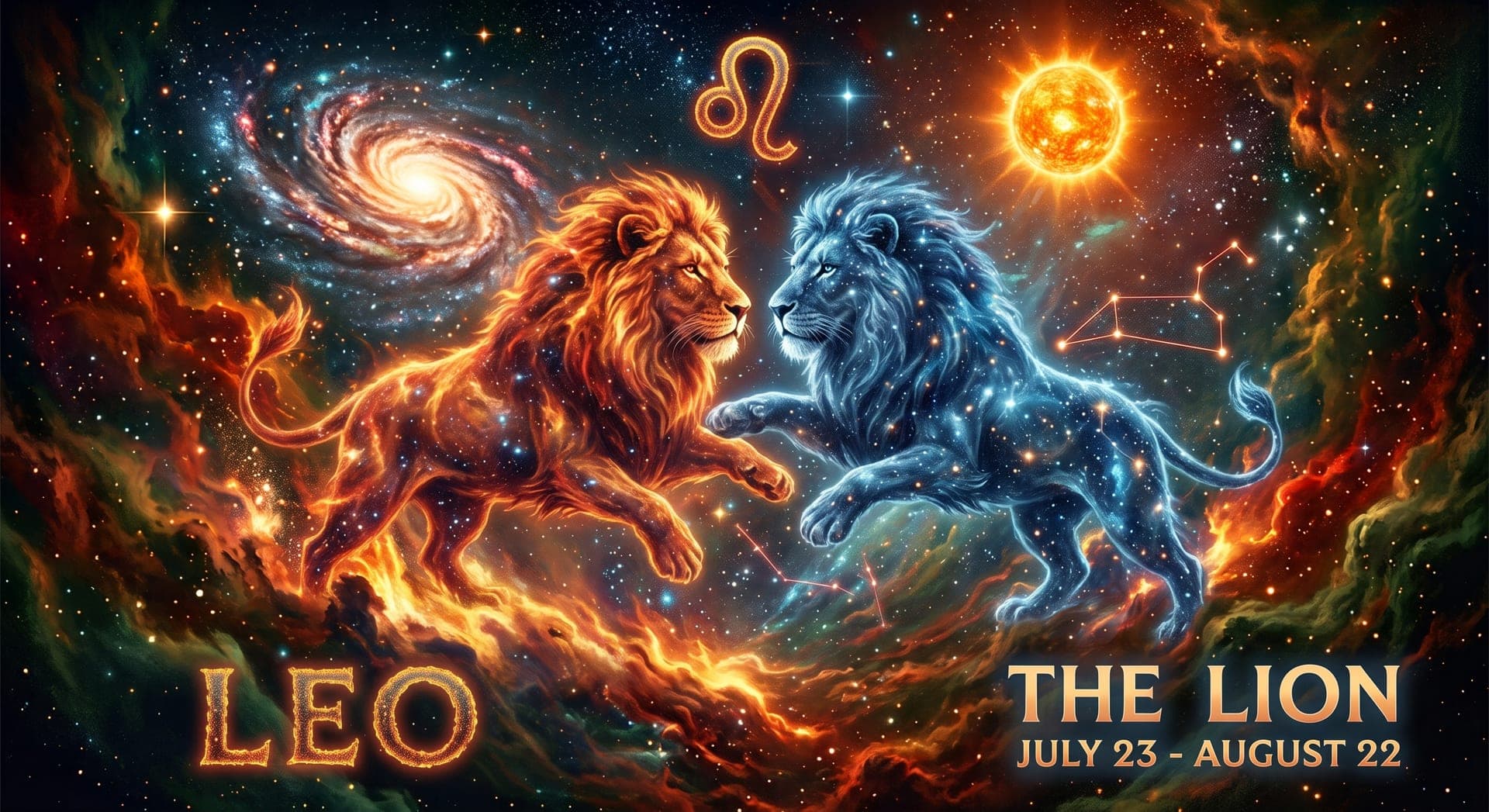
Born on August 16: Leo ♌
Leo, the fifth sign of the zodiac, spans July 23 to August 22 and is symbolized by the lion, an animal long associated with courage, pride, and natural leadership. Ruled by the Sun, the center of the solar system and the source of light and life, Leo is widely regarded as one of the most confident, warm, and charismatic signs of the zodiac, naturally drawn to the spotlight. As a Fire sign, Leo approaches life with passion, enthusiasm, and a flair for the dramatic, rarely content to blend quietly into the background. Its Fixed modality gives Leo a strong sense of loyalty and consistency, along with a stubborn streak once its mind is made up. People born under this sign are often natural performers, leaders, or creatives who thrive when appreciated and celebrated by those around them. Leo's generosity and warmth make it a beloved friend and steadfast ally, though its genuine need for recognition and admiration can tip into vanity or a demand for center stage if left unchecked.
Personality Traits
Strengths
- Naturally charismatic leader
- Generous and warm-hearted
- Confident and self-assured
- Creative and expressive
- Loyal to friends and family
Weaknesses
- Prone to arrogance
- Craves attention and validation
- Stubborn once decided
- Can be domineering
- Sensitive to criticism of their ego
Compatible Signs
Fun Facts
- Leo's lion symbol connects to the Greek myth of the Nemean Lion, slain by Hercules as the first of his twelve labors.
- Leo is ruled by the Sun, the only zodiac sign ruled directly by a star rather than a planet or moon.
- As a Fixed Fire sign, Leo season falls at the height of summer, when the sun's warmth and intensity are strongest in the Northern Hemisphere.
- Notable Leos include Barack Obama, Madonna, Jennifer Lawrence, and Napoleon Bonaparte.
- Leo rules the heart in traditional medical astrology, reflecting the sign's association with vitality, courage, and life force.
Born on August 16
- 1821
Arthur Cayley
English mathematician who made foundational contributions to the development of matrix algebra and group theory.
- 1864
Elsie Inglis
Scottish doctor and suffragist who founded the Scottish Women's Hospitals for Foreign Service during WWI
- 1888
T. E. Lawrence
British archaeologist, military officer, and writer known as 'Lawrence of Arabia' for his role in the Arab Revolt against the Ottoman Empire, chronicled in Seven Pillars of Wisdom.
- 1902
Georgette Heyer
English author who essentially created the modern Regency romance genre with novels such as These Old Shades and Frederica.
- 1912
Ted Drake
English footballer and manager who scored seven goals in a single match for Arsenal, a First Division record that still stands.
- 1913
Menachem Begin
Prime Minister of Israel and Nobel Peace Prize laureate
- 1920
Charles Bukowski
German-American poet and novelist
- 1934
Diana Wynne Jones
English author of fantasy novels for young readers, including Howl's Moving Castle and the Chrestomanci series.
- 1939
Trevor McDonald
Trinidadian-born British newsreader and journalist best known for presenting ITV's "News at Ten"
- 1945
Nigel Terry
English actor known for starring as King Arthur in the film Excalibur and as the young Henry II in The Lion in Winter.
- 1947
Katharine Hamnett
English fashion designer famous for her oversized slogan T-shirts, including the '58% Don't Want Pershing' design worn to meet Margaret Thatcher.
- 1954
James Cameron
Canadian filmmaker known for "Titanic" and "Avatar"
- 1954
George Galloway
Scottish politician and broadcaster known for his outspoken left-wing views and multiple terms as a British Member of Parliament.
- 1958
Madonna
American singer known as the Queen of Pop
- 1958
Angela Bassett
American actress
- 1960
Timothy Hutton
American actor
- 1962
Steve Carell
American actor and comedian
On This Day in History
- 1513
Henry VIII and Imperial forces defeat French troops at the Battle of the Spurs.
In a decisive engagement near Guinegate, forces of King Henry VIII of England, allied with Holy Roman Emperor Maximilian I, routed French cavalry so thoroughly that fleeing French horsemen reportedly abandoned their spurs in haste, giving the battle its popular nickname.
- 1513
Henry VIII and his Imperial allies rout French forces at the Battle of the Spurs near Guinegate.
Fought during Henry's campaign in northern France alongside troops of the Holy Roman Emperor Maximilian I, the battle earned its nickname from the speed with which fleeing French cavalry spurred their horses to escape rather than fight. Though militarily minor, the victory boosted Henry's early reputation as a warrior king and was celebrated as a triumph over England's traditional rival.
- 1652
English and Dutch fleets clash inconclusively off Plymouth in one of the early engagements of the First Anglo-Dutch War.
English ships under George Ayscue intercepted a Dutch convoy escorted by Michiel de Ruyter, leading to a fierce but indecisive battle in which neither side gained a lasting advantage. The engagement was one of many naval clashes in a war fought largely over trade and maritime supremacy, a rivalry that would keep England and the Dutch Republic in intermittent conflict for decades.
- 1777
American forces under General John Stark defeat British and Brunswick troops at the Battle of Bennington.
American militia forces under General John Stark decisively defeated a detachment of British and allied German troops sent to seize colonial supplies near Bennington, Vermont, inflicting heavy casualties that significantly weakened British General Burgoyne's broader campaign, contributing to his eventual surrender at Saratoga.
- 1777
American militia under John Stark rout a detachment of British and Hessian troops at the Battle of Bennington.
Sent by General John Burgoyne to seize supplies and horses in Vermont, the British force was overwhelmed by a much larger body of American militia, suffering heavy casualties and the loss of nearly a thousand men captured or killed. The defeat badly weakened Burgoyne's campaign and contributed directly to his surrender at Saratoga two months later, a turning point in the American Revolutionary War.
- 1780
British forces under Lord Cornwallis inflict a crushing defeat on the American army at the Battle of Camden, South Carolina.
Cornwallis's smaller but more disciplined force shattered the poorly prepared American militia, who fled almost immediately, leaving Continental Army regulars to be surrounded and destroyed. The rout was one of the worst American defeats of the Revolutionary War and temporarily secured British control of the South, though the campaign later unravelled amid guerrilla resistance and the arrival of Nathanael Greene's forces.
- 1812
American General William Hull surrenders Fort Detroit to British forces without a fight during the War of 1812.
Convinced by a bluff staged by British General Isaac Brock and his Native American allies under Tecumseh that a much larger force was besieging him, Hull surrendered the fort along with his entire army rather than risk a massacre. The bloodless British victory secured control of the Michigan Territory and was a significant early embarrassment for the United States in the war.
- 1819
Cavalry charge a crowd at a public meeting in Manchester, England, killing seventeen people in what becomes known as the Peterloo Massacre.
British cavalry charged into a large crowd of roughly 60,000 peaceful demonstrators advocating for parliamentary reform and expanded voting rights at St. Peter's Field in Manchester, killing at least seventeen people and injuring hundreds more in an event that became a rallying symbol for British democratic reform movements.
- 1819
Cavalry charge a crowd of pro-democracy protesters at St Peter's Field in Manchester, killing 17 people in the Peterloo Massacre.
Some 60,000 people had gathered peacefully to demand parliamentary reform and wider suffrage when local magistrates ordered mounted yeomanry to arrest the speakers, triggering a chaotic charge into the densely packed crowd. The massacre, satirically named after the Battle of Waterloo, provoked national outrage and is remembered as a pivotal moment in the long struggle for British democratic reform.
- 1858
President James Buchanan inaugurates transatlantic telegraph service by exchanging messages with Queen Victoria.
President James Buchanan and Britain's Queen Victoria exchanged the first messages sent via the newly completed transatlantic telegraph cable, a symbolic celebration of the technological achievement, though the cable's insulation soon failed and required a more durable replacement cable years later.
- 1858
US President James Buchanan and Queen Victoria exchange greetings over the newly completed transatlantic telegraph cable.
The cable, laid across the ocean floor by engineers including Cyrus Field, allowed messages to travel between Britain and North America in minutes rather than the weeks required by ship. The exchange of pleasantries between the two heads of state was celebrated as a triumph of Victorian engineering, though the cable failed within weeks and a reliable connection was not achieved until 1866.
- 1896
Gold is discovered in a Klondike River tributary in Canada's Yukon, triggering the Klondike Gold Rush.
Prospectors discovered substantial gold deposits along Bonanza Creek, a tributary of the Klondike River in Canada's remote Yukon Territory, triggering a massive rush of an estimated 100,000 prospectors seeking fortune in the harsh subarctic wilderness over the following two years. Most arrivals faced brutal conditions and found little gold, though the rush transformed towns like Dawson City and left a lasting mark on North American frontier mythology.
- 1906
A magnitude 8.2 earthquake devastates central Chile, killing nearly 3,900 people.
One of the deadliest earthquakes in Chilean history struck the central region of the country, including the port city of Valparaiso, generating a magnitude estimated at 8.2 and causing widespread destruction of buildings, fires, and infrastructure collapse. The disaster killed nearly 3,900 people and prompted early advances in Chilean seismological research given the country's ongoing vulnerability to major earthquakes along the Pacific Ring of Fire.
- 1923
The United Kingdom establishes the Ross Dependency in Antarctica, placing it under the administration of New Zealand.
Carving the territory out of British claims in the Antarctic, London handed day-to-day administration to the Governor-General of the Dominion of New Zealand, reflecting Britain's practice of delegating remote imperial territories to its self-governing dominions. The Ross Dependency remains under New Zealand administration today, encompassing a substantial sector of Antarctica and the Ross Sea.
- 1930
The first British Empire Games open in Hamilton, Ontario, the forerunner of today's Commonwealth Games.
Conceived as a friendly, less commercialised alternative to the Olympics, the inaugural games brought together roughly 400 athletes from eleven countries and territories across the British Empire to compete in events including athletics, swimming, and boxing. Held every four years since, with a brief wartime interruption, the event was renamed the Commonwealth Games in 1978 as the empire gave way to the modern Commonwealth.
- 1960
Cyprus gains independence from British colonial rule.
The Mediterranean island of Cyprus achieved independence from more than eight decades of British colonial administration, establishing a delicately balanced power-sharing constitutional arrangement between its Greek-Cypriot majority and Turkish-Cypriot minority populations. That fragile balance ultimately broke down into intercommunal violence within a few years, foreshadowing the island's eventual partition following Turkey's 1974 military intervention.
- 1960
Cyprus gains independence from the United Kingdom, ending 82 years of British rule.
The island had been administered by Britain since 1878 and annexed outright in 1914, but a prolonged guerrilla campaign by Greek Cypriot nationalists seeking union with Greece pushed Britain to negotiate independence. Archbishop Makarios III became the new republic's first president, though Britain retained two military bases on the island, and tensions between the Greek and Turkish Cypriot communities would erupt into further conflict in later years.
- 1987
Northwest Airlines Flight 255 crashes in Detroit, killing 156 people with only one survivor.
A Northwest Airlines McDonnell Douglas MD-82 crashed shortly after takeoff from Detroit Metropolitan Airport due to a failure to properly configure the aircraft's wing flaps and slats, killing 154 of the 155 passengers and crew plus two people on the ground, with a single young survivor pulled from the wreckage.
- 2012
South African police fatally shoot 34 striking mineworkers near Marikana.
South African police opened fire on striking platinum mineworkers demanding higher wages near the town of Marikana, killing 34 miners in the deadliest use of force by South African security services since the end of apartheid, sparking national outrage and labor unrest.
- 2020
California's August Complex fire, ultimately the largest in state history, begins burning over one million acres.
Sparked by dry lightning strikes amid severe drought conditions, the August Complex fire eventually merged from numerous individual blazes to become California's largest wildfire on record at the time, burning across more than a million acres of Northern California forest and wilderness.